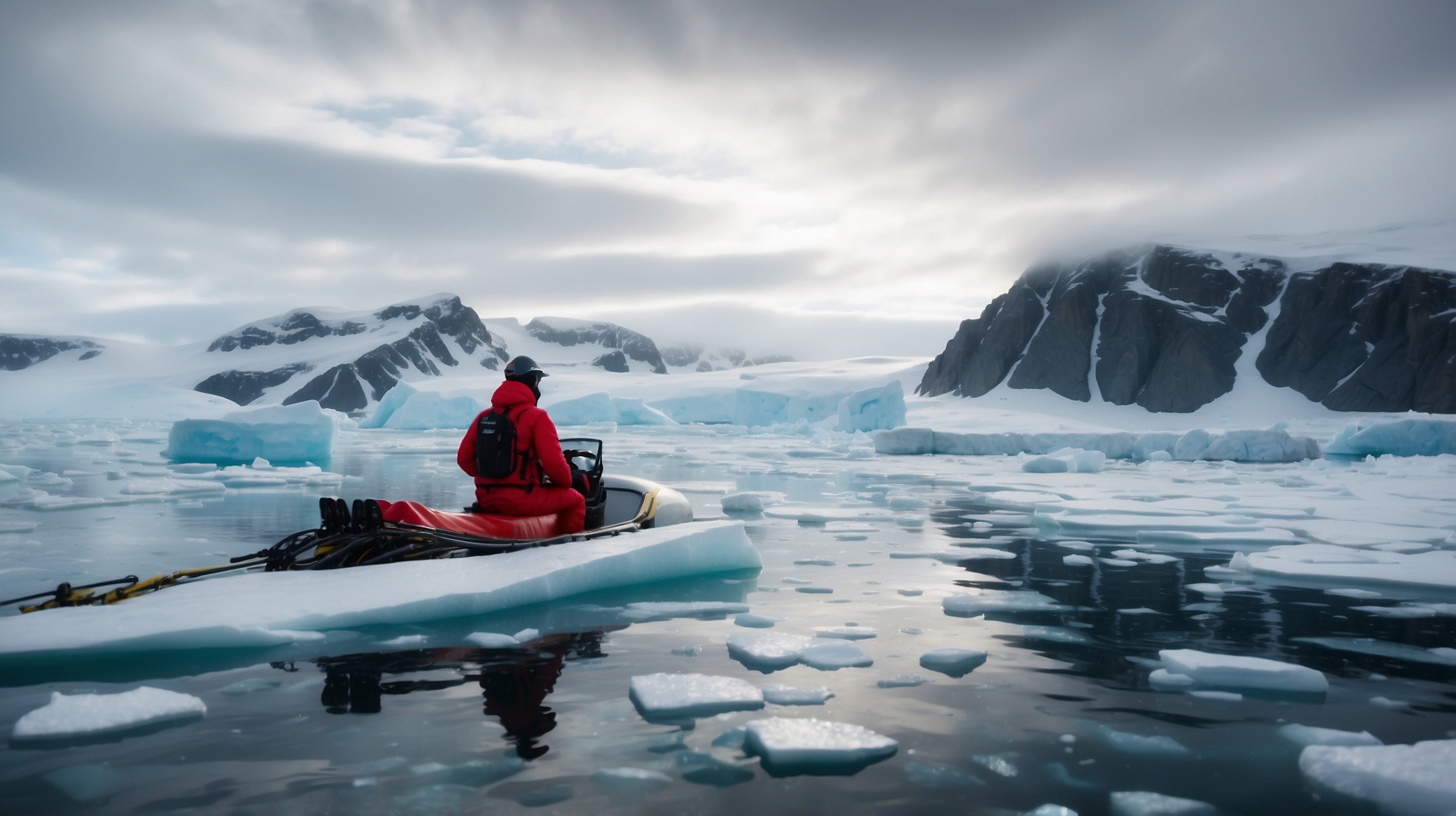
Beneath the ice-covered wilderness of Antarctica lies a concealed relic of the past — a lake hidden under more than two kilometers of ice. For decades, it remained undiscovered, untouched, and untamed — until now. Recent advances in satellite sensing and subglacial exploration have ignited one of the most intriguing scientific pursuits in recent memory: uncovering the mysteries of Lake Vostok, one of the largest subglacial lakes in the world.
Buried beneath a thick crust of glacial ice, **Lake Vostok** is not only a geographical anomaly but an ancient ecosystem sealed off from Earth’s surface for millions of years. The allure of what could be thriving in such isolated, extreme conditions has captivated geologists, microbiologists, climatologists, and even astrobiologists who see analogies between this frozen abyss and the icy moons of Jupiter and Saturn. Could this forgotten pocket of liquid water reveal life untouched by time? Or even offer clues about our own planet’s future?
The discovery isn’t recent, but the depth of our understanding is rapidly changing thanks to new technologies. As scientists continue to explore the frozen secrets entombed beneath Antarctica, the story of Lake Vostok grows only more compelling — a literal deep dive into Earth’s hidden past with implications that stretch into humanity’s future.
At a glance: Key facts about Lake Vostok
| Lake Name | Lake Vostok |
| Location | Antarctica (beneath Vostok Station) |
| Depth under ice | Approximately 4,000 meters |
| Lake dimensions | 250 km long, 50 km wide |
| Estimated water volume | 5,400 cubic kilometers |
| Ice coverage age | 15–25 million years |
| Last major sampling | 2012 (ice core reaches water) |
| Unique feature | Totally isolated liquid water body under extreme pressure |
How scientists discovered a vast lake under Antarctica
Although Lake Vostok was suspected as early as the 1970s, convincing evidence of the lake’s existence emerged in the 1990s through modern radar techniques and gravitational mapping. Soviet researchers first established **Vostok Station** in 1957, unknowingly placing their outpost above one of Earth’s most unique geographical traps. It wasn’t until later that data from aircraft surveys and satellite readings confirmed the existence of an enormous body of water beneath the station — liquid, not frozen, due to the immense pressure and geothermal heat below the glacier.
The idea of a subglacial lake surviving beneath kilometers of ice seems impossible, but **geothermal energy**, combined with thick insulating layers of ice, created a stable and relatively warm environment. The pressure of over 4,000 meters of ice not only melts the bottom layers but keeps the water from freezing again. This equilibrium has allowed the lake to persist, undisturbed, possibly for as long as 25 million years.
What makes Lake Vostok so scientifically important
The importance of Lake Vostok lies in its **pure isolation**. Any microorganisms or microbial ecosystems within it would have evolved away from the surface biosphere for millions of years, making them perfect candidates to study evolutionary paths untouched by climate shifts, pollution, or modern interference. Furthermore, studying these habitats could offer deep insight into how life might survive on **Europa or Enceladus**—frozen moons believed to have internal oceans under icy shells.
Moreover, the lake’s **oxygen levels** are expected to be roughly 50 times higher than a typical fresh water lake, due to the slow but steady melting from the ice sheet above. This hyper-oxygenated, high-pressure environment could host **extremophile organisms** pushing the boundaries of life as we know it.
Challenges in reaching and studying the lake
Drilling into a lake sealed off for millions of years presents enormous risks. The danger of contaminating the pristine system with surface bacteria or chemicals is serious. To address this, Russian scientists modified their borehole drilling techniques. In early **2012**, after years of precision work using a special non-contaminating drill, they finally breached the ice and reached the lake – but instead of taking lake water samples immediately, they waited for the future refreezing of the borehole to push water upward for safer collection.
The sample, when retrieved, wasn’t pure lake water but rather frozen mixture – valuable, certainly, but not enough to paint the full picture. Plans have been drawn to operate **autonomous submersibles** in future missions, remotely navigating the sealed waters in sterile environments to observe any indigenous life forms directly.
Could Lake Vostok harbor life never seen before?
This is the paramount question. While initial results from the lake core samples revealed **unusual microbial DNA fragments**, scientists remain cautious. The samples could have been contaminated during collection, and thus firm conclusions cannot yet be drawn. However, these early hints strongly suggest something *anomalous* may lie within.
“If the life forms we find in Lake Vostok are native to that environment, they may represent a second genesis — a biological lineage entirely separate from known life.”
— Dr. Sarah Linford, Microbial Ecologist (placeholder)
The greater implications for space exploration
Astrobiologists argue that the successful discovery of life in Lake Vostok bolsters the case for potential **extraterrestrial organisms** existing under similar conditions. Jupiter’s moon **Europa** and Saturn’s **Enceladus** both showcase ice-covered surfaces with evidence of subsurface oceans. If Earth harbors life in such extreme isolation, then so could these celestial bodies.
This idea is fueling not just Earth-based research but also missions like NASA’s planned **Europa Clipper**, specifically designed to study whether life can exist in such off-world cryo-environments. Lake Vostok, then, serves as a vital **testbed**, mirroring the conditions of icy exoplanets — a tantalizing simulation beneath our own feet.
Controversies and unexplored depths
Despite excitement, debates persist within the scientific community. Some argue the borehole method may have compromised data integrity, particularly if microbes found were brought in unintentionally. Others assert the need for **independent international involvement** to ensure findings are peer-reviewed and not politicized. Still, Russia plans to continue their work, announcing further drilling operations throughout the next decade.
Deep in its waters, **Lake Vostok remains mostly unknown**. Only minimal samples have been collected, and only a fraction of its 5,400 cubic kilometers of water have been touched by research. The full biological makeup and chemical composition of this lake remain hidden — perhaps until better technology or cooperative international missions can open it further.
What the future holds for subglacial exploration
With burgeoning interest from global space agencies and biotech companies, probing Earth’s **most extreme environments** has never been more relevant. From the Arctic to the seafloor and beyond, Lake Vostok stands as a symbol of what we’ve yet to understand about our own planet. There’s every reason to believe that further missions could yield data — and possibly organisms — that rewrite everything we know about biology.
“Antarctica is no longer just the last frontier on Earth — it may be the first step to decoding life in the universe.”
— Dr. Elena Voytech, Astrobiologist (placeholder)
Short FAQs about Lake Vostok
How was Lake Vostok discovered?
It was identified using radar and satellite imagery, which revealed a smooth, flat lake buried under thick ice near Russia’s Vostok Station.
Is there life in Lake Vostok?
Possibly. Preliminary studies have detected microbial DNA, but it’s unclear if these are native or introduced contaminants.
How old is the water in Lake Vostok?
The lake has likely been isolated for 15 to 25 million years, preserving its unique environment.
Why is Lake Vostok important to science?
It provides a rare opportunity to study isolated ecosystems and serves as an analogue for icy moons that may harbor alien life.
Can scientists access Lake Vostok safely?
Yes, but with great difficulty. Special sterilized drills and controlled sampling methods are required to avoid contamination.
Are there plans for further exploration?
Yes. Russia and international partners are developing new missions, including robotic submersibles, to dive into the lake.
Could studying the lake help space exploration?
Absolutely. It offers a way to test equipment and hypotheses relevant to the search for life on icy moons.
What risks are involved with drilling into Lake Vostok?
The main concerns are contamination and altering the pristine environment. Scientists use special techniques to mitigate these risks.