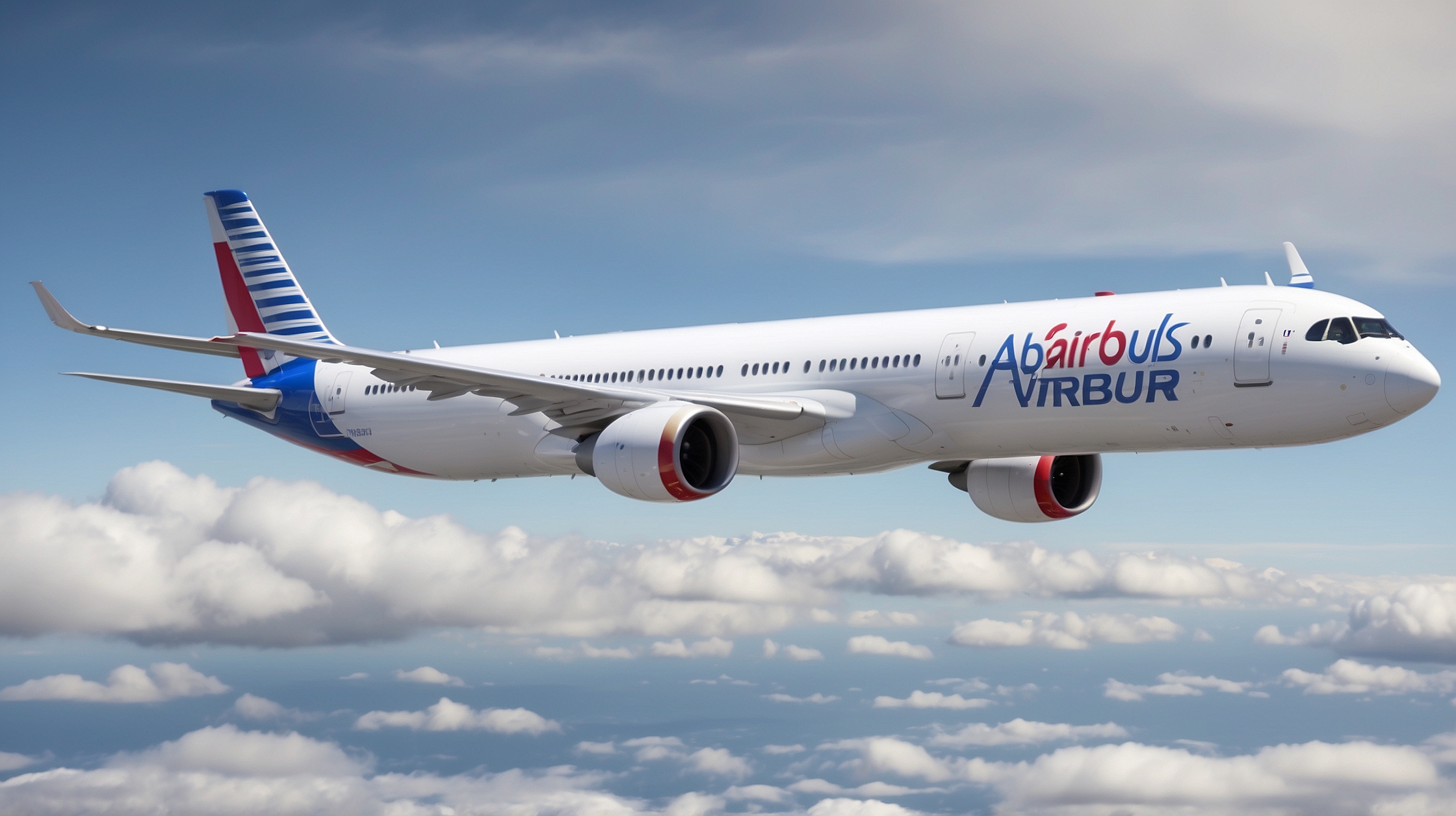
As the global aviation industry steadily regains altitude following years of turbulence, one aircraft stands out for exceeding expectations and redefining long-haul travel: the **Airbus A350**. With its sleek design, superior fuel efficiency, and increasing airline adoption, the Airbus A350 has not just matched the ambitions of its designers—it has soared past them. Recent milestones confirm that this next-generation aircraft is now pulling ahead of its most direct competitor from Boeing, reshaping the balance of power in the wide-body segment.
When the aviation world discusses long-range workhorses, the conversation typically centers around the A350 and Boeing’s 787 Dreamliner. Each has enjoyed tremendous acclaim and adoption since its launch, but recent data and industry trends suggest that the A350 has gained a definitive edge—technically, commercially, and strategically. Rising orders, operational versatility, and customer satisfaction are propelling Airbus to new heights, even as Boeing continues to cope with delays and challenges in its own wide-body programs.
Let’s explore how the A350 has lifted off into a league of its own and what this dynamic shift means for the future of aviation.
Quick facts about the Airbus A350’s recent milestone
| Aircraft Model | Airbus A350 |
| Milestone Reached | 1,000 units ordered |
| Types in Service | A350-900, A350-1000 |
| Main Competitor | Boeing 787 Dreamliner |
| Recent Orders | Major airlines including Singapore Airlines, Air France-KLM, and Turkish Airlines |
| Entry into Service | January 2015 |
What changed this year for Airbus’s long-haul ambitions
The A350’s recent achievement of crossing the **1,000-order milestone** represents more than just a numerical benchmark; it symbolizes a pivotal shift in airline preferences. Industry reports confirm that airlines are increasingly opting for aircraft that bring a balance of performance, comfort, and environmental responsibility. The A350 delivers on all three fronts.
This year, the A350 gained ground thanks to prominent new orders from major global carriers such as Turkish Airlines, Singapore Airlines, and Air France-KLM. These airlines cite the aircraft’s **fuel efficiency, lower emissions, and advanced cabin technology** as key selling points. Beyond economics, the quieter, more spacious cabin adds an appeal for both passengers and operators trying to enhance overall travel experience.
Why airlines are betting big on the A350
The strong uptake of the A350 is driven by next-generation design innovations. Airbus incorporated cutting-edge **aerodynamic features**, lightweight composite materials, and a **new engine design from Rolls-Royce** to deliver a plane capable of flying ultra-long routes with lower operating costs.
The **A350-900** offers a typical range of about 15,000 kilometers, while the **A350-1000** can carry more passengers over nearly 16,100 kilometers. This allows airlines to launch direct services between city pairs previously considered uneconomical or technically unfeasible—such as Singapore to New York or Doha to Auckland.
The A350 is rewriting the economics of long-haul travel. Airlines can now pair efficiency with passenger luxury, all while slashing emissions.
— Aviation Analyst, John Everett
How Airbus pulled ahead of Boeing’s wide-body offerings
While the Boeing 787 Dreamliner remains a global favorite, Airbus’s consistent performance in fulfilling deliveries and enhancing aircraft capabilities has tilted the balance in its favor. Boeing’s wide-body program has faced production halts, quality-control concerns, and delivery delays in recent years—all of which open the door wider for Airbus.
Moreover, the A350’s continued evolution includes a freighter version—**the A350F**—designed to challenge Boeing’s dominance in cargo aviation. With lower operating costs and **compliance with ICAO’s 2027 emissions regulations**, the A350F brings long-term strategic value for freight carriers as well.
Winners and losers in the wide-body aircraft race
| Winners | Losers |
|---|---|
| Airbus (especially A350 program) | Boeing (due to Dreamliner production delays) |
| Airlines operating efficient long-haul routes | Older aircraft like Boeing 777-300ER |
| Passengers enjoying improved cabin comfort | Less efficient wide-bodies with fewer sustainability features |
Unveiling the design and comfort edge of the A350
One of the A350’s strongest selling points—as emphasized by top airline executives—is its superior passenger comfort. From wider seats and quieter cabins to better humidity control and dynamic lighting systems, the A350 is engineered for comfort during even the longest flights.
Airlines like Qatar Airways and Singapore Airlines have configured the jet with **luxury business suites**, **premium economy zones**, and enhanced **inflight entertainment systems**. For passengers, especially those on ultra-long-hauls, the improvements deliver a tangible boost in in-flight well-being.
On the A350, we’ve seen significantly improved passenger feedback due to noise reduction, cleaner air, and overall comfort.
— Olivia Chen, Managing Director of Flight Experience Design
How cargo and sustainability strengthened A350’s case
The shift toward carbon-neutral aviation is accelerating—and Airbus is positioning the A350 at the forefront. The aircraft boasts a **25% fuel burn reduction** compared to previous-generation long-haul aircraft, thanks to its composite frame and efficient engines. In an era where regulatory and public pressure mounts for climate-conscious travel, this is a vital competitive edge.
Meanwhile, the pending arrival of the freighter variant, the A350F, is timed perfectly as **e-commerce drives cargo demand worldwide**. A wider, longer fuselage gives the A350F unique capacity advantages without compromising on emissions or fuel economy.
What’s next for Airbus and the long-haul market
Looking ahead, Airbus plans to build on the A350’s success by exploring derivative models and sustainable fuel integrations. The company is investing in research to make the A350 compatible with **100% Sustainable Aviation Fuel (SAF)** in the coming years.
From an orderbook standpoint, Airbus is gearing up to deliver hundreds of backlogged A350s, with factories in Toulouse and other European cities optimizing output. As new air travel routes emerge post-pandemic, Airbus is well-poised to provide the aircraft that modern airlines demand.
The A350 program is now entering its maturity phase, where volume production and continuous upgrades will drive its value higher.
— Henri Dubois, Aerospace Market Strategist
Frequently asked questions about the Airbus A350
How many Airbus A350s have been ordered so far?
As of 2024, Airbus has received over 1,000 orders for the A350 family, including both the A350-900 and A350-1000 variants.
Which airlines are the biggest operators of the A350?
Major operators include Qatar Airways, Singapore Airlines, Cathay Pacific, Lufthansa, and Turkish Airlines, among others.
What makes the A350 different from other long-haul aircraft?
The A350 combines ultramodern materials, efficient engines, and cabin innovations to offer superior comfort and sustainability.
Is there a cargo version of the Airbus A350?
Yes, Airbus is developing a freighter version called the A350F designed to serve the growing demand in air cargo logistics.
How does the A350 compare to the Boeing 787?
While both are efficient wide-body aircraft, the A350 typically offers greater range, passenger capacity, and cabin width.
What role does the A350 play in emission reduction?
The A350 consumes 25% less fuel than older aircraft and is built using lighter materials, which help reduce overall emissions.
When did the A350 first begin commercial service?
The Airbus A350 entered into commercial service in January 2015 with Qatar Airways as its launch customer.
Will Airbus continue to update the A350 design?
Yes, Airbus is continuously investing in flight range extension, efficiency upgrades, and future compatibility with 100% SAF.