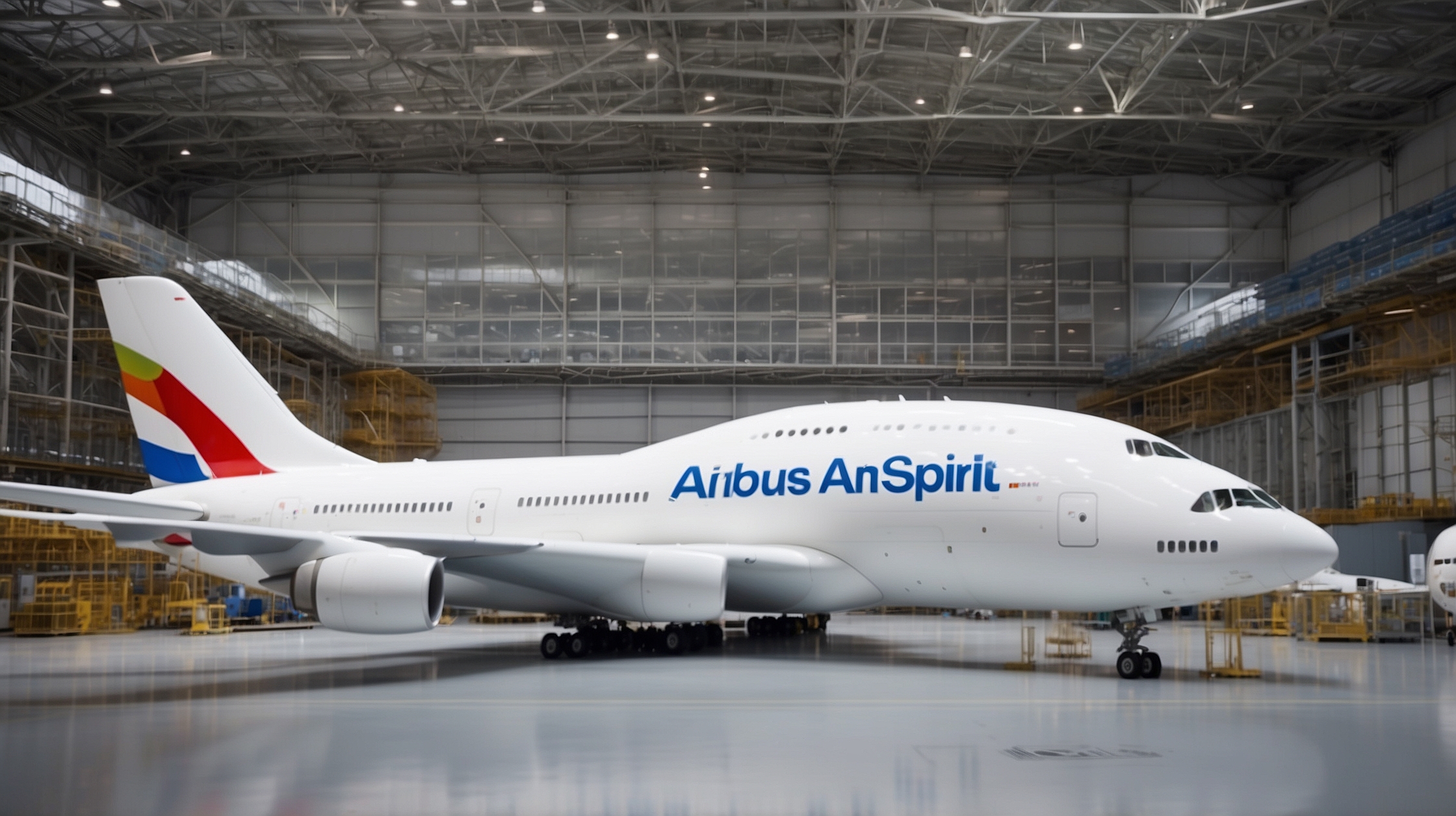
In the global aerospace industry, where resilience and autonomy are becoming increasingly valuable amidst rising geopolitical tensions, one European giant is making a decisive move. **Airbus**, the major aircraft manufacturer and long-standing titan of European engineering, has taken a strategic step to reduce its reliance on U.S.-based aerospace suppliers. In a bold move that has gained global attention, the company announced it will acquire several key industrial facilities from aerospace supplier **Spirit AeroSystems**—facilities deeply embedded in its supply chain—for a total deal valued at **€377 million**, or approximately $400 million USD.
This acquisition isn’t just a business transaction—it’s a signal. Airbus is sending a message to its suppliers, stakeholders, and competitors: it intends to **gain more control of its production processes**, reinforce its supply chain, and ultimately strengthen its independence in a world where transatlantic dependencies are increasingly under scrutiny. The deal encompasses six major production sites, all integral to the manufacturing of Airbus aircraft, and marks a turning point in how the company manages its industrial capabilities across continents.
But why now? Why is Airbus stepping in at this moment to scoop up these facilities—and what does this mean for the aerospace industry’s future? Let’s dig into the details of this landmark transaction and explore its implications.
What changed this year
| Aspect | Details |
|---|---|
| Companies Involved | Airbus and Spirit AeroSystems |
| Transaction Value | €377 million (approx. $400 million) |
| Assets Acquired | 6 major industrial sites in Europe and North America |
| Strategic Intent | Reduce dependence on US suppliers and enhance Airbus industrial autonomy |
| Industry Impact | Shift in aerospace supply chain dynamics |
The six facilities changing hands
The acquisition includes six **mission-critical sites** spread across multiple countries. Airbus is set to assume direct control of facilities located in the **UK (Prestwick and Belfast)**, **North America (Wichita, Kansas and Tulsa, Oklahoma)**, **France (Saint-Nazaire)**, and **Morocco (Casablanca)**. Each site specializes in the production of key aerostructures, including **cockpit and fuselage sections**, indispensable to the manufacturing of Airbus aircraft such as the **A220** and **A350**.
These facilities were previously run by **Spirit AeroSystems**, which had itself acquired many of these as divisions spun off from larger aerospace players. However, Spirit’s financial struggles and increasing operational inefficiencies made these sites a liability rather than an asset—especially when it came to Airbus integration. For Airbus, the opportunity to streamline operations and eliminate layers of third-party complexity was simply too good to ignore.
“It’s a matter of securing industrial continuity and quality.”
— Guillaume Faury, CEO of Airbus
Why Spirit AeroSystems was ready to sell
Spirit AeroSystems, while historically a vital supplier to both Airbus and **Boeing**, has been facing a range of difficulties over recent years. Quality control issues, labor shortages, and supply disruptions—some exacerbated by the pandemic—have adversely affected the company’s profitability and reputation. Boeing, their largest client, has itself been under immense scrutiny, stretching Spirit’s resources and focus.
In this context, Spirit’s decision to offload parts of its Airbus-facing business is both strategic and necessary. **Spirit is trying to concentrate resources on stabilizing its relationship with Boeing**, which represents a larger proportion of its revenue. With Airbus stepping in as buyer, the deal becomes a win-win—Spirit gets breathing room, and Airbus gets greater control of its production destiny.
What the deal means for Airbus
By **acquiring and integrating these facilities**, Airbus aims to better manage its supply chain disruptions which have frequently hindered timely aircraft deliveries. This change is projected to empower Airbus with more control over manufacturing timelines, labor negotiations, quality assurance, and engineering consistency across platforms.
Moreover, this move significantly reduces the company’s exposure to **geopolitical uncertainties and trade tensions between the U.S. and Europe**. By controlling more of its own industrial assets, Airbus can insulate itself from abrupt policy changes and tariffs that could impact transatlantic operations and parts procurement.
“We’re not just buying assets—we’re investing in resilience and performance.”
— Christian Scherer, Airbus Chief Commercial Officer
The impact on Europe’s aerospace sector
With a newly enlarged European industrial footprint, Airbus is doubling down on its commitment to **European sovereignty in aviation**. Governments across the continent, particularly in France and Germany, are likely to back this move as supportive of domestic job markets and technological leadership. Additionally, it could re-energize European SMEs that work in the aerospace supply chain.
This could put competitive pressure on Boeing, which is currently grappling with its own supply chain and quality challenges. While Boeing will remain a dominant global force, **Airbus is clearly taking strategic steps to consolidate leadership in a shifting industrial economy**.
Winners and losers from this acquisition
| Winners | Losers |
|---|---|
| Airbus (gains control and resilience) | Spirit AeroSystems (shrinks Airbus revenue stream) |
| European manufacturing sector | Competing suppliers losing Airbus contracts |
| Airbus customers (expect improved delivery timelines) | Competitors with complex, outsourced production lines |
Airbus strategy going forward
This deal aligns with Airbus’s broader strategy of **vertical integration**, where the company takes on more direct control of its value chain. It is part of a larger wave of industrial realignments in response to **global supply chain vulnerabilities** exposed during the COVID-19 pandemic and ongoing geopolitical tensions.
Through selective acquisitions and internal reinvestments, Airbus is laying the groundwork for greater structural stability in the long term. Importantly, this may serve as a blueprint for other manufacturers in tech-heavy sectors like automotive, defense, and semiconductors, where ownership of the production process increasingly translates into a **strategic advantage**.
What it means for Airbus jobs and workers
With Airbus taking over operations, **jobs in the acquired facilities are likely to be preserved**, if not expanded, if production demand continues to grow. Airbus is reportedly in talks with local authorities in each region to ensure a smooth transition, support retraining programs and safeguard labor continuity.
The move could also offer **greater job stability** for thousands of factory and engineering workers, many of whom have faced uncertainty working under a struggling Spirit AeroSystems. Workers may benefit from **unionized environments**, enhanced benefits, and long-term safety under Airbus’s typically worker-friendly European corporate culture.
Frequently Asked Questions
Why is Airbus buying facilities from Spirit AeroSystems?
Airbus is acquiring the facilities to reduce its dependency on external suppliers, improve supply chain control, and ensure timely aircraft production while navigating geopolitical risks.
Which facilities are included in the transaction?
The deal includes six facilities located in the UK, France, USA, and Morocco that produce vital aircraft components for Airbus models like the A220 and A350.
How will this affect Spirit AeroSystems?
Spirit AeroSystems will lose a significant portion of its Airbus-related revenue but can now focus more intensively on improving its performance and stability with Boeing.
Will the acquisition impact Airbus aircraft delivery timelines?
Yes. By gaining more control of its own production sites, Airbus expects improved timelines, quality control, and reduced risk of supply-related delays.
Is this a trend among aerospace manufacturers?
Yes, many major corporations are rethinking outsourcing and aiming to bring critical parts of their production capabilities back in-house due to strategic and security concerns.
Will there be any layoffs due to this acquisition?
Current indications suggest Airbus plans to retain most, if not all, existing staff. The company is focused on continuity and expanding capabilities responsibly.
What does this mean for Airbus investors?
The acquisition is seen as a positive long-term move, likely to enhance operational stability and margin growth, although integration costs may affect short-term earnings.
When will the deal be finalized?
The transaction is subject to regulatory approvals and is expected to be finalized before the end of the year.