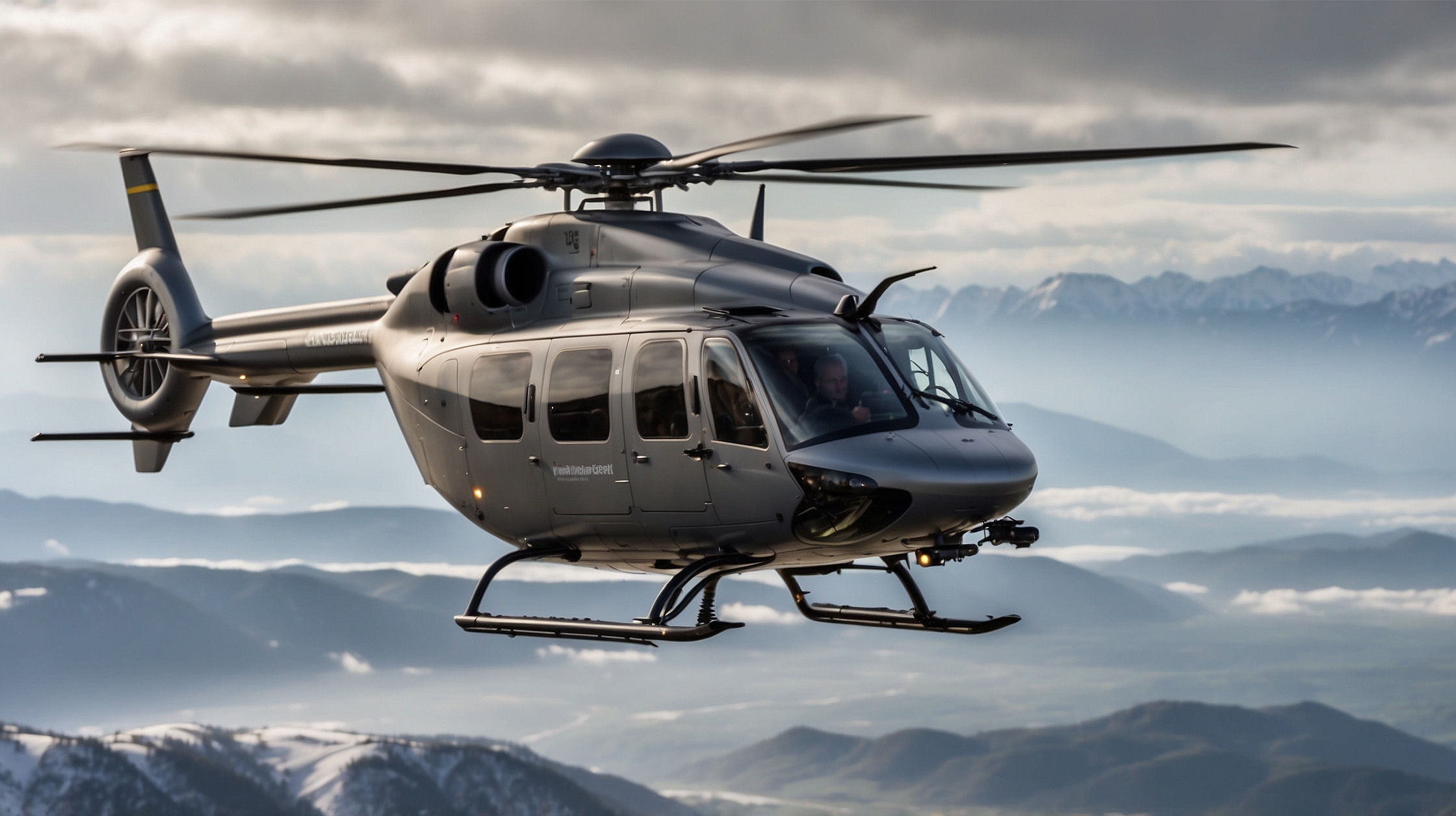
When it comes to the global helicopter market, few names command the same level of respect and recognition as **Airbus Helicopters**. In a sector that marries advanced technology with high-stakes military and rescue missions, Airbus has long been a formidable player. But in 2024, the company has taken another significant leap forward, making headlines with a substantial procurement deal involving the **German government**. As defense strategies and rapid response capabilities grow more crucial across Europe, Airbus is tightening its grip on this booming industry—and it’s doing so with confidence, scale, and strategy.
The acquisition of **twenty additional H145M military helicopters** by Germany is not just another large sale in the defense world; it’s a resounding endorsement of Airbus’ product reliability and the geopolitical necessity of modern, adaptable air support. While Germany addresses operational demands in both domestic and NATO-led missions, the procurement underlines a growing trend among European states to invest in agile and technologically advanced aircraft. This fleet expansion reflects broader strategic shifts: Germany is doubling down on rapid deployment, interoperability, and future-focused defense capabilities.
For Airbus, this purchase is a key milestone—a signal that demand for its H145M template is not only robust but also expanding. For Germany, it’s about scalability, reliability, and readiness. This story is about far more than a numbers game; it’s about leadership, adaptability, and emerging dominance in a competitive, security-conscious world.
Airbus H145M Expansion: At a Glance
| Key Detail | Information |
|---|---|
| New Orders | 20 H145M helicopters |
| Customer | German Ministry of Defence |
| Total H145M German Fleet | Over 80 units (existing + new) |
| Primary Mission Types | Special Forces operations, medevac, reconnaissance |
| Key Features | 5-blade rotor, enhanced flight systems, modular design |
| Delivery Timeline | Starting 2024 through late 2020s |
Why this deal matters in global geopolitics
The latest procurement underscores Germany’s commitment to **modernizing its armed forces** during a time of increased geopolitical instability. Following Russia’s ongoing war in Ukraine and growing tensions along NATO’s eastern borders, NATO member states have been reevaluating their **air mobility assets**. Germany, one of the largest contributors to NATO, has been especially active in enhancing its operational readiness.
The H145M’s versatile profile makes it a favorite in multi-mission scenarios—whether it’s **transporting special forces**, deploying fast-response teams, or conducting air surveillance. Airbus is leveraging this momentum to reassert its dominance, especially when the Western defense landscape is evolving rapidly. The five-bladed rotor system provides not only greater agility but also **reduced maintenance demands**, ensuring higher operational availability during prolonged missions. These factors make Airbus the vendor of choice among European military buyers.
In today’s strategic climate, asset availability, flexibility, and speed are paramount. The H145M delivers all three with Airbus’ trusted engineering at its core.
— Placeholder, Senior Defense Analyst
What changed this year for Airbus and defense aviation
Airbus ended 2023 with major contract wins, but 2024 is shaping up to be a *transformative year*. Western defense budgets are growing, in contrast to post-Cold War cuts, and governments are now prioritizing **interoperable platforms** that can operate across multiple forces. Germany’s additional H145M purchase reflects this shift: solutions need to be **modular, efficient, and rapid-deployable**.
The **updated rotor system**, more intuitive flight management systems, and increased autonomy in Airbus’ latest configuration have helped the H145M stand out. Designed for both urban environments and rugged terrain, the aircraft is purpose-built for flexibility. Paired with low acoustic footprint and adaptability for medevac missions, it’s clear why the H145M checks all boxes for modern military operations. Earlier in 2024, Airbus also committed to expanding its **local maintenance infrastructure**, a factor contributing to this expanded order.
Governments today are looking for trust-based partnerships, not just suppliers. Airbus is meeting that expectation on every level with the H145M.
— Placeholder, Aerospace Procurement Lead
Who benefits from this helicopter procurement
| Winners | Losers |
|---|---|
| German Armed Forces | Competing helicopter manufacturers |
| Airbus Helicopters | Legacy fleet models being phased out |
| NATO interoperability initiatives | Countries delaying modernization |
This deal will have ripple effects far outside Germany. As one of NATO’s leading military forces, Germany’s procurement standards often become benchmarks for neighboring allies. Other European states—especially frontline nations like Poland and the Baltic countries—may look to replicate parts of this model for their own defense expansion programs. That spells opportunity for Airbus.
How Germany plans to deploy its H145M fleet
The expanded fleet is expected to serve in **special operations command**, **medical evacuation**, **reconnaissance**, and **rapid extraction** missions. Germany has invested significantly in rapid-reaction capabilities to increase its agility during crisis escalations. The five-bladed version of the H145M offers improved **payload capacity**, decreased cabin vibration, and better crew operational safety—all crucial in high-risk environments.
The helicopters are also expected to be enhanced with **electronic warfare capabilities**, **ballistic protection**, and integrated **night operation suites**, depending on mission parameters. Combined with its plug-and-play modularity, the H145M can toggle between combat and civil rescue functionalities within minimal turnaround time—keeping it operationally versatile.
Next steps in Airbus’ strategic roadmap
Beyond this German deal, Airbus is actively positioning itself to **scale up production**. A critical part of its roadmap includes investments in its Donauwörth facility in Germany—both to support direct deliveries and provide **long-term service capabilities and spare part readiness**. With the H145M already operational in other militaries such as Hungary, Serbia, and Thailand, Airbus is actively co-marketing its multi-country inter-operability value to attract more clients.
This momentum is likely to be sustained through 2025, as additional security agreements prompt other mid-sized nations to select a **proven, NATO-compatible platform** that can be integrated into multinational operations almost instantly.
What industry analysts are predicting
Analysts across the defense aviation sector agree that the H145M represents a sharp uptick in procurement value. With its **versatility, compact form, and cost-effectiveness**, many view the platform as ideal for militaries redesigning their force structures toward fast deployment and data-integrated missions. Moreover, Airbus has shown reliability not just through aircraft production, but by standing up **long-term support ecosystems**, logistics pipelines, and in-theatre maintenance.
We see the H145M as a platform that will define light utility rotorcraft standards in Europe for the next decade.
— Placeholder, European Defense Journal Editor
Frequently Asked Questions
What is the Airbus H145M primarily used for?
The Airbus H145M is a multipurpose military helicopter mainly used for **special operations**, **medevac**, **light attack**, and **reconnaissance** missions. It offers high mobility in urban and rugged environments.
How many H145M helicopters does Germany operate now?
With the new order of 20 units, Germany will soon operate over **80 H145M helicopters**, making it one of the largest fleets in NATO.
What makes the H145M different from other helicopters?
Its **five-bladed rotor**, **reduced maintenance**, **low noise footprint**, and **plug-and-play modularity** set it apart. It is designed for efficiency in various combat and non-combat roles.
When will the new helicopters be delivered?
Deliveries are slated to **begin in 2024**, with full fleet integration expected over several years through the **late 2020s**.
How does this deal impact Airbus’ position in the market?
The deal significantly **enhances Airbus’ dominance** in the European military rotorcraft market, ensuring a steady stream of revenue and influence.
Will other countries follow Germany’s example?
Yes, several NATO countries and Western European allies are expected to **consider similar procurement** strategies, particularly for rapid-deployment forces.
Are there any civilian versions of the H145M?
Yes, Airbus offers a **civilian variant (H145)** that is widely used in air ambulance services, police operations, and disaster response.
What enhancements come with the five-blade rotor upgrade?
The upgrade improves **payload capability**, **reduces vibrations**, and **lowers maintenance requirements**, providing more operational uptime and crew comfort.