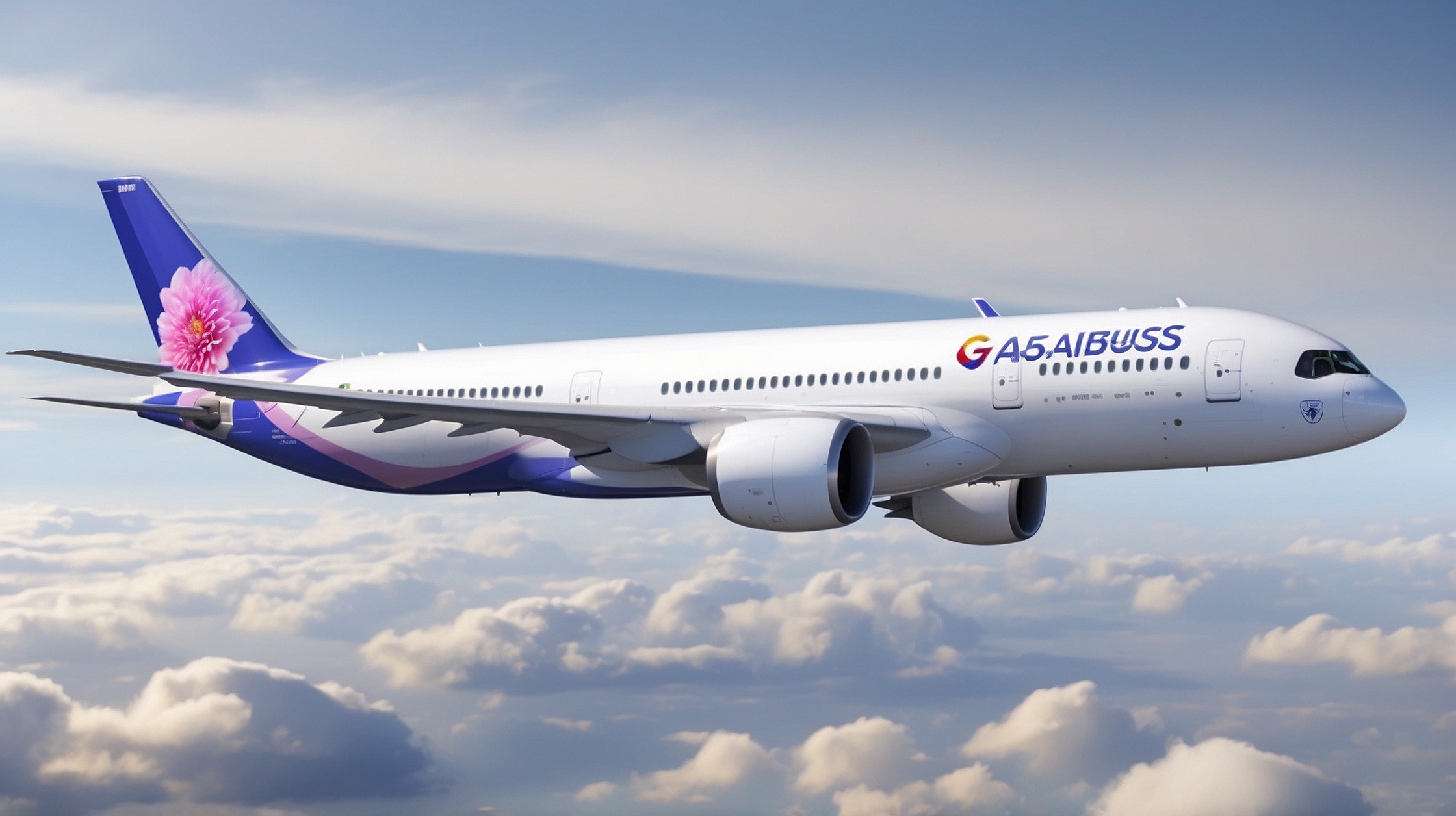
On a fog-laced morning in Toulouse, the hum of high-tech machinery resonated in Airbus’s massive final assembly line hangar. As engineers tightened the final bolts on a wide-body fuselage, a press release from Europe’s aerospace giant confirmed what had been whispered for weeks: Airbus had secured a significant new aircraft order from China’s largest airline. But this wasn’t just another high-value transaction in the aviation world—it marks a major geopolitical and economic pivot that could shape the future of air travel in Asia and beyond.
China Southern, an airline known for its ambition and expansive international routes, has signed a billion-euro deal to acquire an **additional five Airbus A350-1000 wide-body jets**, significantly expanding its long-range fleet. Coming on top of an earlier order of six A350-900s announced in 2022, this latest decision underscores a deeper shift in China’s aviation preferences and global alliances. For Airbus, still competing with Boeing for dominance in the skies, the deal is nothing short of a statement: Asia’s future skies may be painted increasingly European.
It’s not just about aircraft parts and delivery dates—this development crystalizes a rapidly evolving aviation landscape. With economic recovery outpacing expectations in China and long-haul travel on the rise, these aircraft will play a pivotal role in connecting the East to the West once again.
Key details of the China Southern–Airbus A350-1000 order
| Feature | Details |
|---|---|
| Airline | China Southern Airlines |
| Aircraft Ordered | 5 Airbus A350-1000 |
| Combined Deal Value | Several billion euros (€), exact figure undisclosed |
| Previous Airbus A350 Orders | 6 A350-900s in 2022 |
| Aircraft Type | Wide-body, long-range |
| Delivery Schedule | Set to commence between 2024–2026 (expected) |
| Purpose | Expand and modernize long-haul fleet, especially intercontinental routes |
What changed this year for China’s aviation strategy
China’s aviation sector is undergoing a quiet but hands-on transformation—fuelled by domestic policies, global recovery, and fleet modernization. In recent years, Chinese carriers relied heavily on narrow-body aircraft like the Boeing 737NG or Airbus A320 for their domestic and regional operations, but the long-haul segment was always Boeing-dominated, particularly with the 777 and 787.
Airlines like China Southern are now re-aligning their fleet strategy post-pandemic. High fuel efficiency, greater passenger capacity, and operational flexibility of the A350-1000 are playing strongly into procurement plans. According to industry insiders, this model offers up to 350–410 seats and a range of over 8,000 nautical miles—perfect for connecting Guangzhou and Beijing to cities across Europe, the Americas, and potentially even Africa.
“The A350-1000 offers significant cost per seat advantages while enhancing passenger comfort and environmental performance over long-haul routes.”
— Jean-Pierre Mirande, Aviation Consultant (Placeholder)
Why Airbus is winning ground in Asia
The landscape has shifted in favor of Airbus for several reasons. First, with Boeing still grappling with production issues and regulatory hurdles following the 737 MAX and 787 setbacks, airlines are diversifying suppliers more strategically. Airbus, with its steady production lines and cleaner models, has emerged as the logical choice for reliable supply and modernized cabin experiences.
Secondly, at the geopolitical level, cooling ties between the U.S. and China are influencing business relations. While China hasn’t outright banned acquisitions of Boeing jets, its carriers are more cautious. Procurement from Airbus may be seen as a more neutral ground, free from the possibility of U.S. political interventions or sanctions.
“Asian airlines like China Southern are calculating more than just tonnage and thrust. Politics and perceived reliability are part of the equation now.”
— Meilin Shan, Aviation Policy Analyst (Placeholder)
How the A350-1000 fits into China Southern’s global plans
China Southern has made no secret of its ambition to become a global hub airline capable of rivaling the likes of Emirates, Qatar Airways, or Singapore Airlines. To do this, long-haul and ultra-long-haul capabilities are essential. The A350-1000, capable of covering extended routes without sacrificing passenger comfort, fits snugly into this strategy.
Expected to be initially deployed to key international hubs—including London, New York, and Frankfurt—these aircraft are also suited for high-demand seasonal routes and strategic bilateral market expansions. Their composite structure and aerodynamic efficiency mean improved cost-per-kilometer metrics, which are crucial as competition in international travel intensifies.
“Fleet modernization is no longer optional—it’s a strategic imperative. Airlines that delay these decisions will be left behind.”
— Li Zhen, Aviation Business Professor (Placeholder)
Winners and losers in this latest Airbus deal
| Winners | Losers |
|---|---|
| Airbus (increased market share in Asia) | Boeing (declining influence in Chinese market) |
| China Southern (fleet expansion and modernization) | Regional carriers with older aircraft models |
| Passengers (more comfortable and fuel-efficient flights) | Airlines relying solely on legacy aircraft |
Environmental considerations in wide-body expansion
In today’s carbon-conscious world, aircraft purchases are increasingly scrutinized not just on performance but also on **environmental impact**. One of Airbus’s main selling points for the A350 family is its superior fuel efficiency and reduced CO2 output compared to legacy aircraft like the Boeing 777-300ER.
Fitted with Rolls-Royce Trent XWB engines, the A350-1000 offers nearly 25% better fuel efficiency than older wide-body models. This allows airlines like China Southern to meet emissions targets while improving operating margins—a powerful combination for any executive suite trying to align growth with sustainability.
“A350 is spearheading the next generation of sustainable long-haul flying. It’s a real leap in environmental evolution.”
— Andre Lemoine, Aerospace Engineer (Placeholder)
What it means for global competition in aviation
This deal sends a clear signal to the global aviation sector: the balance of power is shifting. China isn’t just beefing up its fleet—it’s also hinting at broader geopolitical preferences. The continued tilt towards Airbus suggests that commercial aviation, like technology and semiconductors, could become another arena for soft-power influence and global alignment.
For Airbus, the win isn’t just about planes—it’s about trust, consistency, and logistical alignment. For Boeing, it’s a wake-up call that delays, certification problems, and diplomatic complications are heavily impacting its competitiveness, especially in one of the world’s fastest-growing aviation markets.
Frequently Asked Questions
What is the Airbus A350-1000?
The A350-1000 is a wide-body, long-haul aircraft developed by Airbus and known for its spacious cabins, fuel efficiency, and advanced carbon-fiber construction. It typically seats around 350–410 passengers and has a range exceeding 8,000 nautical miles.
Why did China Southern choose the A350-1000?
China Southern selected the A350-1000 due to its superior fuel efficiency, long-range capabilities, passenger comfort, and reliability. The move aligns with the airline’s plans to expand international routes and modernize its aging fleet.
How many Airbus aircraft has China Southern ordered recently?
China Southern has recently ordered a total of 11 A350 aircraft—six A350-900s in 2022 and now five additional A350-1000s in 2024.
When will the new A350-1000s be delivered?
Exact schedules haven’t been disclosed, but deliveries are expected to begin between 2024 and 2026 as Airbus ramps up production to meet global demand.
How does this deal affect Boeing?
This purchase impacts Boeing by reducing its market share in China, where it has traditionally been strong. The move underscores ongoing challenges Boeing faces both in production and in its relationship with Chinese regulators.
Will passengers notice a difference on A350 flights?
Yes. The A350-1000 offers quieter cabins, better air circulation, higher humidity, and larger windows—enhancing the overall passenger experience, especially on long-haul routes.
Is this part of a greater China-Europe shift?
While not officially stated, the deal reinforces growing economic ties between Europe and China, particularly as political tensions persist between China and the U.S., affecting major industries like aviation.