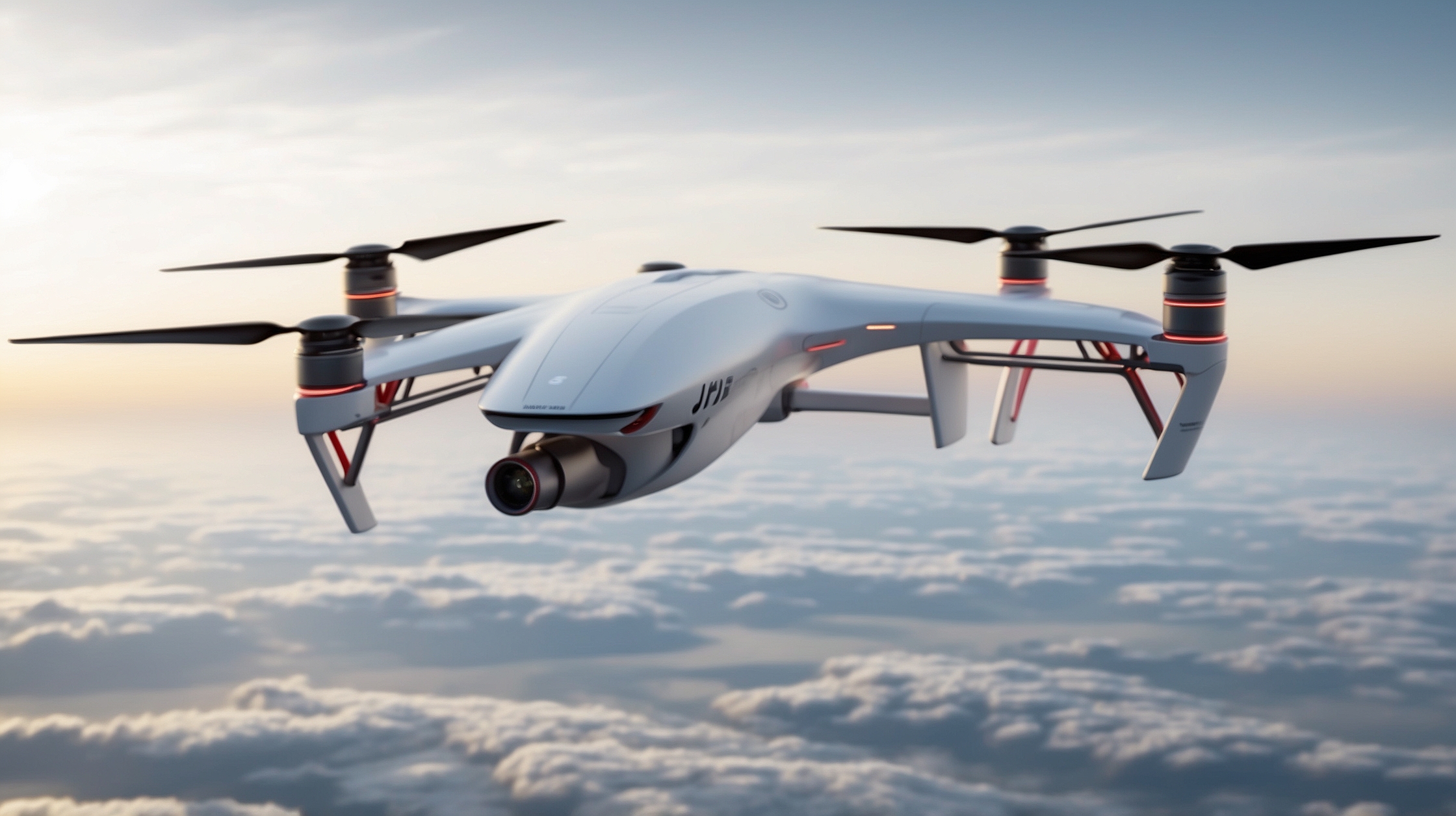
As the global demand for lightweight, long-range surveillance and logistics drones increases, one of France’s largest aerospace players is steering its course toward a new frontier in unmanned aviation. The company in question, a well-established name in the world of aeronautics with a footprint across defense and aviation sectors, is gearing up to reshape the future of medium- to long-range drone operations with the introduction of the **UAS100**—a next-generation unmanned aerial system (UAS) set for official certification in 2025.
While several players have entered the drone market over the past decade, this company’s pivot toward long-range, autonomous UAV solutions signals a commitment not only to innovation but also to regulatory compatibility and broad commercial viability. Designed to operate safely in civilian airspace and optimized for missions up to 300 kilometers, the UAS100 signals a critical step forward in Europe’s drone ecosystem—one that could serve a broad spectrum of industries from infrastructure inspection to border surveillance and emergency response.
With collaborations including partnerships within European aerospace clusters and a production roadmap that leverages full-scale aviation know-how, this French firm’s strategic shift hints at a larger trend: the convergence of traditional aerospace engineering with nimble, mission-driven drone technology. Set against a backdrop of increasing global instability, climate-driven emergencies, and the rising need for long-distance, autonomous reconnaissance, the UAS100 is poised to become a foundational tool for data-driven and strategic field services worldwide.
Here’s how this aviation giant plans to scale its technology and certification path—and why the commercial drone market is watching closely.
Key details about the UAS100 drone project
| Feature | Details |
|---|---|
| Drone Name | UAS100 |
| Manufacturer | Major French Aviation Company (Undisclosed Name) |
| Maximum Range | 300 kilometers |
| Cruising Speed | Approximately 100 km/h |
| Weight | Up to 100 kilograms |
| Certification Timeline | Expected by 2025 |
| Primary Missions | Surveillance, Infrastructure Inspection, Emergency Operations |
| Target Customers | Government Agencies, Civil Operatives, Industry |
What sets the UAS100 apart in a saturated drone market
As the skies grow more competitive with a mix of recreational, commercial, and military drones, the **UAS100 distinguishes itself** with a number of unique design and certification features. Built with dual electric motors and advanced avionics typically found in standard aircraft, the drone reflects a higher level of safety and reliability than many of its competitors. Moreover, its ability to share civilian airspace safely gives it a crucial advantage for missions over populated or sensitive areas.
The drone’s airframe is crafted to mimic the aerodynamic stability of manned aircraft. This stability allows it to carry out long-endurance missions of up to three hours while maintaining a quiet, environmentally friendly electric profile—attributes that are becoming essential as policy makers look to regulate drone noise and emissions.
“Our aim is not just to build a drone, but to develop an airborne platform with the flight integrity of a certified aircraft. That’s where the market is heading.”
— Project Lead Engineer, UAS100 Initiative
In essence, the company’s decision to pursue the European Union’s highest-level drone regulatory benchmarks suggests this is not a tech demonstration, but a full-fledged entry into critical drone infrastructure operations globally.
The road to European drone certification
Part of what makes the UAS100 program particularly ambitious is its path toward full **European Union Aviation Safety Agency (EASA)** certification—considered one of the most stringent regulatory environments in global aviation. By aiming for EASA certification, the company is positioning the UAS100 to be operable not only in France but across the wider European Union, and eventually other partner jurisdictions that align with EASA equivalence.
“EASA certification is more than just a legal requirement—it’s a statement of airworthiness, safety, and integration readiness. Most drones today aren’t built to that standard.”
— Aerospace Regulatory Consultant (Placeholder)
This certification path includes rigorous evaluation of software, redundancy systems, emergency fail-safes, and interoperability with Air Traffic Management (ATM) systems. Once achieved, the UAS100 would become **one of the few long-range drones formally cleared for integration into national airspace**—a key advantage when bidding for emergency, defense, and governmental service contracts.
Key partnerships and technological contributors
The project isn’t being undertaken alone. In a strategic move, the drone is being co-developed alongside a consortium of specialized European aerospace firms. These partnerships have contributed critical expertise in micro-avionics, data encryption, and ground control interfaces. While the primary company orchestrates production and flight platform integration, the support ecosystem ensures that every component is secured, reliable, and fit for civil-authority deployment.
Additionally, the automated ground control systems being developed for the UAS100 include AI-assisted flight planning logic, enabling predictive maintenance updates and mission alteration mid-flight. This brings high levels of automation without losing operator oversight—vital for complex or multi-scenario missions.
Potential market applications and global reach
Unlike many short-range or consumer drones that flood the market, the UAS100 is intentionally designed for **strategic and industrial use cases**. These include:
- Logistical Support in post-disaster areas or terrains lacking infrastructure
- Infrastructure Surveillance for rail, powerlines, and remote oil platforms
- Environmental Monitoring for wildfire tracking, flood prediction, or glacial shifts
- Cross-Border Patrols in coordination with civil defense or border units
As such, key customers are expected to include state infrastructure agencies, civil defense departments, utility conglomerates, and even climate monitoring NGOs. With geopolitical challenges and climate instability becoming more frequent, demand for airborne intelligence and logistics platforms is expected to double over the next five years according to internal projections shared by company sources.
Winners and potential losers in the emerging drone paradigm
| Winners | Losers |
|---|---|
| Government agencies seeking long-range, certified drones | Short-range consumer drone manufacturers without certification paths |
| Infrastructure surveillance companies | Operators relying on drones banned from civil airspace |
| Environmental and emergency tracking authorities | Under-regulated drone exporters facing import restrictions |
Why 2025 will be a pivotal year
While the UAS100 is in final phases of research and pre-certification flight testing, 2025 is the year when real market competition begins. With regulatory frameworks maturing across Europe and beyond, the drones that succeed commercially will be not only intelligent but fully certified, fail-safe, and adaptable to real-world mission sets.
This French aerospace firm is placing a bet that a small, highly reliable drone with long-range visibility—supported by decades of aircraft engineering experience—can fill a market gap untouched by typical consumer-grade or military drones. If successful, the UAS100 could reset the quality standard in long-range commercial drones used across disaster zones, national border missions, and large-scale infrastructure networks.
Frequently asked questions about the UAS100 drone
What is the maximum distance the UAS100 can travel?
The UAS100 is designed to cover up to **300 kilometers** in a single mission, distinguishing it from most other drones in its weight and size class.
When will the UAS100 receive official certification?
Certification for the UAS100 is expected sometime in **2025**, following completion of final validation and regulatory clearance protocols.
What missions is the UAS100 designed for?
The drone is optimized for **surveillance, emergency response, border monitoring**, and large-scale infrastructure inspection missions where autonomy and range are critical.
Who can purchase and operate the UAS100?
Only certified operators and agencies complying with **airspace integration laws** will be eligible to deploy the UAS100, per EASA guidelines.
Is the drone fully electric or hybrid?
The UAS100 is powered by **dual electric motors**, aligning with the push toward low-emission aviation frameworks.
How does the UAS100 stay compliant with European airspace rules?
The drone has integrated **redundant safety protocols and avionics** systems to enable safe coexistence with commercial aircraft under EASA airspace protocols.
What kind of data systems are on board the UAS100?
It features encrypted **real-time telemetry, autonomous navigation**, and environment-sensitive flight adaptation systems, suitable for mission flexibility.
Is there international interest in the platform?
Yes, due to its compliance potential, the UAS100 has garnered early attention from **international defense and climate agencies** alike.