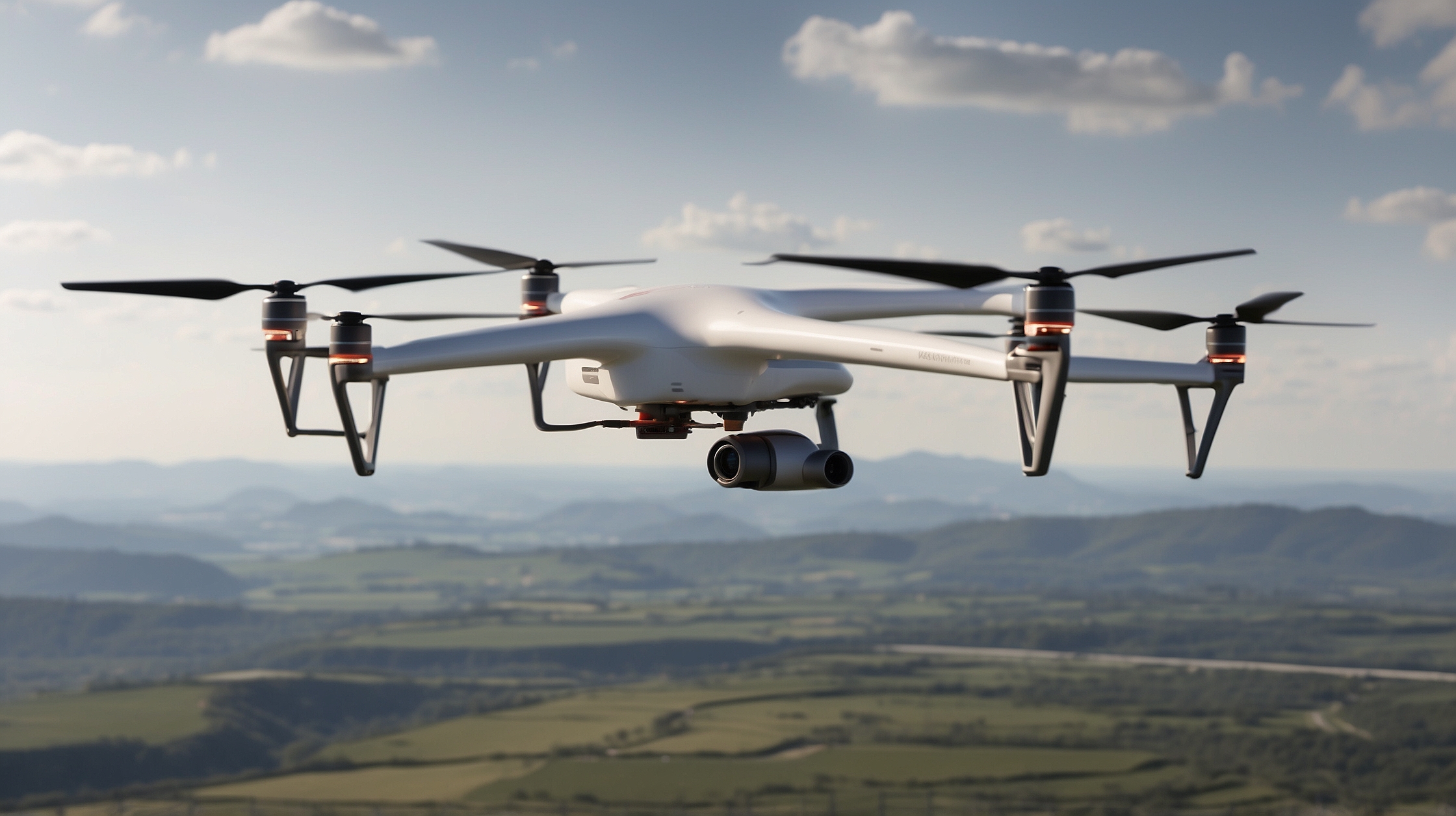
In a rapidly evolving defense and aerospace landscape, a French aviation titan is making waves with its strategic pivot toward unmanned aerial technology. This ambitious move is driven by a burgeoning demand for **long-range drone solutions**, designed not only to address immediate military needs but also to reshape global surveillance and logistics capabilities. The aviation behemoth—steeped in decades of experience with manned aircraft—is reinventing itself with cutting-edge unmanned platforms, and at the center of this bold transformation stands the **UAS100**, a drone with the potential to become a game-changer in the skies by 2025.
As international defense budgets swell and sophisticated aerial threats become increasingly complex, the urgency to deploy advanced drone technologies has never been greater. The emergence of the UAS100 platform signifies a deliberate and calculated step from legacy aircraft engineering toward **next-generation autonomous systems**. Slated for full accreditation by 2025, the UAS100 is not just another entry in the drone race—it is a proof-point of France’s commitment to pioneering scalable, long-range unmanned vehicles that can serve a wide array of civilian, commercial, and defense applications.
Behind the UAS100 project lies a rigorous years-long research and development cycle, with a focus on **operational safety**, reliability, and environmental sustainability. As regulatory frameworks begin to evolve and welcome the integration of long-range drone platforms into open airspace, the company is keen to position itself at the forefront, ensuring that when the airways open, they’ll be leading the formation.
An aerial evolution: Understanding the UAS100 initiative
| Aspect | Details |
|---|---|
| Project Name | UAS100 |
| Type | Long-Range Unmanned Aerial Vehicle (UAV) |
| Target Accreditation | 2025 |
| Flight Duration Capability | Over 100 kilometers with optimized safety |
| Primary Use Cases | Surveillance, logistics, environmental monitoring |
| Partnerships | Includes Thales and other local collaborators |
What changed this year
This year marked a turning point for the UAS100 project as it transitioned from **developmental prototyping to pre-accreditation field testing**. With the European Union Aviation Safety Agency (EASA) weighing in on longer-range UAVs, UAS100 is navigating a complex approval environment. What differentiates this project from prior efforts is its emphasis on **compliance with future airspace integration standards**.
The company has been working diligently with policymakers, regulatory bodies, and air control organizations to ensure the drone’s design doesn’t just comply with today’s standards but is futureproof for the evolving ecosystem of **urban air mobility and beyond visual line of sight (BVLOS) capabilities**.
Why the UAS100 matters now more than ever
The global demand for **long-range UAVs** is surging, as governments seek new tools for fire detection, surveillance, critical supply deliveries, and land mapping. The UAS100 offers a distinctly European solution to a marketplace heavily influenced by U.S. and Chinese drone technologies. By incorporating **green aviation technologies** and prioritizing low-noise operation, this drone stands apart as an eco-conscious competitor in a traditionally emissions-heavy field.
Furthermore, geopolitical tensions and changing battlefield dynamics necessitate aerial platforms that can maintain resilience, **autonomy, and adaptability**. The UAS100’s modular build allows for evolutions in payloads, meaning one drone design can tackle vastly different missions—from cartography to military recon—simply by changing integrated modules.
State-of-the-art tech behind the UAS100 design
At the heart of the UAS100 is a **hybrid-electric propulsion system**, selected both for its lower environmental footprint and its quiet operation. Strategic design partnerships with players like Thales helped integrate advanced **radar and communication systems**, making the drone suitable for both civilian and protected airspaces.
The drone also includes an innovative **detect-and-avoid solution**, which is essential for its certification under strict European regulations. With real-time telemetry and sensor fusion, the UAS100 can autonomously navigate dynamic air traffic scenarios—an essential feature for large-scale commercial rollouts.
Collaborations powering the mission forward
This is not a solo flight for the French aviation manufacturer. Collaborations with **leading cybersecurity firms**, sensor developers, and aerospace logistics companies have enriched the UAS100 project’s legitimacy. Among its most influential partners is Thales, whose track record in avionics ensures the drone’s guidance and telemetry will meet or exceed global standards.
The goal is clear: ensure a seamless and secure data ecosystem connects ground control, air traffic controllers, and the drone itself. These collaborations form the backbone of the extensive **testing and validation ecosystem** that will pilot the UAS100 toward 2025 and beyond.
Projected applications and real-world scenarios
Once accredited, the UAS100 could see deployment across sectors. In **agriculture**, farmers in vast rural zones could use it for crop scanning and soil analysis. In **environmental protection**, it offers a sustainable method to track forest fires or illegal deforestation. The **logistics industry** also stands to benefit with middle-mile delivery capabilities previously out of reach due to limitations in drone endurance.
Most importantly, in **emergency response**, UAS100’s long-range capacity means better **disaster visibility and resource allocation**, saving lives where helicopters or ground teams might be delayed or grounded.
Winners and those facing turbulence
| Winners | Losers |
|---|---|
| Defense industries seeking autonomous ISR solutions | Commercial short-range drone makers without BVLOS capability |
| Regulators committed to safe drone integration | Outdated legacy UAV systems lacking modular scale |
| European manufacturers in competition with non-EU drone developers | Countries lagging behind in drone regulation infrastructure |
Expert perspectives on the UAS100 era
“The UAS100 reflects a new era in drone aviation—scalable, safe, and suited for real-world missions. Its long-range performance brings drones not just into cities, but across continents.”
— Jean-Luc Marette, Aviation Analyst (Placeholder)
“Certification in the EU drone regulatory environment is no small feat. The UAS100’s trajectory indicates it’s built with compliance at its core.”
— Erika Fontaine, Aerospace Regulatory Consultant (Placeholder)
FAQs about the UAS100 and long-range drones
What is the UAS100’s maximum range?
The UAS100 is designed to operate effectively over **100 kilometers**, making it suitable for extended surveillance and delivery missions.
When will the UAS100 be fully accredited?
The development team is targeting **full regulatory accreditation by 2025**, pending EASA guidelines and performance tests.
Who are the partners involved in the UAS100 project?
Among the consortium are several French innovation firms including **Thales**, focused on avionics and data integration systems.
What makes the UAS100 environmentally friendly?
Its **hybrid-electric propulsion** and efficient aerodynamics reduce fuel consumption and sound pollution, making it one of the greener options among long-range UAVs.
What sectors are likely to benefit from UAS100?
Primary sectors include **defense**, **logistics**, **emergency services**, **agriculture**, and **environmental monitoring**.
Can the UAS100 operate in urban airspaces?
Yes, pending regulatory approval. It is being developed with **detect-and-avoid capabilities** and secure communication systems to operate safely in complex airspace.
What differentiates the UAS100 from existing drones?
The UAS100 offers **modular payload ability**, long-range endurance, and is built with full regulatory accreditation in mind, setting it apart from commercially available counterparts.
Is the drone targeted only for military use?
No. While defense is a major application, UAS100 is also built for **commercial and humanitarian uses**, expanding its market potential.