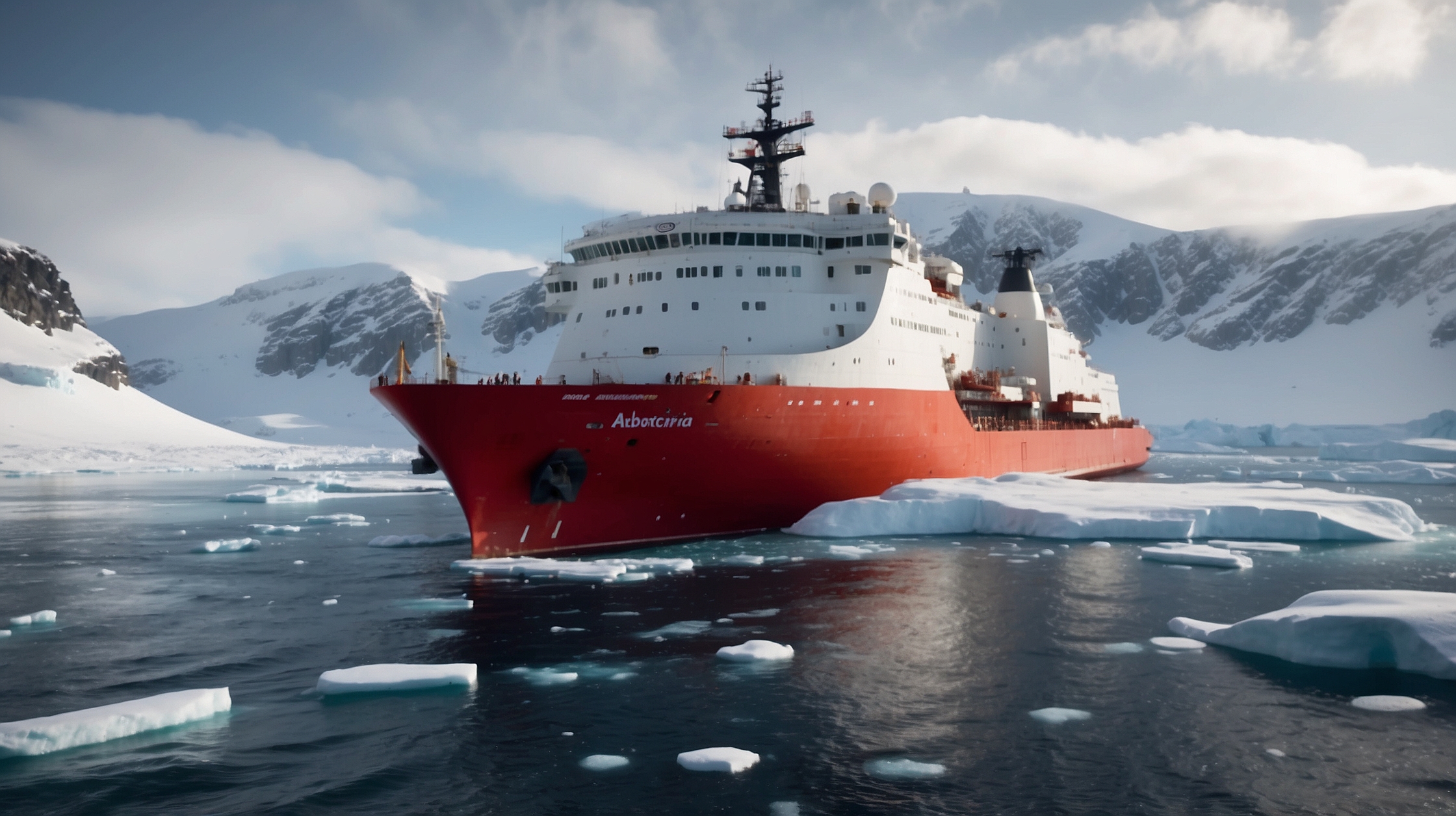
Amid the vast, icy wilderness of Antarctica, a new chapter in the scientific and logistical conquest of the southernmost continent has unfolded. For the first time in history, a colossal Italian icebreaker has taken center stage in one of the world’s most challenging environments. The bold maneuver reflects not only new capabilities in polar logistics but also unprecedented collaboration among nations striving to support groundbreaking research in one of Earth’s most remote frontiers.
This milestone moment was marked by the deployment of Italy’s new 10,000-ton research and logistics vessel, the RV Laura Bassi, to provide vital resupply missions across no fewer than three polar research stations maintained by Italy, South Korea, and Germany. A powerhouse of technological advancement, the Laura Bassi is more than just a supply ship — it’s a mobile research lab, icebreaker, and international ambassador of cooperation in polar science.
Forging through treacherous ice fields and volatile seas, the vessel’s journey not only emphasizes human capacity to adapt and innovate but also highlights the growing need for environmental stewardship and scientific unity. Here’s a detailed look at this landmark journey and what it means for the future of Antarctic exploration.
Overview of the historic Antarctic mission
| Vessel Name | RV Laura Bassi |
| Operator | Italian National Institute of Oceanography and Experimental Geophysics (OGS) |
| Tonnage | Over 10,000 tons |
| Mission Purpose | Resupply and research support for Italian, Korean, and German Antarctic bases |
| Region Deployed | Ross Sea and Terra Nova Bay, Antarctica |
| Unique Feature | First instance of tri-national resupply by a single icebreaker |
Why this mission marks a turning point in Antarctic operations
With challenging ice conditions, logistical nightmares, and unpredictable weather patterns, resupplying Antarctica’s scientific stations is no small feat. Historically, supply missions were organized independently by respective nations, leading to duplicated efforts, higher carbon footprints, and increased risks. The success of this mission sets a new standard by proving that consolidated missions can save costs, cut emissions, and foster scientific exchange.
“This mission is a powerful example of what can be achieved when nations pull together for the sake of science and sustainability.”
— Maria Rossi, Polar Logistics Coordinator
By aiding research operations for three nations — Italy’s Mario Zucchelli Station, South Korea’s Jang Bogo Station, and Germany’s Gondwana — the RV Laura Bassi demonstrated that shared objectives can produce remarkable logistical efficiency. This strategic synergy also opens doors to more collaborative research and data-sharing ventures.
What changed this year in polar deployment strategy
The RV Laura Bassi underwent a significant overhaul before embarking on its mission. Modernized with cutting-edge navigation, reinforced icebreaking capabilities, and eco-conscious upgrades, the vessel was equipped to operate under the most extreme environmental conditions. This allowed it to navigate through dense pack ice in the Ross Sea region with unprecedented ease and reliability.
The increased operational range and enhanced cargo capacity allowed the vessel to not only transport supplies but also assist in scientific missions, such as oceanic sampling and environmental monitoring. The dual-purpose mission capacity is what sets this deployment apart.
“This isn’t just a cargo run — each voyage is a floating experiment in logistics, technology, and science.”
— Dr. Luca Benedetti, Marine Scientist
Meet the vessel redefining Antarctic supply routes
The RV Laura Bassi, originally a Norwegian vessel, was acquired and retrofitted by Italy to suit high-demand Antarctic missions. With a gross tonnage eclipsing 10,000 tons, the ship is the largest such asset operated by Italy in the region. Fitted with robotic submersibles, high-resolution sonar technology, and a full-service onboard laboratory, it offers both physical support and research capability.
Notably, it’s also one of the few vessels in the world capable of navigating thick multi-year sea ice, which is increasingly necessary due to climatic changes producing more erratic sea-ice patterns. The ship also features an advanced waste-management system to meet strict environmental protection protocols under the Antarctic Treaty System.
Winners and losers in this new Antarctic model
| Winners | Why |
|---|---|
| Polar Research Stations | Receive streamlined, efficient, and timely supplies across multiple nations |
| Environmental Agencies | Lower CO2 impacts from consolidated missions |
| Scientific Community | Improved collaboration and shared data collection |
| Italian Research Institutions | Showcase leadership in polar logistics and sustainability |
| Losers | Why |
| Outdated Logistics Models | Standalone national missions may now appear inefficient |
| Small Supply Contractors | May lose individual contracts to larger joint missions |
How international cooperation made this possible
The success of this ambitious journey was made possible by years of intergovernmental dialogue, planning, and bureaucratic compromise. Agreements were forged between institutes like Italy’s OGS, Korea’s KOPRI, and Germany’s Helmholtz Association, each recognizing the importance of sustainability and cooperation in the harsh Antarctic environment.
Coordinating resupply windows, aligning safety protocols, and sharing onboard resources required a level of transparency and trust rarely seen in international operations. But the mutual goal of uninterrupted scientific progress in Antarctica acted as the great unifier.
The scientific benefits of consolidated missions
Beyond improved logistics, this mission brought significant gains for scientific research. The RV Laura Bassi allowed for concurrent marine ecosystem studies and glaciological observations while it performed its supply duties. Data gathered include ocean temperature profiles, salinity gradients, and ice-core samples, all essential for climate monitoring.
Furthermore, having shared research environments fosters real-time collaboration among scientists, catalyzing faster hypothesis testing, improved dataset comparability, and joint funding opportunities. The net result: a smarter, faster, and more aligned global scientific effort.
“Data gathered from this voyage is already filling gaps in our knowledge about the Southern Ocean and its role in global climate.”— Dr. Hee-Jung Kim, Oceanographer
What’s next for polar logistics innovation
Following this successful mission, discussions are already underway to expand on the model. Plans are being considered to establish an annual tri-national (or even multi-national) deployment calendar, potentially including nations like France, Australia, and Argentina in the future.
In the near term, the RV Laura Bassi will return to Italy for scheduled maintenance, but its international role appears poised for growth. Engineers are reportedly working on further upgrades to expand its fuel range and add next-generation renewable energy modules.
Short FAQs about the RV Laura Bassi mission
What is the RV Laura Bassi?
The RV Laura Bassi is an advanced Italian icebreaker and research vessel used for polar exploration and scientific support in Antarctica.
Which countries benefited from this mission?
Italy, South Korea, and Germany all received resupply support for their Antarctic research stations during this mission.
Why is this mission historic?
It is the first time a single vessel performed simultaneous resupply operations for three different countries in Antarctica.
What kind of research was conducted?
The mission included marine biology, oceanography, and climate monitoring studies alongside logistics support.
How is this model better for the environment?
Consolidating missions reduces the carbon footprint, avoids redundancy, and results in fewer emissions per ton of cargo delivered.
Will there be more missions like this?
Yes, discussions are ongoing to make joint resupply missions a recurring fixture in polar operations.
How large is the RV Laura Bassi?
It weighs over 10,000 tons and is among the largest polar vessels in service by Italy.
What technological upgrades does it feature?
The ship includes advanced sonar, robotic sensors, and environmentally conscious waste-management systems.