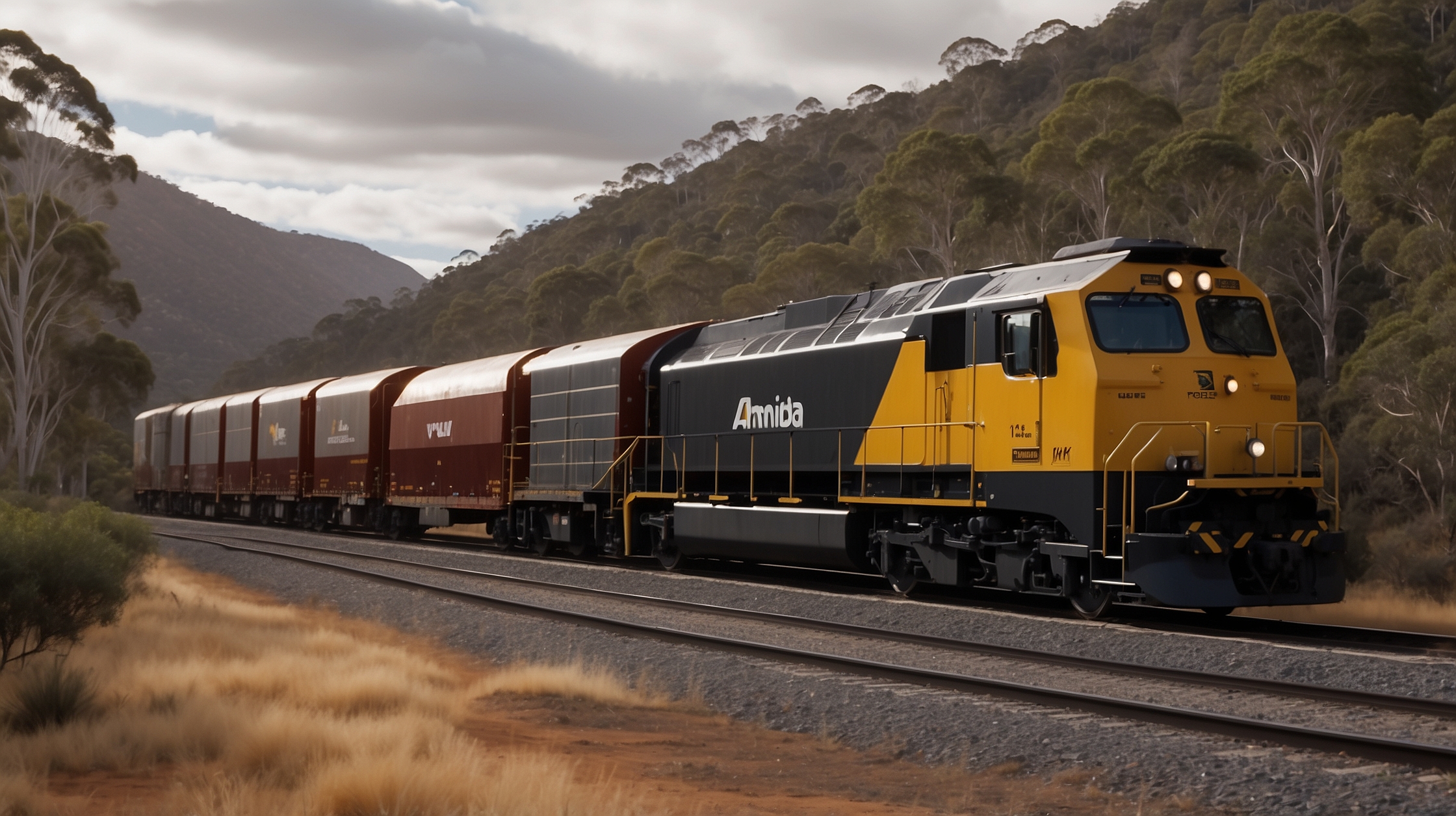
In the heart of Australia’s vast rail networks, a technological revolution is quietly reshaping the future of freight transport. A new milestone has been reached that could redefine how heavy industries approach sustainability. Australia has just unveiled the **world’s largest battery-electric locomotive**, powered by a groundbreaking 14.5 MWh lithium-ion battery. This isn’t just a feat of size or power—it’s a transformative move that underscores a global shift toward zero-emission transport solutions.
Developed in collaboration with major players in the rail and energy sectors, the battery locomotive has already made its maiden journey, leaving experts and industry insiders excited about what this means for supply chains and environmental policies worldwide. As countries grapple with rising emissions from transport and increasing pressure to decarbonize, this record-breaking Australian initiative could be a blueprint for the rest of the world.
The deployment of this **high-capacity electric locomotive** points the way forward for mining companies, freight rail operators, and sustainable infrastructure developers. With freight trains often among the largest diesel consumers in the transport sector, this mammoth battery engine delivers a critical turning point.
Overview of Australia’s Record-Breaking Electric Locomotive
| Project | Battery-Electric Locomotive for Heavy Freight |
| Battery Capacity | 14.5 MWh lithium-ion |
| Developer | Fortescue and Williams Advanced Engineering |
| Location | Australia |
| Primary Use | Mining transport and heavy rail infrastructure |
| Key Feature | World’s largest battery-powered locomotive |
Why this locomotive is a game-changer for freight
Freight trains are essential to the economy, transporting raw materials and products across long distances. However, they are traditionally powered by diesel, contributing significantly to greenhouse gas emissions. The shift to battery-powered locomotives aims to address this. A train equipped with a **14.5 MWh battery** is equivalent, in energy storage terms, to powering nearly 1,000 average homes for a full day—demonstrating its sheer capacity and potential for long-haul performance.
This development stands out not only due to the scale but also the mission: to **decarbonize one of the most polluting segments of the transportation sector**. In Australia, where mining and freight logistics account for a considerable portion of industrial activity, introducing a zero-emissions locomotive marks a significant win for both the environment and the companies trying to meet increasingly strict ESG (Environmental, Social, Governance) benchmarks.
“Battery-electric trains could transform the way we move freight. They bring quieter, cleaner operations to areas impacted by diesel pollution.”
— Dr. Laura King, Transportation Technology Analyst
A deep dive into its technological innovations
The 14.5 MWh battery powering this locomotive is built with **advanced lithium-ion cells**, optimized for energy density and fast charging cycles. Developed by Williams Advanced Engineering, a firm known for its work in Formula E and energy solutions, the battery pack is integrated with regenerative braking systems, meaning the locomotive can recover and store power while slowing down—enhancing efficiency even further.
A high-tech onboard power management system ensures that energy use is optimized in real-time, depending on gradients, load, and route profiles. The battery system is modular, allowing easier upgrades and maintenance. All these features are designed to support **heavy haul operations** that typically traverse hundreds of kilometers in remote terrains under harsh industrial conditions.
“This locomotive isn’t just powerful—it’s smart. It’s built to perform in environments where conventional EV technologies fall short.”
— Mark Billings, Battery Systems Engineer
Environmental and economic benefits of electrifying heavy rail
The shift from diesel to battery-electric offers a wealth of benefits. From an environmental standpoint, the reductions in **CO2 and NOx emissions** could be substantial, especially when scaled across an entire fleet. For industrial operators, the reduced reliance on diesel also translates to significant **long-term cost savings** and immunity from volatile fuel prices.
Additionally, battery-electric rail eliminates noise pollution, minimizes maintenance costs due to fewer moving parts, and positions operators as serious contenders in the **green economy transition**. These benefits contribute not only to public health improvements but also open doors to sustainable financing and climate-related incentives from governments worldwide.
How the battery-powered locomotive compares to traditional engines
| Feature | Diesel Locomotive | Battery-Electric Locomotive |
|---|---|---|
| Fuel Type | Diesel fuel | Lithium-ion battery |
| Greenhouse Gas Emissions | High | Zero (during operation) |
| Noise Levels | Moderate to high | Low |
| Fuel Cost Fluctuations | Significant | Stable electricity cost |
| Maintenance Frequency | High | Lower due to fewer moving parts |
What this means for mining and heavy industries
Mining companies such as Fortescue are early adopters of sustainable transport mainly because of their **energy-intensive supply chains**. By piloting this monster battery-powered locomotive, Fortescue is setting a precedent that may force other global mining and freight logistics firms to rethink their own decarbonization strategies.
The implications are vast: supporting net-zero pledges, reducing operational costs, and enhancing corporate reputation. The technology also signals new opportunities in **green job creation**, battery supply chain localization, and energy innovation ecosystems centered around Australia’s robust mining infrastructure.
“This is not just innovation—it’s leadership. Fortescue is proving that large-scale industries can pioneer clean mobility without sacrificing performance.”
— Talia Norrington, Sustainability Lead at GreenTransport Lab
Challenges and next steps for wider adoption
Despite the positives, widespread adoption will rely on resolving **charging infrastructure** challenges, battery recycling pathways, and high upfront costs. Building megapack chargers and optimizing rail routes to align with battery range are top priorities for developers and regulators.
Furthermore, as the technology scales, it will require **policy support**, long-term investment, and integrated energy-grid planning. Yet, the signals from the market suggest strong backing, with more trials expected to follow in both public and private rail networks.
Short FAQs about Australia’s 14.5 MWh battery locomotive
How much energy does the battery locomotive store?
The locomotive stores a massive 14.5 MWh, making it the most powerful battery-electric locomotive globally.
Who developed this new locomotive?
It was developed through a partnership between Fortescue and Williams Advanced Engineering.
What is a primary use case for this battery-powered train?
Its primary function is for freight transport in mining industries and other heavy rail logistics.
Will this replace diesel locomotives entirely?
Not immediately, but it’s a significant step toward the eventual replacement of diesel fleets in heavy rail.
How is the battery charged?
The system includes charging infrastructure with regenerative braking to partially recharge while in transit.
What are the benefits for the environment?
Reduction of CO2 emissions, decreased diesel dependency, and elimination of local air pollutants during operations.
Is this technology unique to Australia?
Currently, the battery size is a world first, but the technology could be adopted in other countries with similar rail needs.
When will similar locomotives become mainstream?
Wider rollout is expected within the next 5–10 years as infrastructure improves and costs decrease.