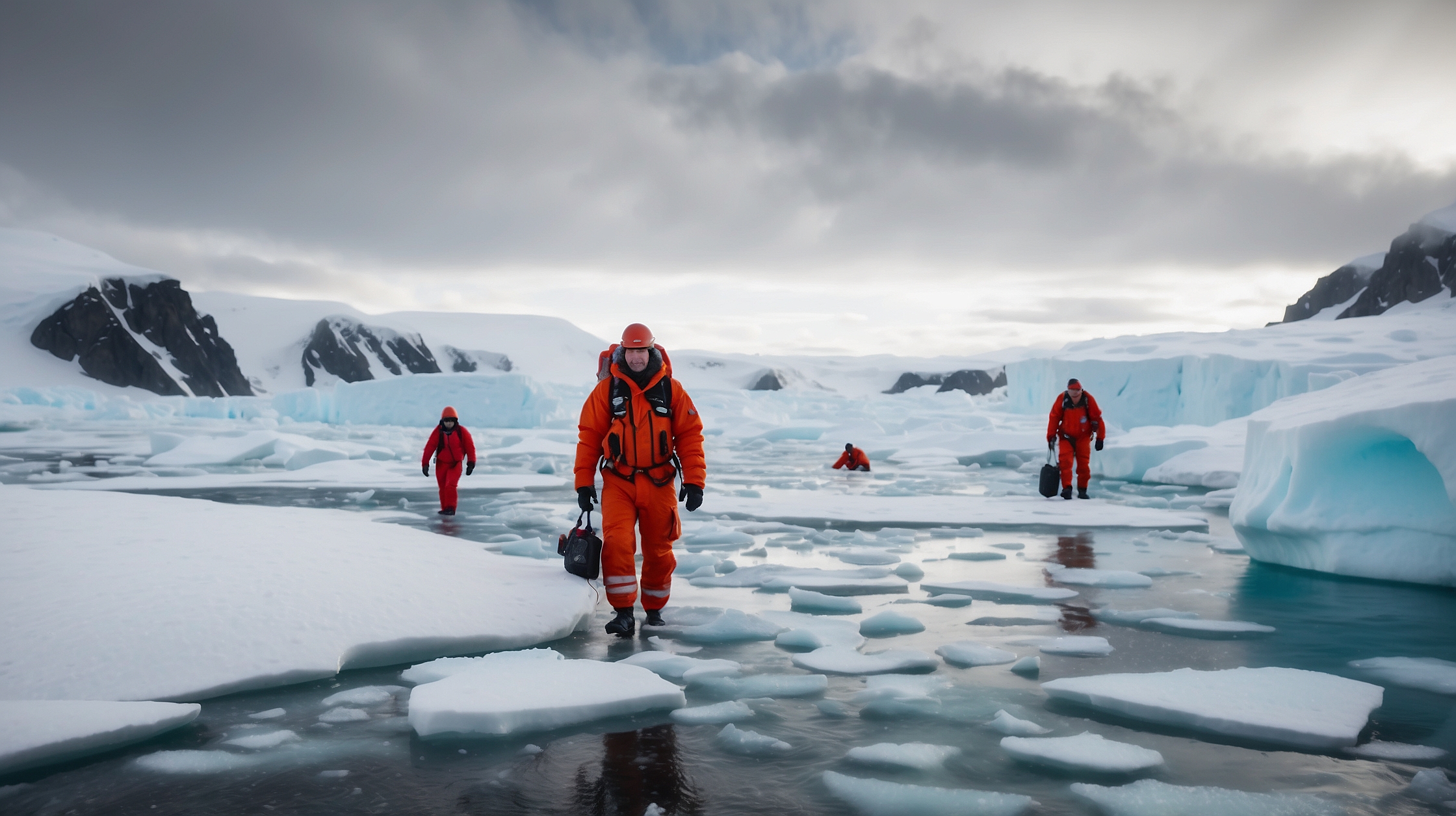
In the icy heart of Antarctica, buried two kilometers beneath the surface, scientists have uncovered a time capsule frozen in time. It’s not dinosaur bones or ancient ice formations—but something far more mysterious: a seductively rare and alien-like ecosystem that could unlock secrets about Earth’s deep past and possibly even life far beyond our planet. This hidden world, shrouded in darkness for millions of years, lay quietly beneath the East Antarctic Ice Sheet—until cutting-edge technology pulled back the curtain.
This incredible discovery has stunned the scientific community and sparked wild speculation among both experts and the public. Some call it a revelation, others a mere geological fluke. But what lies within Lake Vostok’s frozen confines is rewriting our understanding of life in extreme environments—and hinting at what humanity might one day discover on frozen worlds like Europa or Enceladus. But how did we stumble upon this hidden domain? What have scientists found, and what do they believe it means for the future of science?
The buried secret deep beneath Antarctica
| Discovery Location | Lake Vostok, East Antarctica |
|---|---|
| Depth Below Ice | Approximately 2 kilometers |
| Date of Discovery | Ongoing research since early 2000s |
| Key Finding | Microbial life and unusual organic compounds |
| Significance | Implications for extremophile biology and potential life on icy moons |
| Research Institution | Multiple: Russian, American, and European space agencies |
What makes Lake Vostok so extraordinary
Lake Vostok is truly like no other body of water on Earth. Hidden under **approximately 2 kilometers of solid glacial ice**, the lake has been sealed off from the atmosphere for at least 15 million years. Its isolation makes it an unprecedented natural laboratory—unaffected by surface conditions that have transformed the rest of the planet during eons of climate shifts and extinction events.
This subglacial lake was discovered using satellite radar and seismic mapping. Behind its serene icy barrier, it hides water that’s kept from freezing by geothermal heat seeping from the Earth’s core. That allows it to exist in liquid form, despite constant temperatures averaging about -60°C on the surface above. Inhabitants of such an environment would have had to evolve *entirely independently* of the conditions familiar on Earth’s surface.
Ancient microbes: The overlooked lifeforms of Lake Vostok
When Russian scientists finally managed to drill and extract ice cores from Lake Vostok, the initial excitement turned to astonishment. Inside samples of accreted ice, they found **microorganisms unlike any known species**. Many of the identified bacteria had no close relatives in existing microbial databases. They had survived—perhaps even thrived—in pitch-black depths, high pressure, low oxygen, and near-freezing temperatures.
This isn’t just a step forward in extremophile biology. It could redefine the very parameters of life on Earth.
— Dr. Lena Fischer, Polar Microbial Ecologist
This leads to incredible biological hypotheses. Could Earth harbor more isolated environments with evolutionary pathways detached from the known web of terrestrial life? Could extremophile bacteria and viruses answer long-standing questions in genetics, medicine, or even space exploration?
How drilling was done without contamination
Preserving the untouched state of Lake Vostok proved to be a delicate challenge. Any drilling method risked contaminating the water with surface bacteria or chemicals. Russian engineers, assisted by environmental scientists and international regulators, devised a **non-invasive hydraulic drilling method**. A combination of kerosene and Freon acted as antifreeze and lubricant, keeping the drill operational while preventing contamination of the pristine environment below.
Researchers used heated drill heads and retrograde freezing, which allowed them to collect ice accretions rather than contacting the open water directly. Only much later did newer tools allow them to sample liquids in a sterile manner. These careful efforts eventually yielded enough specimens to analyze in-depth.
Implications for extraterrestrial exploration
Perhaps more exciting than the discovery itself is what it *represents*. Lake Vostok is almost a precise analog for icy extraterrestrial environments—most notably **Europa**, a moon of Jupiter, and **Enceladus**, a moon of Saturn. Both are believed to have liquid oceans sealed beneath thick ice crusts, kept liquid by tidal heating or geothermal activity.
If microbial life can survive in Lake Vostok, it becomes statistically more plausible that similar forms could exist under Europa’s icy shell.
— Dr. Neil Karavitch, Astrobiologist
NASA and ESA missions currently in development, such as Europa Clipper and JUICE, are directly inspired by findings from Antarctica. Technologies tested during the Lake Vostok project serve as prototypes for robot arms, drills, and submersibles that may one day be sent deep into space in search of alien life.
An untouched evolutionary archive
Aside from its implications for space exploration, Lake Vostok holds an immeasurable geological and biological archive. Embedded in its sediments could be **chemical signatures of ancient Earth**, untouched by atmospheric decay or tectonic activity. Scientists see potential to reconstruct atmospheric compositions, seismic activity, and even the past presence of life forms on continents now covered in ice.
It’s effectively a time capsule from more than 10 million years ago. Who knows what biomarkers or DNA sequences we might still discover.
— Dr. Akim Petrov, Cryo-Geologist
This long-lasting record has the power to illuminate vast segments of Earth’s climate history—and possibly forecast its future as polar regions continue to shift under the weight of climate change.
Public fascination and mysterious theories
Such a unique discovery inevitably stirs mystery and intrigue. Conspiracy theorists and curious minds alike have speculated whether **alien microbes** or even ancient civilizations could lie beneath the ice. While scientists quickly dismiss these as unsubstantiated, they admit the sheer scale of the mystery does ooze an air of science fiction realism.
Photos and lab samples don’t always reveal the full story. The truth is, only a fraction of the lake has been observed through instruments. Much remains unexplored, and each mission returns with more questions than answers.
Continuous exploration is on the horizon
The international scientific community has not halted in their quest to fully understand this frozen wonder. Teams plan deeper drilling missions, autonomous underwater vehicles and even long-term climate observatories. Each effort will try to unearth a more detailed blueprint of **life, geology and environmental stability** in polar regions and beyond.
| Winners | Losers |
|---|---|
| Astrobiology and space exploration research | Traditional biological models challenged |
| Microbial evolutionary science | Opponents of polar drilling due to ecological risks |
| Climate researchers | Lack of public understanding about scientific significance |
Frequently asked questions about the hidden world beneath Antarctic ice
What is Lake Vostok?
Lake Vostok is a subglacial lake located under 2 kilometers of ice in East Antarctica. It has been sealed off from the surface for over 15 million years.
Why is Lake Vostok important to scientists?
Because of its isolation, it offers a rare glimpse into ancient microbial life and conditions that may resemble environments on icy moons in the solar system.
What has been found inside the lake?
Scientists have discovered previously unknown bacteria and organic molecules, suggesting life can exist in extreme cold, darkness, and pressure.
How was the lake explored without contamination?
Engineers used specialized, non-invasive drills and collected ice cores formed from lake water freezing upwards to avoid direct contact.
Does this discovery suggest alien life could exist?
It makes it statistically more plausible that life exists in similar environments on icy moons like Europa or Enceladus, though no direct evidence of alien life has been found.
What is next for Antarctic subglacial research?
Further drilling, use of autonomous underwater drones, and international collaborative missions are planned to explore more of the lake and similar sites.
Is it safe to continue drilling in Antarctica?
There are environmental concerns, but scientists follow strict protocols to minimize contamination and disturbance to fragile ecosystems.
How does this help humanity?
It expands our understanding of life’s resilience, improves our models of Earth’s past climate, and supports space missions that search for life beyond our planet.