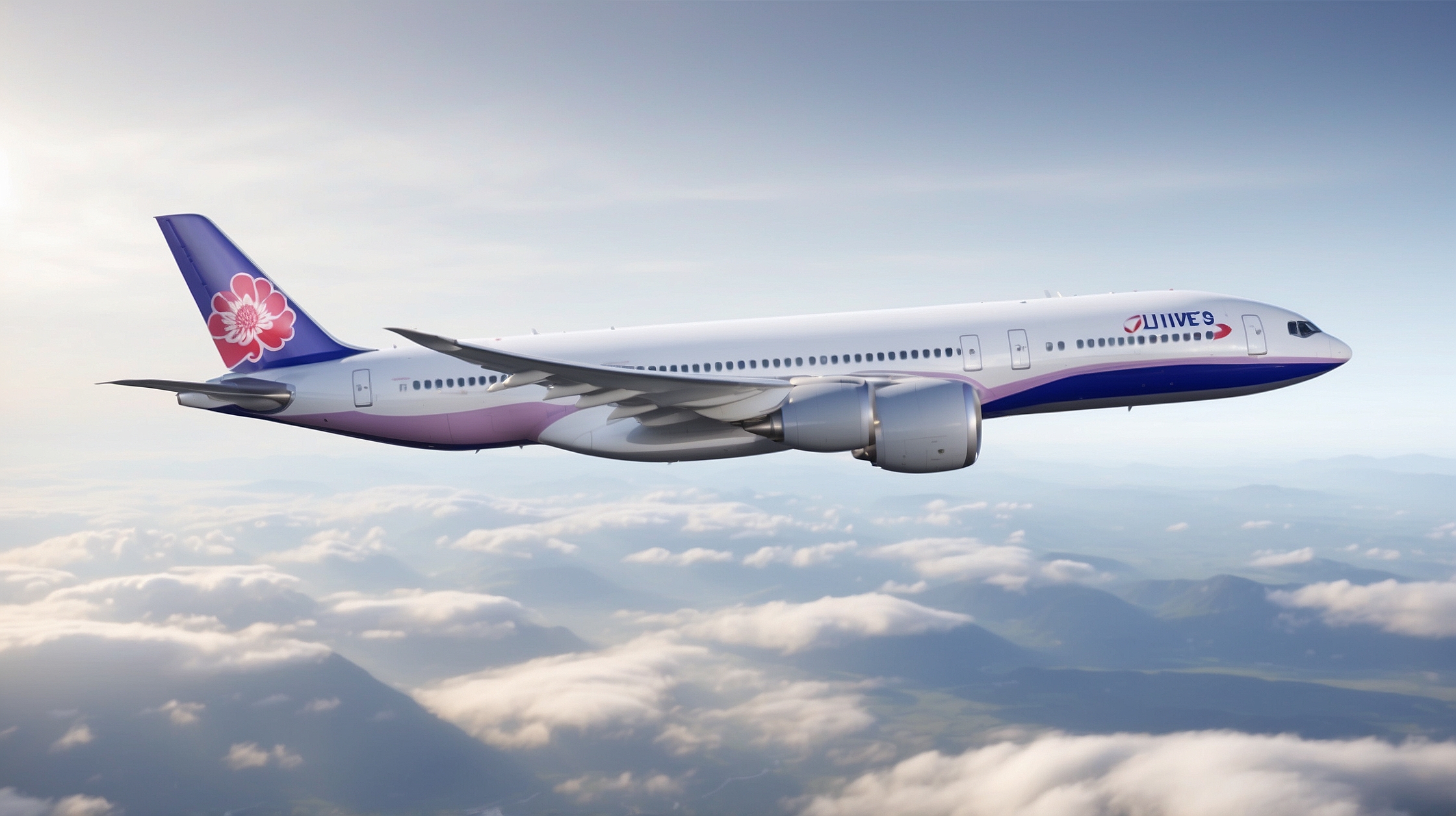
In a significant move poised to reshape regional aviation dynamics, **China Airlines** has deepened its investment in next-generation widebody aircraft with the acquisition of an additional five **Airbus A350-1000s**. The multibillion-dollar transaction cements the airline’s commitment toward sustainability, long-haul efficiency, and passenger comfort—placing China Airlines in a commanding position within the fiercely competitive Asian airline market.
The bold fleet expansion, valued at up to **one billion euros**, brings China Airlines’ total order for A350 aircraft to 22, as it seeks to replace aging fleets and bolster international route capacity. But this deal extends beyond numbers. It demonstrates a strategic pivot toward greener operations and underscores Taiwan’s ambition to be a premier long-haul transit hub amid shifting global travel patterns and economic recoveries post-pandemic.
With new-generation aircraft promising enhanced fuel efficiency, lower emissions, and superior range, China Airlines is making a bet not just on the success of the A350, but on capturing a larger share of long-haul traffic, particularly to Europe and North America. For Airbus, the deal further validates the demand surge for its flagship long-range aircraft in Asia, one of its most important markets.
Key details from the China Airlines–Airbus A350 deal
| Airline | China Airlines |
| Aircraft Model | Airbus A350-1000 |
| Number of New Aircraft Ordered | 5 |
| Total A350 Orders by China Airlines | 22 (17 A350-900 + 5 A350-1000) |
| Deal Value | Up to €1 billion |
| Main Objective | Fleet modernization and sustainability |
| Delivery Timeline | Starting 2026 |
What changed this year
The new aircraft purchase represents the next phase in China Airlines’ post-pandemic recovery and transformation strategy. After a turbulent few years marked by global travel restrictions and reduced demand, the Taiwanese carrier is surging forward with a clear vision: **reduce operational costs**, **cut carbon emissions**, and **enhance international competitiveness**.
With air travel demand returning across key long-haul corridors—especially in Europe and North America—the airline is optimizing its fleet with the latest aerospace innovations. The A350-1000 model offers not only wider cabins but also 25% better fuel efficiency compared to previous generation aircraft. This year, these advantages have become essential for any carrier focused on sustainability, customer satisfaction, and commercial viability.
Why the Airbus A350-1000 fits the airline’s long-term vision
The **Airbus A350-1000** is currently among the most advanced widebody aircraft in the world. Designed for ultra-long-haul travel, it combines modern composite materials, aerodynamic efficiency, and state-of-the-art Rolls-Royce Trent XWB engines to deliver unmatched performance. For China Airlines, the specific choice of the **A350-1000**—as opposed to smaller A330neo or even the A350-900—speaks volumes about its growth aspirations.
This aircraft allows airlines to fly farther with more passengers while consuming less fuel per seat. For China Airlines, this translates to reduced emissions, a stronger ESG (environmental, social, governance) profile, and improved fleet commonality with their existing A350-900 aircraft—simplifying pilot training and maintenance logistics.
“The A350-1000 supports our enhanced service goals while delivering on environmental promises”—
China Airlines spokesperson
Global impacts and strategic implications
China Airlines’ move may kickstart a broader trend among Asian carriers to prioritize **ultra-efficient widebodies** amid growing consumer expectations for greener travel and rising fuel costs. With the **global aircraft supply chain gradually stabilizing**, orders of this magnitude also carry economic impact beyond aviation.
For Airbus, the 5-plane deal reinforces its hold on the premium long-range market, especially as Boeing contends with production delays in its 777X and 787 families. Airbus’ backlog now includes hundreds of A350s bound for Asian airlines, pointing to the region’s crucial role in driving demand through the decade.
“Asia continues to be at the forefront of widebody innovation. China Airlines’ decision reinforces Airbus’s value proposition for both reliability and efficiency.”
— Aviation Analyst (placeholder)
How this will improve passenger experience
Passengers flying aboard the A350-1000 will soon notice significant improvements. The aircraft’s **wider cabin layout** allows for increased aisle space and potentially quieter inflight environments thanks to **lower cabin altitude** and advanced ventilation systems. The aircraft is also designed for better humidity control and reduced jet lag—an important feature for Taiwan-based travelers journeying across the Pacific or into Europe.
Other features include next-generation Wi-Fi systems, **modern in-flight entertainment**, and more spacious overhead compartments. These upgrades are key differentiators in an increasingly competitive premium travel market, especially for business and long-haul sectors.
“Passenger comfort is the new battleground for top-tier airlines. The A350 gives airlines serious leverage.”
— Travel Technology Expert (placeholder)
Which routes and markets will benefit most
Although the airline has yet to finalize the new aircraft deployment plans, industry expectations point to the **trans-Pacific** and **European long-haul** markets as the most likely beneficiaries. Cities such as **Los Angeles**, **San Francisco**, **Frankfurt**, and **London** are top contenders for the new A350-1000s given their length and high passenger demand.
Taiwan is steadily positioning itself as a key **regional gateway** for Asia-bound travelers, and China Airlines is capitalizing on this with a renewed long-haul focus. The A350-1000 will allow it to expand frequencies, increase payloads, or even introduce new routes that were previously not viable with older aircraft types.
Winners and losers of the new Airbus deal
| Winners | Losers |
|---|---|
| China Airlines (modernization) | Boeing (lost potential order) |
| Airbus (expanded market share) | Older aircraft models (retired sooner) |
| Passengers (improved comfort) | Competing airlines with outdated fleets |
Outlook for Taiwan’s aviation sector
Taiwan’s aviation strategy has always been careful and deliberate. With geopolitical uncertainty and economic pressures from freight volatility, airlines must be agile and future-focused. The A350-1000 gives China Airlines the **flexibility and resilience** required to thrive through 2030 and beyond.
Moreover, as Taiwan continues to emerge as a leading player in global technologies like semiconductors and green energy, a strong aviation infrastructure complements its logistical ambitions. The move by China Airlines symbolizes not only a renewal of its fleet but a signal of national economic resilience.
“This isn’t just about planes. It’s about strategy, sustainability, and survival in a new global order.”
— Professor Lee, Aviation Strategy, National Taiwan University
Frequently Asked Questions
What model of aircraft did China Airlines order?
China Airlines ordered five Airbus A350-1000 aircraft to complement and expand its existing fleet of A350-900s.
What is the value of the deal between China Airlines and Airbus?
The deal is estimated to be worth up to one billion euros for the five additional aircraft.
When will China Airlines begin receiving the A350-1000s?
Aircraft deliveries are expected to begin around 2026, although precise dates could shift based on production timelines.
Why did China Airlines choose the A350-1000 over other widebody aircraft?
The A350-1000 offers enhanced fuel efficiency, increased capacity, and extended range, making it ideal for long-haul destinations with high passenger loads.
Which destinations might benefit from the new aircraft?
Key international routes, particularly across the Pacific and Europe (such as to Los Angeles and Frankfurt), are the most likely to see these aircraft in service.
How does this deal affect Boeing?
Boeing loses an opportunity to place its 787 or 777X models, especially as more Asian carriers turn to Airbus for fleet upgrades.
Will the new aircraft be more environmentally friendly?
Yes. The A350-1000 burns approximately 25% less fuel per seat and emits fewer greenhouse gases compared to previous generation aircraft.
Does this signify a trend for Asia-Pacific airlines?
Yes, many regional carriers are focused on modernizing their fleets with advanced, sustainable aircraft to meet both regulatory and passenger expectations.