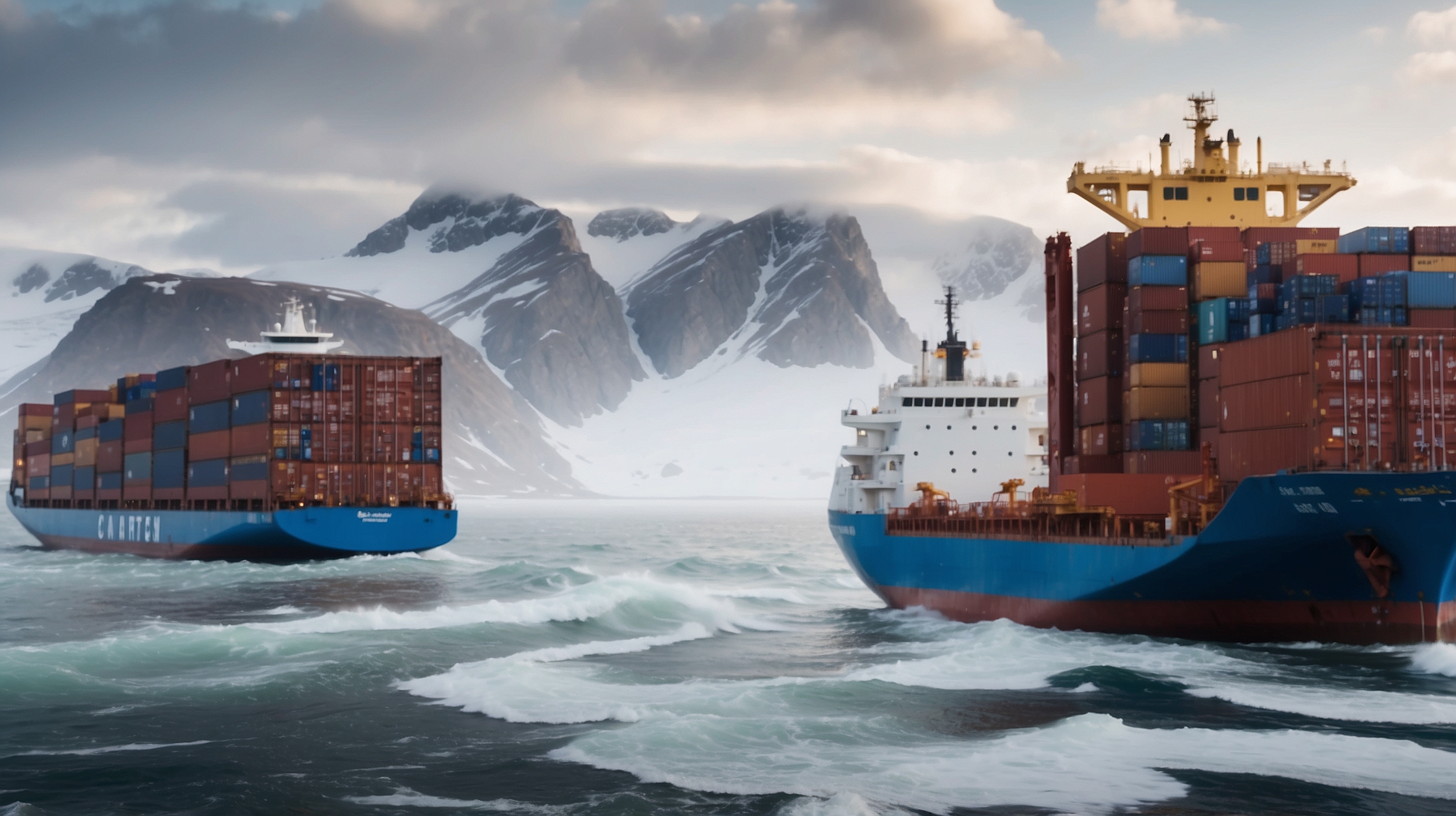
In the frigid silence above the Arctic Circle, a new route is thawing into global focus. Carved by melting ice and driven by geopolitical ambition, this once-forgotten corridor is now humming with life—life made possible by China’s aggressive expansion into Arctic maritime shipping. Where ships once feared impassable conditions and economic futility, **China now sees opportunity: a shortcut to Europe, a symbol of resilience, and a testing ground for future dominance in global logistics**.
In 2023, China shattered expectations by completing 14 full-container voyages through the Arctic’s **Northern Sea Route (NSR)**. With eyes set on even greater ambitions for 2025, Beijing’s gamble may be reshaping not only Arctic geopolitics but also the future of international trade. The West may have turned its back on the route, citing instability and environmental concerns. China, on the other hand, has leaned in—with icebreakers, container ships, and a strategic forecast that’s years in the making.
This transition didn’t happen overnight. It is a culmination of climatological shifts, savvy state investment, and logistical necessity. But it’s also a bold statement: **while the world hesitated at the icy edge, China shoved full steam ahead.**
How China’s Arctic effort is reshaping trade routes
| Metric | Details |
|---|---|
| Route Name | Northern Sea Route (NSR) |
| 2023 Achievements | 14 full-container voyages successfully completed |
| 2025 Projection | Further expansion of NSR voyages and port connectivity |
| Key Advantage | 40% shorter than the Suez Canal path between Asia and Europe |
| Major Stakeholders | China COSCO Shipping Corporation, Chinese authorities, Russian Arctic ports |
Why the Northern Sea Route matters now more than ever
The Arctic was once considered too hostile for viable maritime traffic. But as **climate change dramatically reduces sea ice coverage**, the NSR is becoming increasingly navigable during summer months. It offers a path from China to Europe that is about **40% shorter than traditional routes through the Suez Canal**. That translates into **less fuel, quicker turnaround, and lower emissions per ton of cargo**—a logistical nirvana in an industry forever chasing tighter margins.
With Western shipping companies temporarily shunning the NSR due to its unpredictable politics and environmental uncertainties, **China has stepped into the vacuum**. The moves aren’t just economically savvy—they’re geopolitically loaded. By building out this Arctic corridor, China is tightening relations with Russia and strengthening its long-term Belt and Road Initiative’s maritime node, dubbed the “Polar Silk Road.”
“The Northern Sea Route is no longer just a concept—it’s an operational reality.”
— Xu Lirong, Chairman, China COSCO Shipping Corporation
What changed this year
In 2023, the number of container voyages using the NSR surged to 14 from virtually none just years prior. All ships flying Chinese flags or operated by China COSCO successfully charted these complex waters. These were more than test runs—**they were fully commercial operations**, carrying goods between Chinese and European ports using a route many considered dormant or dangerous.
Several technological and operational advancements enabled this development:
- Modern Ice-class container ships designed to withstand Arctic conditions.
- Real-time satellite navigation for route safety and efficiency.
- Close cooperation with **Russian port authorities** and infrastructure at Arctic hubs.
With the Russia-Ukraine war limiting the West’s engagement in Siberian infrastructure, **China has seized the initiative**, funneling investment and coordinating schedules to avoid port congestion and seasonal sea freezing.
Who’s gaining and who’s losing
| Winners | Losers |
|---|---|
| China’s shipping sector, Russia’s Arctic ports, Polar Silk Road proponents | Western maritime operators, traditional Suez Canal routes, climate activists |
By grabbing early-mover advantage in NSR logistics, **China is setting new benchmarks** for Arctic shipping volume. Its decades-long investments in ship construction, polar research, and maritime insurance are now paying off.
Conversely, European and American shipping giants that once explored the NSR have pulled back, citing **regulatory penalties**, **environmental backlash**, and uncertainty stemming from the Ukraine conflict. That vacuum is proving lucrative for Chinese carriers who face **less public scrutiny domestically** and are increasingly insulated from Western financial pressures.
How Russia and China teamed up strategically
Russia remains the formal administrator of the NSR, and as such, no foreign ship can use the corridor without **full clearance and support from Moscow**. Since its fallout with the West due to ongoing sanctions, **Russia has turned almost exclusively to China** to make economic use of its Arctic coast. This bilateral cooperation has led to:
- Faster customs clearance in Russian Arctic ports.
- Joint icebreaker assistance for dangerous segments of the NSR.
- Infrastructure development funded by **Chinese bank loans and engineering consultants**.
“We’ve entered a new phase of Sino-Russian Arctic coordination, where our mutual goals align more than ever.”
— Professor Liu Hong, Polar Strategy Expert, Harbin Engineering University
Why Western companies are backing off
While China accelerates, **Western entities have virtually retreated** from the NSR due to a confluence of factors:
- Sanctions on Russia severely limit port cooperation.
- Growing environmental pressure to avoid high-risk Arctic navigation.
- Insurance premiums remain too high for the route to be commercially viable at scale.
That said, critics argue that **vacating this space provides China with unchecked influence** in a region rich not just in shipping value—but also untapped oil, gas, and mineral resources. Long-term environmentalists worry that increased Arctic shipping could **escalate ecological fragility**, while creating irreversible pathways for trade that further enable dependency on fossil corridors.
Looking to 2025 and beyond
All eyes are now set on 2025, a year when COSCO projects an even larger number of container ship expeditions through the NSR. **China aims not just to conduct these voyages—but to normalize them.** Future plans indicate:
- Expanded use of **autonomous ice-navigation systems** for safer travel.
- Development of “Arctic logistics hubs” in key Russian cities like Murmansk and Arkhangelsk.
- Improved coordination with Euro-Asian rail systems for last-mile delivery inland.
What was once viewed as a fringe route for nuclear icebreakers and military surveillance will soon become a **mainstream international shipping lane**, if China has its way. Though geopolitical risk remains high, the NSR’s **strategic and economic potential is undeniable**.
“In a few short years, we’ve gone from theory to benchmarked results. The Northern Sea Route will become a global logistics artery.”
— Wu Jiyan, Director, Institute of Polar Policy Research (Placeholder)
Frequently Asked Questions about China’s Northern Sea Route Strategy
What is the Northern Sea Route?
The Northern Sea Route (NSR) is a shipping corridor along the Russian Arctic coast. It connects the Kara Sea to the Bering Strait, offering a shortcut between East Asia and Northern Europe.
Why did China start using the NSR more actively?
China increased usage of the NSR because it offers a shorter transit option for exports to Europe, reduces fuel consumption, and aligns with its Polar Silk Road strategy.
Is the NSR safe for year-round use?
Currently, the NSR is navigable for a limited period during the summer months. Harsh ice conditions still make winter transit risky, requiring specialized icebreaker assistance.
How does this impact the Suez Canal route?
In the long term, increased NSR activity may divert traffic from the Suez Canal, particularly for time-sensitive cargo headed between East Asia and northern Europe.
Are western companies likely to return to the NSR?
Not in the short term. Regulatory, environmental, and political concerns have made the NSR a high-risk proposition for Western shipping operators.
What role does Russia play in this development?
Russia administers the NSR and provides port logistics, customs, and icebreaker support. It has partnered closely with China to leverage Arctic trade opportunities.
Are there environmental risks involved?
Yes. Increased shipping through the Arctic can disrupt fragile ecosystems, increase pollution, and contribute to accelerated ice degradation in the region.
What is the Polar Silk Road?
The Polar Silk Road is a Chinese-led initiative under the Belt and Road framework that aims to develop Arctic trade routes, particularly through the NSR, as part of a global logistics network.