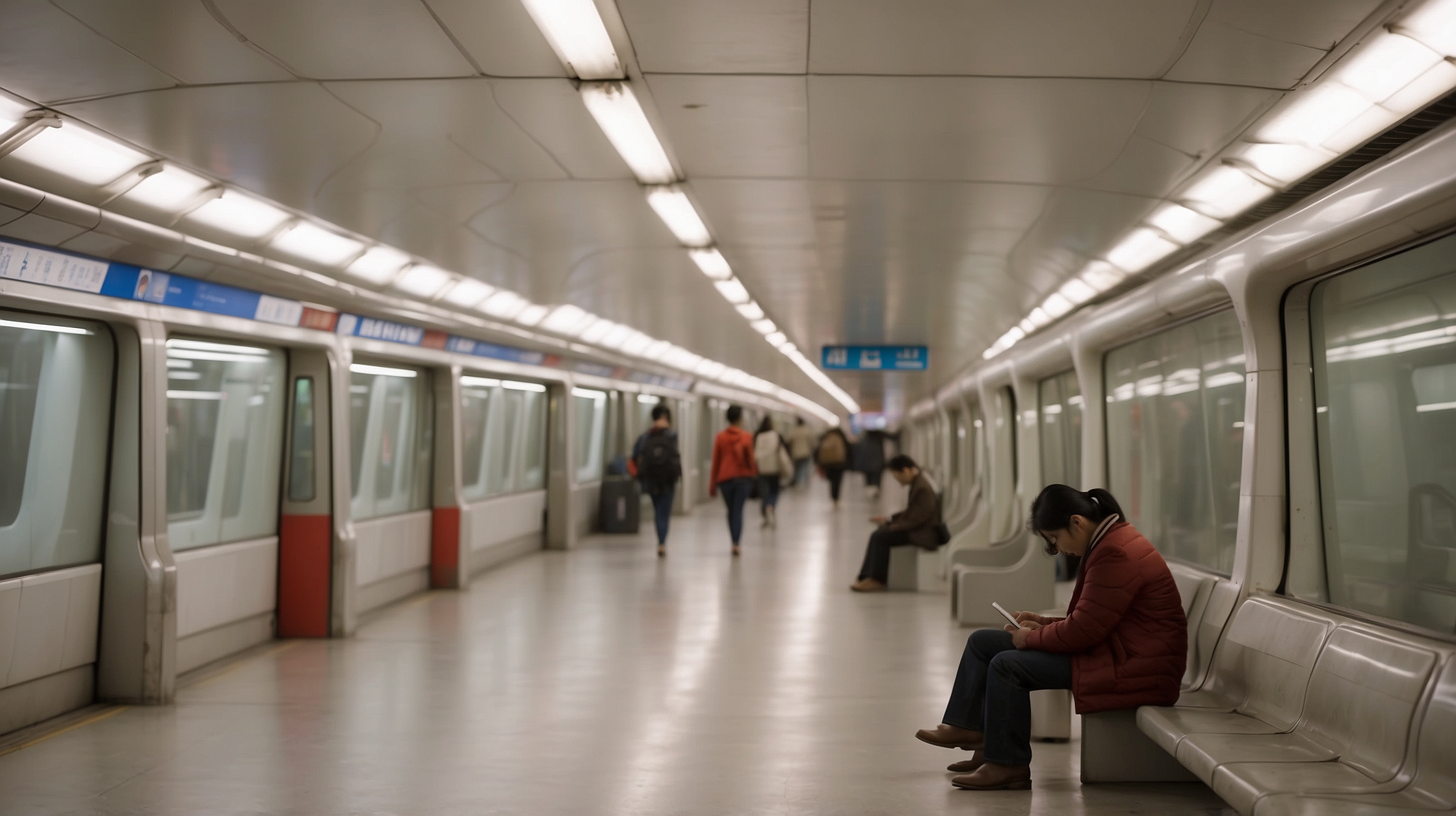
In the late 2000s, as China’s urbanization push soared to new heights, a curious phenomenon began capturing the attention of both domestic citizens and foreign observers alike. Shimmering new metro stations — outfitted with advanced infrastructure — seemed to rise from the dust in places that had little more than flat farmland or sparse trees. No cities, no roads, no homes. Just pristine platforms and glass-wrapped entryways in the apparent “middle of nowhere.”
Critics and skeptics scoffed. Why build multimillion-dollar subway stations where not a soul lived? The images became fodder for social media ridicule and think pieces abroad. The common refrain was simple: “What is China thinking?” It felt reckless, even delusional. But 10, 15 years later, we finally see what seemed invisible to many then. The stations weren’t misplaced. They were milestones planted along a long-term vision of **integrated urban expansion** that’s now paying off.
Let’s dive deeper into what once seemed like urban misjudgment and explore how these metro stations became key chess pieces in China’s grand development strategy.
China’s “metro stations in the desert” — a closer look
| Project Concept | Anticipatory metro stations in undeveloped areas |
|---|---|
| Initial Public Reaction | Skepticism, ridicule, confusion over necessity |
| Strategic Goal | Align urban transit with long-term urban planning |
| Timeframe for Development | 10–20 years post-construction |
| Outcome | Flourishing satellite towns and efficient commuting networks |
Why China planned ahead with “empty” metro stations
The rationale behind China’s strategy wasn’t as far-fetched as it appeared. The country’s **rapid urbanization** — with millions moving to cities annually — put immense pressure on major metros like Beijing, Shanghai, and Guangzhou. To ease this burden, the government began reshaping policies to encourage the development of satellite towns and new urban belts.
Building metro infrastructure ahead of population settlement ensured that transport wouldn’t be a bottleneck once residential and commercial projects began. To paraphrase an urban strategy official, “If you wait until people arrive, it’s already too late.”
We had to build for the people who hadn’t arrived yet — our job was to make sure they had a way in and out the moment they made the move.
— Wei Long, Urban Planning Advisor, Chengdu Metro Expansion Team
This foresight is rooted in China’s tradition of state-backed master plans. Unlike in many world cities where transit follows development, China flipped that model — with transit laying claim to what would soon become residential zones.
The 2008 initiatives that confused the world
It began with metro expansions in cities like Chengdu, Zhengzhou, and Wuhan. Vast financial investments went into networks pushing deep into undeveloped zones. Some stations stood in isolation — surrounded by open fields with no occupants in sight. International observers questioned the **economic wisdom** of these choices, wondering whether valuable resources were being squandered in vanity projects.
Chinese authorities, however, stayed mum — confident that their gamble aligned with longer-term priorities. Land acquisition became easier in less populated zones, and developers snapped up opportunities, knowing transport was guaranteed upfront. This changed the game over the next decade.
What changed in the 2010s that proved the critics wrong
Fast forward to the late 2010s, and the early-stage “ghost stations” were now surrounded by growing communities, schools, hospitals, and shopping complexes. Cities like Chengdu and Hangzhou had blossoming neighborhoods where only farmland existed in 2008. Metro stations ensured immediate connectivity, thereby **accelerating settlement** and **drawing businesses** faster than conventional urban sprawl.
These stations effectively forecasted urban gravity — they pulled in infrastructure rather than chasing it. That model changes how we think of urban planning.
— Professor Jian Li, Urban Development Scholar, Zhejiang University
Several metro stations that once served zero daily passengers now record tens of thousands of entries per day. Instead of building roads first, metro-first planning became a hallmark of **efficient, high-density development**. The result: reduced congestion, smarter land use, and reduced environmental pressure from car dependency.
Winners and losers from anticipatory transit planning
| Winners | Why They Benefited |
|---|---|
| Real estate developers | Gained early transit access that improved selling value and demand. |
| Young homebuyers | New affordable housing zones with metro access gave them viable options outside expensive city cores. |
| Urban commuters | Metro-first planning provided reliable and fast transport from emerging communities. |
| Losers | Why They Were Affected |
| Small rural landholders | Faced displacement or undercompensation during land acquisitions for new development. |
| Competing second-tier cities | Struggled to attract populations without such transit-oriented development strategies. |
What this model means for mega cities worldwide
China’s metro-first urban expansion model could offer a fresh blueprint for cities grappling with overcrowding and unaffordable housing. Instead of letting population pressure dictate infrastructure, the strategy flips the sequenced script — betting that **building connective tissue first** can organically draw arteries and lifeblood around it.
While only some countries have the centralized authority or financial scope to pursue such a model, the principle remains enlightening for city planners: view transportation not as a support tool, but as a growth magnet. Success in China suggests that **anticipatory infrastructure investment** has long-term dividends that far surpass short-term skepticism.
Is this level of foresight replicable elsewhere?
Not every country can plan a 10–20 year urban project and keep political and fiscal alignment. China’s unique governance model and strong mortgage of land development rights allowed such concentrated execution. Still, the **takeaway lesson** is clear: waiting until there’s demand may delay your chances of shaping it effectively.
“Ghost stations” taught skeptics around the world that it may be wiser to build for tomorrow, not just today.
Urban growth doesn’t just need guidance — it needs infrastructure to light the path before anyone takes the first step.
— Lin Yao, Lead Architect, Guiyang Metro Authority
Short FAQs on China’s early metro station planning
Why were metro stations built in undeveloped areas?
They were part of a long-term plan to prepare infrastructure for eventual residential and commercial growth.
Did these isolated stations eventually get used?
Yes. By the late 2010s and early 2020s, many of the once-deserted stations became hubs in new neighborhoods.
Were these projects considered financially wasteful?
Initially, some thought so. But over time, as ridership and land values grew, their cost-effectiveness improved significantly.
How long did it take for development to catch up with the metro lines?
Typically 8–15 years after station construction, development began to blossom significantly around them.
Did this strategy help reduce urban congestion?
Yes. It created alternatives to main urban cores, distributing populations more evenly across newly connected zones.
Can this planning model be used in Western cities?
Not easily, due to different political, financial, and urban zoning frameworks — but elements of the concept can inspire better future planning.
What industries benefited most from this transport-first strategy?
Real estate, construction, urban tech services, and local retail were all major beneficiaries.
What’s the main lesson for modern city planners?
That infrastructure can be a proactive tool, not just a reactive one — a catalyst for growth, not just a response to it.