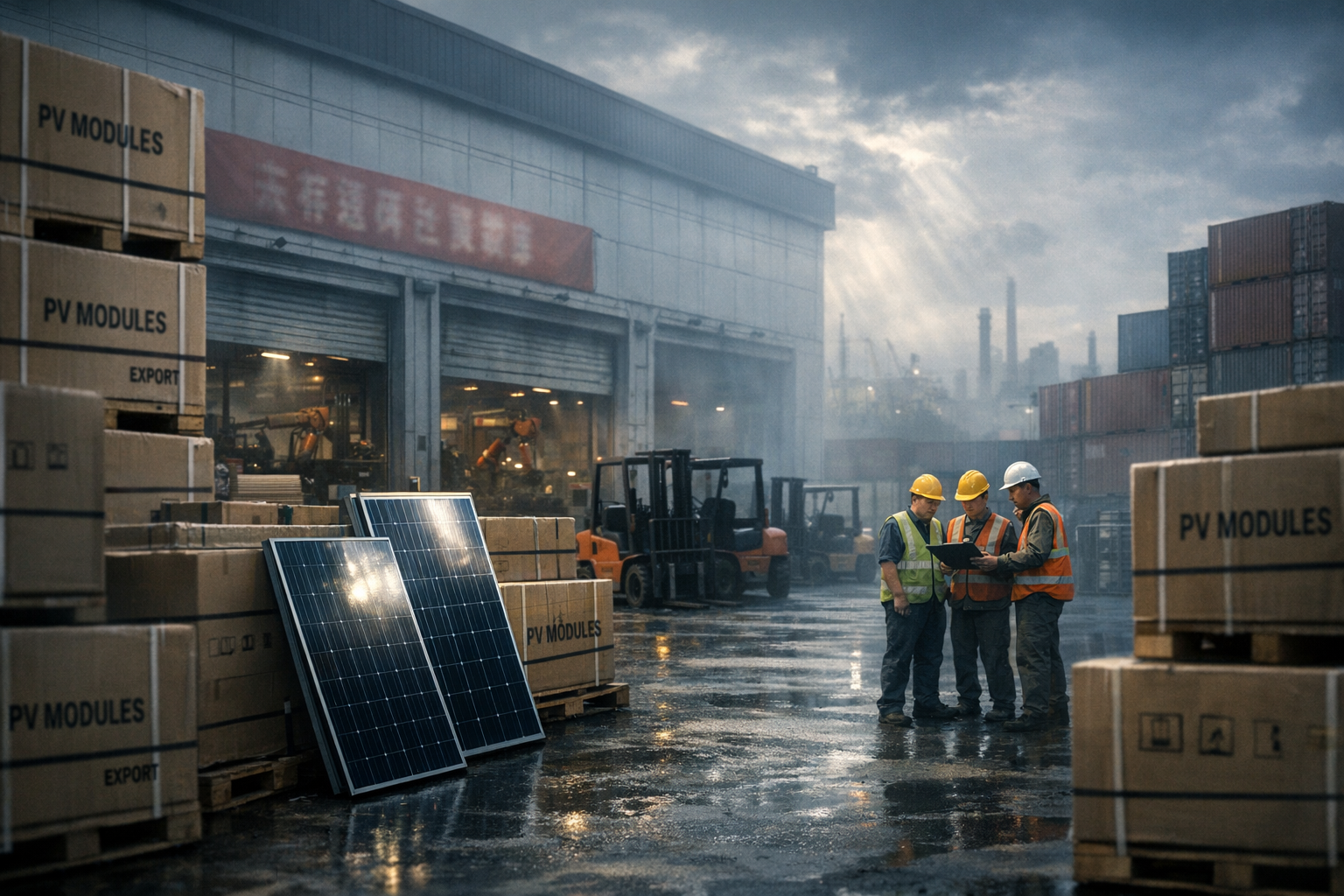
In less than two decades, China went from a minor participant in the solar energy industry to the undisputed global powerhouse. Spurred by ambitious green policies, massive government subsidies, and immense economies of scale, Chinese manufacturers flooded the global market with inexpensive solar panels—dropping the price dramatically and speeding up the adoption of renewable energy around the world.
But that same overwhelming force has now become a potential liability. An aggressive expansion strategy has led to a glut in the solar panel supply chain, pressuring prices to unsustainable lows and forcing even Chinese firms to consider scaling back operations. In a twist of irony, the country that helped bring down worldwide solar panel costs now faces the risk of a market collapse caused by its own overproduction.
What lies ahead for China’s solar industry could reshape the future of global energy. As nations push urgently toward carbon neutrality, the survival of solar manufacturing giants and the viability of the supply chain has become a global concern. China is now weighing drastic steps, including government intervention and factory shutdowns, to stabilize the sector it once revolutionized.
What led to China’s solar manufacturing dominance
| Factor | Description |
|---|---|
| Subsidies | Massive government support helped ramp up production and keep costs low. |
| Scale | China scaled manufacturing far beyond competitors, lowering per-unit costs. |
| Technology Transfer | Access to foreign IP and partnerships allowed quick technical improvements. |
| Global Demand | Countries rushed to install solar, creating long-term consistent demand. |
| Export Strategy | A deliberate push to supply global markets and hold dominant share. |
During the early 2010s, Chinese producers like LONGi, Jinko Solar, and Trina Solar surged past competitors by massively investing in polysilicon manufacturing, wafering, and panel assembly capacity. The end result was a steep drop in solar panel prices globally—over 80% reduction between 2010 and 2020. This made solar more accessible across continents, from Europe to Africa, and not just in wealthy countries.
This expansion wasn’t accidental. It was highly systematic, driven by national policies such as “Made in China 2025”, which prioritized renewable energy technologies as a core economic pillar. State banks made financing available for solar production lines. Provinces competed to host mega-factories, and a hyper-efficient supply chain emerged.
What changed this year
While solar demand continues to grow, particularly from the United States, India, and Southeast Asia, in 2023 and 2024, the sheer volume of panels being produced far outpaces current installation capacity. This has created a massive overcapacity issue. Prices for solar modules tumbled by over 40% within a year, reaching some of the lowest points in history.
Market leader LONGi has reported drastic profit contractions, and other major manufacturers are experiencing record-low margins. Several smaller players have already closed shop or paused expansion plans. The outburst of production was largely fueled by cheap credit and municipal policies encouraging local industrial growth—which ironically put the entire industry at risk.
To put it into perspective, China now produces enough panels to meet over twice the global demand. While having extra capacity allows price competitiveness, it also risks triggering bankruptcies, layoffs, and sector instability if not checked.
“We are seeing the consequences of over-success… the solar industry grew too fast, and now it has to retrench before it collapses.”
— Placeholder Expert, Renewable Energy Analyst
Beijing’s response and possible interventions
Even as China champions clean energy globally, stability of its solar industry is an economic imperative. Beijing is reportedly considering policy options such as:
- Shuttering underperforming factories
- Implementing quotas for production volumes
- Encouraging mergers to consolidate supply
- Shifting focus to high-efficiency panels with better margins
The Ministry of Industry and Information Technology (MIIT) is reportedly developing guidelines to reduce low-end duplication and redirect resources toward innovation. By focusing on next-generation products like N-type panels and perovskite technologies, the sector might stabilize by climbing up the value chain rather than overproducing standard modules.
“Market discipline alone won’t fix this—China must now manage an orderly slowdown while preserving future competitiveness.”
— Placeholder Expert, Solar Industry Economist
Who gains and who loses from this shift
| Winners | Losers |
|---|---|
| Installers in developing markets (cheaper modules) | Small solar manufacturers in China |
| Export-heavy competitors (India, U.S., EU) | Chinese provincial economies dependent on solar plants |
| Consumers (lower electricity prices) | Investors in struggling solar stocks |
| Tech innovators in solar efficiency | Legacy panel manufacturers with outdated lines |
Markets in developing countries, especially across Africa and Southeast Asia, may benefit from the plummeting prices in the short term. More affordable panels mean increased adoption, electrification, and lower energy costs. Similarly, solar installers across the world are grabbing the opportunity to deploy large-scale systems at reduced cost.
However, within China, the outlook is more severe. Thousands of jobs in solar manufacturing are at risk. Provincial governments that have used solar investment to boost GDP may face economic stagnation. For international competitors, a more disciplined Chinese market could level the playing field, particularly in regions implementing anti-dumping tariffs.
The road ahead for solar energy
The global mission to achieve net-zero emissions by mid-century relies heavily on solar energy. According to various projections, solar power could make up 30% or more of global electricity by 2050. For that to happen, the manufacturing base—most of which sits in China—needs to be both resilient and economically sustainable.
Some experts argue that what’s happening now is a “correction,” rather than a catastrophe. Industry cycles aren’t new, and similar patterns have played out in technology sectors before. Once the excess capacity is absorbed or closed, prices may stabilize, innovation will resume, and supply chains will mature.
But for the short term, the fear of an unmanaged collapse looms. If major players fail and local economies face shocks, China may be forced to nationalize part of the industry or redesign its five-year plans around slower solar growth.
Frequently asked questions
Why did China overproduce solar panels?
Driven by government incentives and high global demand, Chinese manufacturers aggressively expanded capacity, resulting in an oversupply far exceeding installation rates.
How has solar panel pricing changed recently?
Prices for solar modules dropped by over 40% in the past year due to oversupply, making them more affordable globally but hurting manufacturers’ margins.
Will this affect global solar adoption?
In the short term, cheaper panels may boost installations globally, especially in developing nations. But long-term instability in supply could create uncertainty.
What actions is the Chinese government taking?
Beijing is considering limiting production, shutting older factories, and promoting industry consolidation to stabilize the solar manufacturing sector.
Which companies are most at risk?
Smaller and less technologically advanced solar firms in China are most vulnerable due to their inability to compete on per-unit cost and efficiency.
Is solar energy still a smart investment?
Yes, solar remains crucial to global energy transition, but investors are advised to focus on companies with strong technology leadership and diversified markets.
Could other countries benefit from this situation?
Yes, nations like India and the U.S. might gain an advantage as competition from China softens, enabling local producers to scale without drastic underpricing.