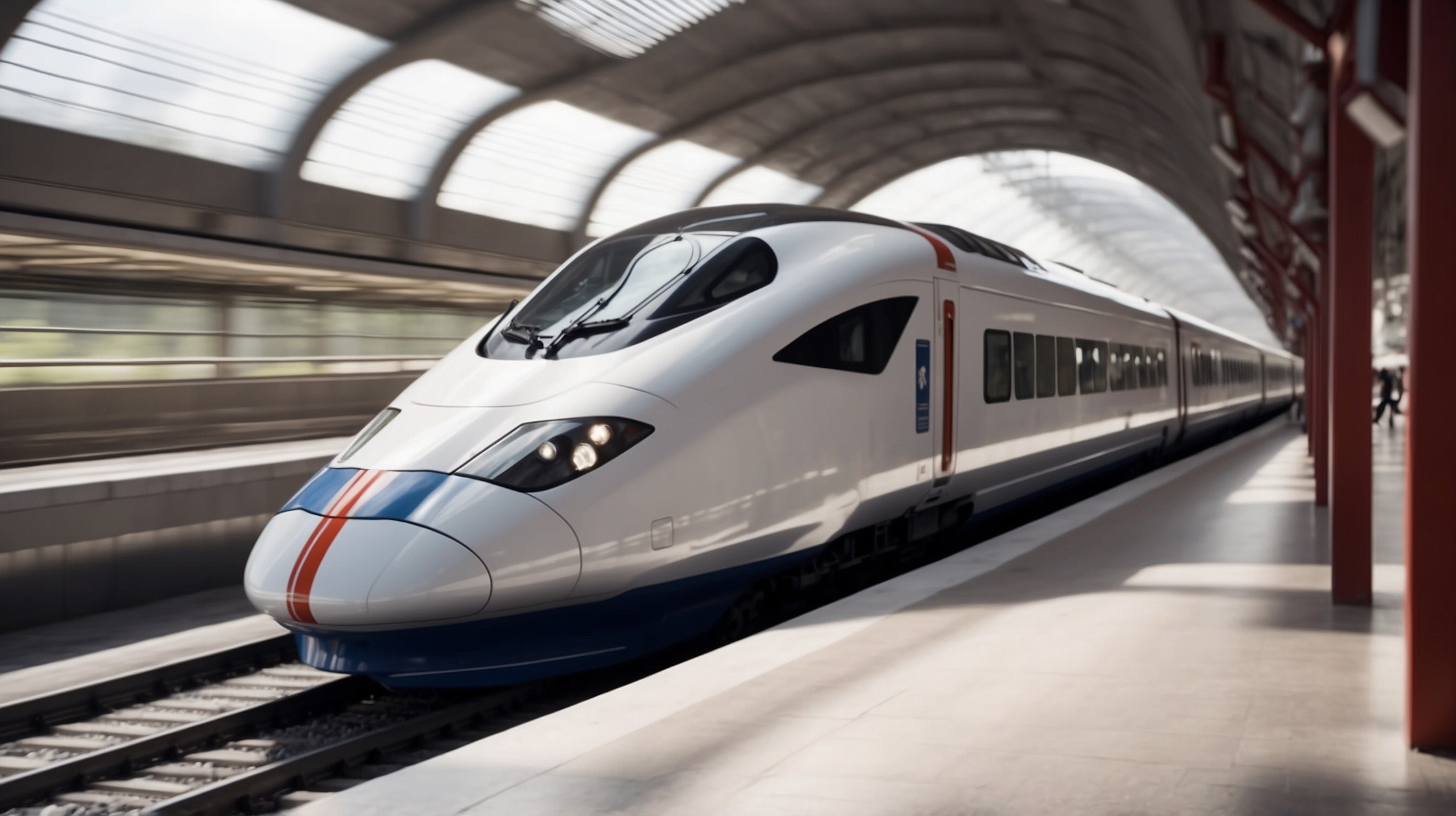
A thunderous surge of mechanical precision races across the vast landscapes of China. It glides so smoothly, so silently, that one could almost forget they were aboard a technological marvel — not just a high-speed train, but a symbol of China’s mounting engineering prowess. This is the CR450, China’s latest answer to the challenge of defining the future of transport. With its gleaming frame and futuristic capabilities, it’s not just another rail innovation; it’s set to push the boundaries of what high-speed travel means in the 21st century.
From the very land that previously relied on imported train technologies, the tables have dramatically turned. The CR450 represents a new generation of ultra-high-speed trains that aims to rival — and potentially outperform — the legendary French TGV. As its name begins to write itself into the annals of rail transportation history, what makes this train so special, and why is the world watching?
This breakthrough didn’t come overnight. Years of engineering refinement, groundbreaking research, and a bold vision for national mobility all coalesced in a project aiming beyond just beating records. The CR450 is a testament to what is possible when a country concentrates its resources on leading where others once dominated.
Key highlights of the CR450 and how it compares
| Feature | CR450 | French TGV |
|---|---|---|
| Top Speed (Test Mode) | 453 km/h | 574.8 km/h (record, 2007) |
| Operational Speed | 400–450 km/h (projected) | 320 km/h (standard) |
| Power Consumption | Lower, due to lightweight materials and efficient design | Higher relative to speed |
| Passenger Comfort | Advanced noise reduction and stability | High but not CR450 level |
| Mass Production Readiness | Expected by 2025 | Already in operation for decades |
The story behind China’s rail dominance
Just two decades ago, China’s rail infrastructure lagged behind global leaders. With routes often congested and speeds modest at best, the vision of a domestic high-speed network seemed distant. But through meticulous planning and heavy state investment, China embarked on the world’s fastest expansion of rail infrastructure. Today, the country boasts the largest high-speed rail network, with over 40,000 kilometers in operation — and growing.
Technological independence became a strategic goal. Early developments focused on assimilating foreign train designs, notably from Germany, France, and Japan. But the rapid acquisition of knowledge eventually led to indigenous breakthroughs. The CR450 is the culmination of this transition, showcasing a 100% domestically developed train with world-beating potential.
This journey represents not just progress in engineering, but a cultural and economic shift. China’s rail sector serves as a microcosm of the country’s move from imitator to innovator, producer to pioneer.
What sets the CR450 apart from other high-speed trains
The first thing that stands out is obviously the **record-setting test speed** of 453 km/h. While not yet verified under commercial operating conditions, this speed brings the CR450 very close to the TGV’s long-standing record. But speed alone is not the only miracle of this train. Efficiency and passenger comfort matter just as much — and that’s where the CR450 excels.
The train features next-generation materials which drastically reduce weight, enhancing acceleration and braking abilities. Energy efficiency has been prioritized with smart technologies managing drag and electrical systems. According to engineers, its energy consumption is approximately 15% lower per kilometer than older models — a massive gain over time when scaled across thousands of trips.
From a rider’s perspective, innovations such as cabin pressure regulation, noise insulation systems, vibration absorption, and AI-driven on-board services place a premium on comfort. “It’s like flying business class without leaving the ground,” as one tester reportedly quipped.
Behind-the-scenes innovation and development strategy
Major innovations supporting the CR450’s development have involved collaborations across dozens of Chinese tech institutions. High-profile players like CRRC Corporation, the Chinese Academy of Railway Sciences, and hundreds of materials researchers have contributed. Together, they form a technological complex similar in intensity to a space program effort, underlining how central high-speed rail is to China’s national identity and export ambition.
“The CR450 is not just another high-speed train; it’s a symbol of what our independent innovation can deliver at the world stage.”
— Dr. Li Xunhua, Lead Engineer at CRRC (Placeholder Name)
What’s also notable is the plan to integrate these new-generation trains across several national routes connecting major population hubs. Scheduled for deployment in high-traffic corridors by 2025, the CR450 will replace older models and expand to new routes that prioritize urban economic zones.
Impact on global rail competition
The emergence of the CR450 could significantly alter the global balance in the train manufacturing and infrastructure sector. While Europe’s Alstom and Japan’s Hitachi have long been dominant, China’s CRRC now positions itself for export competition.
Countries in Southeast Asia, the Middle East, and even parts of Europe may now view Chinese rail tech as a viable — and possibly preferable — alternative, due to cost and competitive performance. This is especially critical as many developing nations seek turnkey infrastructure partners capable of delivering affordable long-distance transportation.
“We are witnessing a pivot point. Emerging nations are likely to see China’s high-speed technology not just as affordable but as superior.”
— Maria Conti, Infrastructure Analyst, World Transport Watch (Placeholder)
Challenges ahead for mass deployment
While the CR450 sets new bars in speed and efficiency, there remain considerable challenges in bringing it into full-scale operation. These include certification from safety bodies, adaptation of existing rail infrastructure to handle higher speeds, and public adoption. Any increase in routine operational speed must account for weather changes, maintenance schedules, and terrain adjustments.
Additionally, balancing high frequency with energy requirements and maintenance downtimes remains crucial. Track upgrades, signaling systems, and staff training must all evolve in tandem to realize the train’s potential as more than a tech showcase.
Possible winners and those left behind
| Winners | Losers |
|---|---|
| Chinese rail technology providers | Foreign rail manufacturers losing exclusivity |
| Passengers benefiting from faster, smoother rides | Older train models phased out earlier than planned |
| Developing countries seeking affordable high-tech solutions | Countries unable to invest in compatible track infrastructure |
Where we go from here
The CR450 is not just a marvel on rails — it’s a harbinger of a shifting global industrial axis. Whether or not it ultimately surpasses the TGV on every metric, it has already succeeded in redefining the capabilities and ambitions of modern transport. More importantly, it brings into focus the idea that innovation can scale — and that the next decade will be shaped by those bold enough to push boundaries.
As the world gears up for an era of hyper-connected cities and transnational infrastructure, the question is no longer whether high-speed rail is the future — but who will lead it. With the CR450, China has made its intentions unmistakably clear.
Frequently Asked Questions (FAQs)
What is the top speed of the CR450?
The CR450 achieved a peak test speed of 453 km/h, making it one of the fastest trains in history.
When will the CR450 be available for public use?
The CR450 is expected to enter commercial service by 2025, pending final tests and infrastructure readiness.
Is the CR450 faster than the French TGV?
While the TGV holds the absolute record (574.8 km/h), the CR450 is designed for consistent, efficient performance around 400–450 km/h, making it competitive in operational terms.
What makes the CR450 more energy efficient?
Advanced lightweight materials, aerodynamic design, and smart energy management systems contribute to its reduced power consumption.
Will the CR450 be sold to other countries?
Yes, China is positioning the CR450 for export. Several developing nations are potential buyers due to its cost-benefit profile.
Is the CR450 fully made in China?
Yes, the CR450 is a product of complete domestic innovation, signaling China’s exit from reliance on imported train designs.
How does the CR450 impact passenger comfort?
Key design features include vibration control, low-noise cabins, and AI-based onboard services to enhance the travel experience.