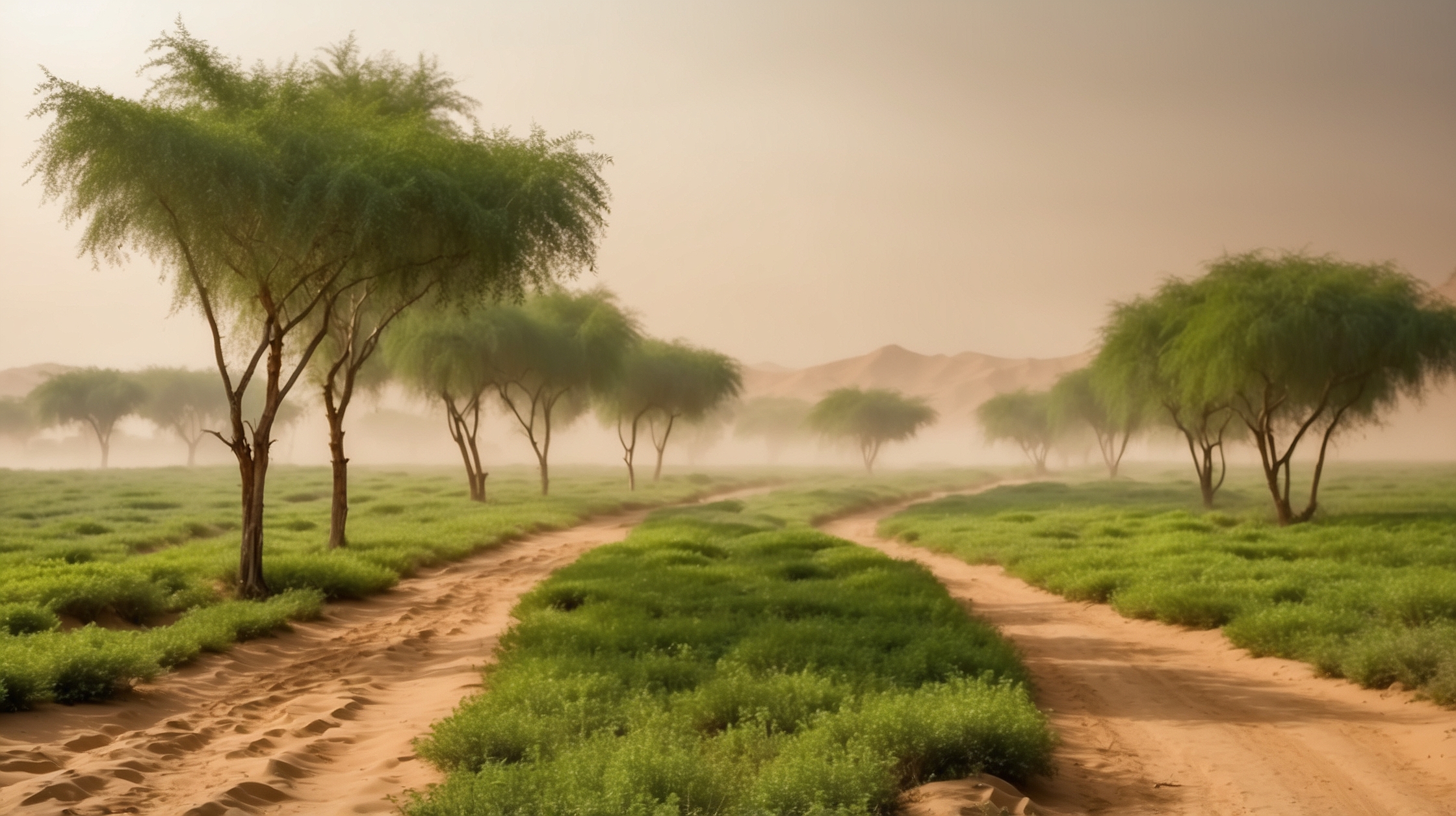
In the vast, wind-scoured deserts of northern China, a quiet revolution is taking root—quite literally. Once characterized by sandstorms and barren land, these regions are now the frontline of one of the largest ecological restoration efforts in modern history: **China’s Great Green Wall**. Over the past several decades, the country has been embroiled in an ambitious and at times controversial campaign to halt creeping desertification by planting billions of trees and vegetation across arid regions.
This endeavor, officially known as the **Three-North Shelter Forest Program**, stretches across more than 4,500 kilometers, spanning the provinces that make up China’s northernmost latitudes. Its mission is both ecological and geopolitical: to reclaim uninhabitable lands, protect farmland, reduce sandstorms that degrade air quality in urban centers like Beijing, and even influence environmental perceptions globally. What began as a battle against sand is now a symbol of a nation’s commitment to ecological transformation.
But does the Great Green Wall truly deliver on its promises? Critics have raised concerns about monoculture planting, water depletion, and long-term viability, while supporters tout green belts, improved air, and sustainability milestones. Let’s delve into the evolution of this colossal environmental project, examining its strategies, successes, setbacks, and future trajectory.
Key highlights about China’s Great Green Wall initiative
| Project name | Three-North Shelter Forest Program (Great Green Wall) |
| Launch year | 1978 |
| Target end year | 2050 |
| Geographic area covered | Over 4,500 kilometers across northern China |
| Main goal | Combat desertification and reduce impact of sandstorms |
| Trees planted | Over 66 billion trees as of 2023 |
| Total project budget | Over $8 billion (as of current estimates) |
What changed this year with the Great Green Wall
In 2023, the Chinese government announced reinvigorated efforts to shift from fast-paced tree planting to a more nuanced, sustainable ecological restoration. This includes planting **native species** more suited to local ecosystems instead of fast-growing but resource-intensive species. Authorities are integrating advanced technologies like satellite monitoring, AI-assisted reforestation planning, and community feedback loops to measure soil quality, tree survival rates, and climate impact.
This year also marked a significant review of data from previous decades. Many new findings suggest that **plant survival rates are lower than expected** in some regions due to poor species choices, monocultures, and desert conditions. Officials are now adjusting forestry strategies to incorporate more shrubs, grasslands, and drought-resistant plants, enabling **resilient ecosystems** rather than merely tree coverage.
The scale and ambition of the project
The Great Green Wall is unparalleled in its ambition. When complete, it is expected to cover more than 35 million hectares—an area nearly the size of Germany. The regions impacted include Inner Mongolia, Ningxia, Gansu, and the fringes of the Gobi and Taklamakan Deserts. Its economic footprint is likewise massive, with multi-billion dollar investments from both state and private sectors, all contributing to a long-term **vision of ecological security** and sustainable development.
“No other country has attempted ecological restoration on this scale and in such a complex geographic area. It’s a massive social experiment in terraforming.”
— Dr. Liu Cheng, Environmental Policy Expert, Beijing University
How desertification became a national threat
China houses some of the **largest expanses of desertification** in the world, with nearly 30% of its total land area vulnerable to desert expansion. By the 1970s, wind-blown sands from the Gobi Desert were impacting cities hundreds of miles away, darkening skies in Beijing and posing serious health and agricultural risks. The underlying causes were both environmental and anthropogenic: climate change, deforestation, overgrazing, and unsustainable farming practices.
Addressing this meant more than aesthetics or even environmentalism—it became a national imperative. The government sought to curtail these risks through what would become the **world’s largest afforestation campaign**, transforming not just land but governance, funding structures, and rural economies along with it.
Who are the winners and losers so far
| Winners | Losers |
|---|---|
| Rural and farming communities gaining employment through forestry programs | Natural grassland ecosystems disrupted by monoculture forests |
| Urban populations benefiting from cleaner air and reduced sandstorms | Water supplies strained by thirsty non-native tree species |
| Local wildlife where native forest cover is restored | Tree survival rate in arid zones remains low, wasting resources |
What the early results tell us
Studies show that the Great Green Wall has had **measurable success** in slowing the spread of deserts in targeted areas. Satellite imagery confirms reductions in the frequency and intensity of sandstorms, while regions like western Inner Mongolia have reported increases in vegetation cover by as much as 15%. However, these gains are not evenly distributed.
Notably, some regions have seen **low tree survival rates**, with estimates ranging from 15% to 40% in some zones. Planting species unsuited to the region’s arid climate has led to poorer long-term outcomes. Lessons from these zones have led authorities to revise strategies toward **localized ecological planning** rather than one-size-fits-all approaches.
The human element: local participation and rural empowerment
A key transformation in recent years has been the **integration of local communities** in the planning and implementation of afforestation. Villagers are recruited and trained in sustainable land management, earning income in areas previously marked by economic decline. This creates a dual benefit: economic uplift and long-term local stewardship of restored lands.
In areas like Ningxia, farmers have shifted to **agroforestry**, combining crops with tree planting to enhance productivity and counter erosion. These hybrid landscapes offer a model that balances ecology with livelihoods, showing that ecological security and human development can go hand in hand.
“Local engagement is no longer optional—it’s essential. People must become guardians of their own land.”
— Mei Yulan, Ecological Engineer, Ningxia Provincial Forestry Bureau
Scientific support and technology integration
The Chinese Academy of Forestry and national climate institutes have increasingly turned to **data analytics, AI models, and remote sensing** to assess real-time changes in forest cover and plan planting techniques. Drones are being used to reseed hard-to-reach desert areas, and computer models are helping predict which species will thrive in coming climate scenarios.
Artificial Intelligence has allowed better **species optimization strategies**, replacing fast-growing poplars with more suitable drought-tolerant varieties. Such changes have significantly improved survival and adaptability rates in marginal zones. Through these tools, China is digitizing not just cities—but ecosystems.
Looking ahead: goals for 2030 and beyond
With just over two decades until its slated completion in 2050, the Great Green Wall’s next major checkpoint arrives in 2030. The goals ahead include increasing the surviving forest coverage to 65% in designated desert regions and restoring more **wildlife biodiversity corridors** within green zones.
Future plans also involve **carbon sequestration** incentives, turning forested zones into valuable assets in China’s push for carbon neutrality by 2060. The afforestation zones will not only feed into national climate commitments but could eventually offer **carbon credits** and eco-tourism revenue streams, further embedding the Green Wall into the economic fabric of the region.
Frequently asked questions about China’s Great Green Wall
What is the main goal of the Great Green Wall?
The primary goal is to combat desertification, reduce sandstorms, and restore ecological balance in northern China through large-scale tree planting and land rehabilitation.
When did the project begin?
The project officially commenced in 1978 and is expected to run until 2050.
How many trees have been planted so far?
It is estimated that over 66 billion trees have been planted across the designated regions as of 2023.
Why has the survival rate of trees been low in some areas?
Many trees were non-native species unsuited to the arid climate, leading to low survival. New strategies now emphasize native and drought-resistant species.
How does this project affect urban areas like Beijing?
The reduction in desertification and sandstorms has significantly improved air quality in northern cities, including Beijing.
Is the Great Green Wall helping with climate change?
Yes, by increasing forest cover and promoting carbon sequestration, the project contributes to China’s broader climate and environmental goals.
What role do local communities play?
Local people are involved in planting, maintaining, and managing the forested areas, ensuring long-term sustainability and local economic benefits.
What are future improvements being planned?
Upcoming phases focus on biodiversity protection, smarter species selection using AI, and integrating climate-related benefits like carbon offsetting into regional policy.