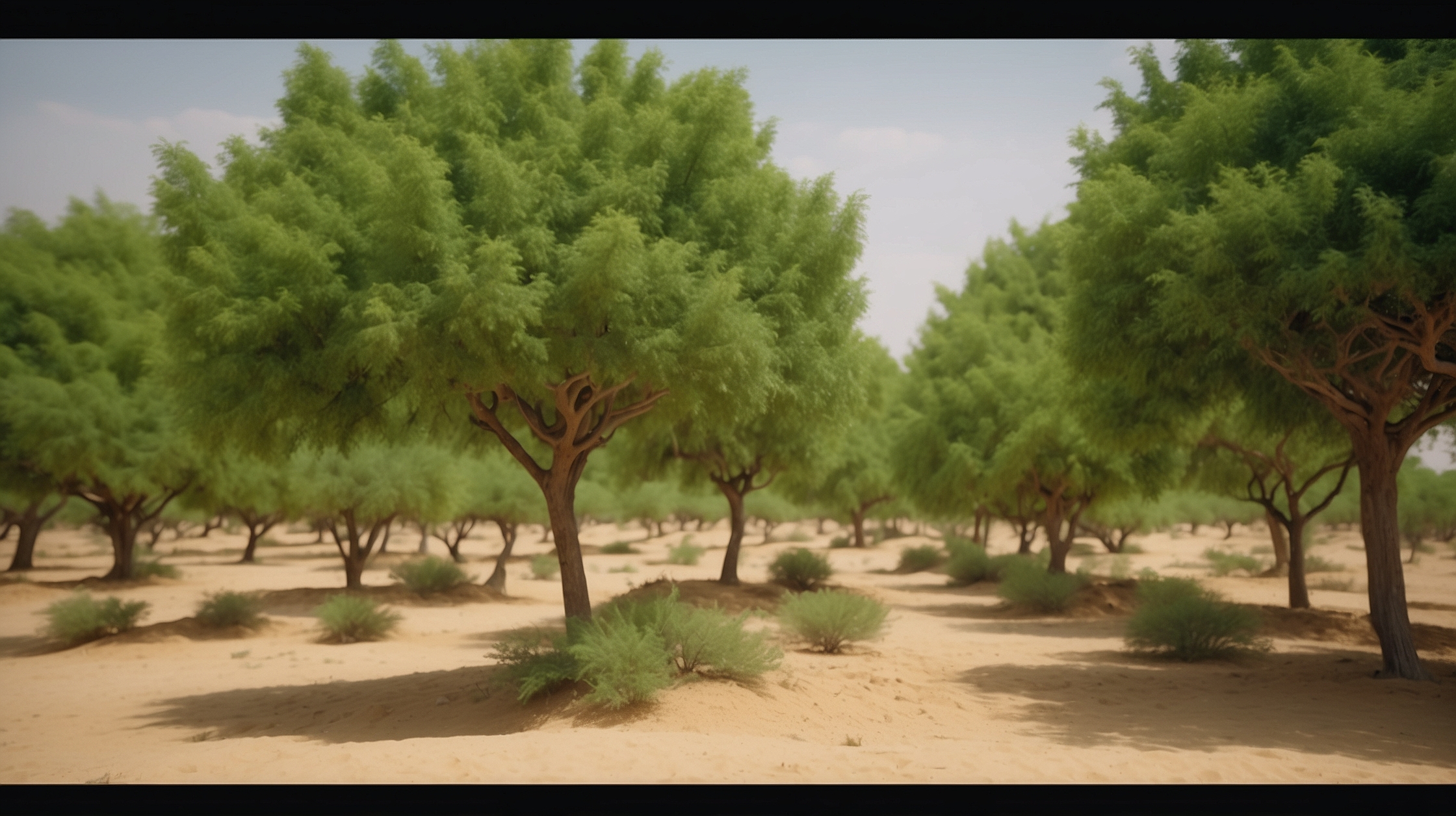
The winds of change are sweeping across Asia’s arid north—one shovel of sand, one seedling at a time. In the face of unforgiving desertification and rising climate threats, China is tackling land degradation through one of the most relentless and ambitious green initiatives in human history: the **Great Green Wall**. Stretched out like a leafy spine across the edge of the nation’s vast deserts, this living barrier is meant to combat the desert’s advance and breathe life into barren lands.
Since the early 1980s, China has grappled with the risks posed by the encroaching Gobi and other deserts. Frequent sandstorms, lost farmland, and fleeing rural populations told a bleak story. But with growing urgency brought on by climate change, the Chinese government is not just reviving this green dream—they are fast-tracking it as a core strategy for ecological security and sustainability.
Now spanning decades, billions of trees, and sprawling across provinces, this megaproject—formally known as the **Three-North Shelter Forest Program**—is undergoing a critical upgrade. With new scientific backing, government buy-in, and modern monitoring technologies, the wall’s future looks more robust and dynamic than ever. Yet challenges remain.
What lessons can the world learn from China’s leafy experiment? And could this vegetative wall stand as an example for other drought-stricken parts of the globe? Let’s explore how this grand project evolved, where it stands now, and what lies ahead in the path of this unprecedented green reclamation effort.
Key facts about China’s Great Green Wall Project
| Official Name | Three-North Shelter Forest Program |
| Start Year | 1978 |
| Target Completion | 2050 |
| Total Area Covered | Over 500 million hectares |
| Regions Involved | Heilongjiang, Inner Mongolia, Gansu, Ningxia, Xinjiang, and others |
| Estimated Trees Planted | 70 billion+ |
| Main Goal | Combat desertification and protect northern China from sandstorms and erosion |
How the Great Green Wall got started
In 1978, the Chinese government launched the **Three-North Shelter Forest Program** in response to the growing degradation of land in its northern regions. The project aimed to halt the creeping expansion of deserts like the Gobi, which were swallowing farmland, uprooting communities and destabilizing local ecologies. With over 400 million people affected by desertification at the time, it was a decision rooted in national survival.
The original vision was to create a “green screen” to reduce wind erosion and farmland loss. The plan was simple but sweeping: plant billions of trees across nearly 20% of China’s total area, focusing on the arid zones across northern, northeastern, and northwestern China—hence the name ‘Three-Norths’.
For decades, armies of workers, volunteers, and farmers contributed to planting efforts. Although methods may have seemed simplistic then, they laid groundwork for an evolving ecological mega-project that continues to this day.
What changed this year
In 2024, China significantly ramped up efforts tied to the Great Green Wall as part of its broader **ecological civilization strategy**. Several key updates are breathing new life into the initiative:
- Advanced satellite and drone monitoring now tracks tree health and growth patterns.
- New reforestation models are integrating local biodiversity rather than planting generic monocultures.
- Increased international collaboration is putting China’s green wall into global dialogues on climate action.
- Thousands of formerly abandoned villages are being revitalized through eco-tourism and afforestation programs.
Policy documents released in early 2024 revealed a commitment to finish the remaining third of the project by 2050, with nearer-term goals of regenerating up to **26.67 million hectares** by 2030.
Scientific breakthroughs driving progress
Recent years have brought a welcome maturity to the program. AI tools help suggest species mixes for afforestation efforts, while soil-enhancing techniques involving biochar and mycorrhizal fungi are boosting survival rates of saplings. These novel approaches address an early criticism of the project: that planting too many non-native or water-intensive species led to poor survival rates.
Additionally, scientists now conduct fine-scale microclimate analysis to plant trees better suited to local environmental stressors. The desert is no longer a blank, hostile canvas—it is an intricate landscape under micro-managed ecological transformation.
“We’ve moved from brute-force planting to precision forestry. That marks a turning point for both success rates and long-term sustainability.”
— Dr. Chen Wai, Senior Ecologist at Beijing Forestry University
Environmental and social impacts
The effects of the Green Wall are no longer hypothetical. Studies show that regions shielded by shelterbelts have reported **30–40% less wind erosion**, **increased soil moisture**, and gradual recovery of native plants and wildlife. Air quality in nearby areas—especially Beijing—has improved thanks to reduced sandstorm frequencies in recent years.
On the social front, the program created millions of seasonal jobs, particularly in rural areas where economic opportunities were scarce. In towns across Inner Mongolia and Gansu, afforestation projects gave rise to new industries, from sapling nurseries to nature parks that draw visiting eco-tourists.
Challenges that still remain
Despite success stories, the project has not been immune to missteps. Initial efforts suffered from monoculture planting, shallow root systems, water overuse, and underwhelming survival rates. As much as 25% of the trees initially planted died within the first five years during some phases.
Moreover, forested zones may increase competition for water in already drought-prone regions. Sustainable balance is now key, requiring close integration with local climate, hydrology, and community economic models.
“We must ensure our solution to desertification doesn’t inadvertently lead to water stress. It’s a delicate equilibrium.”
— Prof. Li Jie, Institute of Desertification Studies
The bigger global picture
As the UN continues to push for international action under the Desertification Convention, China’s Great Green Wall serves as a test case. Could similar initiatives work in Africa, Central Asia, or the American Southwest? So far, other nations are watching closely—and in some cases, adopting variations of China’s approach.
The natural advantages China leveraged—such as centralized governance and a command-driven public works apparatus—may not exist elsewhere. However, the core lessons about scalable green infrastructure, ecological policy planning, and community integration are globally translatable.
Who benefits—and who doesn’t
| Winners | Losers |
|---|---|
| Rural communities gaining jobs and stable income | Farmers facing tree encroachment on grazing lands |
| Urban areas protected from dust storms and erosion | Regions battling groundwater depletion due to forest demands |
| Local biodiversity revival in forest zones | Monoculture-planted zones with low resilience |
The way forward to 2050
From sheer labor to smart ecology, China’s Green Wall has evolved tremendously since its dusty beginnings. As the world eyes its long-term results, the key will be adaptive governance, research-driven planting, and the inclusion of local communities not just as laborers, but as stewards of restored ecosystems.
The march toward 2050 will test many of these methods under unpredictable climate models. But one thing is already certain: A greener curtain is rising across the desert’s frontier—and it carries global implications far beyond the Chinese horizon.
Frequently asked questions about China’s Great Green Wall
What is the goal of China’s Great Green Wall?
The primary goal is to prevent desertification, reduce sandstorms, restore degraded land, and improve ecosystem resilience in northern China through massive afforestation projects.
How long has the project been running?
The project began in 1978 and is scheduled for completion in 2050, making it one of the longest-running ecological efforts in human history.
Which regions are most affected by this project?
Key provinces include Inner Mongolia, Gansu, Ningxia, Xinjiang, and parts of Heilongjiang. These are historically vulnerable to desert encroachment and wind erosion.
Is the Great Green Wall a success?
While there have been setbacks, especially in earlier years, the project has shown measurable improvement in reducing wind erosion, increasing vegetation cover, and improving rural livelihoods.
What types of trees are being planted?
Initially, monocultures were common, but current efforts focus on drought-resistant native species that better align with local ecosystems and water availability.
How is technology helping the project now?
Modern tools like satellite imagery, drones, AI-driven mapping, and soil chemistry analysis are now heavily used to optimize the locations and species of new tree plantings.
Can other countries adopt a similar model?
Yes, parts of Africa and Central Asia have drawn inspiration and launched similar afforestation programs, though success depends on governance, climate, and community engagement.
What’s next for the Great Green Wall?
Between now and 2030, China plans to restore 26.67 million hectares of land as part of its broader ecological security plan. The remaining phases will roll out toward a 2050 completion goal.