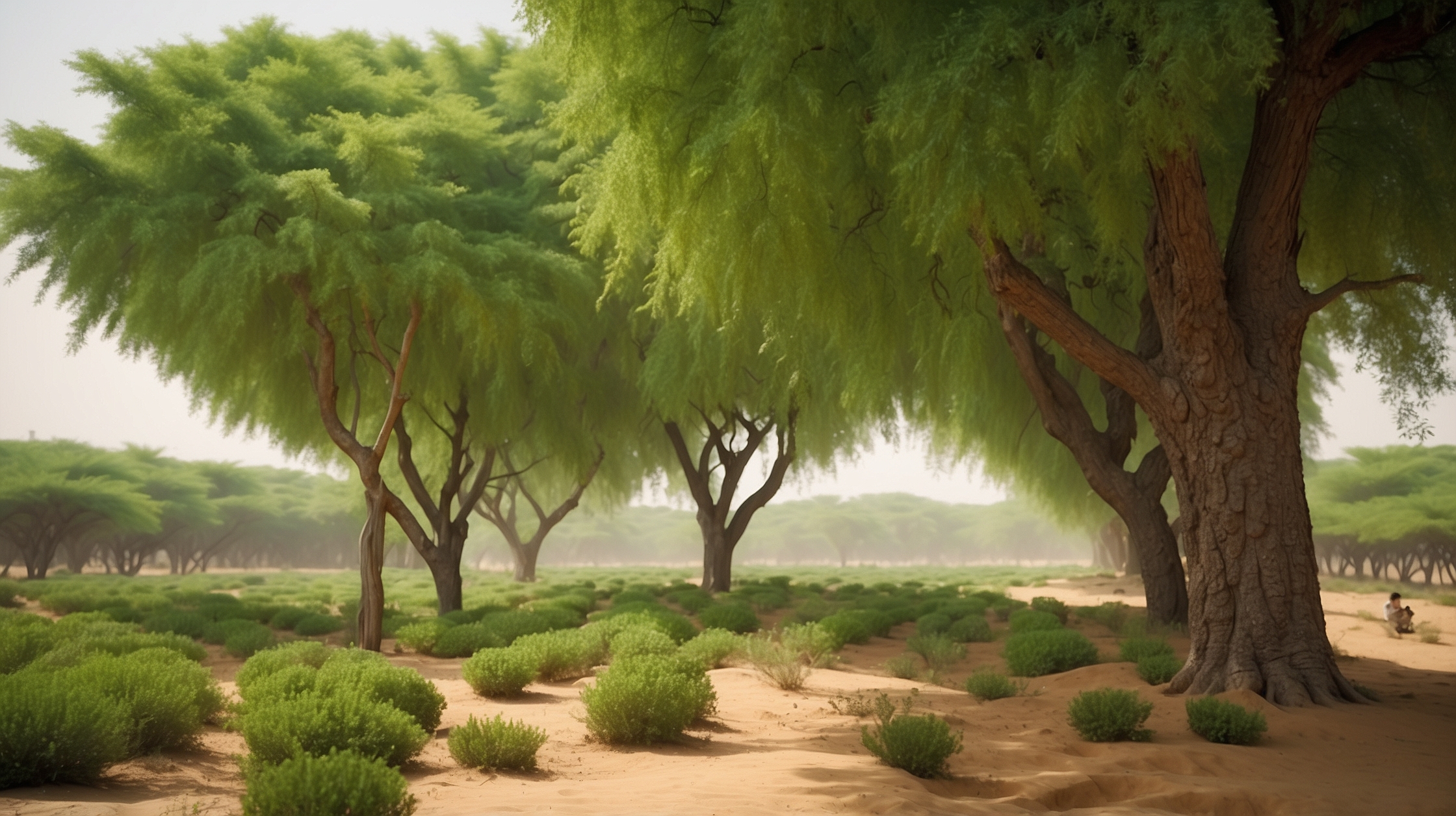
In the desolate vastness of northern China, once fertile lands have withered under the weight of time, climate, and overuse. Stories of desertification—where vibrant ecosystems degrade into dust—have haunted the country’s rural communities for decades. Families have been uprooted, farming economies decimated, and entire ecosystems pushed to their brink. One region after another watched helplessly as creeping deserts swallowed fields and forests in the relentless march of sand.
But China, faced with the staggering reality of its shrinking green spaces, is undertaking one of the most ambitious ecological projects in human history: a bold effort to build a “Great Green Wall.” Unlike the ancient wall that once marked boundaries and defense, this modern version marks hope, regeneration, and resilience. It’s a tree-planting endeavor on a scale the world has rarely seen—one that stretches across thousands of miles with a mission to fortify the land against desertification and climate vulnerability.
Now, with recent technological advancements and a revamp of strategies in 2024, the country’s efforts are gaining momentum again. Billions of trees have already been planted, satellite monitoring has taken root, and rural communities are becoming vanguards in this green revolution. It’s a campaign that carries lessons not just for China, but for the entire planet.
An ambitious plan to reforest the north
| Project Name | Three North Shelterbelt Forest Program (“Great Green Wall”) |
| Start Year | 1978 |
| Regions Covered | Northeast, North, and Northwest China |
| Total Area | Over 4,500 kilometers in length |
| Primary Goal | Combat desertification and curb dust storms |
| Trees Planted | Over 88 million acres reforested |
| Planned End Year | 2050 |
What changed this year
In 2024, Chinese authorities unveiled a reinvigorated strategy for the “Three-North Shelterbelt Program.” Previously criticized for planting non-native species in risky monocultures, the program now emphasizes the importance of climate-adapted, ecologically native species. Government scientists and ecologists use advanced AI, satellite imagery, and big data analysis to evaluate which trees are most suitable for specific microclimates within the vast project area.
Another key change is community involvement. While earlier waves of afforestation often bypassed local consultation, the new strategy places local knowledge and stewardship at the heart of the project. Residents now receive training on land restoration, forest maintenance, and agroforestry techniques.
“The success of any ecological restoration depends on those who live on the land. Communities must be empowered, not bypassed.”
— Dr. Lin Meiru, Ecologist and Policy Advisor
A fight against the yellow dragon
China’s deserts, particularly the expanding Gobi and Taklamakan, have long been known as the “yellow dragon”—a mythical symbol locals attach to the harsh, sand-laden winds that sweep across their towns. In spring, the infamous yellow dust storms affect not just China’s internal cities like Beijing, but reach as far as Korea and Japan. The Great Green Wall aims to tame this dragon with trees.
Long belts of forests, grasslands, and shrubs are strategically planted to act as windbreaks that slow desert winds. Over time, this helps prevent further degradation of topsoil, protecting crucial agricultural bases and communities from being overwhelmed by the advancing sands.
“We were seeing dust storms nearly every month in the 1990s. Today, they’re less frequent, less intense. Trees work.”
— Zhao Wen, Forestry Official in Inner Mongolia
Winners and losers in the afforestation drive
| Winners | Losers |
|---|---|
| Rural farmers trained in agroforestry | Wild species displaced by monocultures |
| Urban populations seeing cleaner air | Regions where non-native trees failed |
| Chinese forestry and AI sectors | Critics citing over-planting and low biodiversity |
How satellite technology is changing forest management
While tree planting might seem like a low-tech endeavor, behind the scenes it’s becoming increasingly digitized. China’s forestry agencies now rely on high-resolution satellite data and real-time monitoring to track forest health, soil moisture, and plant survival rates. Drones assist in aerial reforestation, particularly in hard-to-reach mountainous areas.
This responsive system helps officials identify underperforming zones quickly and course-correct with better planting techniques or crop variations. It also allows watchdog agencies to publicly validate claims and track forest success without needing direct on-ground verification.
“Data is the lifeblood of modern restoration. It helps us work smarter, faster, and stay accountable.”
— Li Zhong, Lead Analyst, Chinese Academy of Forestry
Challenges to long-term sustainability
Despite optimistic gains, several challenges could hinder long-term success. A persistent issue is water scarcity, especially in China’s northwest. Introducing new forests into arid zones risks pulling water away from natural vegetation or agriculture.
Moreover, past mistakes in the project had emphasized monoculture plantations, such as poplar trees planted widely during the 1980s and 1990s, many of which later succumbed to pests, drought, and poor soil. Learning from that, current efforts prioritize mixed-species forests and ecosystem diversity—though shifting to such models takes time and expertise.
The people planting trees for generations to come
The campaign’s most enduring legacy may not be the billions of trees themselves—but the people who are planting them. China’s “green brigades,” composed of elders, farmers, and youth, sow in rows of saplings with a generational commitment that extends beyond personal gain.
Some villages have transformed into model eco-settlements, with tourism and harvests from forest-friendly enterprises supplementing traditional income. Children are taught about forest care from an early age, creating younger stewards of the land.
“This land raised my father. If trees save it, I’ll plant as many as it takes.”
— Liu Fang, Rural Resident in Ningxia
Why the rest of the world is watching closely
As climate change accelerates aridification globally, countries in Africa, Central Asia, and even the U.S. southwest are studying China’s model. The Great Green Wall is more than a national effort—it’s a global test case in planetary reforestation. If successful, it could showcase how a nation can integrate technology, community, and policy in reviving abused landscapes.
Yet questions remain: Can China sustain this pace until 2050? Can it ensure higher biodiversity and ecological resilience? And most importantly, can it avoid the temptation of results-driven monoculture and truly grow forests as ecosystems?
This initiative, decades in the making, might just hold answers the world desperately needs.
Frequently asked questions
What is China’s Great Green Wall project?
It is an ongoing reforestation program named the “Three-North Shelterbelt Program” aimed at combating desertification and dust storms by planting billions of trees across northern China.
When did the project start?
The project began in 1978 and is scheduled to continue through 2050.
How much area does the project cover?
The planned area stretches approximately 4,500 kilometers across northeast, north, and northwest China.
Is the program successful so far?
Yes, it has made measurable progress, including reduced severity of dust storms and improved green cover, although some areas faced ecological setbacks due to poor planting practices in earlier decades.
What trees are being planted in the new phase?
The new phase focuses on climate-adapted, native species with an emphasis on biodiversity and long-term sustainability.
How is technology being used in the project?
Satellites, drones, and big data help monitor planting success, detect degradation, and assist in planning ground interventions.
Who benefits from this project?
Local communities, urban populations, and regional climate systems benefit from improved land health, cleaner air, and reduced desert expansion.
Can this model be applied to other countries?
Yes, many nations facing climate-induced desertification are studying China’s approach to adapt similar strategies in their regions.