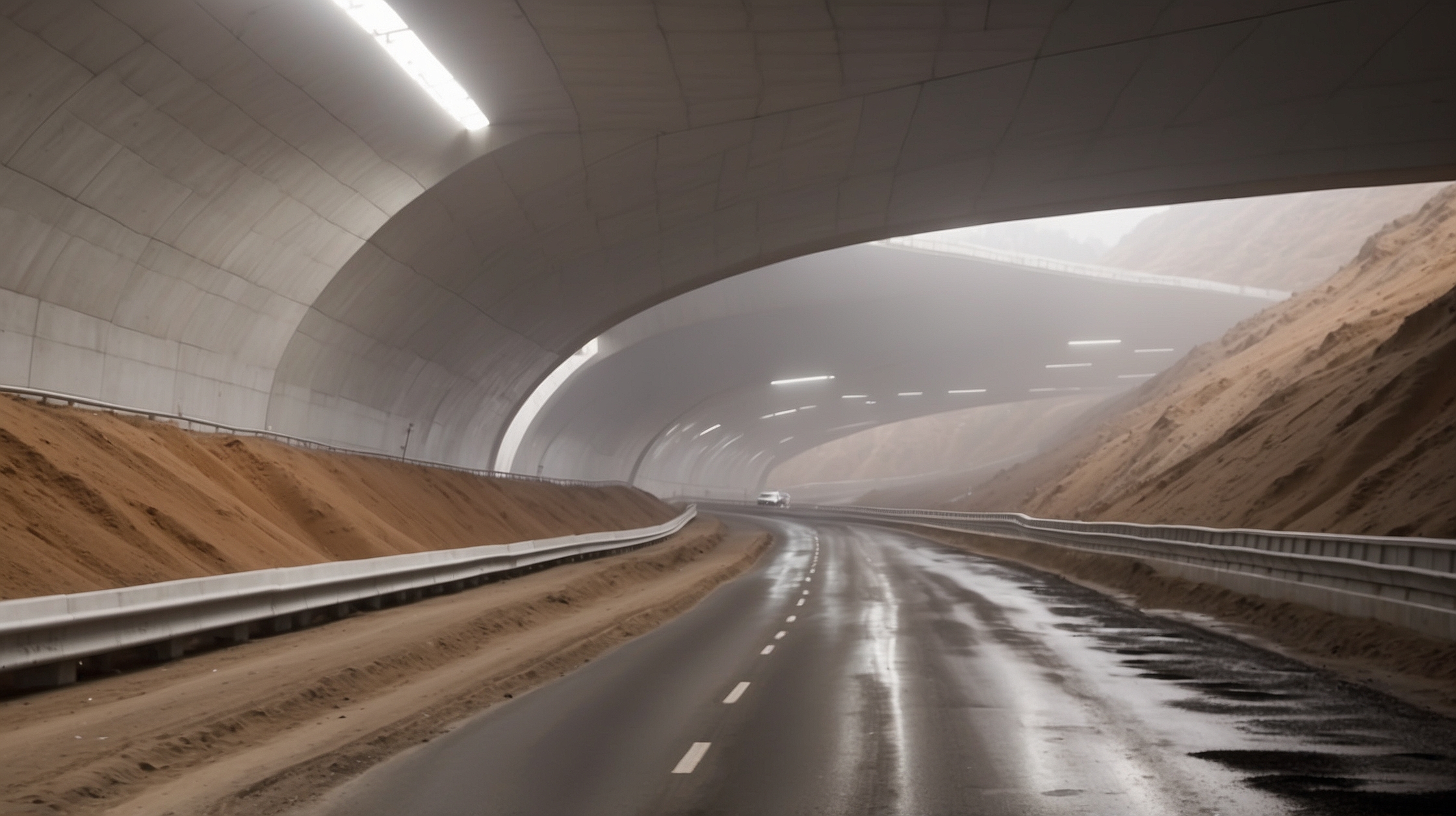
In a monumental feat of modern engineering, **China has once again etched its name in the annals of construction history** with the completion of a groundbreaking infrastructure project. Tunneling through some of the most formidable terrain on Earth, the newly opened **Taihang Tunnel on the Shanxi-Hebei expressway** has set a new world record with its staggering length of **22.13 kilometers**. This transformative achievement is much more than a marvel of engineering; it also reshapes how logistics, transportation, and connectivity will function in northern China for decades to come.
Emerging from the midst of imposing mountain ranges and built under challenging geological conditions, this expressway tunnel showcases China’s sustained commitment to infrastructure development that pushes boundaries. Spectacular in scope and designed with precision in navigation, safety, and environmental considerations, this tunnel is a prime example of how cutting-edge technology is being leveraged to meet the ambitions of an economic superpower.
This isn’t just a tunnel; it is a symbol of progress that underscores how **large-scale infrastructure** can empower economies, promote regional integration, and reduce environmental impact. But how did it come to be? And what does this mean for local communities, supply chains, and technological advancement in the realm of tunneling?
Overview of China’s Record-Breaking Tunnel
| Project Name | Taihang Tunnel on the Shanxi-Hebei Expressway |
| Length | 22.13 km |
| Location | Between Hebei and Shanxi Provinces, China |
| Completion | 2024 |
| Key Feature | World’s longest expressway tunnel through mountainous terrain |
| Purpose | To reduce traffic congestion and improve economic connectivity |
What makes this tunnel an engineering milestone
Constructing a tunnel of this magnitude in a geographically complex region like the **Taihang Mountains** posed densely intertwined challenges: from unpredictable rock formations and high in-situ stress to environmental hazards and logistical hurdles. Yet, the engineering teams behind the project overcame these barriers with sophisticated excavation techniques, intelligent monitoring systems, and robust tunnel boring machinery.
The integration of **digital modeling**, **AI-powered safety controls**, and ultra-durable infrastructure materials enabled the uninterrupted boring of over 22 kilometers through rock strata. With tremendous precision, the western and eastern tunnel bores were perfectly aligned when they met at the designated junction deep beneath the mountain range, a feat that required exactitude to within centimeters.
“Not only does this tunnel set a new standard in terms of length, but it also demonstrates the extraordinary degree of control and foresight that modern civil engineering can achieve.”
— Dr. Min Zhang, Professor of Civil Engineering
The tunnel’s impact on regional connectivity
Prior to the tunnel’s completion, transporting goods or commuting between the northern provinces of **Hebei and Shanxi** was not only time-consuming but also hazardous due to winding mountain routes. The opening of this expressway tunnel slashes travel time dramatically, cuts fuel consumption, and minimizes traffic risks, especially during winter when the region is prone to snow and ice.
Travel times have been reduced by **approximately 30%**, greatly enhancing logistic chains and enabling more fluid trade between the interior and coastal provinces. This is a strategic move in China’s broader initiative to strengthen its **inland transportation infrastructure**, thereby balancing development resources between the country’s historically rich east and its industrial, yet logistically constrained, interior regions.
What changed this year in tunnel construction strategy
This tunnel is a prominent benchmark in China’s urbanization model, which increasingly prioritizes **sustainability and safety**. Advanced ventilation systems and emergency passages ensure that both air quality and evacuation protocols within the tunnel meet or exceed international standards.
One notable change in 2024 was the formal adoption of an **AI-based real-time monitoring regime** throughout the construction process. This allowed for immediate detection of geological anomalies, water intrusion, or technical equipment malfunctions, drastically reducing delays and risk of failure.
Additionally, this ambitious project emphasized the minimal ecological footprint. By adopting tunnel excavation techniques that reduced vibration and sound pollution, nearby ecosystems and rural communities were shielded from the typical disruptions associated with high-intensity infrastructure work.
“With the integration of AI and green construction principles, this tunnel marks a paradigm shift towards intelligent infrastructure development.”
— Liu Wei, Infrastructure and Transportation Consultant
How the tunnel enhances China’s macroeconomic strategy
The tunnel doesn’t exist in isolation—it serves a grander economic narrative. Powered by the Belt and Road Initiative and domestic development goals, it acts as a **critical conduit** linking underdeveloped inland regions to economic powerhouses along the east coast.
Improved inter-province transport logistics leads to increased exports, faster industrial communication, and quicker dispersal of resources such as coal, steel, electronics, and agricultural products across provinces. The tunnel also strengthens ties between regional hubs like **Shijiazhuang**, **Taiyuan**, and Beijing, ensuring that labor markets expand and commerce thrives well beyond provincial limits.
Winners and those who gain the most
| Winners | Why They Benefit |
|---|---|
| Local commuters | Shortened travel time and improved road safety |
| Logistics and freight companies | Faster cargo delivery times and reduced transport costs |
| Regional governments | Boost in economic activity and inter-provincial coordination |
| Construction and engineering firms | Increased project visibility and expanded technological application |
How local communities are reacting to the tunnel
Residents across both Hebei and Shanxi are responding with optimism and energy. The tunnel has opened up new employment avenues—not just in transport but also in trade, tourism, and services. Small businesses, previously cut off from wider markets, now see daily opportunities for expanded reach and higher sales volume.
Environmental advocacy groups, initially wary of such a large-scale project, have acknowledged the care taken to preserve ecological balance and historic sites in surrounding areas. The **use of low-noise machinery** and **tree-planting programs** initiated post-construction have helped build public trust.
“It’s not just a tunnel for vehicles—it’s a tunnel to opportunity for our youth and local enterprises.”
— Zhang Hui, Local Business Owner, Hebei Province
Why this sets precedent for future mega-infrastructure
As economies worldwide grapple with outdated transportation systems and climate mandates, China’s tunnel sets an example for how **mega-infrastructure can be designed sustainably and intelligently**. The Taihang Tunnel proves that even in topographically challenging regions, solutions are possible with the right alignment of policy, engineering, and community cooperation.
Nations and developers looking to solve transport bottlenecks in mountainous or remote areas will likely study and replicate elements of this project—especially its health, environmental, and safety protocols.
Frequently Asked Questions
What is the length of the Taihang Tunnel?
The tunnel spans a record-breaking 22.13 kilometers, making it the longest expressway tunnel through mountainous terrain in the world.
Where is the tunnel located?
It connects Hebei and Shanxi provinces in northern China, cutting through the Taihang mountain range.
When did construction on the tunnel begin?
Although planning and surveys started years earlier, full-scale tunnel construction began in the late 2010s and was completed in 2024.
How has the tunnel improved transportation?
It has cut travel times by around 30%, improved highway safety, and enhanced logistical efficiency in the region.
Was ecological conservation a concern during construction?
Yes. The project emphasized sustainable construction, including reduced vibration methods and post-completion reforestation efforts.
Will the tunnel be open to heavy freight vehicles?
Yes, the tunnel is built to handle all regular and heavy-load vehicle types with safety and ventilation protocols in place.
Is this China’s first long tunnel through a mountain?
No, but it is by far the longest of its kind and sets a new precedent for infrastructure capabilities in mountainous terrain.
Could similar tunnels be constructed in other parts of the world?
Yes, with proper planning and technological adaptation, this model could be replicated globally to overcome natural barriers.