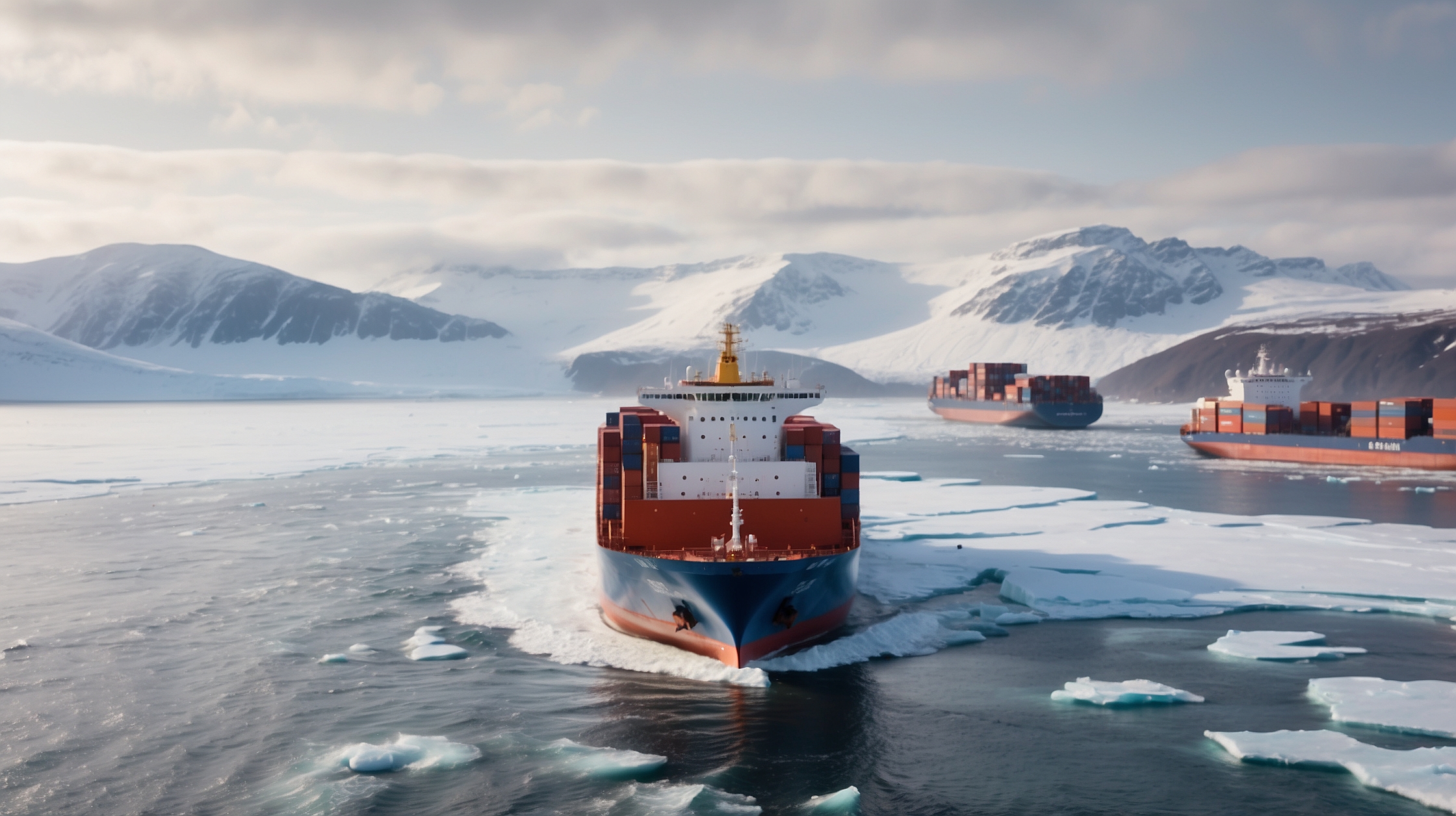
In the icy wilderness above the Arctic Circle, a silent transformation is underway—one that’s poised to reshape global trade for decades to come. Once shunned by global shipping giants due to geopolitical tensions and environmental sensitivities, the **Northern Sea Route** (NSR) is now rapidly gaining prominence. And leading that charge into the frigid corridor is China, which has just shattered previous records by completing 14 container ship journeys through the NSR—an unprecedented number for a single year.
This bold maneuver underscores a stark shift in maritime strategy, global trade dynamics, and climate realities. As the West pulls back from the Northern Sea Route primarily for political and ecological concerns, China’s increasing activity signals not only its readiness to lead the Arctic race but also its intention to create alternate shipping and supply chain routes that prioritize autonomy away from chokepoints like the Suez Canal.
As climate change continues to melt Arctic sea ice, once-inaccessible routes now lay exposed for longer periods each year. But where others see risk, China sees opportunity—particularly as it positions itself as a central figure in the development of the **Polar Silk Road**, aligning closely with Russia’s ambitions to industrialize the Arctic corridor. What does this development mean for global trade, shipping emissions, and the geopolitical balance? Let’s dive deeper.
Key facts about China’s latest Arctic shipping breakthrough
| Event | Record-setting 14 container voyages by China through the NSR in 2023 |
| Location | Northern Sea Route (Arctic Ocean, along Russian coast) |
| Key player | China’s state-controlled COSCO Shipping |
| Typical commercial context | Route once dominated by occasional Western freight and LNG shipping |
| Strategic initiative | “Polar Silk Road”, China’s Arctic extension of the Belt and Road Initiative |
| Western status | Minimal to no participation due to sanctions and environmental concerns |
Why the Northern Sea Route is attracting China
China’s gravitation toward the Arctic’s **Northern Sea Route** may seem surprising at first, but its motivations are rooted in both **strategic necessity and opportunity**. The NSR offers significantly shorter distances between Europe and Asia—up to 40% less than traveling through the Suez Canal—translating into faster delivery, lower costs, and reduced fuel consumption.
Increasing Western restrictions and maritime congestion in traditional trade routes have accelerated China’s push for alternatives. The Arctic, increasingly navigable due to global warming, provides a viable and untapped corridor—particularly compelling in light of recent disruptions in the Red Sea and Panama Canal.
“This is part of China’s broader plan to future-proof its trade network and control logistics flows regardless of Western involvement.”
— Arctic Shipping Analyst, Placeholder
What changed this year
Until recently, Arctic shipping was largely restricted to specialized vessels and seasonal LNG shipments. However, 2023 marked a **turning point** as China’s COSCO Shipping completed 14 commercial container voyages across the NSR—almost entirely filling the void left by European operators who have abandoned the route in recent years, largely in protest to Russia’s invasion of Ukraine and in observance of environmental pledges.
This dramatic leap in NSR usage by a single country reveals not just China’s growing **maritime confidence**, but also a clear divergence between East and West over the Arctic’s future—both as a trade corridor and geopolitical frontier.
The state of Western retreat from Arctic shipping
Historically, participation in Arctic shipping saw a mix of Western and Eastern state-backed enterprises. However, that balance shifted drastically post-2022. Sanctions against Russia and internal policy shifts in the EU led Western logistics firms to all but abandon the NSR, despite its technical advantages. As a result, capacity for Arctic shipping plummeted, creating a **strategic vacuum**—one China was quick to fill.
Western firms have voiced both **ethical and environmental concerns**, citing the fragility of the Arctic ecosystem and the unpredictable effects of melting permafrost. Nevertheless, their retreat has effectively handed China a first-mover advantage in developing the Arctic corridor both for trade and scientific exploration.
How Russia’s cooperation complements China’s ambitions
Russia, keen on monetizing the dilapidated but strategic NSR, has found in China not just a deterrent to economic isolation, but a genuine partner. The integration of **China’s Polar Silk Road vision** and Russia’s Arctic industrial policy has enabled infrastructure enhancements, icebreaker cooperation, and tariff arrangements that make the route more commercially viable.
“Russia needs trade partners that won’t pull out under pressure, and China needs a trade route under less American influence—it’s a marriage of geopolitical convenience.”
— Polar Policy Researcher, Placeholder
The Russia-China rapport has also yielded a shared interest in de-dollarization, with many NSR deals now transacted in yuan or rubles, further insulating their trading rhythms from sanctions and dollar-market volatility.
Impact on shipping industry and global logistics
The enhanced viability of the NSR will likely **reshape global shipping models**. Reduced transit times, navigational predictability through satellite advancements, and new ice-resistant container ship designs are making Arctic pathways more plausible, even for non-polar-capable firms.
For the broader shipping industry, a well-developed NSR would force adaptation in fleet compositions, seasonal planning, and port investments in northern hemispheric hubs. Conversely, it poses risks such as limited emergency response infrastructure and thin regulatory oversight—problems clearly tucked into Western hesitations about continued engagement.
Winners and losers in the Arctic trade shift
| Winners | Losers |
|---|---|
| China’s shipping and logistics sectors | European container firms withdrawing from NSR |
| Russia’s Arctic economic zones | Environmental watchdog credibility in enforcement |
| Chinese manufacturing with faster EU access | Traditional chokepoint-dependent sea routes |
What comes next for Arctic logistics
Looking ahead, the sustainability and scale of NSR shipping depend on several variables: **ice conditions**, international sentiment, and technological innovation. By 2025, China is already planning **further increases in container capacity**, signaling that this year’s record could be surpassed as quickly as it was set.
To maintain its edge, China has announced further investment into **polar navigation training**, **ice-resistant vessel production**, and **satellite surveillance systems** for Arctic weather mapping. These initiatives solidify China’s ambition to become a **permanent player in polar trade** corridors and potentially offer NSR routes to third countries under logistical leasing programs.
“What we’re seeing with China and the NSR is an emerging global trade axis shifting toward the Arctic—with colossal implications.”
— Maritime Futures Consultant, Placeholder
Frequently asked questions
Why is China investing in the Northern Sea Route?
China sees the NSR as a shorter, cost-effective alternative to traditional routes like the Suez Canal. It also aligns with its strategic goal to diversify trade channels and bolster the Polar Silk Road initiative.
How much faster is the Northern Sea Route compared to other shipping lanes?
Depending on departure and destination ports, the NSR can shave off 30–40% of travel time compared to routes through the Suez Canal.
Is the Arctic safe for container shipping?
Safety is improving with better vessel designs and Arctic navigation tech, but challenges include unpredictable ice formation, limited emergency infrastructure, and harsh weather conditions.
Why did Western companies abandon the NSR?
Western firms have exited the NSR primarily due to geopolitical tensions with Russia and concern over the environmental impact of Arctic shipping.
What is the Polar Silk Road?
The Polar Silk Road is China’s Arctic extension of the Belt and Road Initiative, aiming to integrate the Northern Sea Route into global trade and logistics frameworks.
Are container ships built for the Arctic different?
Yes, ships used on this route typically have reinforced hulls, specialized ice-breaking capabilities, and enhanced satellite communication systems for navigation and safety.
What countries are benefiting from this development?
China and Russia are the primary beneficiaries, with emerging interest from some Middle Eastern markets for Arctic transshipment partnerships.
What are the environmental concerns of increased Arctic shipping?
The biggest concerns include oil spills, disruption to marine life, black carbon emissions darkening sea ice, and the accelerating impact of climate change on Arctic ecosystems.