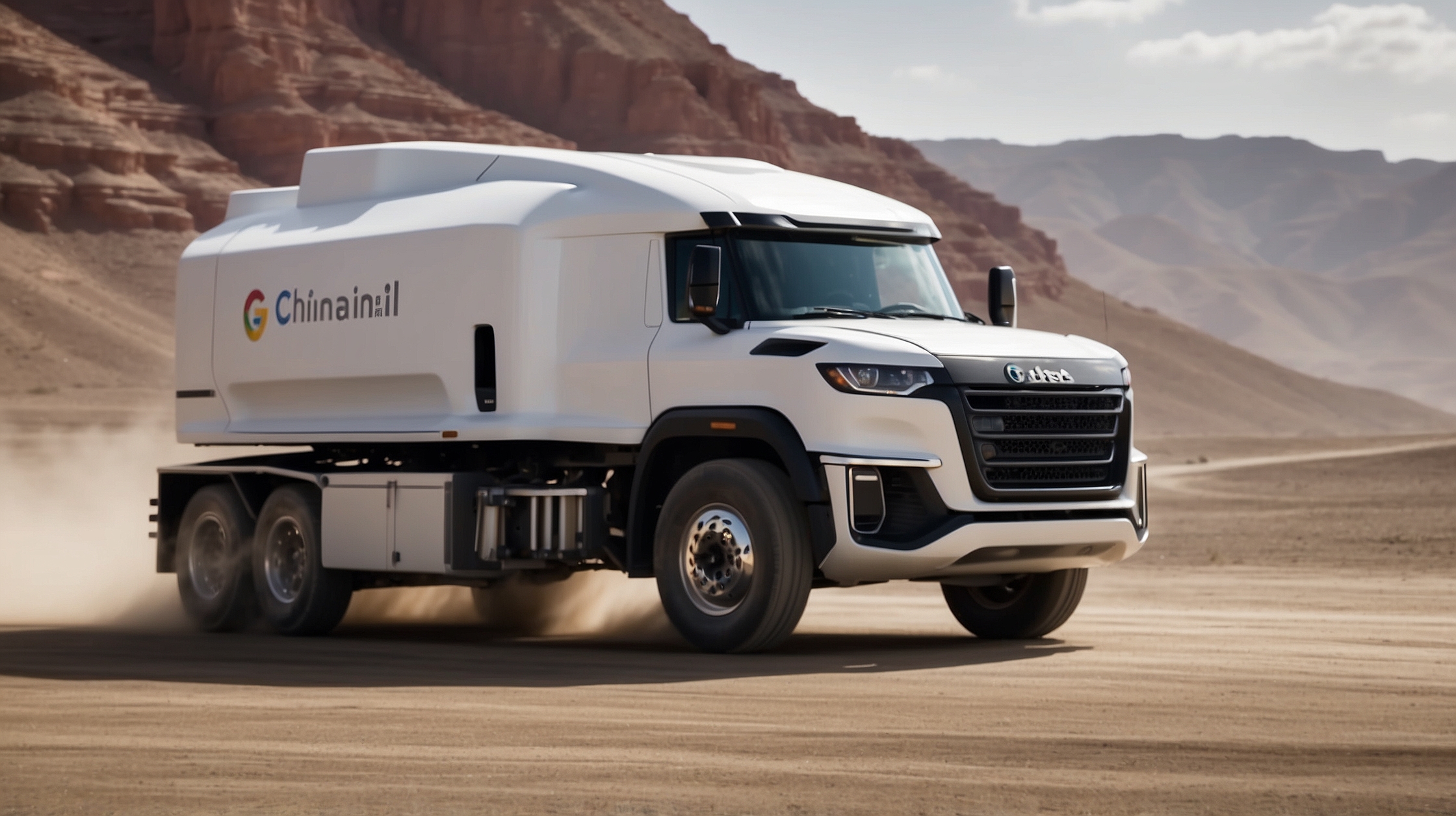
Deep in the mountain wilderness of Tibet, where the harsh, high-altitude terrain and rugged isolation have kept industrialization at bay for centuries, something monumental is unfolding. Nearly 5,000 meters above sea level, nestled inside one of the world’s most unforgiving environments, is a copper mine of staggering value—estimated at **$45 billion**. But unlike conventional mining operations, this one doesn’t teem with workers navigating explosive machinery or dangerous tunnel systems. In fact, human presence has been significantly minimized. Instead, what dominates the landscape is a fleet of **autonomous trucks**, operated by China’s national mining giant, driving the future of resource extraction with cutting-edge technology.
This revolutionary mining effort marks a turning point, not just for Chinese industry, but for the global conversation around resource extraction, technology, and environmental adaptation. With a growing demand for minerals like copper—crucial for electric vehicles, renewable energy, and electronics—China has pushed the limits to ensure access to these materials without relying on traditional, high-risk manpower. By deploying driverless, smart vehicles and AI-powered logistics, China is showing the world that automation might be the only viable solution to mining in environments previously deemed inaccessible. The implications are massive—and not just in Tibet, but for mining operations worldwide.
High-tech mining in the clouds: The shift to automation in Tibet
| Project Name | Tibet Julong Copper Mine |
| Location | Tibet Autonomous Region, China |
| Altitude | 4,900 meters above sea level |
| Estimated Value | $45 billion in copper resources |
| Autonomous technology provider | Tage IDriver Plus (Beijing-based AI firm) |
| Fleet Size | More than 100 autonomous trucks in operation |
| Operator | Western Mining Group / Tibet Julong Copper |
Why this mine matters to China’s future
The Julong Copper Mine isn’t just another mineral excavation site—it’s fast becoming central to China’s ongoing strategy for **resource security**. With geopolitical competition for key minerals intensifying, ownership of large domestic reserves is now viewed as a national security imperative. Copper, in particular, is essential for everything from **electric vehicle batteries** to national infrastructure and military applications.
China currently relies heavily on copper imports. This makes the Julong site not only a commercial asset but also a cornerstone of long-term economic independence. The mine’s estimated 40 million tonnes of copper make it one of **the largest undeveloped reserves** on the planet, and its development will contribute significantly to safeguarding supply chains amid intensifying trade tensions.
What technology is powering the trucks
The mining trucks operating in this high-altitude, oxygen-depleted environment aren’t ordinary vehicles. They’re a result of collaboration between AI logistics firm Tage IDriver Plus and the China Earth Group, tasked with integrating **autonomous navigation, obstacle detection**, and real-time coordination systems into heavy machinery. Each truck features a suite of sensors, including LiDAR, radar, and intelligent cameras capable of functioning in fog, snow, and poor visibility conditions common at these elevations.
This AI system was trained using extensive simulation models and real-world datasets, allowing the trucks to perform **round-the-clock operations** with minimum risk to human life. More than 100 trucks have been deployed so far, with comprehensive mapping and coordination software ensuring that each unit knows its route, hazard ratings, and optimal load pace in real time.
Autonomous operation is no longer science fiction—it’s industrial necessity. Without it, this copper mine wouldn’t be functional at all.
— Chen Wang, Senior Engineer at Tage IDriver Plus
Overcoming extreme challenges at high altitude
One of the most staggering aspects of this mining venture is not its size, but its location. Operating at nearly 5,000 meters above sea level puts immense stress on both machinery and humans. The **thin air affects engine combustion efficiency**, exposes electronics to temperature variance, and presents a health hazard for human operators—a hazard that automation completely mitigates.
Logistically, the remote terrain demands an autonomous system capable of functioning with **limited GPS connectivity** and infrastructure. Developers had to innovate low-latency communication frameworks and self-correcting algorithms that function independently of traditional network nodes. The result? A fleet of trucks that learns on the fly, with each unit contributing to a **collective AI system** that gets smarter by the day.
If one truck identifies a hazard, all trucks know it seconds later. Knowledge-sharing at machine speed is our advantage in environments this severe.
— Li Zhenyu, AI Researcher (placeholder quote)
Economic winners and environmental risks
For the Chinese government and mineral extraction firms, the benefits are enormous: increased productivity, reduced labor costs, and stable supply of strategic materials. However, mining at such a high altitude also raises serious environmental and ethical concerns. The Tibetan plateau is ecologically sensitive, home to **glaciers and endangered species**, and the site borders sacred lands important to local communities.
Critics argue that deploying mining operations in these zones represents a violation of local autonomy. There’s also growing concern about **ecological erosion**, loose sediment runoff, and disruption to downstream water systems—especially as permafrost melts due to climate change. While the trucks are electric and lower-emission, the overall extraction process is still disruptive to the natural equilibrium.
| Winners | Losers |
|---|---|
| China’s mining industry | Local Tibetan ecosystems |
| AI and tech integration firms | Traditional mining labor force |
| National supply chains and EV production | Indigenous and religious groups |
What changed this year
In 2024, the autonomous fleet reached a critical milestone: **continuous 24-hour operation without human intervention**. This prompted a surge in investment into similar projects across China and beyond. The success of the Julong Mine has emboldened the authorities to announce expansion plans across the Tibetan plateau and other previously untapped high-altitude zones.
More importantly, Chinese regulators have begun drafting new industrial guidelines to **create formal frameworks for AI operation** standards at elevation. These documents will shape the future of mining and remote infrastructure development—where human workers are replaced not due to cost, but due to survival limits.
This is not about eliminating jobs; it’s about reaching places that humans physically cannot.
— Zhang Haoran, Policy Analyst (placeholder quote)
The road ahead for global mining industries
The Julong Copper Mine is a preview of the future—where **extreme geography creates laboratories** for breakthrough industrial AI. As mining continues to push into harder-to-reach locations, from the Arctic to deep-sea ridges, the precedent set here will ripple across industries. The role of **automated logistics and environmental sustainability** will no longer be optional, but fundamental to expansion strategies.
Countries with natural reserves, but lacking technological infrastructure, may find themselves at a disadvantage. Likewise, multinational firms will likely pursue similar autonomy systems to minimize human risk and automate compliance tracking. What’s happening on a cold mountaintop in Tibet might mark the beginning of a warm race into Earth’s last untouched frontiers.
Frequently Asked Questions about China’s smart mining operation
What is the Julong Copper Mine?
It is a massive high-altitude copper mining site in Tibet estimated to contain $45 billion in copper reserves, operated mainly through autonomous vehicles.
How high is the mine located above sea level?
The mine sits at around 4,900 meters (16,000 feet) above sea level, making it one of the highest industrial mining sites in the world.
What role do autonomous trucks play in the operation?
Fully automated trucks handle material transport without human drivers, allowing continuous and safe operations in a dangerous environment.
Is the mine environmentally safe?
While automation reduces emissions and human disruption, the project still poses risks to local environments, such as erosion and water system disruption.
Who produces the autonomous equipment?
The AI systems and trucks are developed by Beijing-based tech firm Tage IDriver Plus, in partnership with Chinese mining operators.
Is this model being copied elsewhere?
Yes. The success of this project has inspired similar initiatives in high-risk or remote extraction zones globally, especially for strategic minerals.
Why is copper so important to China?
Copper is essential for green energy, electronics, and national infrastructure. Reducing dependence on imports increases energy security and industrial resilience.
What are the political implications of mining in Tibet?
The project has sparked debate over minority rights, environmental integrity, and cultural autonomy within the Tibetan Autonomous Region.