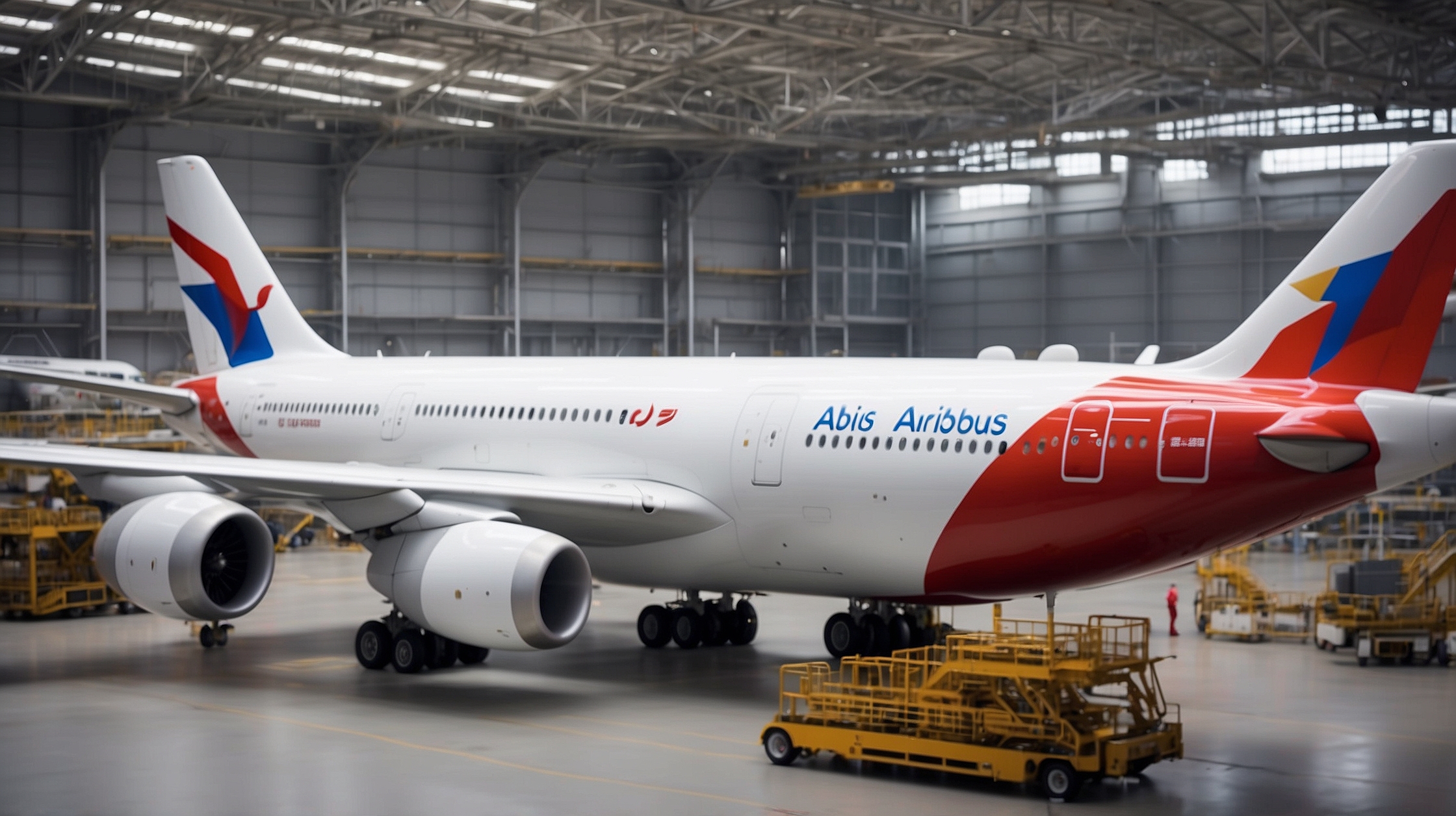
In the bustling manufacturing heart of Tianjin, China, where industry meets innovation, a momentous occasion recently unfolded that could have far-reaching implications for the global aerospace sector. The Airbus Final Assembly Line Asia (FALA) plant, nestled in the coastal city’s development zone, celebrated the delivery of its 700th A320 family aircraft — a symbolic benchmark in China’s soaring aviation ambitions and a major milestone for one of Europe’s foremost aerospace companies.
This development highlights not just the maturity of Airbus’ operations in China, but also the increasing significance of the Chinese market to global aircraft manufacturers. In essence, China has handed Airbus an “early Christmas gift,” reflecting a dynamic and reciprocal partnership that stretches back nearly two decades. Amid rising geopolitical tensions and shifting manufacturing strategies, this achievement underscores the value of cross-border cooperation in technological sectors where precision and dependability are non-negotiable.
But what exactly does this mean for Airbus, for China’s aviation industry, and for the larger geopolitical implications in the aerospace market? Let’s unpack this milestone and explore its wider significance.
Airbus and China: The evolving partnership
| Key Metric | Details |
|---|---|
| Facility | Final Assembly Line Asia (FALA), Tianjin |
| Milestone | 700th Airbus A320 family aircraft delivered |
| Start of Operations | 2008 |
| Primary Aircraft | A320 Family (A319, A320, A321) |
| Expansion Plans | Second assembly line in Tianjin from 2025 |
| China’s Market Share | Up to 20% of Airbus global deliveries |
Airbus’ relationship with China has grown significantly since the launch of the Tianjin assembly line in 2008 — their first production facility outside Europe for the popular A320. Initially regarded as a strategic move to enter and expand within the burgeoning Chinese aviation market, the partnership has blossomed into one where cooperation benefits both parties substantially. For Airbus, Tianjin provides a cost-effective, efficient, and strategically located base from which to serve Asia-Pacific customers; for China, it offers sustained technology transfer, skills development, and a role in global high-tech manufacturing.
Airbus CEO Guillaume Faury has publicly credited the Tianjin facility with enabling Airbus to meet the growing demands of its airline customers in the Asia-Pacific region, especially during the post-pandemic recovery phase.
“The success of our Tianjin facility underscores our commitment to building robust industrial footprints wherever we operate, and reflects the depth of trust between Airbus and China.”
— Guillaume Faury, CEO of Airbus
What changed this year
2023 proved instrumental for Airbus operations in China. While the Tianjin assembly line has been active for over 15 years, this year saw a substantial ramp-up in production aligned with China’s rapidly recovering aviation sector. With a resurgence of domestic travel, Chinese airlines resumed aggressive fleet expansion plans, making them a top customer for narrow-body aircraft like the A320 and A321 models.
Perhaps more significantly, Airbus began laying the groundwork for a second final assembly line in Tianjin, set to open in 2025. This expansion is expected to increase the output capacity dramatically and deepen Airbus’ investment in China’s aviation future. Insiders suggest this could double Airbus’ Chinese production capacity in the next five years, creating even more jobs and solidifying its status as a dominant OEM in the region.
Why Tianjin matters to Airbus
The choice of Tianjin as a Final Assembly Line location wasn’t incidental. The city offers world-class infrastructure, a dedicated aerospace development zone, and business-friendly policies conducive to foreign investment. Moreover, it’s part of China’s broader push to become a global hub for high-tech manufacturing and aerospace innovation — a vision that aligns well with Airbus’ industrial goals.
Situated just an hour by high-speed rail from Beijing, Tianjin allows Airbus to remain close to regulatory authorities and key airline customers while benefiting from a skilled workforce and robust local supply chains. The success of the 700th aircraft delivery confirms Tianjin’s strategic relevance and future potential.
Who benefits from this milestone
| Winners | Losers |
|---|---|
| Airbus (brand visibility, market share) | Boeing (weaker presence in Chinese market) |
| Chinese aviation workforce and ecosystem | Geopolitical critics of tech cooperation |
| Asia-Pacific airline customers | Smaller regional aircraft manufacturers |
Airlines across the Asia-Pacific, especially budget carriers and regional operators, are key beneficiaries. With increased assembly capacity near their home bases, they enjoy reduced delivery times, improved service response, and easier access to parts and maintenance support. More jobs and ancillary business opportunities also arise for local Chinese communities and upstream supply companies.
Boeing, meanwhile, continues to face hurdles in resuming aggressive production in China due to a mix of regulatory, political, and competitive pressures. This opens the door wider for Airbus to consolidate its lead over its American rival in one of the world’s biggest markets for commercial aviation.
How this affects global aviation strategy
The 700th delivery is not just a local celebration — it signals wider changes in how aircraft are manufactured and delivered in an interconnected world. For Airbus, it illustrates the benefits of diversifying production geographically, reducing over-dependence on any one region while gaining proximity to emerging markets.
This strategy is now more crucial than ever as supply chains remain under strain and labor dynamics shift. In many ways, China has become not just a market, but also a production powerhouse that is integral to Airbus’ global ambitions — from increased output goals to sustainability and innovation agendas.
“Strategic global assembly sites like Tianjin allow Airbus to remain resilient and agile in a volatile aviation landscape.”
— Placeholder, Aerospace Industry Expert
What’s next for the Airbus-China collaboration
Looking ahead, Airbus intends to leverage its growing infrastructure in China to explore new projects beyond narrow-body aviation. As electric and hybrid aircraft R&D accelerates, and as demand in Asia-Pacific broadens beyond short-haul routes, possibilities abound for subsequent collaboration in sustainable aviation technologies.
Further, Airbus Global Services is reportedly eyeing enhanced after-market capabilities in the region, including pilot training, aircraft maintenance, and software solutions — all potentially headquartered from within China.
With over 2,100 Airbus aircraft currently in service in China and that number expected to grow rapidly, the 700th aircraft delivery is more than just a milestone. It’s a signal that Airbus is not only celebrating past success in China — it’s betting on a future deeply intertwined with it.
Frequently asked questions
What type of aircraft does the Tianjin plant manufacture?
The Tianjin Final Assembly Line Asia produces A320 family aircraft, including the A319, A320, and A321 models.
When did Airbus begin operations in Tianjin?
Airbus opened its Tianjin assembly facility in 2008 in collaboration with Chinese aviation partners.
How many aircraft has Tianjin delivered so far?
As of 2023, the plant has delivered 700 A320 family aircraft.
Is Airbus planning to expand operations in China?
Yes, Airbus is building a second final assembly line in Tianjin, expected to begin operations by 2025.
Why is the Chinese market important for Airbus?
China is one of the fastest-growing aviation markets in the world, contributing up to 20% of Airbus’ global deliveries.
How does this milestone affect Boeing?
Boeing’s challenges in the Chinese market give Airbus an opportunity to expand its dominance, making the 700th delivery particularly significant competitively.
What are Airbus’ future plans in China?
Besides expanding assembly capacity, Airbus aims to invest in services, maintenance, and sustainability R&D within the Chinese market.
Is this part of a larger global strategy by Airbus?
Yes, Airbus is diversifying production globally to balance risk and optimize supply chains in an increasingly uncertain geopolitical landscape.