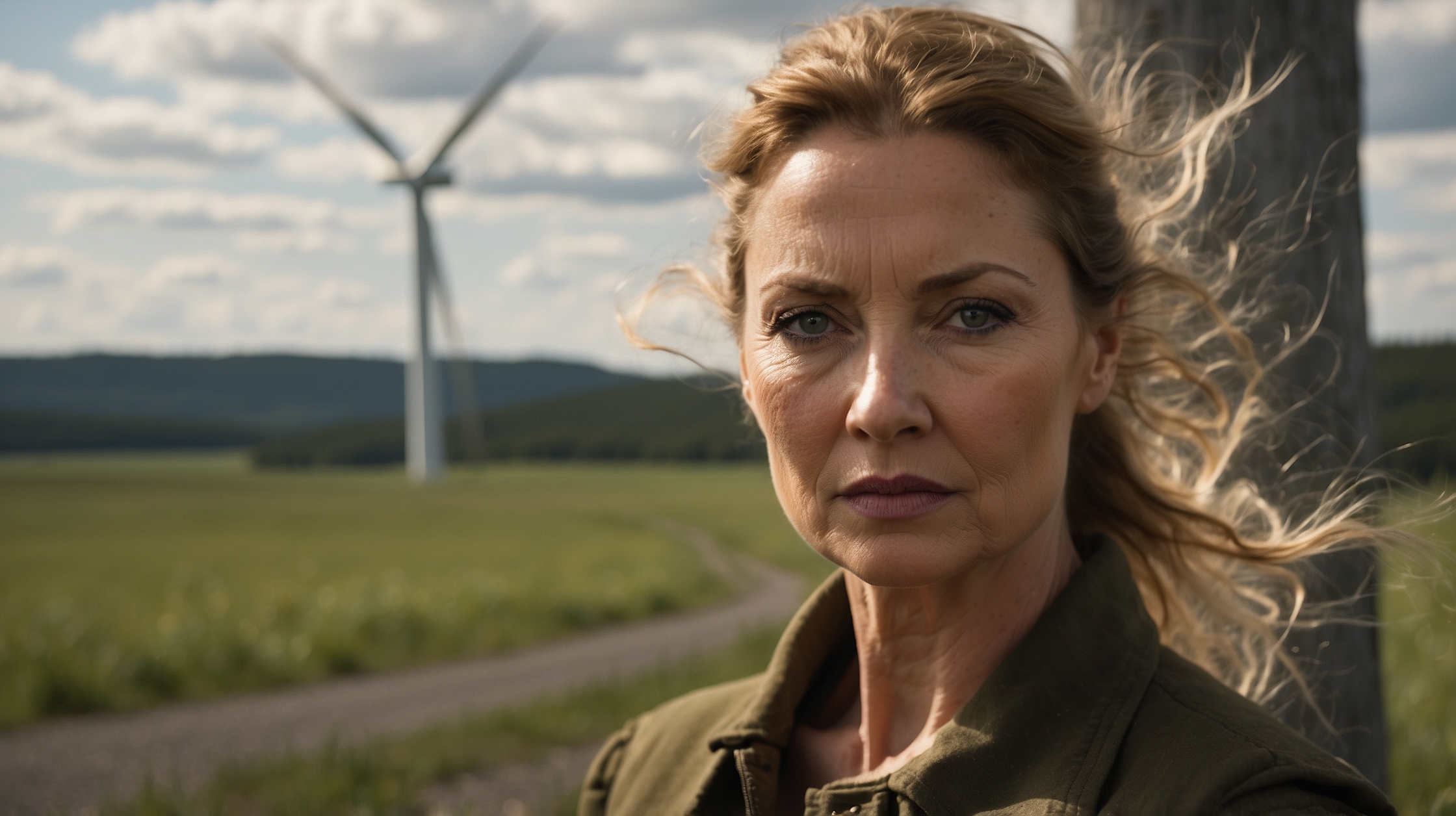
As the wind howled across the rolling highlands of New Brunswick’s Madawaska County, it brought with it not just the season’s first chill, but a gust of change. For years, residents and clean energy advocates have watched and waited while plans for a landmark wind energy project lingered in red tape and planning stages. Now, after delays and plenty of anticipation, the winds are finally shifting in favor of progress.
This week, the long-anticipated Madawaska Wind Project received the official go-ahead. Backed by EDF Renewables Canada, one of the country’s leading renewable energy developers, the 270-megawatt (MW) wind farm is set to become a pivotal cornerstone of eastern Canada’s shift toward sustainable energy. It’s a moment of triumph not just for the company but also for a community eager to embrace a cleaner, greener future.
With construction slated to begin in the coming months and a target deployment by the end of 2026, the approved project will significantly boost Canada’s national wind power portfolio. But beyond turbines and transmission lines, it tells a larger story—one of economic revitalization, regional energy independence, and bold climate ambitions. Here’s a closer look at what the Madawaska Wind Project means for Canada’s energy landscape.
Overview of the Madawaska Wind Project
| Project Name | Madawaska Wind Project |
|---|---|
| Developer | EDF Renewables Canada |
| Location | Madawaska County, New Brunswick |
| Planned Capacity | 270 megawatts (MW) |
| Completion Target | End of 2026 |
| Estimated Homes Powered | Nearly 60,000 |
| Key Stakeholders | EDF Renewables, Local Governments, Indigenous Partners |
Why this milestone is so significant for Canada
Canada’s climate goals are ambitious. Committing to net-zero emissions by 2050, the nation has emphasized renewable energy development as one of its most crucial pathways. While provinces like Quebec and Ontario have already advanced hydropower and solar initiatives, New Brunswick’s energy grid has relied more heavily on fossil fuels and nuclear sources. The greenlighting of Madawaska Wind marks a turning point in New Brunswick’s contribution to the national sustainability agenda.
The 270-MW capacity of the Madawaska farm represents a significant leap in renewable energy output for the province. With enough output to power around 60,000 homes yearly, EDF’s development will be among the largest wind farms in Eastern Canada—placing New Brunswick squarely on the green energy map.
“This project not only aligns with our climate commitments but also paves the way for a sustainable and economically balanced energy future for Eastern Canada.”
— Placeholder, Federal Minister of Natural Resources
Community involvement and Indigenous partnerships
One of the most commendable aspects of the Madawaska Wind Project is its deliberate and respectful approach to community engagement. EDF Renewables Canada has worked closely with local governments, residents, and Indigenous stakeholders to ensure the project proceeds with broad-based support and mutual benefit.
These collaborations include agreements with regional First Nations communities, both for consultation and potential equity partnership. The development also promises to bring local jobs, training opportunities, and long-term revenues back into Indigenous and rural communities.
“We’ve ensured that this project works not just for the environment, but for our people. These agreements are about autonomy and respect.”
— Placeholder, Local Indigenous Representative
What changed this year to move the project forward
The Madawaska Wind Project wasn’t new to the drawing board. Initially discussed several years ago, the development encountered bureaucratic inertia, logistical complications, and community hesitation. However, in the past year, multiple hurdles were cleared thanks to favorable regulatory changes, renewed political pressure to meet climate goals, and increased demand for diversified energy sources in the province.
Strategic policy developments at both provincial and federal levels provided clearer pathways for renewable project approvals and funding. Coupled with advances in turbine efficiency and grid integration, the timing was finally right in 2024 for the project to gain traction and move to execution.
Projected economic impact on the region
More than just an energy initiative, the Madawaska Wind Project is poised to have a profound economic impact. Job creation during construction and ongoing project management is estimated to provide employment for hundreds. Additionally, service and supply chain contracts will stimulate local businesses in transport, equipment servicing, and operations maintenance.
The facilitation of a regional hub for wind energy education and training is also under discussion, with proposals to collaborate with colleges and universities in Atlantic Canada. This would help foster long-term regional benefits and ensure a skilled workforce for future renewable projects.
“We expect this project to act as a regional catalyst, not only keeping energy costs competitive, but offering sustainable employment for decades.”
— Placeholder, Economic Development Officer for Madawaska County
Environmental considerations and energy infrastructure
Minimizing environmental impact has been a cornerstone of EDF’s plan, with extensive assessments conducted to ensure wildlife, habitat, and local ecosystems are preserved. Wind turbines are expected to be strategically placed to reduce noise pollution, maintain viewscapes, and limit disturbance to migratory routes.
Significant upgrades to local energy infrastructure will also accompany the project. This includes transmission line improvements and integration points to feed the green power efficiently into regional and national grids.
Winners and losers of the Madawaska approval
| Winners | Losers |
|---|---|
| Local communities gaining jobs and revenue | Fossil fuel-powered utilities facing obsolescence |
| Environmental advocacy groups | Landowners concerned with turbine installations |
| Indigenous stakeholders with equity involvement | Traditional energy providers losing market share |
What to expect in the coming months
Construction on the site is expected to begin later this year, beginning with land preparation and turbine transport logistics. EDF will be rolling out community information sessions and environmental monitoring programs as part of their pre-construction engagement phase.
Residents and external stakeholders are encouraged to participate as the development moves forward, with EDF promising transparency and open access to developmental updates and environmental reports. A project website and hotline will also be launched to maintain communication throughout the construction phases.
Short FAQs about the Madawaska Wind Project
How large is the Madawaska Wind Project?
The project is designed with a capacity of 270 megawatts, making it one of the largest wind farms in Eastern Canada.
When will the Madawaska Wind Project be completed?
The targeted completion date is the end of 2026, with construction activities beginning this year.
Who is developing the wind farm?
EDF Renewables Canada, a subsidiary of EDF Renewables, is spearheading the project.
How many homes could this project power?
Once fully operational, the wind farm is expected to power nearly 60,000 homes annually.
What is EDF’s approach to community engagement?
EDF is prioritizing local input, Indigenous consultation, and transparent information sharing throughout the project life cycle.
Will there be any environmental effects?
Extensive environmental assessments have been conducted, and measures are in place to minimize ecological impacts, including wildlife and sound management systems.
Are there job opportunities connected to the project?
Yes, the construction and ongoing maintenance phases will create hundreds of jobs, both directly onsite and throughout the supply chain.
Is this project connected to Canada’s national climate goals?
Absolutely. It directly supports federal targets for reducing emissions and increasing renewable energy usage by 2030 and beyond.