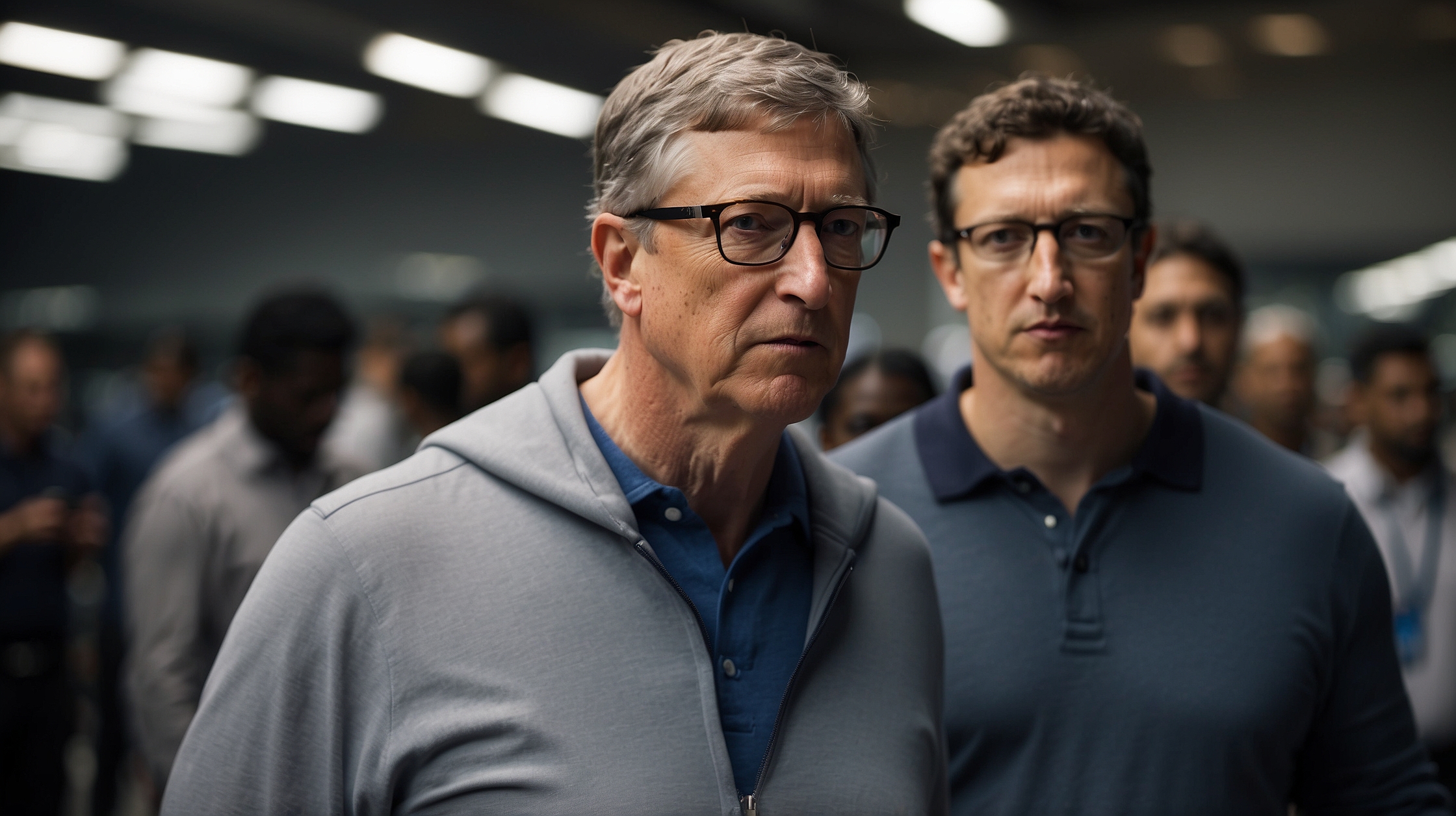
In a world where technology giants continuously outpace one another, the declaration of the smartphone’s “death” is nothing short of revolutionary. Elon Musk, Bill Gates, and Mark Zuckerberg—each a titan across the arenas of innovation—have cast a bold vision of a post-smartphone future. Their predictions revolve around advanced technologies such as brain-machine interfaces, artificial intelligence, and augmented reality that promise to liberate us from the rectangular screens we’ve grown all too attached to.
Yet, while some tech leaders are preparing funeral dirges for the device that changed the world, Apple’s CEO is singing a different tune. With Apple still basking in the monumental success of each iPhone generation, and billions of users worldwide reluctant to give up their beloved devices, Apple’s stance reflects a different, perhaps more measured outlook on innovation. Instead of dismissing the smartphone, Apple is doubling down—improving, evolving, and even reimagining what a smartphone can be in a highly connected digital future.
Despite the allure of futuristic ideas like Neuralink and AI glasses, many ask: are consumers ready—or willing—to make the leap away from their phones? And if the smartphone is truly on its last breath, why is one of the world’s biggest companies betting everything on its continued relevance?
Overview: Where Apple and Other Tech Giants Stand on the Future of Smartphones
| Tech Leader | Position on Smartphones | Highlighted Technology |
|---|---|---|
| Elon Musk | Smartphones are obsolete | Neuralink (brain-computer interfaces) |
| Mark Zuckerberg | Transitioning beyond smartphones | AR glasses, Metaverse |
| Bill Gates | Post-smartphone devices coming soon | AI-powered devices |
| Tim Cook (Apple CEO) | Smartphones remain vital | Next-gen iPhone, integration with Vision Pro |
What changed this year in the tech landscape
This year witnessed intensified discussions about the limitations and future replacement of smartphones. The sudden surge in interest around AI-driven applications and wearable tech reached a boiling point when high-profile technologists proclaimed that the smartphone era was nearing its close. Several announcements made waves—Elon Musk emphasized that Neuralink has achieved successful brain-to-computer interface trials; Zuckerberg showcased AR and VR solutions through Meta’s initiatives; and Gates pointed towards an AI-first mobile ecosystem that doesn’t rely on traditional hardware models.
Contrastingly, Apple’s strategy remains grounded. The tech giant launched yet another groundbreaking iPhone model while revealing incremental but crucial advances in its ecosystem, particularly with the integration of their Vision Pro augmented reality headset. Apple’s approach suggests not a technological revolution, but rather, an evolution—one that reinvents the smartphone rather than discards it.
Why some believe the smartphone is already dying
Several elements are fueling this belief. Smartphones—once central to every facet of modern life—are now seen by some as limiting. Attention spans are shrinking, mental health ramifications of screen addiction are increasingly verified by studies, and smarter, more intuitive technologies are entering the fray to occupy the roles iPhones and Androids once exclusively held.
Innovators like Musk and Zuckerberg argue that devices such as brain-computer interfaces and immersive AR hardware could relieve users from constant screen dependency. They envision a future where digital experiences are seamlessly woven into daily life, without having to constantly look down at a glowing rectangle.
We’re already cyborgs. Most people don’t realize that—with smartphones and computers, you have superpowers. The next natural step is to interface directly with the brain.
— Elon Musk, CEO of Neuralink
Apple’s firm position: The smartphone isn’t going anywhere
Apple CEO Tim Cook has taken a distinctly different view from his contemporaries. In public appearances and behind closed doors, Apple has shown no signs of preparing for a post-smartphone world. Instead, the company continues to place the iPhone at the center of its multi-device strategy, bolstering it with accessories like the Apple Watch, AirPods, and soon, Vision Pro. From Apple’s perspective, it’d be premature—and fiscally irresponsible—to bury its most lucrative product line.
By focusing on refining iPhone features such as computational photography, on-device AI processing, and stronger integration with home and wearable devices, Apple is reinforcing the smartphone’s role—not eliminating it. Their continual investment underscores a belief that the smartphone still has an indispensable part to play in our immediate technological future.
The smartphone has been the most successful consumer device in history—and there’s still immense potential to shape its future for generations.
— Tim Cook, CEO of Apple
How Apple’s approach contrasts with the competition
While other tech leaders pour resources into long-view technologies that might not take hold for another decade, Apple’s philosophy is rooted in immediate user experience. Rather than trying to replace the iPhone, the company seems to be augmenting it with complementary technology. The Vision Pro headset, Apple’s most ambitious push into AR and VR, is not positioned to replace the iPhone—but to expand upon it, offering a broader, immersive experience that still relies heavily on the phone as a controller and content manager.
This divergence in approach raises a vital question: is it better to invest in existing, profitable avenues while preparing in parallel for the future, or is a full pivot the only way to stay ahead? For now, Apple bets on continuity, not disruption.
Winners and losers in this philosophical divide
| Winners | Losers |
|---|---|
| Apple and other traditional smartphone makers | Startups investing solely in experimental devices |
| Consumers who value reliable, incremental upgrades | Hardware companies dependent on AR/VR market saturation |
| App developers in current smartphone ecosystem | Brands phasing out mobile support prematurely |
Why consumer trust and behavior matter more than predictions
Regardless of how brilliant or revolutionary a technology may be, the consumer ultimately decides its fate. The average user is hesitant to abandon their smartphone—which has become more than just a gadget. It’s a companion, personal assistant, family photo album, and often a workspace. For the majority of people, the smartphone remains indispensable—no matter what futuristic alternatives are dreamed up.
Trust also plays a significant role. Consumers are wary of embedding chips into their brains or relying on headsets with limited portability. Apple’s slow and deliberate trajectory helps maintain user trust by extending features without radical shifts. This continuity feels safer and more manageable for most users.
Big technological leaps often fail not because the tech isn’t good—but because users aren’t ready. Apple knows this, and that’s why it’s winning the long game.
— Jane Morris, Consumer Tech Analyst
Where the future might actually take us
It’s fair to say that both visions may coexist for years to come. While Meta and Neuralink explore the boundaries of neural and immersive interfaces, Apple appears content steering the ship of careful, consumer-friendly evolution. Perhaps the smartphone’s “death” has been greatly exaggerated—or maybe it’s being reincarnated in a form more familiar and seamless than we’ve yet imagined.
What’s clear, however, is that the debate has reinvigorated innovation. Whether we are ready to interface with devices using our minds or eyes alone remains debatable. The immediate future seems to support Apple’s viewpoint: the smartphone is still king—but the courts of technology, innovation, and public perception remain highly dynamic.
Frequently Asked Questions
Is the smartphone really ending soon?
According to experts like Elon Musk and Bill Gates, radical new technologies are on the horizon, but smartphones are still deeply integrated into daily life and are not going away anytime soon.
What future technologies might replace smartphones?
Technologies such as brain-computer interfaces, AR glasses, and AI assistants are being developed as potential alternatives, but mass adoption is likely years away.
Why is Apple still investing in smartphones?
Apple believes in evolving the smartphone by improving features and ensuring smoother integrations with upcoming devices like Vision Pro, rather than replacing it entirely.
How does Vision Pro relate to the future of mobile devices?
Apple’s Vision Pro headset enhances user experiences and expands the iPhone’s functionality, but it’s not designed to be a full replacement for smartphones.
Will most users adopt AR or brain interface devices?
Mass consumer adoption may be slow due to trust, privacy, and behavioral comfort barriers. Most people are still heavily reliant on familiar smartphone routines.
Is Apple at risk of falling behind by not moving away from smartphones?
Not necessarily. Apple’s steady approach and focus on user experience may prove to be more successful as consumers prefer evolutionary changes over revolutionary leaps.
How do developers view this post-smartphone era?
Many developers are still heavily invested in the mobile app ecosystem. While some are preparing for future platforms, smartphones remain their primary market.
Can alternative devices work without a smartphone?
Most emerging devices still require smartphones for support or content delivery. A true standalone replacement is still in concept phase for now.