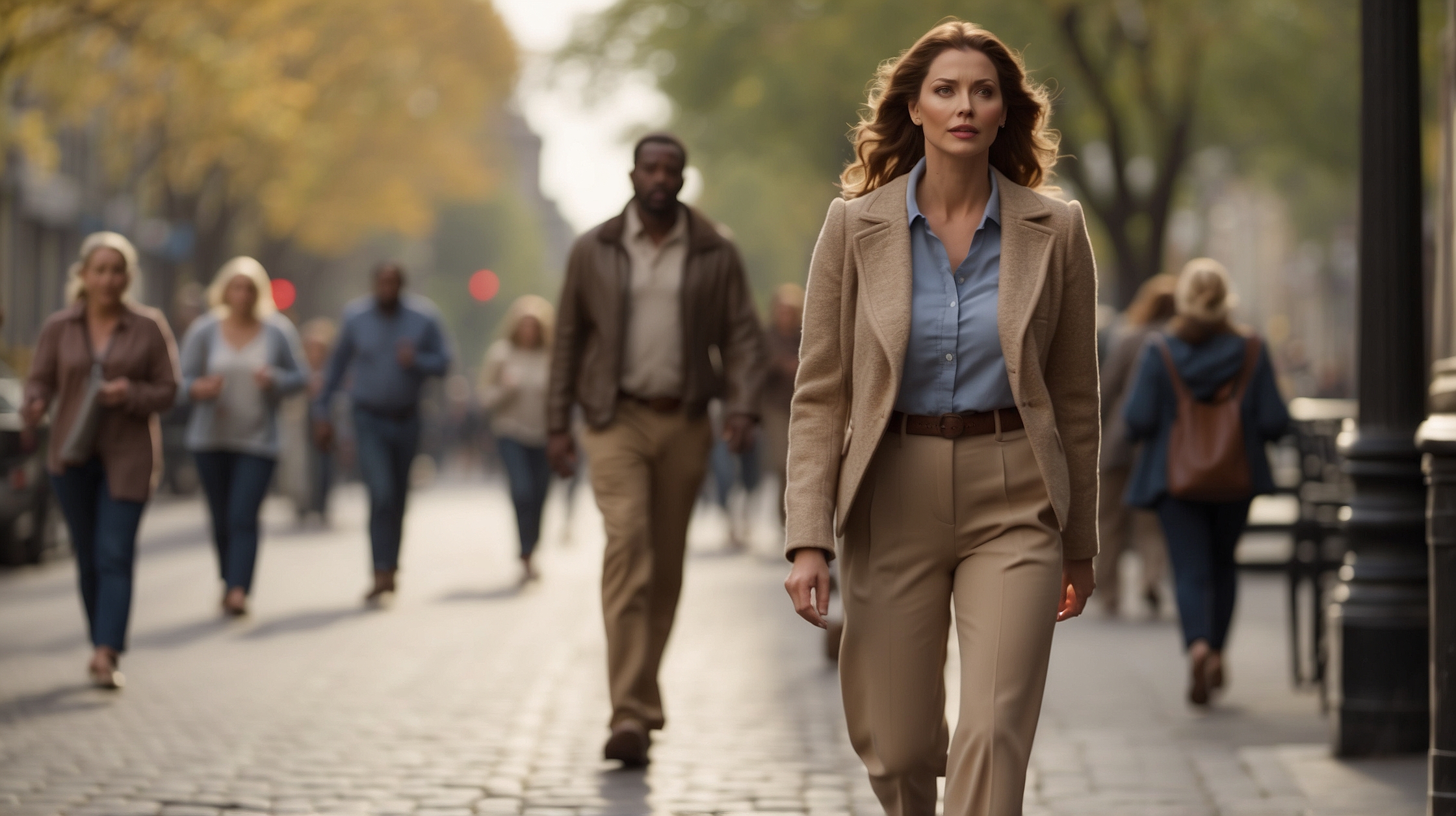
In a bustling city crosswalk during rush hour, it’s easy to spot the fast walkers. Eyes forward, steps brisk, dodging slower pedestrians as if every second counts. For years, speed walkers were applauded—not just for their purposeful pace, but also for what it seemed to suggest: superior fitness, better time management, and a commitment to health. Social media even turned the “fast-walking city dweller” into a trope of productivity and success. But what if that rapid stride isn’t a sign of wellness at all?
Recent research sheds a surprising new light on what’s behind our walking speed. Contrary to popular belief, those with a more urgent pace may not be the healthy role models we imagined. Instead, a growing body of data suggests that **fast walkers are often more anxious, mentally unstable, or carrying deep psychological burdens**—not necessarily in better physical shape. This controversial insight is sending waves through how we interpret body language and social behavior in public spaces.
For years, public health guidelines and fitness tracking apps encouraged faster steps as a sign of a healthier heart and a more efficient lifestyle. However, researchers are now separating voluntary fitness efforts from subconscious behavioral patterns—revealing that **fast walking might be more about what’s happening inside the mind, not the muscles**. Let’s explore why, and what it might mean for how we view mental and emotional health in public spaces.
What we’ve misunderstood about walking speed and health
| Topic | Summary |
|---|---|
| Common Belief | Fast walking indicates better health and productivity |
| New Insight | Fast walkers may exhibit higher anxiety or emotional instability |
| Lead Research | Psychologists analyzed gait patterns and mental health correlations |
| Physical Fitness Link | Not all fast walkers are in better shape; some are mentally agitated |
| Public Impact | Raises awareness about mental health manifestations in daily behavior |
Why people assumed fast walkers were healthier
It’s no mystery how walking speed became synonymous with health. Studies have long pointed to **brisk walking as an effective cardiovascular exercise**, with benefits including lower risk of heart disease, reduced obesity rates, and improved blood pressure. People who weren’t necessarily running but moved at a fast clip were considered “active”—a word that sits comfortably in wellness culture.
The rise of fitness tracking wearable devices further cemented the idea that movement speed correlates directly to health. Apps with “pace goals” created measurable targets and incentives for users to increase their average walking speed. Over time, fast walkers were seen as naturally healthier individuals—disciplined and in control. But researchers now challenge this view with data showing that **mental distress often plays a role in this behavior**.
The psychological profile of a fast walker
Fast walking can indeed be a reflection of good physical conditioning—but in many cases, **it may also reveal chronic stress, social anxiety, or even feelings of instability**. One psychological interpretation is that fast walkers unconsciously try to avoid certain social interactions, get away from triggering environments quickly, or feel an anxious urgency to control their pace in uncertain surroundings.
“Walking rapidly offers a sense of autonomy and escape for anxious individuals. It’s a subtle form of self-medication—movement as a distraction.”
— Dr. Lila Kim, Behavioral Psychologist
These insights were derived from observed patterns during neuropsychological assessments where participants’ walking speeds were monitored under varying emotional and cognitive states. Researchers found striking patterns: increased walking pace often coincided with elevated cortisol levels, indicating stress.
How to distinguish fitness walking from anxious pacing
Not all fast walkers are suffering from anxiety—but there are often contextual signals that help differentiate intent. **Fitness-driven fast walkers typically have a consistent routine, proper posture, and show signs of physical control**, such as rhythmic breathing and a relaxed gaze. Meanwhile, those whose brisk pace stems from psychological unrest may display traits like darting eyes, clenched fists, tense jawline, and a noticeable avoidance of eye contact or surroundings.
In fact, some professionals point to directional patterns. Anxious walkers often change paths abruptly, cross streets to avoid crowds, or walk in near-isolation zones despite having alternate convenient routes. These choices paint a more nuanced picture of what might be influencing their stride.
The rise of performative speed walking and urban anxiety
In dense urban centers, where efficiency and productivity are glorified, walking quickly isn’t just habitual—it’s performative. Many individuals feel compelled to walk quickly as a way of signaling their value in a fast-paced society. But this pressure can evolve into a **competitive race driven by psychological stress** rather than health goals.
“Cities amplify these behaviors. There’s adrenaline, environmental overstimulation, and the desire to fit into a culture of hustle—all of which contribute to faster, more erratic movement habits.”
— Chen Wei, Urban Sociologist
This phenomenon extends into youth culture as well. Teens and young adults, grappling with uncertainty and identity development, may project confidence or professionalism through purposeful movement—masking internal struggles or insecurity. It becomes clear that fast walking, though seemingly trivial, is layered with personal and social narratives.
Consequences we often overlook
The belief that fast walking is universally good may lead to **overlooking signs of emotional distress**, especially in personal or professional environments. Employers, for instance, might reward brisk behavior without recognizing it as a manifestation of burnout or high-anxiety. Similarly, friends and family may assume someone is “doing well” if they’re always “on the move.”
Ignoring these cues can prevent early interventions in mental health, allowing emotional imbalance to worsen over time. Teachers, therapists, and parents might benefit from paying closer attention to walking behavior—not as a diagnostic tool, but as one data point among many that signals inner unrest.
What this means for everyday interactions
Recognizing the full spectrum of motivations behind walking speed helps challenge our assumptions and opens the door to **more compassionate interpretations of daily behavior**. Whether it’s a coworker pacing the hallway or a loved one rushing through the grocery aisle, our collective understanding of these actions can shift from judgment to empathy.
“Instead of complimenting someone for being ‘always in a hurry,’ we might start asking how they’re sleeping, or if they’re feeling overwhelmed.”
— Lena Ortiz, Clinical Mental Health Counselor
This doesn’t mean we stigmatize walking fast—but it does mean we consider context more deeply. It’s a call for socially-informed observation, where mental health awareness is seamlessly integrated into how we read and react to the world around us.
Winners and losers of this changing perspective
| Winners | Losers |
|---|---|
| Mental health advocates pushing for nuanced behavior interpretation | Wearable fitness brands promoting speed as health indicator |
| Behavioral psychologists and neurobiologists studying gait | Pop wellness influencers oversimplifying activity metrics |
| Workplace wellness programs addressing anxiety holistically | Hyper-productivity culture driven by appearances |
Frequently asked questions about walking speed and mental health
Does walking fast always mean you’re anxious?
No, walking fast can be a sign of fitness, purposefulness, or habit. But in some cases, particularly when paired with behavioral cues, it can signal anxiety or emotional distress.
Can mental health really affect how I walk?
Yes. Studies suggest that emotions like fear, anxiety, or urgency can alter your pace and walking patterns. Mental states can manifest physically in subtle ways.
Should I be concerned if I often feel the urge to walk quickly?
If your need to move fast is accompanied by restlessness, chest tightness, or emotional overwhelm, it may be worth discussing with a mental health professional.
How can I tell if someone’s fast walking is due to stress?
Look for indicators like poor posture, rushed or erratic decisions, tense muscles, and an anxious facial expression. Context and consistency help determine motivation.
What are healthier ways to manage anxiety besides walking fast?
Mindfulness techniques, breathing exercises, therapy, regular workouts, and structured routines can effectively manage anxiety without relying solely on physical escape.
Can fast walking still be part of a healthy lifestyle?
Absolutely. Brisk walking is a great form of low-impact exercise. The key is understanding why you’re doing it: for health, or out of stress or compulsion.
Are there tools to better understand my walking habits?
Yes. Some fitness trackers and mental wellness apps now include emotional correlation data. Journaling or self-awareness practices can also help.
What should I do if I think my walking habits are anxiety-driven?
Consider speaking with a therapist to explore underlying causes. Awareness is the first step; early intervention can lead to lasting emotional resilience.