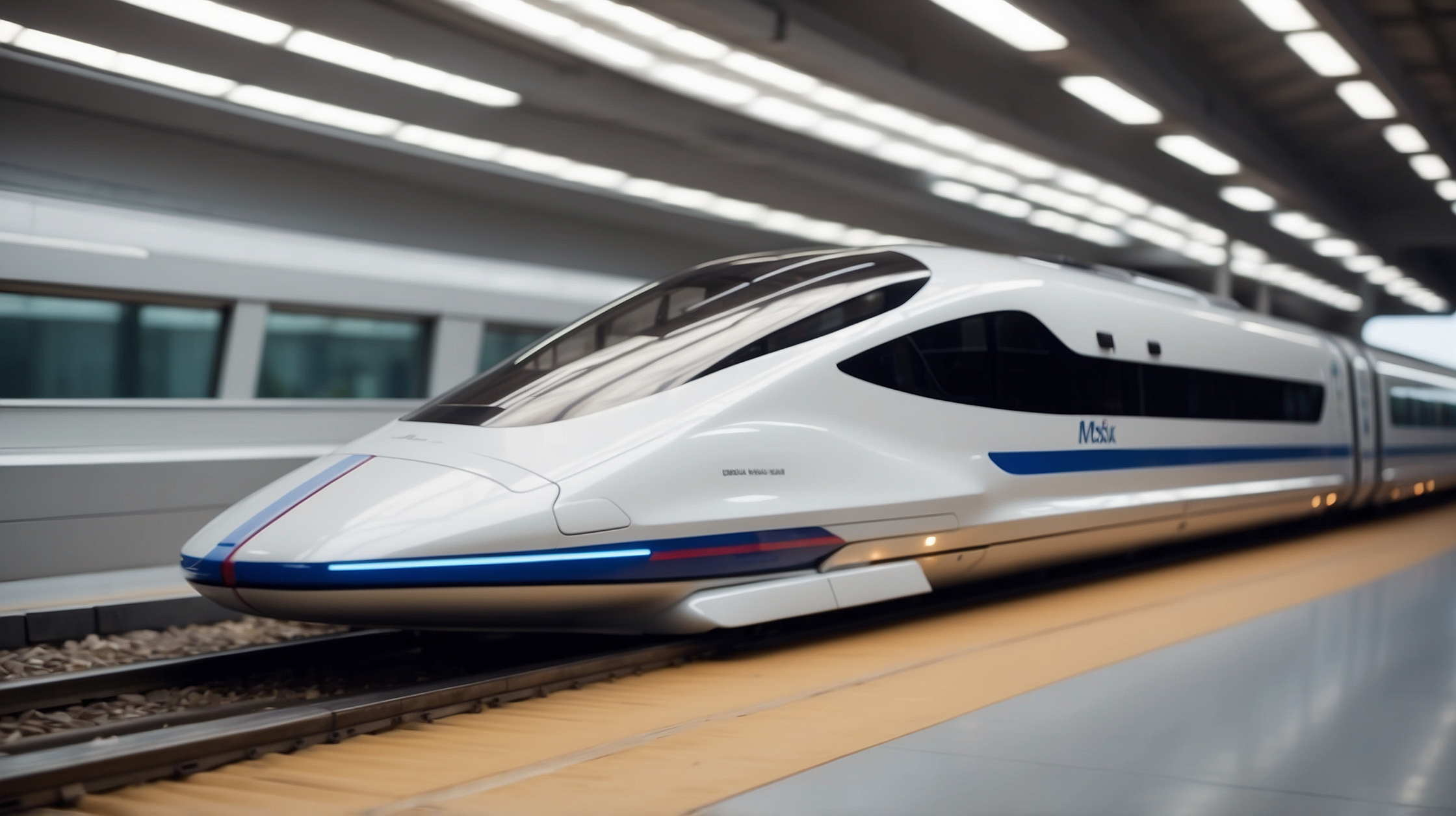
Imagine silently hurtling down a magnetic track at speeds over 600 kilometers per hour, gliding seamlessly above the ground without touching the rails. For years, high-speed rail systems have pushed boundaries, but now, China’s latest technological marvel is rewriting what we thought possible. The unveiling of the world’s fastest **maglev train** marks the beginning of a transformative era for transportation — where ultra-high-speed meets sustainable innovation.
In a country known for its rapid infrastructure development, China has once again made headlines with a transportation breakthrough that is more than just fast — it’s groundbreaking. This is not just another train launch; it’s a quantum leap in magnetically levitated (maglev) travel. Packed with cutting-edge features and backed by a robust research initiative, this train is poised to redefine intercity travel globally, but more importantly, reshape domestic connectivity within China itself.
Created by China’s state-owned CRRC Corporation, the newly revealed maglev train now holds the title as the **fastest ground vehicle in commercial prototype**. With the potential to outrun commercial airplanes on short-haul routes, it promises to reduce travel times across major cities in ways once thought impossible — all without laying a finger on fossil fuels.
China’s revolutionary maglev train at a glance
| Country: | China |
| Developed by: | CRRC Corporation |
| Max speed: | 620 km/h (385 mph) |
| Technology used: | Magnetic Levitation (Superconducting) |
| Status: | Prototype completed and tested |
| Distance Capability: | Mid-to-long distance intercity travel |
| Notable Comparisons: | Faster than Japan’s SCMaglev and Germany’s Transrapid |
What makes this train the fastest in the world
The core of this high-speed achievement lies in **magnetic levitation**, a technological concept first introduced decades ago but turned into reliable high-speed transport only in recent years. Unlike conventional trains that use wheels rolling over steel tracks, maglev trains float on a magnetic cushion — eliminating contact friction, substantially increasing speed, and decreasing maintenance wear.
This new train from China is built using **superconducting magnets**, which allow it to hover about 10 cm above the track, eliminating all ground contact resistance. As a result, it can accelerate and decelerate far more efficiently compared to traditional high-speed rail. Engineers reported the capability to reach **620 km/h**, making this prototype the fastest ground vehicle on Earth. For comparison, Japan’s existing SCMaglev prototype tops out around 603 km/h.
Why it’s more than just speed
Speed often grabs headlines, but this maglev train represents more far-reaching innovations. Its **lightweight body** is made of high-strength materials to resist deformation at high velocities. Inside, the train is equipped with state-of-the-art control systems, passenger safety technologies, and low-noise engineering.
More importantly, its zero-emission design positions it as a **sustainable solution**. Unlike airplanes or diesel locomotives, this train doesn’t burn fossil fuels during operation. Instead, it leverages electric energy with minimal losses — a big leap toward eco-friendly transport in rapidly urbanizing countries.
“This isn’t just an upgrade — it’s a reimagining of transport. We’re looking at the future of intercity travel.”
— Zhang Wenyue, Lead Engineer, CRRC Corp. (placeholder)
Where the maglev could run first
Current infrastructure remains the biggest hurdle for widespread maglev deployment. Although a handful of cities in China like Shanghai already use maglev on short-haul routes (most notably its airport train), broad national implementation would require the construction of **specialized tracks**. Unlike conventional high-speed rail, maglev trains demand unique guideways due to their levitation system.
Potential corridors being considered include **Beijing to Shanghai**, **Chengdu to Chongqing**, and eventually extensions into the Greater Bay Area. If implemented, the new train could **cut a 3-hour high-speed journey to just 90 minutes**, challenging short-haul airlines and dramatically freeing capacity on other routes.
How it could disrupt air travel and high-speed rail
One of the most striking possibilities is how maglevs could affect **domestic air travel**. On routes up to 1,500 km, maglevs offer comparable — or superior — travel times when factoring in airport security, check-in, and boarding procedures. Unlike planes, passengers can arrive minutes before departure, thanks to seamless boarding and minimal pre-departure requirements.
This means that airlines operating short-haul flights within China may face stiff competition, especially on oversaturated routes. Additionally, Japan and Germany will likely accelerate their own maglev development to keep pace, signaling a potential **global arms race in high-speed rail innovation**.
| Winners | Losers |
|---|---|
| Commuters in large Chinese metros | Short-haul domestic airlines |
| Eco-conscious transportation advocates | Conventional high-speed rail |
| Innovation in public transportation tech | Private car dependency for intercity travel |
Who is behind the innovation
The project is spearheaded by **China Railway Rolling Stock Corporation (CRRC)**, the largest rolling stock manufacturer in the world. The initiative is part of China’s broader 2035 railway plan, which seeks to integrate **new energy-efficient technologies** into its transportation framework.
The prototype unveiled was developed at a dedicated test facility in Qingdao, where CRRC has an advanced R&D hub for rail technologies. The project also took input from academic institutions, materials engineers, and magnetic field physicists — making it a truly multi-disciplinary innovation.
“We expect this train to be a template for the next generation of high-speed urban connectivity.”
— Li Feng, Transportation Policy Specialist (placeholder)
What lies ahead for passengers
For future travelers, the experience will be dramatically different from today’s trains. Ultra-smooth rides, quiet operation, and technologically advanced interiors are expected to **elevate the passenger experience** beyond current high-speed rail services. Potential features include real-time health monitoring, internet-of-things (IoT) electrical systems, and AI-operated service bots inside the coaches.
However, these luxuries won’t be cheap at the start. Initial tickets are expected to rival or slightly exceed airfare prices. Yet, as infrastructure scales and competition rises, passenger costs could drop dramatically — helping to democratize ultra-fast travel for the masses.
Maglev vs high-speed rail: What’s the long game?
The debate between maglev trains and high-speed rail is set to intensify. While **high-speed rail** continues to be more cost-effective in terms of track-building and train manufacturing, maglevs offer long-term savings through reduced part wearing, lower maintenance, and greater energy efficiencies.
In the long run, China’s move suggests an optimistic bet on **maglev supremacy** — especially for corridors expected to carry more than 50 million passengers annually. It’s not just about shrinking travel time, but about rethinking how cities, economies, and regions connect.
Frequently asked questions
What is the top speed of the new Chinese maglev train?
The train can reach a maximum speed of 620 kilometers per hour (approximately 385 mph), making it the fastest ground vehicle prototype in the world.
Who developed this magnetic levitation train in China?
The train was developed by CRRC Corporation, China’s leading state-owned rail manufacturing company.
How does maglev technology differ from normal trains?
Unlike traditional trains that use wheels on tracks, maglev trains levitate above their guideway using powerful magnets, eliminating ground contact and drastically reducing friction.
Will passengers feel motion or turbulence at such high speeds?
No — the ride is designed to be exceptionally smooth due to the lack of friction and noise. Passengers will likely experience a more stable journey than on planes or conventional trains.
How soon will this maglev train be operational?
While a working prototype has been tested, commercial operations will depend on infrastructure development, which could take several more years.
Is the new maglev environmentally friendly?
Yes. It operates using electric energy and produces no direct emissions, making it a powerful solution for sustainable transportation.
Which routes could be the first to use maglev trains?
Potential early corridors include Beijing to Shanghai or Chengdu to Chongqing, though specific approvals are still pending.
How much will tickets cost on the maglev train?
Pricing hasn’t been confirmed, but early costs may be on par with airline tickets before becoming more affordable with broader use.