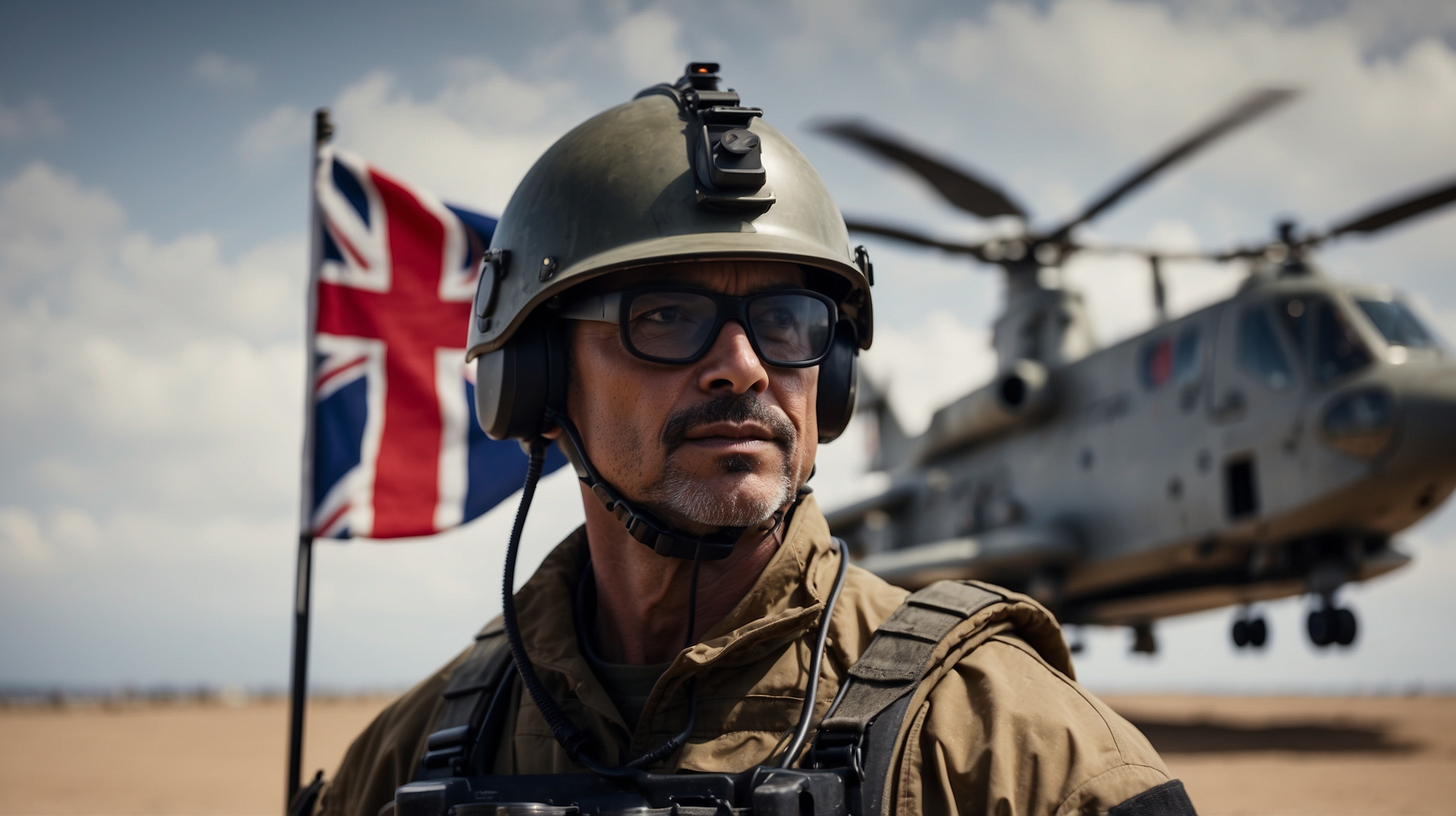
In the silent depths of the ocean, where traditional human senses fail, the future of naval defense is being shaped by advanced algorithms and international collaboration. In one of the most significant defense technology partnerships of the year, the United Kingdom and France are joining forces to develop a new AI-powered mine-hunting system—a move that could reshape not just maritime security, but the broader landscape of autonomous military operations. As naval forces worldwide modernize, the dual pressure of strategic threats and technological breakthroughs has spurred a new era of innovation beneath the waves.
This development isn’t merely a product of modern necessity—it’s a testament to how alliances and pioneering artificial intelligence are converging to tackle one of the most persistent and dangerous threats at sea: naval mines. Deceptively silent and capable of disabling ships with catastrophic damage, mines linger as an old adversary in a new age. With this joint effort, France has stepped in to help Britain create a system more intelligent, autonomous, and adaptable than ever before, using AI not only to detect and neutralize threats faster but to do so with reduced risk to human life and cost to nations.
What makes this initiative especially compelling isn’t just its promise to transform naval mine warfare—it’s also a reflection of evolving military strategies, where interoperability, digital integration, and rapid decision-making are the new standards. As we explore this story, there’s an urgency pulsing beneath the surface: to lead in an AI-enhanced defense environment, global cooperation and innovation are no longer optional—they’re strategic imperatives.
What changed this year in mine-hunting strategy
| Project Name | MMCM (Maritime Mine Counter Measures) Program |
| Involved Countries | United Kingdom and France |
| Technology Used | Artificial Intelligence, Autonomous Systems, Robotics |
| Lead Developer | Thales Group |
| Project Goal | Develop AI-based systems to detect and neutralize sea mines autonomously |
| Project Status | Testing and early deployment phases underway |
France’s role in unlocking autonomous marine defense
France is not a new player in the space of underwater defense innovation. But in the current context, it has emerged as a critical partner in advancing the UK’s capacity to evolve beyond legacy mine detection techniques. By injecting expertise from its national defense contractor Thales Group, renowned for its innovations in underwater systems, France contributes not only engineering resources but also operational standards shaped by decades of experience in both NATO and EU missions.
What’s new is the scalability and scope offered by artificial intelligence. The deployed technology under the MMCM (Maritime Mine Counter Measures) initiative shifts the battlefield from reactive detection to predictive and preemptive capabilities. France’s experience with AI integration across land, air, and naval platforms means this partnership can hit the ground running—not just with hardware, but with the neural networks required to make hardware intelligent.
“This partnership marks a milestone in European defense—a shift from just collaboration to true technological integration.”
— Jean Lapierre, Senior Naval Systems Analyst (Placeholder Quote)
How the AI-based system is changing naval operations
Traditional mine-hunting missions rely heavily on human divers and manually piloted vehicles, often under duress and in hostile conditions. The AI-powered system eliminates many of these risks by deploying autonomous vessels equipped with advanced detection sensors and machine learning models trained to identify, evaluate, and engage undersea threats.
At the core of the MMCM system are surface and sub-surface drones that don’t just execute commands—they learn from mission outcomes. With every operation, the software gets smarter, adapting to new environments and increasingly sophisticated adversarial mines, some designed to avoid detection by sending misleading acoustic signatures.
With AI, the goal is real-time decision making—detection, classification, and engagement all occur within minutes, not hours, and with safer distance between the threat and the human decision-makers. The technology is also modular, allowing it to work across multiple platforms and integrate with NATO’s broader maritime defense command structure.
Why NATO and EU allies are watching closely
Both NATO command structures and Europe’s defense coordination forums are treating this UK-France AI mine-hunting initiative as a potential template for multilateral defense efforts going forward. As autonomous and AI-enabled systems become more common, interoperability is no longer a “nice to have”—it’s a decisive advantage or a detrimental gap.
With the MMCM program, the UK and France are setting the bar. They demonstrate not only a technical proof of concept but also a viable political framework for joint investment and shared defense outcomes—crucial in a time when emerging technologies often spark unilateral races rather than cooperative strategies.
“This is a realignment moment, not only in how we defend our waters but how we collaborate strategically.”
— Lt. Col. Margaret Wilson, UK Naval Defense (Placeholder Quote)
Contracts, timelines, and tech partners involved
Thales Group leads development, backed by several key subcontractors specializing in underwater robotics, signal processing, and autonomous navigation. Although not all partners have been disclosed, the UK’s defense procurement body and the French DGA (Direction Générale de l’Armement) play essential funding and oversight roles.
Initial systems are already in testing off the coasts of the UK and France, with timelines projecting limited operational capability by 2025. Full deployment across NATO-aligned naval fleets could span into the next decade, though fast-tracked trials may accelerate adoption.
| Winners | Losers |
|---|---|
| UK and French Naval Forces | Legacy mine-hunting manufacturers |
| AI tech development firms entering defense | Manual detection teams facing obsolescence |
| NATO interoperability and shared R&D initiatives | Standalone national procurement strategies |
What this means for future naval combat scenarios
Naval warfare is fundamentally changing. With the integration of AI, future combat scenarios will rely more on machine-learned risk assessments, autonomous decision-making, and predictive maintenance over the unpredictability of human error. This leads to faster missions, fewer casualties, and reduced operating costs.
More importantly, it repositions mine warfare from a slow, defensive task to a rapid, offense-oriented tactical maneuver. Ships may soon be accompanied not by human dives teams—but by intelligent, responsive drone fleets capable of clearing zones on-the-fly before any attack or engagement begins.
“AI unmanned vehicles give us agility we’ve never had. We’re not just reacting—we’re dictating the undersea domain.”
— Marine Tech Officer, UK MoD (Name Withheld)
Security experts urge global governance for AI militarization
Although the current partnership paints a positive innovation picture, security experts warn about the fast-tracking of autonomous weapons without global oversight. There’s rising concern that without standardized protocols, AI can misidentify targets or be tampered with by enemy cyber teams.
Calls are growing for NATO and UN peers to establish core rules around how AI engages in lethal actions, what degree of human oversight must be maintained, and how accountability is structured. As the UK and France lead with transparency in MMCM, they may also be defining an ethical roadmap for the world to follow.
Frequently asked questions about the UK-France AI mine-hunting initiative
What is the MMCM project?
The MMCM (Maritime Mine Counter Measures) project is a joint initiative by the UK and France to develop AI-powered systems for autonomous mine detection and neutralization in marine environments.
Who is developing the technology?
The core technologies are being developed by Thales Group with oversight and funding from UK and French defense agencies.
When will it be operational?
Testing is currently underway, with limited operational capability expected by 2025 and full deployment projected for later in the decade.
What makes this different from traditional mine-hunting?
Unlike traditional systems that rely on human divers and manually controlled equipment, this new AI system uses autonomous vessels and machine learning to perform faster, safer, and more efficient detection and clearance tasks.
Why is France involved in the UK’s defense project?
France contributes technological expertise, joint funding, and operational frameworks that benefit both nations under NATO collaboration protocols.
Are other countries involved?
While primarily a UK-France project, the MMCM initiative is being closely watched by other NATO allies, many of whom may adopt the system in the future.
What role does AI play in the system?
AI handles real-time detection, classification of mines, decision-making on engagement strategy, and adapts through mission learning to become more effective over time.
Is this a step toward fully autonomous warfare?
Partially—it represents one phase of integrating AI into defense. While autonomy is growing, human oversight remains a critical component of decision-making structures.