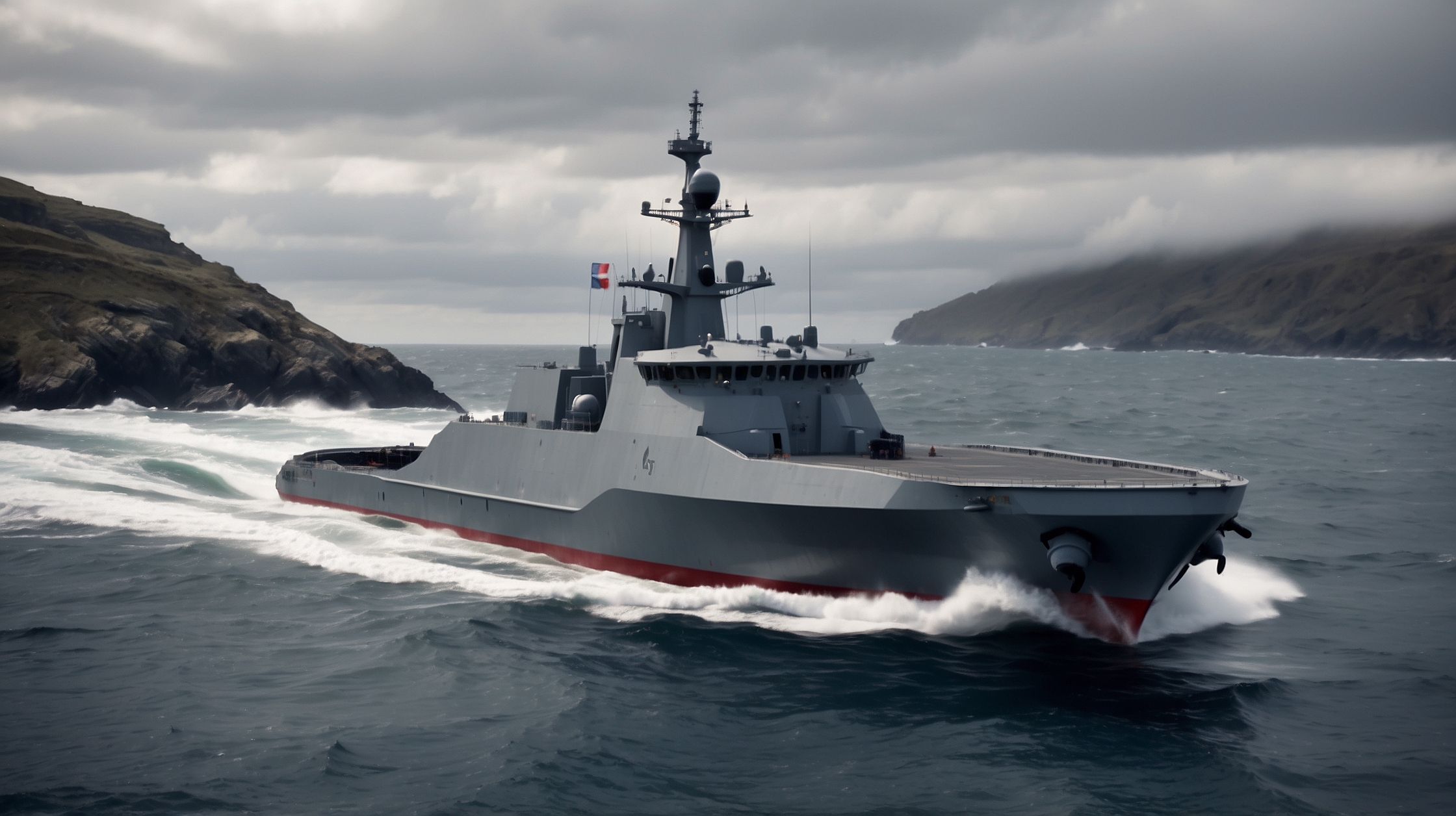
In a new age of maritime warfare where technological dominance often trumps sheer firepower, a quiet revolution is occurring beneath the surface of the oceans. Britain and France, two venerable naval powers with centuries of shared—and competitive—history, are now collaborating on a cutting-edge solution to a pressing modern threat: mine detection and disposal. As naval mine technology has evolved, old methods of demining have become less effective and more dangerous, prompting advanced navies around the world to seek AI-powered alternatives.
This collaboration marks a significant step for both nations, driven by mutual necessity and a forward-looking vision. Naval mines, once thought of as low-cost nuisances, are now potential strategic weapons that can cripple trade routes, obstruct naval operations, and endanger civilian shipping. As such threats evolve, so too must the means of neutralizing them. The UK has turned to France for help in crafting an artificial intelligence-based hunting system capable of detecting and removing mines with minimal human risk.
Rather than each country inventing its own system, this joint effort mirrors a larger European security and defense strategy. It echoes a precedent of shared military development between the two nations, including the Lancaster House Treaties of 2010, which also emphasized joint R&D to reduce costs and increase interoperability. The result this time? A potentially game-changing leap forward in mine-hunting technologies designed for safer seas in increasingly complex geopolitical waters.
Overview of UK-France Mine Hunting AI Project
| Project Name | Maritime Mine Counter Measures (MMCM) |
| Countries Involved | United Kingdom and France |
| Technology Focus | AI-based Mine Detection and Disposal |
| Initiated | 2023 |
| Goals | Reduce human risk, automate mine hunting, improve response time |
| Development Partner | Thales Group |
Why this partnership signals a shift in naval warfare
What makes this development especially noteworthy is its emphasis on autonomy and artificial intelligence. Instead of sending human divers or crewed ships into potentially fatal situations, the new systems being developed under the MMCM (Maritime Mine Counter Measures) project rely on unmanned vehicles. These machines can be launched either from shore or from sea, scanning the waters for mines using sonar and advanced recognition systems driven by AI algorithms.
For France and the UK, two NATO members with global naval responsibilities, the need for such technology is more than theoretical. Likely hotspots such as the English Channel, the North Sea, and even farther into Indo-Pacific routes require readiness against stealthy, low-tech, and yet very disruptive underwater mines. AI offers rapid scanning capabilities that not only neutralize existing threats more quickly, but also reduce the resource burden on naval fleets.
The role of Thales Group and AI technology
At the heart of the MMCM project lies Thales, the French multinational renowned for defense technology and digital innovations. The company’s specific contribution lies in building the software and command systems that allow unmanned vessels—both surface and submersible—to carry out mine-hunting missions autonomously.
Thales’ technology uses high-frequency sonar paired with machine learning models that have been trained on thousands of undersea images. The system can now identify the subtle silhouettes of different mine types, distinguishing them from natural seabed features or debris. These AI-driven tools are installed on robotic platforms equipped with sensors, cameras, and emission-free propulsion systems, making them discreet and extremely difficult to detect.
“This isn’t just an engineering achievement; it’s a paradigm shift in how we approach undersea warfare. Human sailors are kept at a safe distance, and the system does the dangerous work.”
— Jean-Luc Ingert, Defense Analyst (placeholder)
What makes this AI system different from older mine detection tech
Traditional mine clearance has been a high-stakes task fraught with risk. It often involved manually guided ships using towed sonar, relying on human analysis and decision-making. This left ample room for error and exposed crews to potentially fatal environments.
The MMCM system removes much of this risk. Featuring fully integrated sensors and AI logic, it not only scans but also interprets and classifies underwater threats in real-time. The intelligence gathered by these systems enables command centers to make strategic decisions faster and with greater confidence. This aspect is especially valuable in defending choke points or naval bases where time is a critical factor.
“Autonomy in underwater operations is inevitable, but what makes our design robust is the layered redundancy—sonar, vision, navigation—working in harmony.”
— Marie Castellan, Head of Naval Research, Thales (placeholder)
Who benefits the most from this development
| Winners | Losers |
|---|---|
| Royal Navy & French Navy | Traditional defense contractors reliant on manned vessels |
| Maritime trade and civilian shipping lanes | Insurgent or hostile forces using maritime mines |
| Allied defense strategy within NATO | Operators of outdated demining fleets |
Broader implications for NATO and Europe’s naval stance
This bilateral project sends a clear message: modern defense strategies are increasingly collaborative and tech-driven. The MMCM system can be a blueprint not only for the UK and France but also for other NATO allies seeking to modernize their maritime tactical systems. Given escalating tensions in Eastern Europe and in the Indo-Pacific, such proactive defense mechanisms could play pivotal roles in both deterrence and active defense.
Moreover, centralizing mine detection under a unified AI system can enhance interoperability among NATO forces. Exercises and real deployments will require less calibration time, and data sharing between member states can become more efficient and reliable. All this translates to improved battlefield intelligence and operational readiness.
“MMCM shows that Europe can lead in autonomous maritime defense—it’s a wake-up call and a pathfinder project rolled into one.”
— Dr. James Wetherby, European Security Think Tank (placeholder)
Challenges and potential hurdles to widescale deployment
No project of this scale is free of complications. For one, the data used to train AI systems must be exhaustive and diverse to avoid false positives—something that could delay real-time operations. Additionally, interoperability across different navies means ensuring standard protocol adoption, a notoriously time-consuming process in multinational coalitions.
Fiscal constraints may also stall or dilute deployments. Nations under tight defense budgets may hesitate to invest upfront, even if long-term benefits are quantifiable. Training and transitioning personnel from traditional platforms to AI-led systems will require renewed focus on technical education within the ranks.
“Operationalizing AI systems is only half the battle; maintaining trust in their decisions is the true test.”
— Capt. Eliza Rohan, Naval Tech Analyst (placeholder)
What to expect in the coming years
Early trials of the MMCM system have shown promising results, with near-complete accuracy in mine classification and high mission automation levels. In the next one to two years, the Royal and French navies are expected to fully deploy these systems on a rotational basis in key maritime zones.
Eventually, as deployment scales, AI mine-hunting could become a unified capability across not just NATO, but also partner nations including Australia, Japan, and other Indo-Pacific actors seeking to secure their coastal waters.
Frequently Asked Questions about the MMCM AI system
What is the main purpose of the MMCM system?
The MMCM is designed to autonomously detect, classify, and neutralize undersea mines, reducing human risk and operational delays.
Who developed the MMCM system?
The system is developed collaboratively by the United Kingdom and France with core technologies from the Thales Group.
How is AI used in the MMCM system?
AI is used to analyze sonar data, recognize suspect objects, and provide real-time threat assessment without needing constant human supervision.
Will this system replace existing mine-hunting ships?
Eventually, yes. It is intended to supplement and gradually replace older manned mine-hunting fleets with more efficient autonomous systems.
Where will it be deployed first?
Initial deployments will likely occur along strategic choke points in the English Channel and Eastern Atlantic.
Is this system interoperable with other NATO navies?
Yes, interoperability is a core design directive, enabling use across joint missions and multi-nation exercises.
Can the AI system work in all marine conditions?
While generally effective, extensive environmental variables like murky water or dense debris may somewhat impact performance, something ongoing updates aim to address.
How does this benefit civilian sectors?
Secure shipping lanes mean fewer disruptions for cargo and trade, reducing economic loss from potential mine threats.