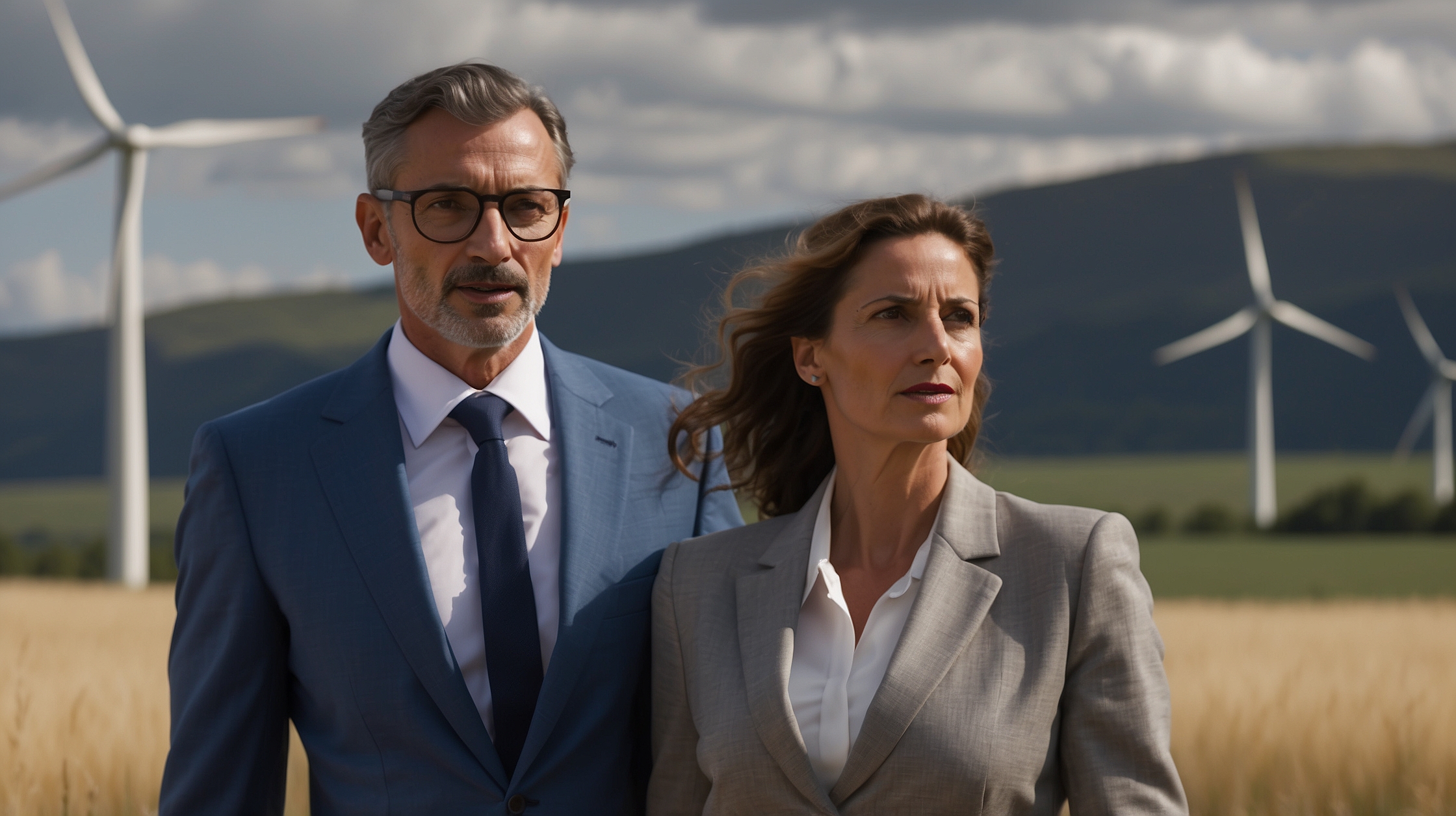
As the world grapples with the accelerating impacts of climate change, nations are racing to develop sustainable energy sources. Some countries have long held a commanding lead in this high-stakes race, with Germany, Spain, and the Nordic nations routinely setting the benchmark for clean energy adoption. But a new contender is preparing to challenge that leadership. France, long reliant on its massive nuclear fleet, is making a decisive pivot toward renewables, and the ambitions are bold—if not revolutionary.
In a surprising yet strategic shift, the French government has announced plans to **triple its renewable energy capacity** by 2035, signaling a new era in European energy dynamics. This ambitious plan doesn’t just concern wind turbines and solar panels—it signifies a broader reimagining of how one of Europe’s largest economies powers homes, fuels industries, and supports its electric vehicle revolution. The policy rollout and investment scale suggest France is not only catching up but potentially primed to lead.
The move comes at a crucial time. Russia’s invasion of Ukraine and the resulting energy crisis laid bare Europe’s overreliance on imported fossil fuels. France, traditionally shielded from volatility due to its heavy dependence on nuclear energy, now sees renewables as a strategic hedge against geopolitical risk and a pathway to energy independence. It’s a story of transformation, ambition, and fierce competition—and one with implications far beyond France’s borders.
What changed this year
| Key Element | Details |
|---|---|
| Announcement Date | September 2023 |
| Goal | Triple renewable power capacity by 2035 |
| Current Renewable Share | 19.3% of final energy consumption |
| Target Renewable Share | Approx. 60 GW wind, 100 GW solar by 2035 |
| Total Investment Required | Expected to exceed €100 billion |
| Key Sectors Covered | Electricity, heating, transport |
Until recently, France was a mild performer in Europe’s renewable scorecard. Overshadowed by Germany’s vast wind farms and solar dominance, and Spain’s swift green transition, France’s star remained its nuclear program, which covered about 70% of national electricity demand. But things turned during President Emmanuel Macron’s 2023 policy announcement, which laid out an unprecedented plan to increase renewable output drastically over the next decade. It marked a sharp policy pivot intended to reduce fossil fuel reliance, diversify energy sources, and support climate goals under the EU’s broader Fit for 55 package.
Why France is now betting big on renewables
Several catalysts have converged to spark France’s renewable ambitions. Firstly, the **energy insecurity** amplified by the Russia-Ukraine conflict has driven home the cost of fossil fuel dependency. Secondly, the aging of France’s nuclear fleet—many reactors approaching or exceeding 40 years—requires either significant reinvestment or supplementary alternatives.
The European Union’s climate goals, which compel member states to reduce greenhouse gas emissions by at least 55% by 2030, have added a regulatory push. France’s laggard position in clean energy adoption placed it under increasing pressure from Brussels, as well as from domestic environmental groups and climate-conscious voters.
Finally, market dynamics played a role. Significant reductions in the cost of solar panels and offshore wind technology, coupled with improved battery storage systems, have made renewables more economically viable than ever. By scaling up investment now, France hopes to stimulate domestic industries, foster job creation, and reduce reliance on foreign energy sources.
A new national roadmap backed by law
The cornerstone of France’s renewable surge is a new legislative framework that streamlines approvals for green energy projects. Under the updated policy, municipalities are now mandated to define zones for renewable deployment, known as “acceleration zones,” enabling faster construction of turbines and solar arrays.
Another key reform simplifies permitting for offshore wind farms—a sector France has been slow to develop. New tenders will aim to quadruple offshore capacity from less than 1 GW today to 18 GW by 2035. Solar energy also gets a boost through incentives for placing panels on commercial rooftops and unused public spaces. The goal is to reach close to 100 GW of solar capacity in just over a decade, up from 15 GW today.
“Our ambition is to make France a leader in renewable energy while preserving the equilibrium of our energy mix.”
— Agnès Pannier-Runacher, Energy Minister of France
How industries and local governments are responding
This shift is not only about government mandates. Corporations and municipalities are expected to play a pivotal role in implementing these targets. Energy companies like EDF and Engie have committed to scaling up solar and offshore wind operations significantly. Meanwhile, regional governments are already drawing up acceleration zones to prepare for streamlined approvals.
Moreover, the plan includes capacity auctions worth several billion euros to incentivize innovation and encourage competition among green tech developers. Schools, city halls, and even churches may soon host solar arrays as part of decentralized power generation strategies.
The initiative also aims to **cut red tape** that has long delayed renewable projects. France has historically faced protests from both environmental groups and NIMBY-ism in rural regions. The new framework addresses local skepticism with revenue-sharing models, where communities hosting renewable facilities can gain financially.
Winners and losers in France’s green energy revolution
| Winners | Losers |
|---|---|
| Renewable energy startups | Traditional fossil fuel importers |
| Solar and wind developers | Local opposition groups (losing influence) |
| French energy grid and battery storage tech | Nuclear advocates expecting reinvestment in old reactors |
| Job seekers in green tech sector | Land developers missing integration incentives |
Challenges that could delay the transition
Despite the momentum, the French energy transition is not without hurdles. Opposition from local residents and environmental purists could slow new wind farm construction. Infrastructure upgrades are also essential, as many rural areas lack the transmission capacity needed to integrate renewable projects.
There are also regulatory tensions at the EU level. Because France counts nuclear energy as “low-carbon” but not strictly “renewable,” some of its energy stats can appear inflated compared to nations like Germany or Denmark. This ambiguity could lead to disagreements over EU subsidies and classification of energy types in the next budget cycle.
What this means for Europe’s clean energy race
France’s sharp turn toward renewables reshapes the balance of power in Europe’s energy policy theater. It sends a clear signal that even countries heavily invested in nuclear can—and should—diversify into wind and solar. For other EU members, especially Eastern European nations still clinging to coal, France sets an example of adaptive strategy amid shifting geopolitical realities.
Additionally, the move brings economic potential not just to France but to the EU as a whole. As the competition to manufacture, install, and maintain renewable tools intensifies, European companies could dominate a critical global sector—if policies align and follow-through is effective.
“France’s plan is one of the most comprehensive and aggressive in the EU. If implemented well, it could ignite a new green age for all of Europe.”
— Lukas Haider, Clean Energy Analyst (placeholder)
Frequently asked questions about France’s renewable plan
What is the main goal of France’s renewable energy plan?
France aims to **triple its renewable energy capacity** by 2035, focusing on rapidly expanding solar and wind infrastructure.
How much will the transition cost?
Estimates suggest the cost will exceed **€100 billion**, covering infrastructure, incentives, and grid modernization.
What types of renewable energy is France focusing on?
The emphasis is on **solar power**, **onshore wind**, and a large ramp-up in **offshore wind farms**.
Why shift from nuclear when it’s already low-carbon?
While nuclear is low-emission, the aging fleet and recent energy security concerns have made diversification into renewables necessary.
Who will manage implementation at the local level?
**Municipal governments** will define “acceleration zones” and work with companies to facilitate project development.
Will this create jobs in France?
Yes, the green energy surge is expected to create tens of thousands of jobs in construction, maintenance, and R&D sectors.
When will we start seeing new projects go live?
Some initial projects are already fast-tracked, with **significant expansions expected from 2025 onward**.
How does this affect the EU’s climate goals?
France’s aggressive entry into renewables helps the EU get closer to its **Fit for 55** emissions targets, strengthening regional climate leadership.