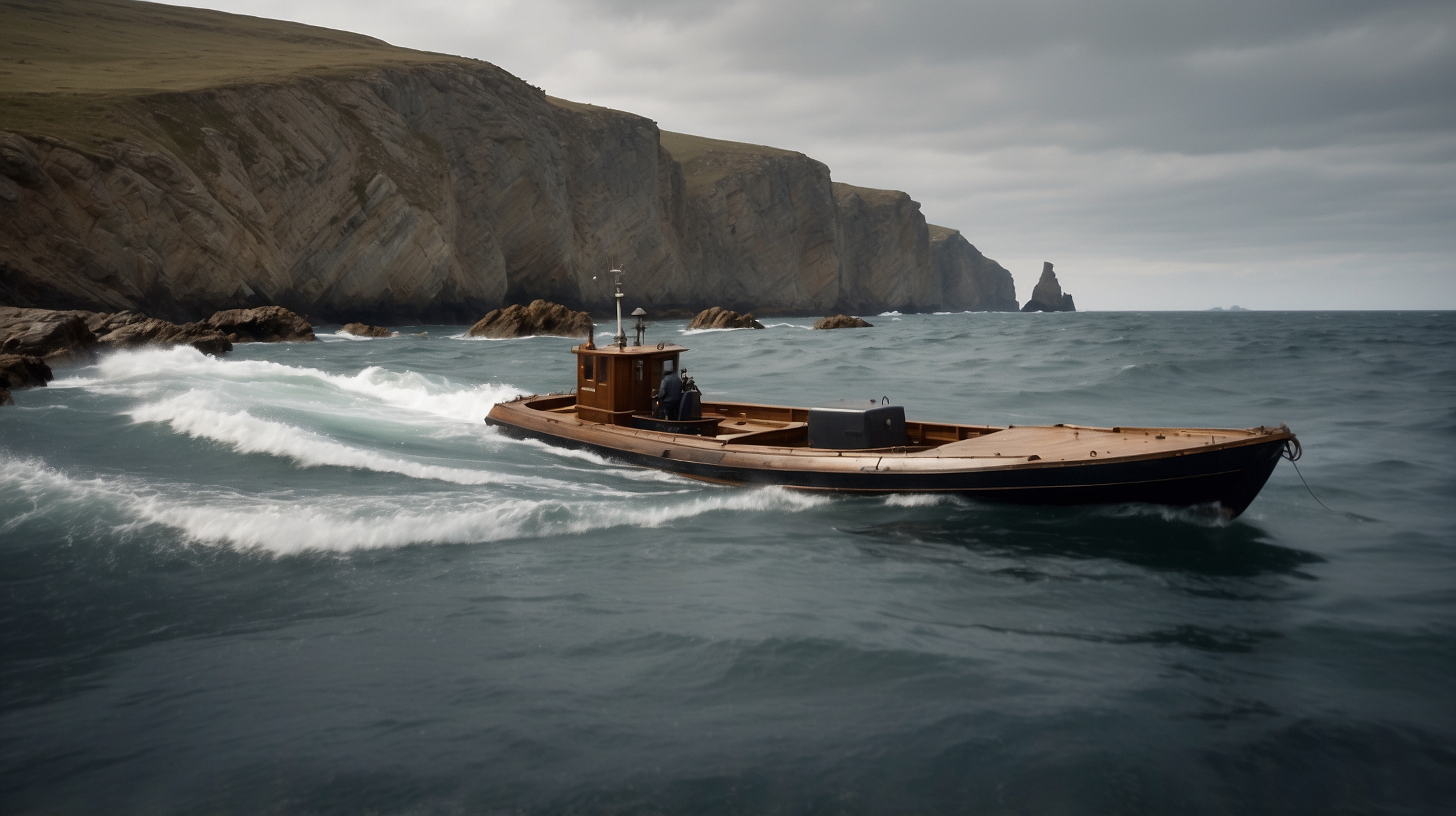
In the heart of Europe, where empires have risen and fallen and borders have shifted with history’s ever-changing winds, one legacy of remarkable endurance has quietly prevailed — a record that stretches across oceans and centuries. It’s not a military triumph, a cultural cornerstone, or even a culinary feat for which France so often takes credit. Instead, it’s a feat of precision, collaboration, and exploration: **France’s Hydrographic and Oceanographic Service**, the world’s oldest of its kind, and it recently marked **over 305 years of continuous operation**.
Unbeknownst to most outside specialized maritime circles, France has quietly maintained the longest-running national agency dedicated to charting the world’s oceans. It’s a testament to the country’s rich naval heritage — and more than that, it challenges the often-held perception that the United Kingdom has always held the reins of hydrographic authority. For seafarers, researchers, defense agencies, and environmentalists, this news reshapes a longstanding narrative.
Despite the monumental significance of such a milestone, this record has been largely uncelebrated and unknown, even in France. However, its impact is profound. From mapping trade routes during the age of sail to supporting climate change research in the modern era, this agency has been at the helm of our understanding of the seas for over three centuries. Here’s why that matters now more than ever.
France’s historic legacy in maritime charting
| Founded | 1720 |
| Name | Service Hydrographique et Océanographique de la Marine (SHOM) |
| Status | World’s oldest hydrographic office |
| Headquarters | Brest, France |
| Functions | Mapping, navigation safety, oceanography, environment monitoring |
| Oversight | Ministry of Armed Forces, France |
| Global Reach | France’s overseas territories and international maritime missions |
How France quietly led the maritime mapping world
France’s claim to having the world’s longest-standing hydrographic service stems from **the official founding of SHOM in 1720**, a move that centralized naval charting efforts under royal authority. This predated Britain’s now-renowned Hydrographic Office — commonly associated with the British Admiralty — by nearly 75 years, as the UK didn’t establish its equivalent until 1795.
Though both nations contributed heavily to nautical exploration and the expansion of global trade networks, it was France that embedded its hydrographic efforts into military, commercial, and scientific endeavors early on. What makes this especially impressive is how the service has emerged intact through revolutions, two World Wars, and technological upheavals in maritime science.
Today’s SHOM serves a critical role in both national defense and global scientific collaboration. From enabling safer navigation for commercial fleets to providing essential oceanographic data for understanding climate change, their mandate has evolved substantially — but the central mission remains the same: to observe, record, and illuminate the world’s waters.
The evolution of a centuries-old institution
SHOM wasn’t always a sleek, high-tech agency. In the 18th century, it began as a small naval service tasked with improving maps for French frigates sailing distant waters. Over time, a committed community of **cartographers, geographers, and naval engineers** built the tools and traditions that SHOM still honors today.
In recent decades, SHOM has transformed into a leading-edge organization on par with modern technological advancements. It now spearheads digital nautical charts, deep-sea surveys, and ocean current modeling. From historic parchment maps to dynamic satellite-integrated systems, the agency has successfully bridged the analog–digital divide.
“This longevity isn’t just about age — it’s about continuity and innovation. SHOM’s ability to adapt through centuries speaks volumes about France’s commitment to maritime expertise.”
— Dr. Jean-Marc Lefèvre, Oceanographic Historian
International relationships and scientific collaborations
SHOM plays a key part in international maritime safety through its integration with the **International Hydrographic Organization (IHO)**. As a founding member, France has set many standards now considered global benchmarks in marine mapping. This includes contributing to bathymetric databases, standardizing chart symbology, and defining ocean boundaries used in global treaties.
The agency also works with multiple international partners on projects involving rising sea levels, biodiversity hotspots, and undersea earthquake monitoring. Its work is essential for coastal planning, climate resilience, and global shipping route management — especially in an era of melting ice caps and increasingly extreme weather.
Why this recognition matters now
In a world growing ever more concerned with **climate change, geopolitical naval tensions**, and global trade logistics, understanding maritime domains is more critical than ever. The confirmation of France’s 305-year hydrographic authority isn’t just a matter of historical record — it’s a signal of enduring relevance.
It also corrects a widespread misconception that the UK has long held the title of the oldest hydrographic service. While the British Admiralty certainly played a central role in maritime navigation during its colonial era, **France was the first to formalize hydrographic administration**. This revelation shifts the axis of prestige in maritime heritage just as drastically as would updating maps of the seas themselves.
Who benefits from SHOM’s work today
| Winners | Why |
|---|---|
| Commercial Shipping | Access to accurate, updated charts for global trade routes |
| Coastal Communities | Climate and sea level data help with urban planning and safety |
| Ocean Researchers | Rich datasets lead to advancements in marine biology and climate science |
| National Defense | Precise nautical intelligence enhances naval strategy |
| Losers | Why |
| Outdated Assumptions | Previously held narrative of British hydrographic dominance challenged |
| Private Mapping Firms | Public access to SHOM data can undermine proprietary software markets |
The cultural significance of maritime cartography
The sea has always symbolized both danger and discovery, and behind every voyage lies the unseen labor of those who mapped the waters. SHOM’s legacy represents **a fusion of art, science, and statecraft**. The maps it provides are stories of possibility — charting connections between nations, ecosystems, and economies.
In an age when GPS and satellite imaging rule, it’s worth remembering that the foundations of modern technology lie in centuries of painstaking observation. Every layer of digital marine data owes tribute to the hand-drawn charts once etched by SHOM artisans centuries ago. This historical thread reminds us that innovation often springs from tradition.
“France’s hydrographic achievements are truly world-class. Their work informs not just navigation but also geopolitics, climate modeling, and marine ethics.”
— Claire Dubois, Marine Geopolitics Analyst
What to expect in the next decade
Looking ahead, SHOM is investing in AI-enhanced mapping techniques, 3D seafloor simulations, and climate-resilient digital platforms. It aims to deepen its partnerships with African, Indo-Pacific, and Arctic nations. There’s also a conscious effort to democratize access to marine data, increasing transparency and empowering smaller nations to better understand their nautical rights and resources.
To sustain its leadership, France will need to continue balancing national interests with global collaboration, a challenge that SHOM seems well-positioned to accept. As oceans become both battlegrounds and laboratories, expect SHOM to remain influential far beyond Europe’s coastline.
Frequently asked questions about SHOM and maritime history
Is France really home to the world’s oldest hydrographic service?
Yes. France’s SHOM was established in 1720, making it the globe’s oldest national hydrographic agency, predating similar organizations in the UK and elsewhere.
What does a hydrographic service do?
It collects, analyzes, and disseminates data related to ocean depth, tides, seafloor topology, and coastal features to aid in safe navigation, defense, and environmental monitoring.
Why is hydrography still important in the GPS age?
GPS gives positional accuracy, but hydrography provides critical context — detailing underwater hazards, depth readings, and dynamic water conditions that satellites alone can’t fully deliver.
Where is SHOM headquartered?
SHOM is based in **Brest, France**, strategically located near both Atlantic naval facilities and critical marine research centers.
Does SHOM’s data contribute to climate research?
Absolutely. SHOM provides essential oceanographic data used in modeling sea level rise, ocean warming trends, and marine ecosystems.
Is SHOM only for military use?
No. While overseen by the Ministry of Armed Forces, SHOM serves a broad range of public, private, and scientific stakeholders around the world.
Can the public access SHOM data?
Much of SHOM’s data is publicly available, especially digital nautical charts and oceanographic summaries, though some sensitive areas remain classified for security.
How does SHOM compare to similar international agencies?
In scope, innovation, and history, SHOM is among the top maritime organizations globally, and its influence continues to grow through international partnerships and technological investment.