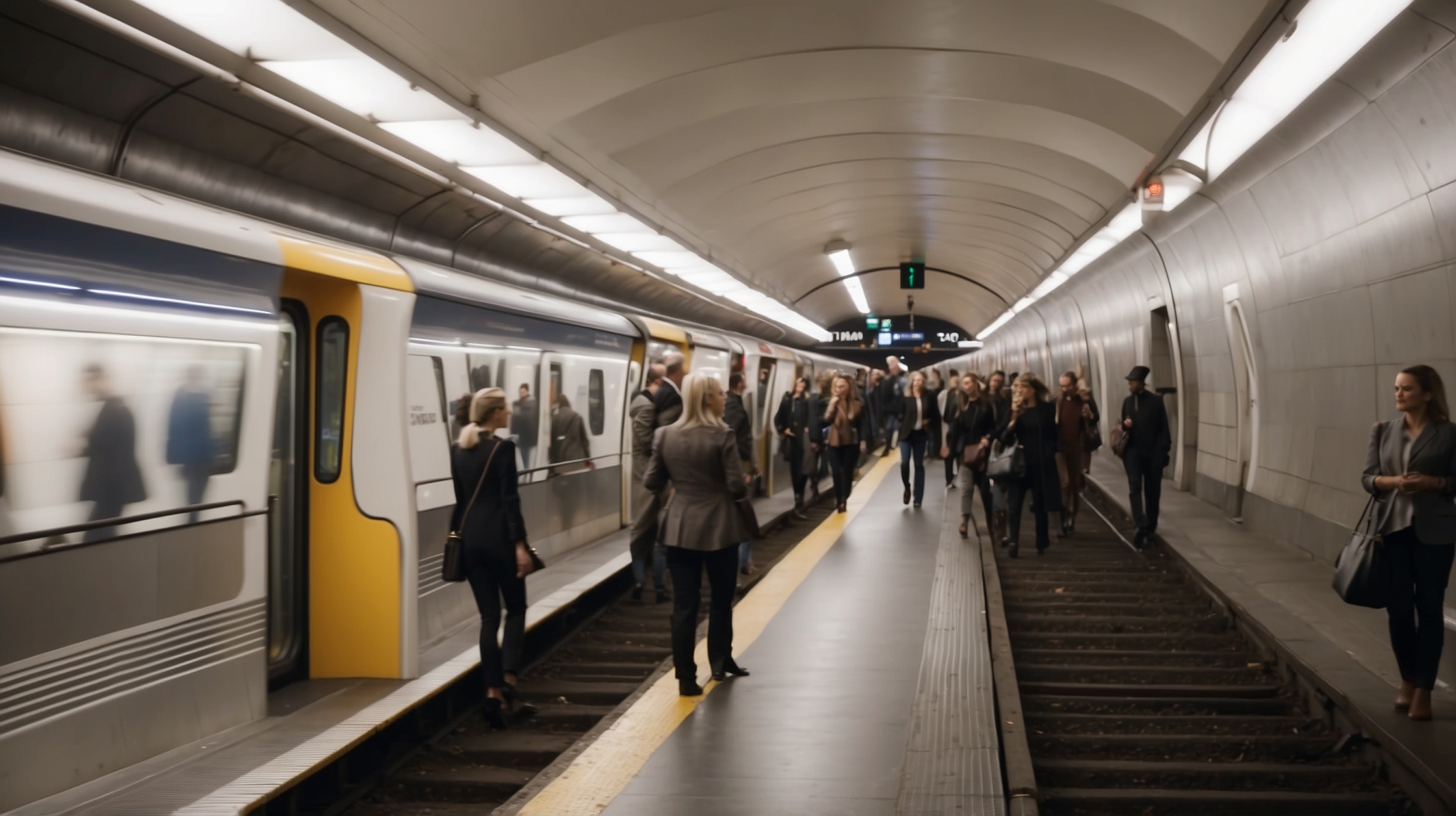
On a bright spring day in Melbourne, the announcement echoed from the heart of Victoria to the chambers of Paris—**France has officially joined the South-East Melbourne Suburban Rail Loop project**, one of the most ambitious transport infrastructure efforts in Australia’s modern history. In what experts are calling a landmark cooperative agreement, French engineering prowess will meet Australian ambition to bring to life a **90-kilometre orbital rail line around Melbourne**, drastically reshaping the commuter landscape for generations.
The historic partnership was sealed just weeks after intensive negotiations between French transport officials and Victorian state leaders. Worth an estimated **AU$75 billion**, the project isn’t just about laying tracks—it’s about defining the blueprint for urban mobility in Australia’s fastest-growing city, with France’s strong record in metros and high-speed rail acting as a critical supporting pillar. As Melbourne’s population surges beyond 5 million and pushes further into suburban sprawl, connecting the city more efficiently and sustainably has never been more vital.
This mega-project is about much more than trains. It’s about creating dynamic new economic zones, making previously inaccessible neighborhoods viable for development, and removing thousands of cars from the roads each day. The enlistment of France reflects not only global interest in Australia’s infrastructure pipeline but also a shared vision of sustainable urban progress. Here’s how this coming-together of nations around rails and tunnels is poised to revolutionize Australia’s southern capital.
Key facts about the Suburban Rail Loop and France’s involvement
| Project Name | Melbourne Suburban Rail Loop (SRL) |
| Length | 90 kilometres (orbital line around Melbourne) |
| Estimated Cost | AU$75 billion |
| Key International Partner | France |
| Segment Underway | SRL East (Box Hill to Cheltenham) |
| Expected Completion (SRL East) | Early 2030s |
| New Stations Under SRL East | Six |
Why France joined Australia’s biggest-ever transport project
France has long been a leader in **rail transport technologies**, boasting globally respected companies like Alstom and Thales, which have shaped metro systems from Paris to Santiago. But what led to France’s strategic commitment to Melbourne’s Suburban Rail Loop? According to statements from both countries’ officials, the French government and engineering firms were drawn by Australia’s stable long-term economic framework, its expansive urban development plans, and the sheer scale of the rail loop.
In a joint media release, ministers emphasized the shared goal of using **green, sustainable transport solutions** to power future growth. With massive tunnel boring operations, state-of-the-art stations, and long-term city-shaping potential, the SRL offers exactly the kind of complex challenge at which French engineering firms excel.
“This is more than a rail project—it’s a statement about what global cooperation around sustainable infrastructure can look like.”
— Philippe Varin, French Transport Collaborations Envoy
What the Suburban Rail Loop means for Melbourne residents
For generations, **Melbourne’s public transport network** has revolved around a central hub-and-spoke model. Trains, for the most part, head in and out of the CBD, requiring commuters traveling between suburbs to endure slow, roundabout trips or rely on cars. The SRL seeks to **break this mold**, allowing Melburnians to move directly between suburbs via fast, high-frequency underground trains.
The first phase—**Suburban Rail Loop East**—will link **Box Hill to Cheltenham** through 26 kilometres of twin tunnels and six new underground stations. Each station will act as a mini hub, complete with bus terminals, cycle paths, retail precincts, and housing developments. It’s a vision to link education (with stations near Monash and Deakin), jobs, and housing more intelligently, not just laying tracks but redesigning the cityscape of Melbourne’s east and south-east corridors.
“This rail loop gives us the opportunity to completely re-orient our transport and land-use thinking. It changes where people can live and how they access jobs and education.”
— Chloe Lin, Urban Planner & Transport Analyst
Winners and losers from the SRL development
| Winners | Losers |
|---|---|
| Suburban residents in Box Hill, Clayton, Monash, Cheltenham | Car-dependent commuters facing construction disruption |
| Property developers and local businesses near new stations | Smaller public projects delayed due to funding reallocation |
| Students commuting to Monash and Deakin universities | Transport critics wary of high costs and delayed completion |
| French engineering and urban design firms | Rival firms who lost bids for partnership roles |
How French technology will shape Melbourne’s rail future
The partnership opens the door to **advanced tunneling machines**, energy-efficient metro systems, and **cutting-edge traffic management tech** from France. These technologies, tested in the Paris Metro Grand project, will now be tailored for Melbourne’s suburban environment. Experts are particularly focusing on **driverless train systems**, noise-absorbing tunnel linings, and **automated signalling nodes**—all planning to debut in SRL East within the next decade.
Moreover, knowledge-sharing is on the agenda. French specialists will train Australian engineers on urban megaproject strategies, forging institutional knowledge that will serve the country well for future infrastructure developments.
Funding and long-term economic value
Critics often focus on the Suburban Rail Loop’s **hefty price tag**—AU$75 billion in total. However, the Victorian Government insists the long-term returns will outweigh costs. By sparking **job creation, increasing land value,** and reducing traffic congestion, the Suburban Rail Loop is expected to inject billions back into the economy. Additionally, with France’s involvement, financing structures could now include **box-funding models** and long-term public-private investment schemes, spreading risk while maintaining build momentum.
“Large-scale future-oriented spending tends to bring high net returns—not just encapsulated in money, but in quality of life and environmental resilience.”
— Dr. Hana Crosby, Infrastructure Economist
What changed this year to make the deal possible
While French firms and Australian officials have had dialogue for years, several triggering factors in 2024 accelerated the cooperation. Notable among them were:
- Completion of pre-construction survey and environmental approvals for SRL East.
- French trade mission prioritizing transportation projects in Indo-Pacific.
- Legislative green lights allowing foreign joint-venture tenders.
With these aligned, the stars were finally right for a **cross-continental urban transformation deal** to be made. It sets the stage not only for better infrastructure but potentially opens the door for more **France-Australia mega-collaborations** in energy, mobility, and urban tech.
Short FAQs about France joining Australia’s SRL project
What is the Suburban Rail Loop (SRL)?
The SRL is a 90km orbital railway around Melbourne connecting major suburbs without requiring travel through the CBD. It intends to reshape Melbourne’s public transport system and urban development for the next century.
Which part of the SRL is already under construction?
The first segment, SRL East, is under construction. It connects Cheltenham to Box Hill with six underground stations and is expected to be operational in early 2030s.
What role is France playing in the SRL project?
France is providing engineering, design, and tunneling expertise through public-private partnerships. French firms are also transferring smart rail technologies and construction techniques.
Why was France selected for the partnership?
France’s global leadership in metro and rail systems, particularly in dense urban zones, made them a valuable partner for managing the complex Suburban Rail Loop development.
Will the trains be made in France?
While it’s likely some components will be designed or sourced from France, final manufacturing decisions have not been announced. Australia has emphasized local job creation wherever possible.
How will the SRL benefit everyday commuters?
It will reduce reliance on the CBD, shorten east-west journeys, and integrate with current rail systems to provide smarter, faster access across suburbs.
What’s the estimated cost of the entire SRL project?
The full project is estimated to cost around AU$75 billion, making it the most expensive transport infrastructure program in Australian history.
Are there any environmental concerns or benefits?
Environmental assessments are in place to mitigate concerns. Long term, the SRL is expected to reduce car emissions and foster compact, sustainable urban living environments.