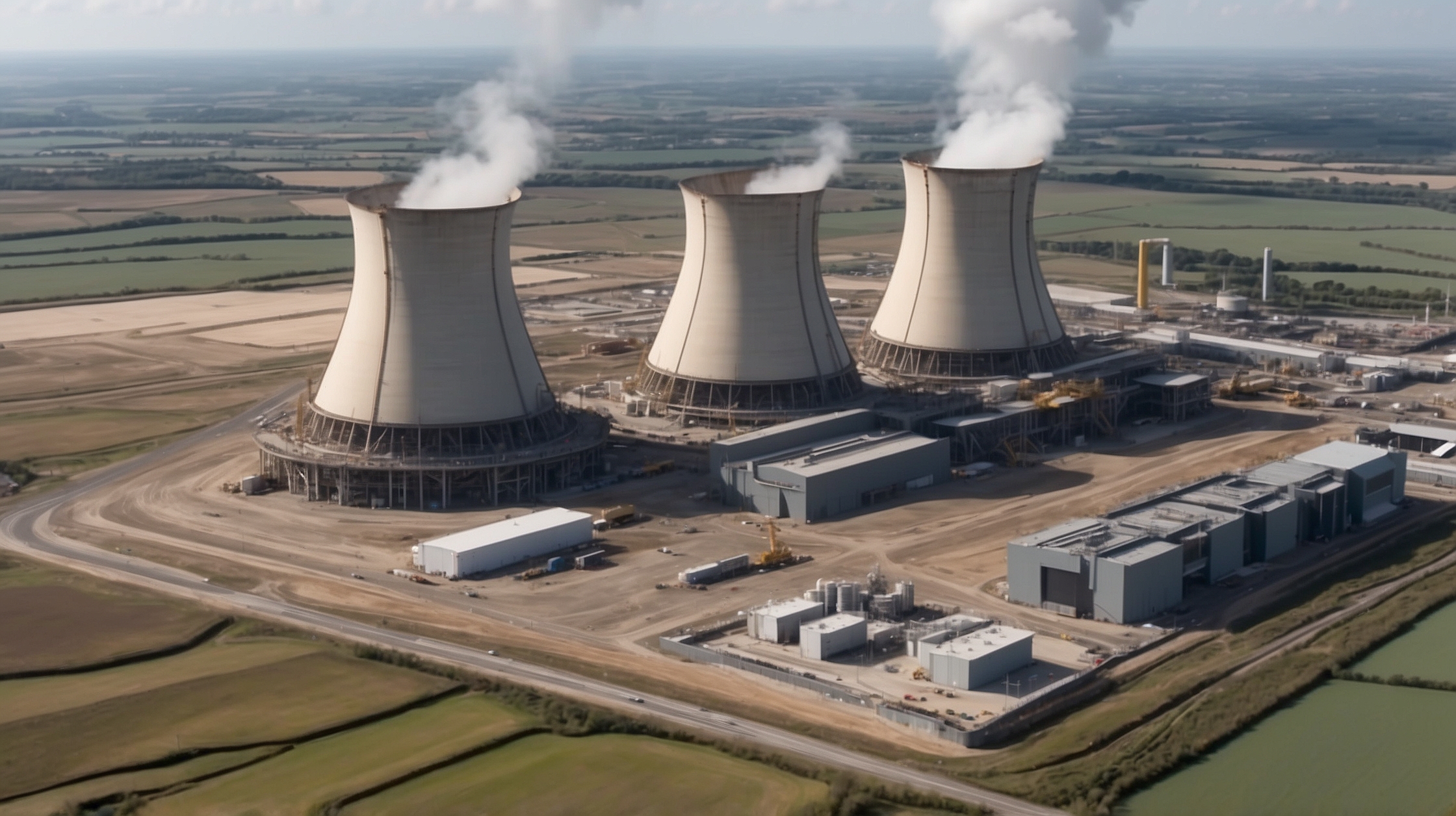
When the first rays of sun filtered through the misty dawn above Somerset, few locals could grasp the magnitude of what was arriving by sea. Months of international coordination, engineering precision, and logistical prowess culminated in a jaw-dropping spectacle at Hinkley Point C. A 500-ton nuclear component—equal in weight to about 70 African elephants—was gracefully lowered into place at Britain’s next-generation nuclear power facility. This wasn’t just another delivery; it was the heartbeat of the entire reactor system, arriving at the end of a 1,000-kilometer odyssey from the industrial heartlands of France.
This unprecedented feat is more than mechanical muscle at work. It represents a defining moment in Europe’s ambition to secure low-carbon energy for future generations. The sheer scale, risk, and precision involved signal a new era for mega infrastructure projects aimed at tackling climate change. As the 500-tonne component reached the Somerset shore—manoeuvred delicately through a specially constructed harbor at Combwich—the crowd of engineers, politicians, and onlookers knew they were witnessing history being made.
France and the UK collaborated closely on this high-stakes delivery to power Hinkley Point C, a multi-billion-pound cornerstone of Britain’s clean energy future. But behind the steel lies a deeper story—of international engineering cooperation, intense logistical planning, and the critical urgency of energy transformation.
A look at the massive effort to deliver a 500-ton reactor component
| Aspect | Details |
|---|---|
| Component Type | First Reactor Pressure Vessel (RPV) |
| Weight | 500 Metric Tons |
| Journey Distance | Over 1,000 kilometers |
| Departure | Chalon-sur-Saône, France |
| Arrival | Hinkley Point C, Somerset, UK |
| Key Function | Safely house the nuclear reaction inside Unit 1 |
| Estimated Lifespan | 60 years |
What makes the reactor pressure vessel so vital
At the heart of every nuclear power plant is the **reactor pressure vessel (RPV)** — and Hinkley Point C’s Unit 1 is no exception. This massive cylindrical steel container is designed to enclose nuclear fuel and maintain high-pressure environments necessary for a sustained chain reaction. Withstanding internal temperatures of over 300°C and built to last six decades, the RPV is not just a piece of the plant—it is the plant’s nuclear core.
Forged and precision-engineered in eastern France, the RPV was subjected to rigorous quality assurance, high-pressure hydraulic tests, and independent scrutiny from safety regulators in both countries. Its successful installation lays the groundwork for Hinkley Point C to begin energy generation in the coming years and is a defining milestone in the UK’s nuclear renaissance.
How the 1,000-km delivery was orchestrated
Transporting a 500-ton piece of equipment across international borders is no everyday job. The RPV’s voyage began in Chalon-sur-Saône in France, traversing internal waterways up to the port of Dunkirk. From there, it was carefully loaded onto a special barge and crossed the English Channel, before making its final approach to Somerset via the River Parrett and Hinkley’s custom-built wharf at Combwich.
This journey required synchronized timing with tides, bridge clearances, and road regulations. A fleet of modular transport systems—designed to distribute intense pressure evenly—carried the component the final stretch on land to the reactor site. Engineers lauded it as one of the most complex and high-risk infrastructure moves ever attempted in the UK nuclear sector.
Why this delivery matters for Britain’s energy future
Hinkley Point C is the first nuclear power station built in the UK in over two decades, and it’s slated to supply around **7% of the UK’s electricity demand**—enough to power 6 million homes. The successful delivery and installation of the RPV marks a point of no return for the project’s timeline.
With growing pressure to wean off fossil fuels and simultaneously ensure energy stability, **nuclear power is staging a quiet comeback**, and Hinkley Point C leads the charge. Once operational, it promises over 3.2 gigawatts of low-carbon energy—cementing its role as a key pillar in Britain’s commitment to achieving net-zero emissions by 2050.
“Every bolt, weld, and inspection on the Reactor Pressure Vessel was performed with one goal: safely energizing Britain’s low-carbon future.”
— Dr. Elena Carter, Nuclear Safety Engineer
Who’s behind the engineering marvel
The RPV was manufactured by Framatome, a French state-owned nuclear engineering firm with decades of experience. Its completion involved international oversight and support—from EDF (Électricité de France), the primary investor in Hinkley, to British regulators and engineers overseeing implementation.
EDF Energy, which operates multiple UK nuclear power plants, has partnered with China General Nuclear Power Group (CGN) in developing Hinkley Point C. Engineers and specialists from more than 20 nations contributed their know-how to safely design, test, transport, and position the component—making this a true global engineering triumph.
“This isn’t just a win for Hinkley; it’s a win for international collaboration in safe, clean energy.”
— Martin Hughes, Director of Plant Delivery, EDF Energy
Impact on jobs and regional economy
Beyond its environmental significance, Hinkley Point C is **one of the UK’s largest single-site construction projects**, projected to inject billions into the national and local economy. More than 22,000 jobs and 1,000 apprenticeships are expected to be created over the project’s lifetime, along with robust investments in local skills and infrastructure.
The delivery of the RPV is also **spurring secondary business ecosystems**, as local transport, port services, logistics companies, and hospitality providers receive unexpected boosts from the growing operation at Hinkley Point C.
Timeline for next phase and final completion
With the first RPV now installed, the next critical steps involve securing the unit’s internals, finalizing coolant systems, and integrating control electronics. Unit 1 is scheduled to begin power generation in 2027, with Unit 2 following by 2029. These dates are crucial—delays can mean escalating costs and lost capacity in addressing carbon reduction targets.
The UK government has reaffirmed its support for nuclear projects like Hinkley as being essential to long-term energy security, especially following fluctuations in global energy pricing and supply chain disruptions triggered by geopolitical events.
| Winners | Losers |
|---|---|
| EDF and Framatome | Anti-nuclear campaigners |
| Local Somerset economy | Fossil fuel industry |
| UK Clean Energy Objectives | Delayers of nuclear deployment |
What comes next in the nuclear agenda
With Hinkley Point C serving as the UK’s flagship project, more nuclear initiatives are poised to follow. The British government is backing **Sizewell C** as the next in line, while also exploring future investment in **small modular reactors (SMRs)**, which could be deployed faster and more flexibly.
The lessons learned from Hinkley—the logistics, political will, and technological innovation—form a blueprint for future energy megaprojects. But it’s not just about building power plants; it’s about fostering cross-border trust, innovation, and a sustainable ethos in engineering.
Key facts about Hinkley Point C and nuclear’s role
- Hinkley Point C will deliver 3.2 GW of electricity—nearly 7% of UK demand.
- The reactor pressure vessel delivered is built to operate safely for 60 years.
- More than 70% of electricity in the UK’s net-zero strategy relies on nuclear.
- Over 22,000 jobs generated, revitalizing Somerset and nearby regions.
Frequently Asked Questions
What is a reactor pressure vessel?
A reactor pressure vessel houses the nuclear fuel and reaction processes, maintaining pressure and safety integrity for the entire reactor system.
How large is the reactor pressure vessel delivered to Hinkley Point C?
The unit weighs 500 tons and stands as tall as a two-story house. It is designed to last for 60 years under intense pressure and heat.
Where was the component manufactured?
The RPV was manufactured in Chalon-sur-Saône, France, by nuclear engineering giant Framatome.
How will Hinkley Point C impact the UK’s electricity supply?
Once both reactors are online, the plant will supply electricity to 6 million homes, representing about 7% of the UK’s total demand.
When will Hinkley Point C start generating electricity?
The first unit is expected to come online by 2027, with the second following in 2029.
Why is this delivery considered historic?
It’s one of the largest ever transported components in UK engineering history, and vital to the future of clean energy production in Britain.
What challenges were faced during transportation?
The journey involved navigating rivers, sea channels, and custom-built infrastructure—proving highly complex and dependent on precision timing.
Is nuclear energy safe and sustainable?
Modern reactors like those at Hinkley are designed with stringent safety protocols and offer a reliable, low-carbon alternative to fossil fuels.