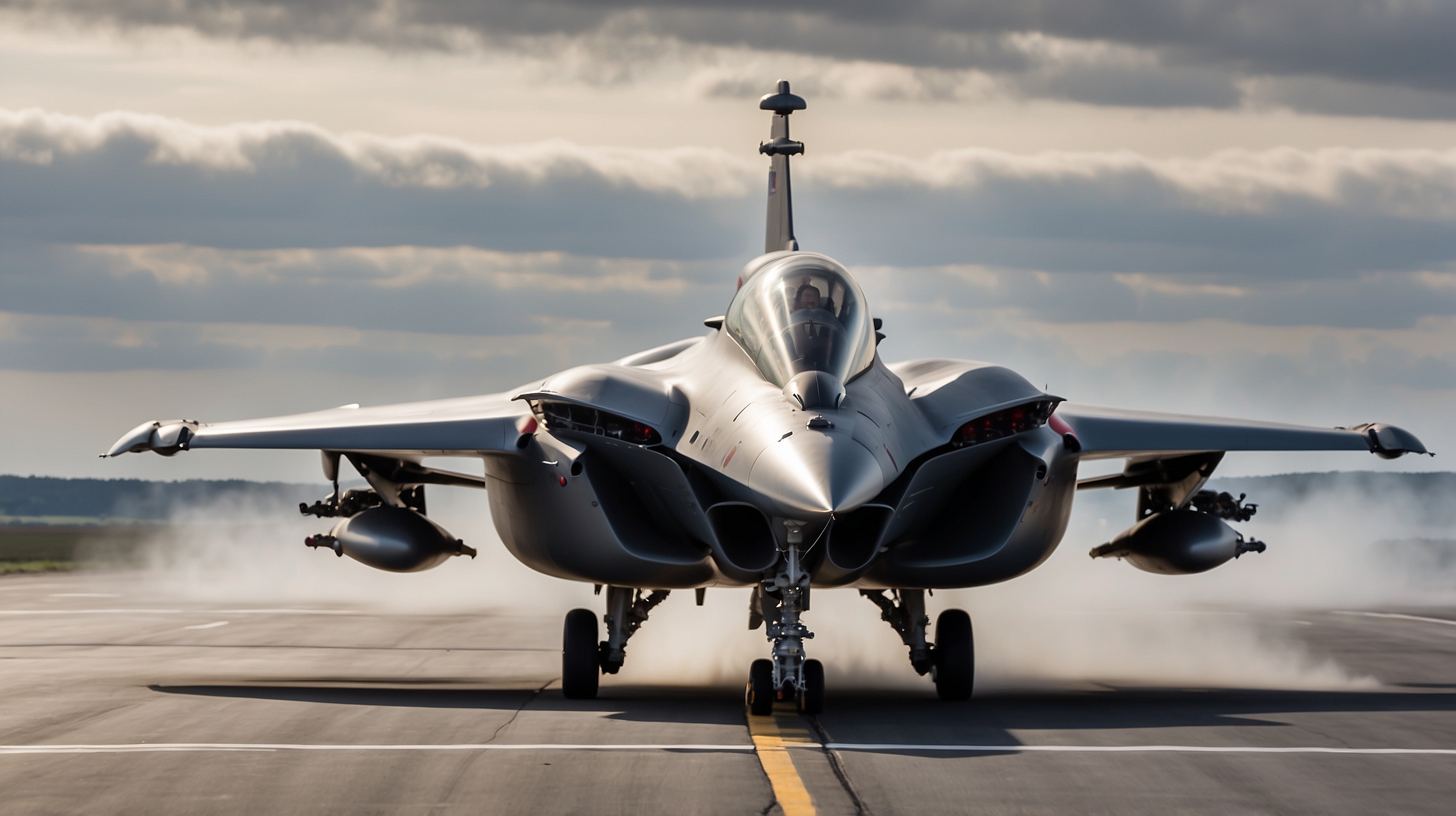
In a move that underscores the evolving dynamics of global defense partnerships, France is once again on the brink of sealing a major international arms deal. This time, it’s a follow-up to one of its most successful aerospace exports — the Rafale fighter jet. Against a backdrop of growing geopolitical tensions and an increasingly competitive market for high-performance combat aircraft, Dassault Aviation’s multirole jet is carving out a growing share of defense budgets around the world.
France is reportedly close to signing another significant Rafale deal with an undisclosed foreign nation, building on the aircraft’s growing prestige. Following successful sales to Egypt, Qatar, India, and the United Arab Emirates, the Rafale continues to assert itself as an elite choice for countries looking to modernize their air forces. With the operational track record it has now accumulated, combined with France’s aggressive semi-governmental support for defense exports, Rafale’s appeal has arguably never been stronger.
For Dassault Aviation and France’s defense industry, this new deal marks a crucial moment — both economically for the companies involved and strategically for France’s foreign relations. At a time when supply chains are tight and the global defense market is in flux, securing a high-value, multibillion-euro contract is no easy feat. But Rafale, thanks to its combat-proven pedigree and full-package offers, may be the exception.
France’s latest Rafale deal signals global defense realignment
| Aircraft | Rafale multirole fighter jet |
| Primary Manufacturer | Dassault Aviation |
| Buyer Country | Undisclosed (rumored Middle Eastern nation) |
| Estimated Value | €10–12 billion (industry sources) |
| Deal Status | In final negotiation stages |
| Expected Aircraft Units | 30–40 Rafale fighter jets |
| Delivery Timeline | Likely from 2026-2030 |
Why Rafale keeps winning global contracts
The Rafale fighter was once labeled a troubled program — too expensive and lacking foreign interest. Today, it’s hailed as France’s geopolitical envoy, opening doors and securing influence across multiple regions. The aircraft boasts omnirole capabilities, allowing it to carry out air superiority, ground attack, and reconnaissance missions in a single sortie. Its integration with European and NATO systems further enhances its marketability.
One of Rafale’s key strengths lies in its full package offer: buyers not only receive the jets but also training, maintenance, and access to long-term logistical support. This “turn-key solution” has become increasingly desirable as nations seek sophisticated platforms without the heavy burden of building complete support infrastructure from scratch.
“It’s the strategic depth France offers — not just selling jets but building relationships, training pilots, and offering decades-long support.”
— Jean-Michel Gauthier, Defense Analyst
What changed this year
This year saw an urgent acceleration in defense acquisitions globally. A combination of the war in Ukraine, escalating tensions in the South China Sea, and regional rivalries in the Middle East have fueled a race to modernize air forces. Countries that were once hesitant to engage in multi-billion-euro defense spending are now unrolling checks at a record pace.
France, seizing this moment, has fine-tuned its arms diplomacy. President Emmanuel Macron’s visit to the Middle East and Africa has doubled as subtle defense promotion trips. The Ministry of the Armed Forces and Dassault Aviation have worked in tandem to close deals with real strategic teeth — not just arms sales but longer-term defense cooperation agreements.
Who stands to benefit — and who doesn’t
| Winners | Losers |
|---|---|
| Dassault Aviation | Competitors like Boeing, Eurofighter |
| French defense industry (Safran, Thales) | Lagging NATO partners with aging fleets |
| Purchaser’s Air Force & Pilots | Countries with delayed procurement plans |
Who could be the next buyer
The latest rumblings point firmly toward a Middle Eastern country, potentially Saudi Arabia or Oman. Both have expressed interest in diversified arms deals and decreasing reliance on U.S.-made systems. In securing either as a buyer, France would not only increase its influence in the Gulf but also potentially change the dynamics of U.S.-Gulf arms relations.
Other likely regional contenders, already operating the Rafale such as Egypt and the UAE, may also opt for top-up orders. India is another candidate for fleet expansion, especially after evaluating Rafale’s performance during border standoffs with China.
“The Rafale is gaining momentum — and it’s no longer about just selling planes, but about shaping alliances.”
— Dr. Isabelle Nevers, Military Strategy Researcher
Technological superiority as a selling point
Each generation of Rafale exports has incorporated improved systems, weapon package options, and radar upgrades. The latest variant comes fitted with AESA radar, Spectra ECM suites, and compatibility with nuclear-capable weapons — giving client nations the security edge they crave.
Whereas some competitors offer stripped-down export versions, France provides essentially the same tech-rich model to its allies. This transparency, combined with trusted quality, forms the bedrock of Rafale’s continued market ascendance.
Local offsets and industrial benefits
France has innovated not just in how it builds aircraft but also in how it builds trust. Dassault often includes offset agreements in exports, allowing purchasing nations to develop domestic aerospace capabilities. India’s “Make in India” clause is a clear example: Dassault worked with Indian firms to transfer aspects of production and maintenance operations.
Similar arrangements are being considered in Southeast Asia and the Middle East. For fledgling aerospace sectors, these offset deals are transformative — creating skilled jobs, technology transfers, and long-term industrial growth.
Political strategy wrapped in wings
Behind each Rafale deal lies a strong diplomatic engine. Buyers aren’t just securing aircraft — they’re investing in a political relationship with France. In an era where arms deals are often marred by conditionality, surveillance, and sanctions threats, France offers a relatively hands-off model of strategic cooperation.
This has great significance in a shifting geopolitical climate. Countries are tilting toward diversified defense anchors, and the Rafale has become a vehicle for asserting autonomy — both militarily and diplomatically.
Looking ahead to 2030 and beyond
Assuming this newest Rafale deal is finalized in 2024, deliveries could extend into the late 2020s. Dassault is already preparing production slots, and France has been methodically ensuring that supplier companies such as Safran (engines) and Thales (avionics) are aligned for ramp-up.
If momentum continues, Rafale might go well beyond the 300–400 unit mark in export sales. France’s long-term aim is to establish it as not only a tool of national policy but also a pillar of regional ecosystems in client states — complete with training centers, MRO hubs, and radar stations.
FAQs about the upcoming Rafale deal
Which country is expected to finalize the new Rafale contract?
The exact buyer is undisclosed, though informed sources suggest a Middle Eastern country, possibly Saudi Arabia or Oman.
How many aircraft are likely to be included in this deal?
Industry estimates indicate between 30 to 40 Rafale jets may be involved in this purchase.
When will deliveries begin if the deal is signed?
Deliveries could commence between 2026 and 2027, with a 3–4-year phased completion schedule.
Why is the Rafale fighter jet considered premium?
The Rafale offers omnirole operational capability, top-tier avionics, and is combat-proven. It’s also bundled with full support and training packages.
What are offset agreements in defense exports?
Offset agreements allow the buyer nation to receive technology transfers, manufacturing partnerships, or economic benefits from the exporter.
How has Rafale impacted France’s defense industry?
Rafale exports have revitalized France’s aerospace ecosystem, involving thousands of jobs and securing billions in revenue for the sector.
Which companies benefit from Rafale exports?
Dassault Aviation leads the program, but suppliers such as Safran, Thales, and MBDA also benefit significantly from each deal.
Could other countries follow with Rafale orders?
Yes, countries such as Indonesia, Greece, and more Middle Eastern allies are also seen as potential future buyers based on current trends.