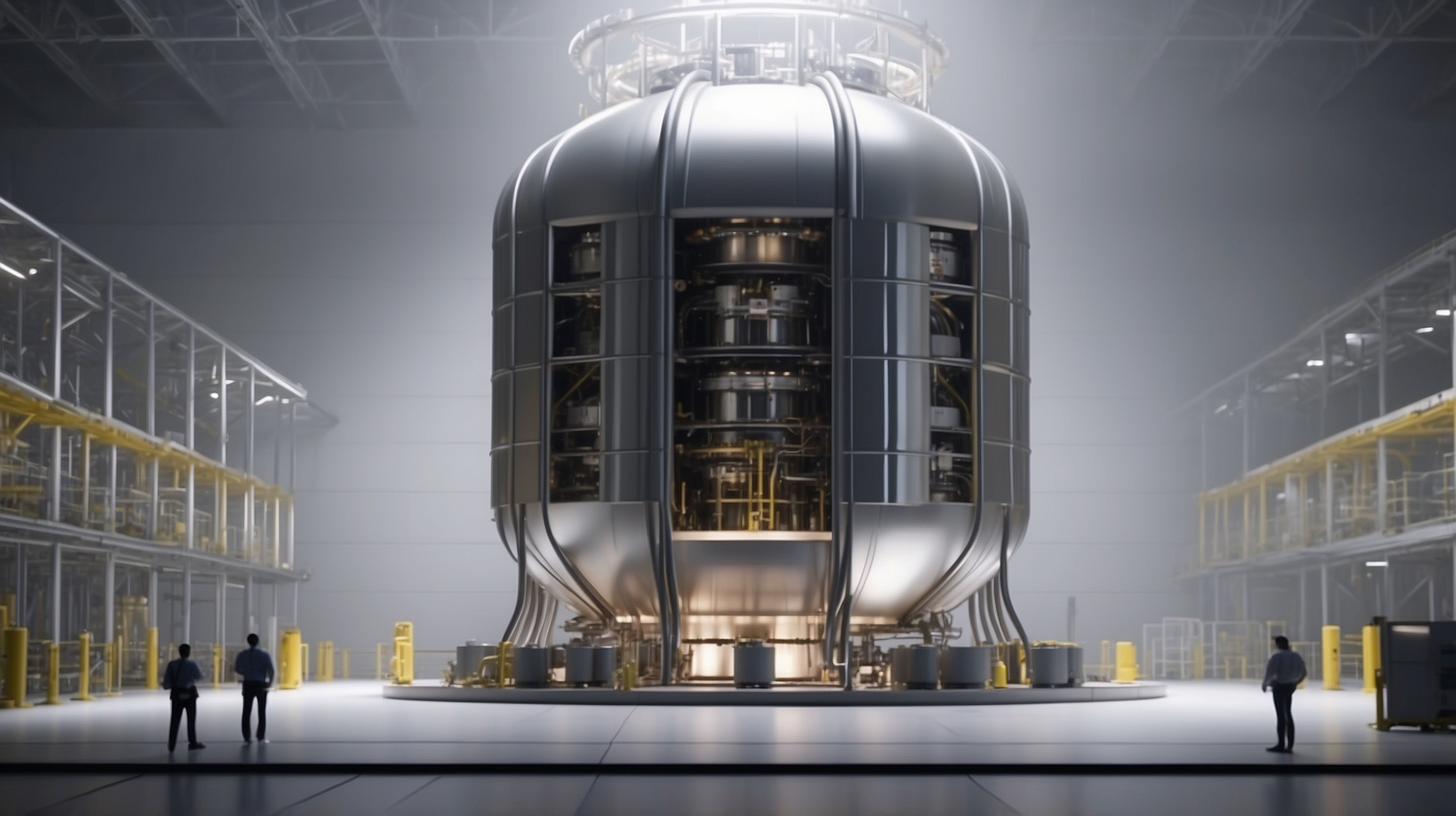
In an era where data consumption is growing at an unprecedented pace, the pressure on data centers to operate more efficiently and sustainably has never been higher. Amid this backdrop, a groundbreaking collaboration has been announced that could completely reshape the future of data center energy solutions. A French nuclear innovation company is partnering with a U.S.-based data center giant to introduce an ambitious solution to the problem—by deploying a new form of nuclear technology never before used in this way.
Dubbed a world-first, this partnership pledges not just a technological marvel, but a shift in how data centers—often called the backbone of the internet—may power their operations in the near future. Stakeholders hail this development as a potentially transformative moment in clean energy and digital infrastructure. The implications for carbon reduction, cost-efficiency, and energy independence are significant, drawing attention from both tech and energy sectors.
With carbon emissions from digital infrastructure now comprising a noticeable share of global greenhouse gases, the emerging concept of “nuclear-powered data centers” could be a critical answer. But what exactly is this new nuclear technology? And how will it change the way our digital world operates? Here’s what you need to know about the world’s first data-center-ready micro-nuclear reactor project.
Key facts about the nuclear-powered data center partnership
| Companies Involved | French company NAAREA and U.S. data center operator CloudHQ |
| Technology Used | Low-temperature fast neutron microreactor (XAMR) |
| Primary Goal | To power data centers using next-gen nuclear energy |
| Expected Launch Timeline | Prototype operational by 2030 |
| Reactor Size | Microreactor with energy output below 10 MW |
| Clean Energy Commitments | Zero CO2 emissions, self-contained grid support |
Why this partnership marks a turning point in green tech
The alliance between NAAREA—a French start-up specializing in advanced nuclear technology—and CloudHQ, a U.S.-based data center heavyweight, represents a milestone moment. For decades, nuclear energy was deemed impractical for urban applications mostly due to safety and scale challenges. But by creating a microreactor under 10 MW with intrinsic safety protocols and ultra-small footprint, NAAREA seeks to invert that logic entirely.
CloudHQ, which operates millions of square feet of server space, brings with it enormous demand for stable and sustainable power. Together, these entities aim to demonstrate how niche nuclear energy solutions can rewrite the rulebook for clean cloud computing. By targeting a first deployment by 2030, they show confidence that this vision is not just theoretical but actionable with current technology advances.
What makes the XAMR microreactor so unique
The XAMR (eXtrasmall Advanced Modular Reactor) is unlike conventional nuclear technologies. At its core, this reactor uses low-temperature fast neutron reactors, making it significantly safer and more adaptable than traditional nuclear plants. Because it operates at lower pressures and temperatures, it reduces many of the engineering challenges historically associated with nuclear systems.
Even more compelling is its approach to fuel. The XAMR is designed to utilize long-lived radioactive waste from existing nuclear reactors. This dual-purpose role—providing clean energy while simultaneously reducing waste stockpiles—could become a game-changer in both environmental and geopolitical contexts.
This technology closes the loop on nuclear sustainability. By recycling fuel, we’re not just building a power source—we’re managing a global waste problem.
— Jean-Luc Alexandre, CEO of NAAREA
How it enhances grid independence for data centers
The energy demands of modern data centers can rival small cities. Keeping them powered consistently while reducing reliance on fossil fuels has been a huge challenge. Traditional power grids can’t always meet these demands reliably, leading to costly downtimes or the use of backup diesel generators—which are clearly not environmentally friendly.
The new microreactor unit offers a solution in the form of a dedicated energy source that can sit adjacent to data center campuses. These self-contained units don’t merely contribute—they could serve as the primary source of power, breaking dependence on overburdened public grids while offering a steady output tuned specifically for digital infrastructure uptime requirements.
If we want a truly green and resilient internet, we have to think outside the legacy power paradigm. Micro-nuclear is a radical, but necessary, step forward.
— Placeholder Quote, Energy Analyst
What changed this year that made this possible
Several barriers to advanced nuclear solutions have started to loosen in 2024. Regulatory bodies in both Europe and the United States have begun carving out frameworks that fast-track the authorization and experimental deployment of small modular reactors (SMRs). At the same time, interest in sovereign energy strategies—especially given current geopolitical tensions—has catapulted “energy independence” to the top of many national agendas.
Furthermore, advances in material science and machine learning simulation tools have accelerated the ability to model reactor performance and safety in silico—reducing both costs and long-term uncertainty.
Scope of expansion and future applications
Though the focus is currently on data centers, this technology has far broader implications. Small-scale, clean, modular nuclear units could prove transformative for sectors like industrial manufacturing, remote hospitals, military bases, and even lunar outposts. The upcoming prototype by 2030 is just the beginning; if it proves successful, cities might one day receive local power from clusters of these reactors, enabling fully decentralized clean energy systems.
NAAREA has already hinted that their 10 MW unit is just a starting model, with plans underway for larger units and grid-integrated solutions. By tackling both energy generation and waste management, this approach could meaningfully contribute to a long-term net-zero emissions strategy.
Winners and losers in this transformation
| Winners | Losers |
|---|---|
| Data center operators seeking clean on-site power | Fossil-fuel-based backup generator providers |
| Advanced nuclear technology firms | Regions reliant solely on centralized energy grids |
| Cloud service users demanding eco-friendly operations | Legacy coal and gas infrastructure investments |
What to watch in the coming years
The race is now on. A successful demonstration of this microreactor could spark an innovation wave in the field of localized nuclear solutions. Expect increased announcements from competitors, more public-private fusion energy projects, and a growing push for localized clean energy ecosystems designed for the digital era.
In some ways, this mirrors the early days of solar or EVs—considered niche until cumulative innovation and support turned them mainstream. For now, 2030 remains the key milestone to monitor. A functioning microreactor powering a major U.S. data center could turn the tides of both nuclear energy perception and green data infrastructure.
Short FAQs about the nuclear-powered data center project
What is NAAREA?
NAAREA is a French nuclear energy start-up focused on developing microreactors that use fast neutron technology and recycled fuel to generate clean, scalable power.
Who is CloudHQ?
CloudHQ is a major U.S. data center operator managing high-capacity tech facilities across North America, catering to cloud infrastructure and enterprise clients.
What is a microreactor?
A microreactor is a compact nuclear power unit designed to generate less than 10 megawatts of energy. It is typically used for localized energy applications.
What makes this reactor different?
The XAMR reactor uses fast neutron technology at low temperatures using pre-existing radioactive fuel waste, offering high safety and environmental benefits.
When will the prototype be ready?
The companies aim to have the first operational prototype of the microreactor ready by the year 2030.
Will this replace traditional power grids?
Not immediately, but it offers an alternative for critical infrastructure to operate independently from traditional grids, especially during instability or outages.
Is nuclear safe in urban or commercial zones?
This microreactor design emphasizes safety with lower operating temperatures, passive cooling, and minimal radiation leakage risks, making it safer for commercial use.
Can this technology help with nuclear waste?
Yes, the XAMR design utilizes long-lived isotopes from existing waste as fuel, potentially reducing overall radioactive stockpiles.