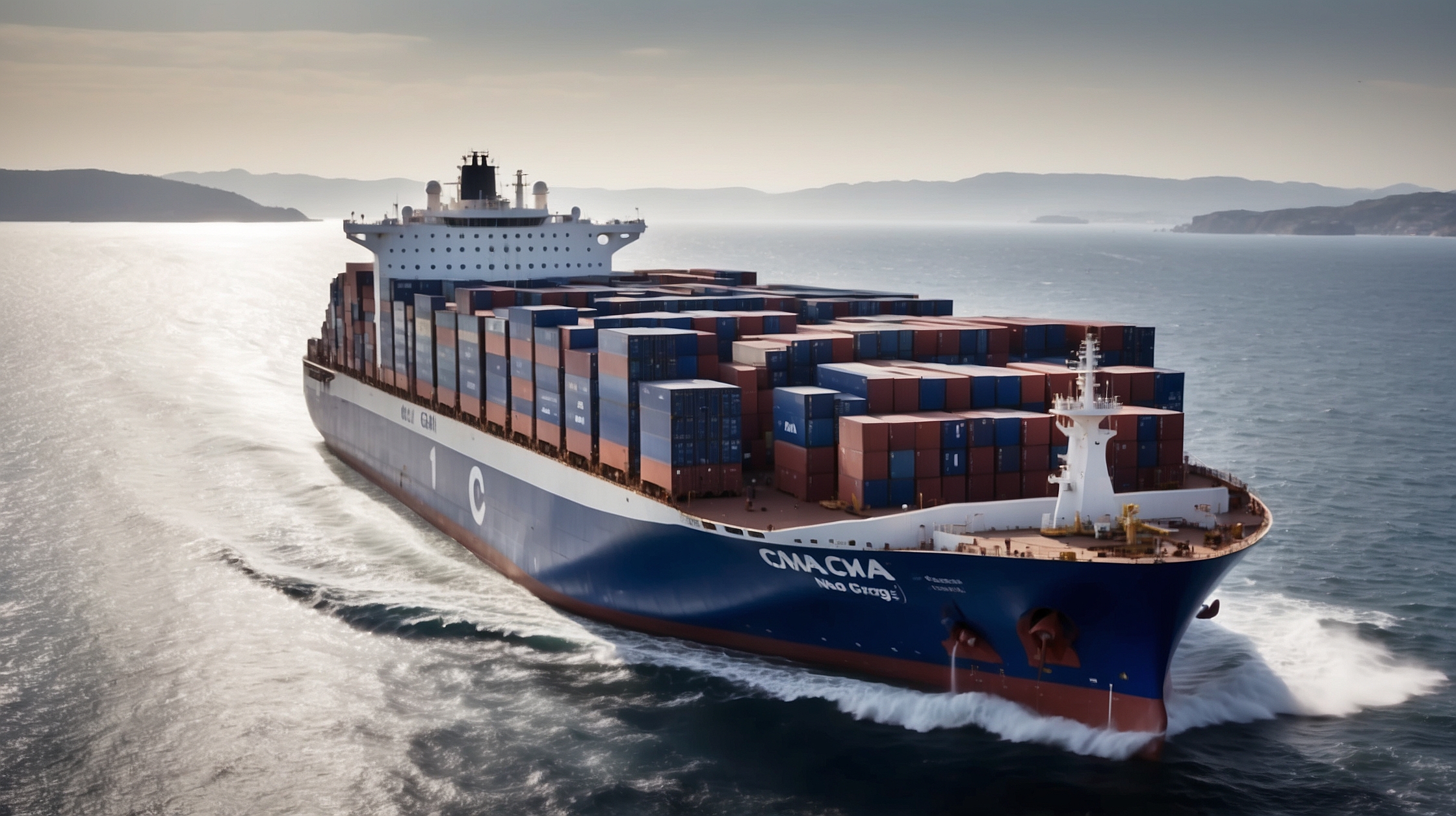
At a time when global environmental concerns are reshaping industries, the maritime shipping sector is undergoing a bold transformation toward greener, cleaner operations. One name making powerful waves in this transformational tide is the French shipping giant, CMA CGM. Already recognized as one of the world leaders in container shipping, CMA CGM has now further cemented its position by launching six cutting-edge LNG-powered mega-ships, signaling a monumental leap in the company’s commitment to sustainable shipping and environmental responsibility.
The maritime industry, long criticized for its carbon footprint, is under increasing pressure to decarbonize. From international regulations to consumer expectations and investor demands, the spotlight has never been sharper. Against this backdrop, CMA CGM’s investment in Liquefied Natural Gas (LNG) mega-ships isn’t just a strategic pivot—it’s a declaration of intent. As the company unveils its sixth LNG giant, it marks not only a technological achievement but a shift in what is possible for the future of shipping.
But this move is not just about environmental goodwill. It’s about economic foresight and industry leadership. In a world that’s slowly weaning off fossil reliance, those who adapt fast stand to gain a competitive edge. And with this fleet expansion, CMA CGM is now positioned as the third-largest container group in the world, reshaping maritime hierarchies one LNG-powered vessel at a time.
Overview of CMA CGM’s LNG Fleet Expansion
| Company | CMA CGM |
| New Fleet Additions | 6 LNG-powered mega container ships |
| Fuel Type | Liquefied Natural Gas (LNG) |
| Capacity per Ship | 13,000 TEU |
| Current Global Rank | 3rd largest container group |
| Main Trade Route | Asia-Mediterranean |
| Target Completion | Current expansion complete with six ships delivered |
Why this expansion matters now
The decision to premiere six 13,000-TEU LNG-powered ships comes at a time when both economic and environmental factors are aligning to demand greater efficiency and reduced carbon emissions from shipping operators. The International Maritime Organization (IMO) has already set ambitious targets to cut greenhouse gas emissions, aiming for a 50% reduction by 2050 compared to 2008 levels. CMA CGM’s move strategically positions it ahead of the compliance curve.
Incorporating LNG technology directly addresses this challenge. LNG emits up to 20% less CO₂ compared to traditional marine fuels and virtually eliminates almost all sulfur oxide (SOx) emissions and fine particles. This enhances not only compliance but also environmental stewardship—a selling point for customers in an increasingly green-conscious marketplace.
Technical strength behind the LNG mega-ships
Each of the six LNG-fueled vessels boasts an impressive capacity of 13,000 twenty-foot equivalent units (TEUs) and integrates new-generation engines that minimize fuel consumption while maximizing propulsion efficiency. These mega-ships represent the pinnacle of maritime technology, with smart onboard systems that monitor emissions, optimize navigation, and advance digital logistics integration.
Built in China’s Hudong-Zhonghua Shipyard, the ships form what CMA CGM calls a “green corridor” on the Asia-Mediterranean route. This isn’t just a symbolic label—the operational benefits from lower fuel consumption to minimal emission levels could redefine how shipping companies view route planning in the future.
“These vessels are not only marvels of engineering, but also a testament to our long-term commitment to energy transition in our industry.”
— Rodolphe Saadé, Chairman and CEO, CMA CGM Group
Impacts on industry rankings
With the latest fleet additions, CMA CGM has surged past COSCO to become the third-largest container shipping line globally in terms of capacity. This reshuffling of maritime hierarchies puts it behind just MSC and Maersk—both of which are also pursuing greener technologies, but not yet at the same LNG-driven scale as CMA CGM.
The timing could not be better. With container demand gradually recovering following pandemic disruptions, the addition of ultra-modern, high-capacity vessels gives CMA CGM a clear logistics edge in terms of both volume and sustainability.
Market opportunities and economic advantage
Beyond environmental impact, transitioning early to LNG can provide substantial operational cost savings over time—especially as regulatory penalties for high emissions increase. The investment further boosts operational resilience, as LNG prices remain relatively stable compared to fluctuating oil markets.
This move also allows CMA CGM to cater to an increasingly eco-demanding customer base. Major brands and retailers now routinely factor in carbon scores when selecting shipping partners. The ability to now market carbon-conscious logistics solutions places CMA CGM at an optimum intersection of trust, innovation, and efficiency.
| Winners | Losers |
|---|---|
| Eco-conscious customers seeking low-emission shipping solutions | Competitors without green-capable fleets |
| CMA CGM (gains market and environmental edge) | Fossil-fuel dependent maritime operators |
| Ports investing in LNG infrastructure | Regions slow to adapt to LNG docking capabilities |
Strategic partnerships and global implications
The shift to LNG-powered mega-ships is also prompting strategic evolutions in port infrastructure worldwide. LNG bunkering facilities are now expanding at major international ports to accommodate the growing fleet of cleaner ships. That means CMA CGM’s choice sends ripple effects far beyond the shipping operator—port authorities, logistics chains, and even customs practices are pivoting to align with this new ecosystem.
This could spur faster adoption of environmentally sound shipping solutions across the global supply chain, fulfilling multiple carbon-reduction goals concurrently and nudging the entire industry toward a greener future.
“A coordinated shift like this sends a powerful signal to the entire logistics sector. It’s the kind of actionable leadership the planet needs.”
— Placeholder Quote, Maritime Sustainability Expert
Future roadmap for CMA CGM
With the successful deployment of these six LNG mega-vessels, CMA CGM has asserted a clear direction. But the journey doesn’t stop here. The company has already outlined plans for additional LNG and even methanol-powered ships, as part of a broader ESG—Environmental, Social, and Governance—strategy designed to achieve carbon neutrality by 2050.
Additionally, CMA CGM is investing in biofuels, digital fleet optimization tools, and partner collaborations for carbon offsetting. Its plan is not just transformation but wholesale reinvention of what maritime logistics looks like in the 21st century.
“Greener fleets are not a luxury—they’re now a business imperative. CMA CGM is future-proofing its operations through innovation.”
— Placeholder Quote, Maritime Energy Consultant
Short FAQs about CMA CGM’s LNG expansion
What is LNG and why is it important in shipping?
LNG, or Liquefied Natural Gas, is a cleaner fuel alternative that significantly reduces CO₂ and other harmful emissions compared to traditional marine diesel.
How many LNG ships has CMA CGM launched?
CMA CGM has launched six LNG-powered mega container ships, each with a capacity of 13,000 TEUs.
Where are these ships being deployed?
The ships will primarily operate along the Asia-Mediterranean trade route, one of the world’s busiest shipping corridors.
What makes these ships environmentally friendly?
They utilize LNG fuel, which cuts down CO₂, eliminates SOx, and emits fewer fine particles. The ships also include advanced emission-reduction technologies.
What is CMA CGM’s current ranking among global shipping companies?
CMA CGM is now the third-largest container shipping group in the world by total capacity.
What benefits do customers gain from this LNG initiative?
Customers benefit from reduced emissions in their supply chains and a reliable, cost-stable shipping option with a lower environmental footprint.
Will CMA CGM invest in other green technologies?
Yes. The company is also exploring biofuels, carbon offset programs, and digital efficiency tools to further reduce their environmental impact.
How might this affect port infrastructure worldwide?
Ports will likely accelerate the development of LNG bunkering stations and related infrastructure to accommodate the growing number of LNG-powered vessels.