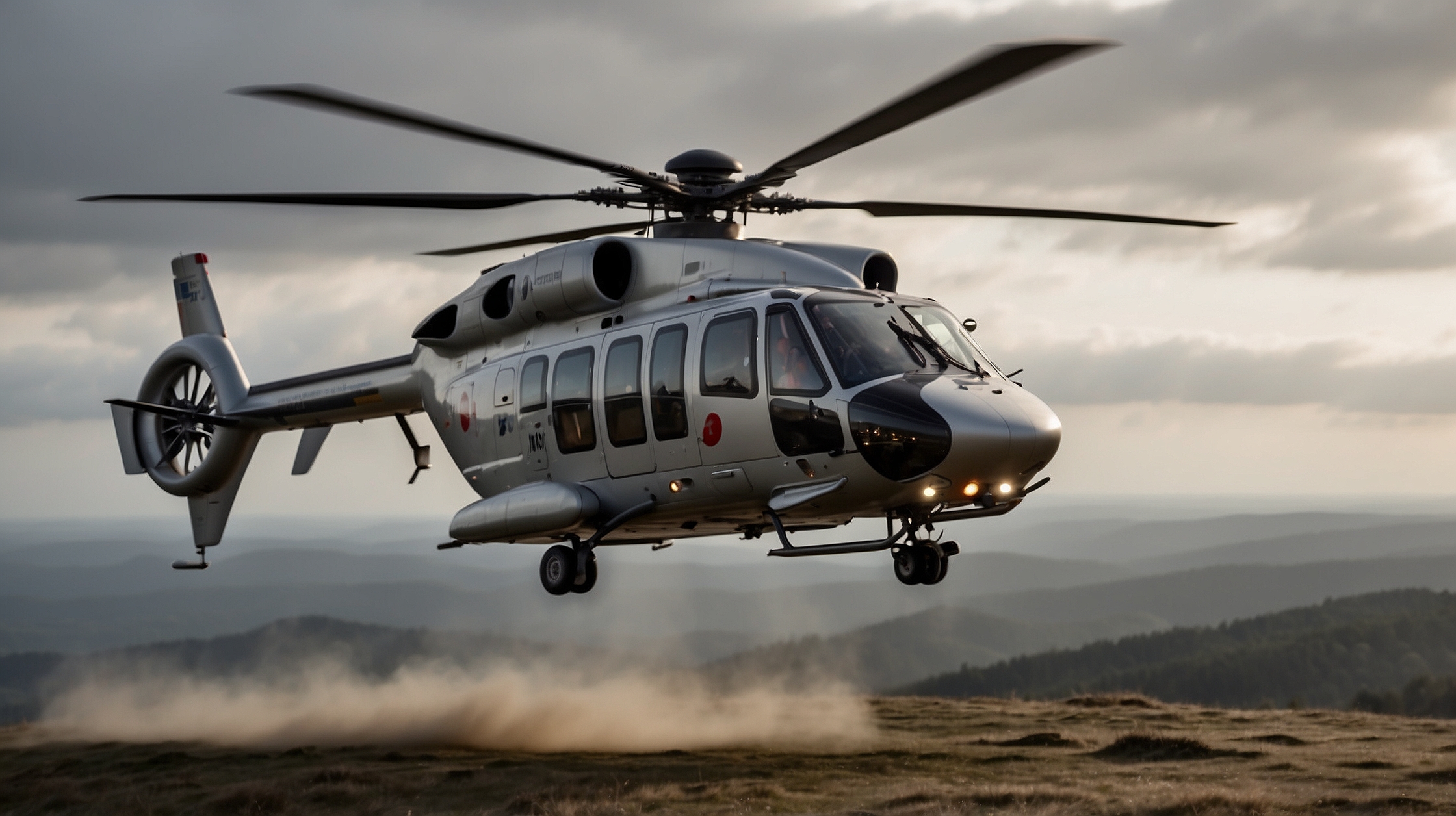
In the high-stakes world of global defense procurement, some deals fly under the radar — both literally and figuratively. But when Germany, Europe’s largest economy and one of NATO’s indispensable pillars, places a substantial follow-up order for military helicopters, the reverberations are felt well beyond the assembly line. That’s precisely what unfolded recently when Airbus, the aerospace titan with deep European roots, secured an additional order from the German government for 20 more H145M light utility helicopters. For Airbus Helicopters, it’s not just another transaction — it’s a powerful reaffirmation of the company’s dominance in the military rotorcraft segment and a strategic endorsement from a top-tier NATO power amid growing European defense anxieties.
The renewed order doesn’t just fill hangars; it strengthens critical operational capabilities across Germany’s Armed Forces. In an era increasingly shaped by hybrid threats, rapid force projection, and humanitarian disaster response, light utility helicopters like the H145M have emerged as unrivaled tools on the modern battlefield. Agile, reliable, and combat-proven, the H145M is not simply a helicopter — it’s a flying embodiment of Germany’s modern defense doctrine. And Airbus, in what could be called a textbook example of industrial foresight, has once again positioned itself at the heart of Europe’s evolving military ambitions. What makes this deal stand out? Why now? And what does it signal for the future of tactical aviation in an uncertain world? Let’s dive deeper.
What the latest Airbus H145M order from Germany means
| Key Element | Details |
|---|---|
| Buyer | Federal Ministry of Defence, Germany |
| Manufacturer | Airbus Helicopters |
| Helicopter Model | H145M |
| Order Size | 20 additional helicopters |
| Contract Value | Estimated at over €1 billion |
| Variants Included | Armed Special Forces version with weapon systems |
| Delivery Schedule | Begins 2024 through 2028 |
What changed this year to prompt Germany’s expanded order
While Berlin’s relationship with helicopter procurement has often been marked by caution and strategic pacing, the 2024 geopolitical environment leaves little room for hesitation. The Russian invasion of Ukraine has completely reoriented European defense priorities. Germany’s Zeitenwende or “turning point” defense doctrine announced in 2022 continues to ripple outward into real-world spending, and a clear focus has emerged: agile, rapid-response forces supported by versatile air fleets.
The H145M fits squarely within this doctrine. With its compact footprint, advanced avionics, and proven mission adaptability — from surveillance to medical evacuation, to combat support — the helicopter offers the Bundeswehr a flexible asset capable of operating in diverse conflict theaters. The latest version includes an updated situational awareness suite and the capability to integrate Spike air-to-ground missiles, turning the aircraft into a potent light attack platform.
“The addition of more H145Ms demonstrates Germany’s clear pivot toward agile and interoperable capabilities across NATO operations.”
— Markus Seidl, Defense Analyst (Placeholder)
Germany’s strategic military needs in 2024 and beyond
Germany’s defense roadmap calls not just for increased spending but smarter acquisition. The H145M delivers exactly that. Light, powerful, and requiring minimal logistical support, it’s ideal for special forces operations, fast deployment, and missions where larger helicopters become liabilities due to space or threat environment constraints.
This new order gives the German Special Forces Command (KSK) and potentially other branches of the Bundeswehr a platform suited for European defense frontlines and expeditionary roles in global hotspots. The contract includes not only helicopters but also ground support packages, simulation systems, and weaponization kits — all indicators of Berlin’s push toward autonomy in mission readiness.
What sets the Airbus H145M apart from its global competitors
Airbus’s H145M isn’t the only light utility military helicopter available on the global market, but its rise has been unrelenting. Its twin-engine design enhances reliability in adverse weather and challenging terrain. But it’s the aircraft’s digital backbone, known as Helionix avionics, that allows flight crews to operate with lower cognitive load, providing real-time system feedback and mission configuration capabilities.
The aircraft also boasts a modular weapons system, allowing configurations for gun pods, rocket launchers, or advanced targeting sensors. This modularity ensures that the platform can evolve with mission parameters, reducing the need for separate helicopter models per mission vertical — a game-changer in military logistics and cost-effectiveness.
“The H145M is an ideal balance of high performance and low maintenance complexities, making it a strategic force multiplier for NATO members.”
— Ana Bouchard, Aerospace Systems Engineer (Placeholder)
Winners and losers in the global helicopter market
| Winners | Why |
|---|---|
| Airbus Helicopters | Expanded market share in military segment; reaffirms European dominance |
| German Armed Forces | Enhanced operational capacity with modern, agile support platform |
| NATO Interoperability | Standardized asset across allied forces, improving joint mission planning |
| Losers | Why |
| Competing OEMs (e.g., Bell, Leonardo) | Lost market opportunity, especially in high-profile NATO country |
| Mid-tier helicopter models | Obsolescence risk due to H145M’s versatility and modularity |
The path ahead for Airbus Helicopters
The Germany order comes on the heels of other international H145M sales — including Hungary, Serbia, and Luxembourg — where the aircraft’s performance and lower total life-cycle cost make it a darling among both defense ministries and accountants. Airbus’s Donauwörth facility, which handles the main assembly, is now primed for consistent helicopter output over the next five years, aligning with the company’s broader European production strategy.
For Airbus Helicopters, this is not a peak but rather a turning point. With the H145M platform gaining increasing traction, market observers expect Airbus to push newer integration options — think battlefield AI, VR pilot training systems, and seamless drone-helicopter command linking. That makes Germany’s order less of an endpoint and more of a strategic basecamp in Airbus’s journey.
“Airbus isn’t just winning contracts; they’re shaping what the next decade of European tactical aviation could look like.”
— Dr. Sofia Klein, Defense Procurement Lecturer (Placeholder)
Frequently Asked Questions
What is the H145M helicopter primarily used for?
The H145M is primarily used for military operations including special forces deployment, reconnaissance, air support, medical evacuation, and surveillance missions.
Why did Germany choose the H145M over other helicopters?
Germany selected the H145M for its agility, modular weapons systems, strong operating history, and compatibility with special forces needs and NATO interoperability standards.
How many H145Ms has Germany now ordered in total?
With the new batch of 20 units, Germany has ordered over 80 H145M helicopters cumulatively, making it one of the largest operators of the model worldwide.
When will Germany receive the latest batch of H145Ms?
Deliveries are expected to begin in 2024 and continue through 2028 according to the contract schedule announced by Airbus and German officials.
What makes the H145M unique compared to similar helicopters?
Its twin-engine design, Helionix advanced avionics suite, modular weapons integration, and low maintenance footprint set it apart from comparable light combat helicopters.
What defense repercussions might this deal have across Europe?
This order reinforces NATO’s cooperative military framework and may influence other members to standardize or upgrade their light utility helicopter fleets to H145M or similar models.
Where are the H145M helicopters manufactured?
They are mostly assembled at Airbus Helicopters’ facility in Donauwörth, Germany, with parts and systems sourced from multiple European partner countries.
Is the H145M expected to get future upgrades?
Yes, Airbus plans to continue evolving the H145M platform with more digital integrations, AI-assisted piloting, and tighter interoperability with unmanned aerial systems.