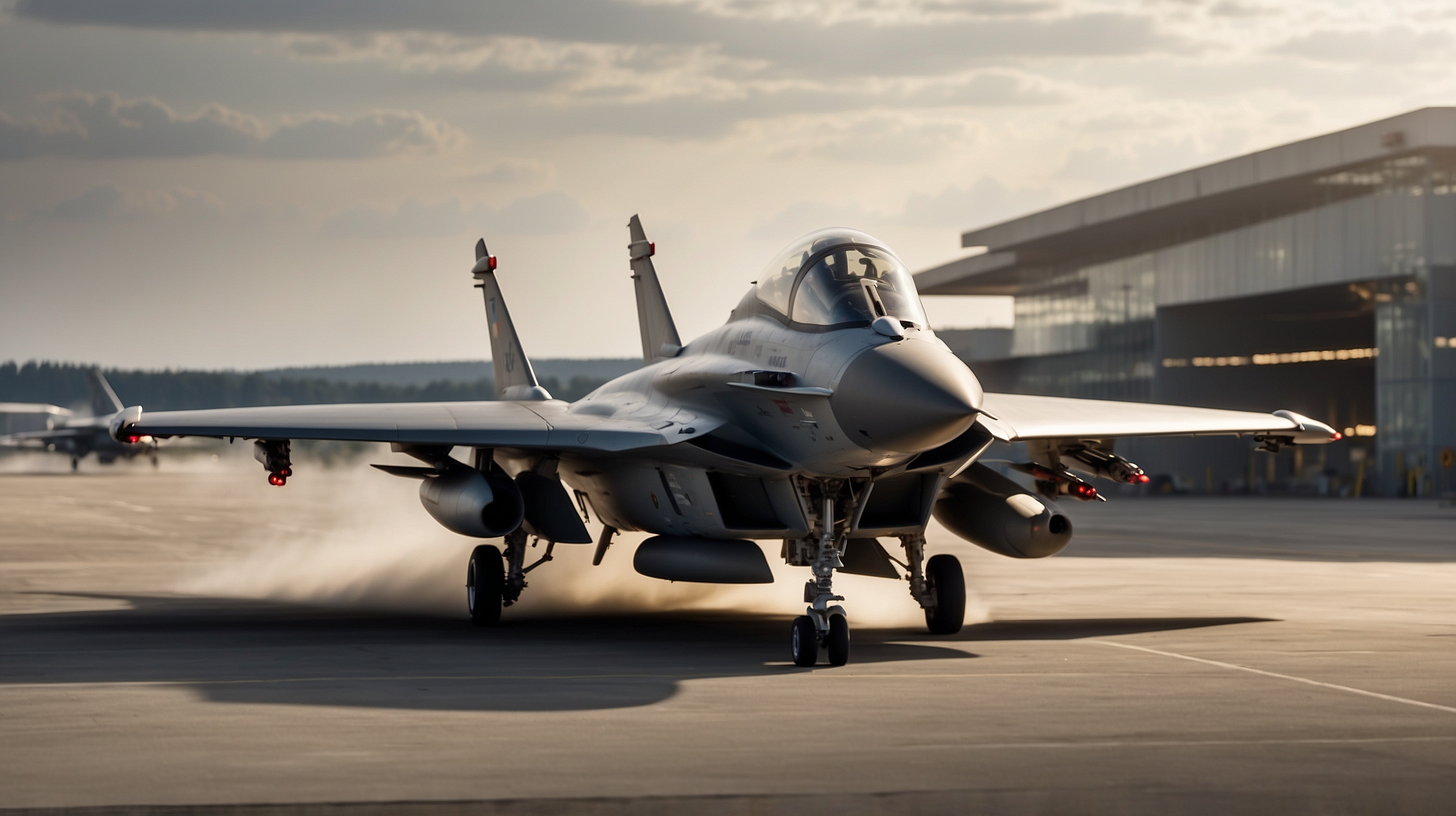
On a brisk autumn morning in Berlin, sleek wings cut across the Bavarian skies. Silent but formidable, these jets symbolize not just cutting-edge aviation technology but also a resolute military posture. Germany, known for its cautious defense spending post-Cold War, has made a significant pivot — a bold statement delivered not in words, but in wings.
In a landmark move, the German government has committed to acquiring 20 brand-new Eurofighter Typhoons from Airbus, injecting billions into its national defense architecture and reinforcing its standing within NATO. Amid rising geopolitical tensions in Europe and beyond, this order marks a historic investment that redefines Germany’s aerial defense strategy — a clear message to allies and adversaries alike.
But why now? What triggered this surge in defense commitment from a historically restrained nation? To understand the origins and implications of this purchase, let’s dive into the factors, players, and broader regional impacts surrounding Germany’s latest stride in airpower modernization.
Key details at a glance
| Order Quantity | 20 Eurofighter Typhoons |
| Manufacturer | Airbus Defence and Space |
| Contract Value | €3 billion (approx.) |
| Delivery Timeline | 2025 to 2030 |
| Primary Purpose | Air Superiority and Deterrence |
| Replaces | Older Tornado and aging Eurofighter units |
| New Features | Enhanced sensors, electronic warfare systems, and NATO interoperability |
What changed this year
The recent procurement of 20 Eurofighter Typhoons stems largely from the seismic shift in Germany’s defense doctrine following Russia’s full-scale invasion of Ukraine. That invasion not only redrew Eastern European boundaries but also reshaped long-standing defense postures across the continent. Berlin, long criticized for its underwhelming military commitments to NATO, has now turned a decisive corner.
Chancellor Olaf Scholz’s “Zeitenwende” (turning point) speech earlier this year placed defense spending at the top of the national priority list. Recognizing that deterrence is indispensable to diplomacy, Germany pledged a special €100 billion defense fund. The order for 20 new Eurofighters, part of this realignment, represents not just fleet modernization but a symbolic reawakening of Europe’s central geopolitical actor.
Why the Eurofighter remains a cornerstone jet
The Eurofighter Typhoon remains one of Europe’s premier multirole combat aircraft. Developed collaboratively by the UK, Germany, Italy, and Spain, the jet is famed for its agility, robust avionics, and air-to-air capabilities. The newly ordered batch will include upgraded versions outfitted for high-intensity conflict environments, with reinforced stealth features, long-range sensors, and advanced electronic warfare capabilities.
Beyond functionality, the Eurofighter project also holds political significance. It underscores European military-industrial cooperation and provides economic windfalls, especially for Airbus Defence and Space, headquartered in Germany. This helps preserve thousands of high-skill engineering and manufacturing jobs across the country.
“The Eurofighter is not just a plane—it’s a European symbol of defense unity. Germany’s expanded order sends a strong message to both allies and threats.”
— Lars Kleiber, Defense Analyst
Economic ripples across Europe
This €3 billion contract is more than just a military acquisition — it acts as a fiscal stimulus across Germany and other Eurofighter partner nations. Airbus operates factories and R&D hubs in several German states, and this order safeguards jobs while potentially creating hundreds of new technical roles.
Moreover, suppliers in the European defense supply chain, from electronics in Munich to radar systems in Seville, stand to benefit. Germany’s commitment also stabilizes the Eurofighter program, paving the way for potential expansions or upgrades from other partner nations seeking to modernize their aging fleets.
Winners and those left behind
| Winners | Losers |
|---|---|
| Airbus Defence & Space | Legacy aircraft suppliers relying on older Tornado jets |
| German Aerospace & Manufacturing Labor Market | Nations expecting Germany to purchase non-European jets |
| Eurofighter Consortium (UK, Spain, Italy, Germany) | Budget alternatives like the F-16 that lost to Eurofighter in this deal |
| NATO’s Eastern flank (Strategic Security Boost) | Critics of Germany’s previous passive stance |
How this impacts NATO and EU defense strategy
Germany’s Eurofighter acquisition has strategic relevance well beyond its borders. As the largest economy in the European Union and one of NATO’s pillars, Berlin is expected to carry enhanced military responsibility. These 20 new fighters will operate in both defensive patrols and tactical missions within joint NATO operations, particularly on the eastern flank and in Baltics airspace.
This order also sends a strong signal underscoring Germany’s renewed commitment to defense burden-sharing within NATO. It aligns with the alliance’s 2% GDP military spending goal — a benchmark long unmet by Germany until now. The move may even prompt other European nations to reinvest in their own aerial combat fleets, revitalizing a relatively stagnant regional defense climate.
Germany’s pathway to aerospace sovereignty
While Germany has often relied on international partners like the U.S. in the past for military hardware (e.g., leasing Patriot missile systems or considering F-35 fighters), this Eurofighter order represents a clear attempt to champion homegrown production. It falls well in line with Chancellor Scholz’s stated ambition for Germany to move toward defense sovereignty within compatible NATO parameters.
Furthermore, this positions Germany for a pivotal role in future fighter collaborations, like the FCAS (Future Combat Air System) with France and Spain, envisioned as the next-generation fighter to replace the Eurofighter by the late 2040s.
Upgrades, delivery roadmap, and modular capabilities
The newly ordered jets are expected to include Block 4 upgrades, which will enhance mission flexibility, survivability, and communications. These enhancements allow seamless integration with NATO’s digital battle networks and enable interface with unmanned aerial systems (UAS).
According to plans, deliveries will commence between 2025 and 2030, following Airbus’s manufacturing ramp-up and testing phases. German crews will begin transition training concurrently, with older Tornado units gradually being phased out by early 2031.
“We’ve worked hard to make the Eurofighter adaptable for the next decade’s threats—from cyber warfare to hypersonics. These upgrades future-proof our skies.”
— Elke Schneider, Lead Systems Engineer, Airbus D&S (Placeholder)
What this means for the defense labor ecosystem
From avionics technicians to software developers, this order will spark hiring across a diverse range of engineering and defense-adjacent roles. German universities with aerospace engineering programs are also likely to expand student enrollment in response to this industry boost, nurturing a new generation of defense specialists.
Suppliers in electronics, composite materials, machine tools, and AI control systems stand to reap long-term contracts, as parts maintenance and upgrades will be necessary well past 2040.
Six quick FAQs on Germany’s Eurofighter acquisition
What is the cost of the new Eurofighter order?
The total contract is estimated at around €3 billion, covering production, upgrades, and integration costs.
Why choose the Eurofighter over other jets?
Germany favored the Eurofighter because of its European partnership roots, customization potential, and advanced electronic warfare capabilities.
Who will build the new Eurofighters?
Airbus Defence and Space, headquartered in Germany, will lead the production with contributions from consortium partners in Spain, Italy, and the UK.
Will this affect Germany’s F-35 plans?
No. Germany still intends to purchase F-35s to replace nuclear-capable Tornado aircraft. The Eurofighter complement this for conventional missions.
When will the new jets be operational?
Deployments are expected to begin by 2025, with full operational capability across all units by 2030.
What’s new in these upgraded Eurofighters?
New features include superior radar systems, digital battle network capabilities, and enhanced stealth and combat agility.