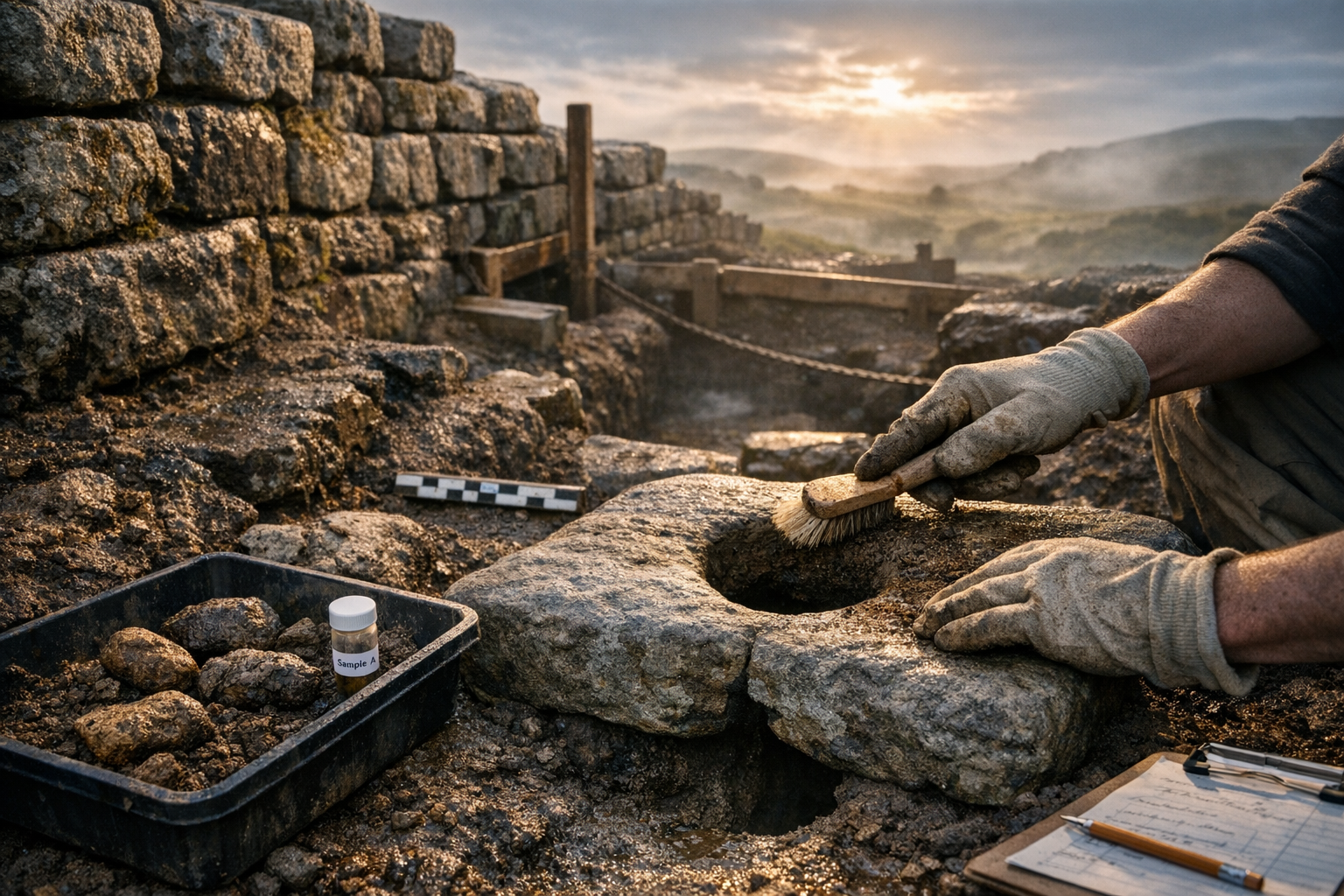
As the winds howl across the rugged frontier of northern Britain, a monumental stone barrier stretches into the mist—Hadrian’s Wall. Built nearly 2,000 years ago to defend the Roman Empire’s northern frontier, this ancient fortification continues to inspire awe, not just for its enduring architecture but now, intriguingly, for the archaeological secrets it holds within its crumbling walls. Buried beneath centuries of soil, fecal matter collected from ancient Roman latrines is offering scientists an unexpected glimpse into the daily struggles and health of soldiers once stationed here.
With the help of modern science, researchers have dug into the microscopic history lodged in this waste. What they found challenges previous narratives about Roman hygiene and exposes new truths about life on the edge of an empire. The latrines of Hadrian’s Wall, it seems, do more than just mark Roman innovation in sanitation—they tell a story of warriors impacted by the invisible forces of parasites.
Through painstaking analysis of sediment cores taken from communal military toilet sites, scientists discovered not only deteriorated biological matter but also preserved parasite eggs, shedding light on a different kind of battle faced by the Roman legions—internal infestations by gut worms that likely caused chronic discomfort, nutritional deficiencies, and wide-ranging digestive issues.
An ancient problem uncovered with modern tools
| Location | Hadrian’s Wall, northern Britain |
| Time period analyzed | Circa 2nd century AD |
| Methodologies used | Microscopic analysis of parasite eggs in latrine sediment |
| Main discovery | Presence of intestinal parasites among Roman soldiers |
| Types of parasites found | Whipworm (Trichuris trichiura), Giant roundworm (Ascaris lumbricoides) |
| Implications | Poor sanitation and disease susceptibility in Roman military life |
What the findings reveal about Roman military life
This latest study focused on three latrine blocks along Hadrian’s Wall, where sediment layers were carefully collected and examined under microscope. Scientists were able to identify parasite eggs—mostly those belonging to *Trichuris trichiura* (commonly known as whipworm) and *Ascaris lumbricoides* (giant roundworm). These helminths typically spread through the fecal-oral route, indicating unsanitary conditions and a likely lack of hand washing or effective sewage treatment at these sites.
These discoveries upend the popular portrayal of the Romans as technologically advanced and highly sanitary. While it’s true that Roman engineering included aqueducts, heated bathhouses, and toilet systems, the presence of parasitic eggs in latrine sediments reveals that their sanitation practices were still susceptible to flaw—especially in remote, military outpost conditions where supply chains and infrastructure may have been less robust.
Moreover, the chronic symptoms associated with these parasites—such as abdominal pain, diarrhea, and fatigue—suggest that soldiers at the Wall may have endured more than just harsh weather and invading tribes. They also fought persistent internal afflictions that may have compromised their overall health, combat readiness, and morale.
“These parasites would have triggered a range of symptoms that we now associate with poor hygiene and chronic disease. This kind of biological stress could have undermined the operational efficiency of troops.”
— Dr. Felicity Banks, Biological Archaeologist (Placeholder)
How these discoveries shape our understanding of Roman hygiene
The Romans displayed notable innovation when it came to public health infrastructure. In Rome itself, grand sewer systems like the Cloaca Maxima exemplify advanced urban sanitation. So how, we might ask, did parasitic infections become so widespread among a military that represented one of the most structured and engineered systems in history?
The answer may lie in the conditions specific to frontier outposts. Unlike Rome’s urban centers, Hadrian’s Wall was situated in a remote northern landscape where logistics and cleanliness were harder to uphold. The reuse of sponges in latrines without proper disinfecting, communal defecation areas, and inadequate washing facilities all contributed to a setting ripe for transmission of parasites.
Furthermore, food and water contamination likely accelerated the spread of gut worms. Latrine placement close to water supplies or preparation zones may have inadvertently facilitated exposure. It’s a vivid example of how even a well-ordered system can fail under pressing environmental or logistical constraints.
Why this matters for modern archaeology and health science
These findings are more than just historical trivia—they reinforce the value of biological archaeology in understanding past lives. Parasite remnants, though minuscule, carry vital information about diet, migration, public health, and even community organization in ancient populations.
With increasing antibiotic resistance and a contemporary resurgence of parasitic diseases in some regions, understanding historical disease transmission offers a valuable reference point for today’s global public health strategies. It reminds us that hygiene, infrastructure, and education remain cornerstones of disease prevention even in technologically advanced societies.
This research also humanizes Roman soldiers. Often depicted as stoic and invincible, they now emerge as ordinary humans grappling with ailments not dissimilar to those we face today. Knowing that these men contended with insidious, energy-depleting parasites gives us a richer, more nuanced understanding of their lived experience.
“The microscopic evidence makes these soldiers feel more real—they were fighting on two fronts: one external and one within.”
— Dr. Marcus Lee, Medical Historian (Placeholder)
What experts say about the social implications
Historians and archaeologists alike are intrigued by the crossover of disciplines involved in this discovery—from parasitology and bioarchaeology to anthropology and classical studies. This integration aids in constructing a well-rounded narrative of ancient life.
The social impact is also significant. Military camps serve as controlled environments, so insights into their living conditions can inform broader assumptions about civilian settlements in the same era. If parasites were this common among trained, organized Roman soldiers, what does that say about public health levels among the general population?
“Military data often acts as a microcosm for larger societal behaviors. This study reveals much more than physical health—it exposes social practices that carried systemic risks.”
— Prof. Helena Grant, Sociomedical Archaeologist (Placeholder)
Winners and losers of this newly uncovered history
| Winners | Losers |
|---|---|
| Historical researchers gaining new insight into Roman lifestyles | Roman soldiers plagued by chronic illness |
| Biologists mapping disease evolution over time | Perceived legacy of flawless Roman hygiene |
| Public health officials exploring ancient disease parallels | Military efficiency undermined by parasites |
Frequently Asked Questions
What types of parasites were found in the latrine sediments?
Primarily whipworm (*Trichuris trichiura*) and giant roundworm (*Ascaris lumbricoides*), both indicating fecal-oral transmission and poor sanitation conditions.
Where exactly were these latrines located on Hadrian’s Wall?
The study focused on three specific Roman latrine blocks distributed along Hadrian’s Wall, though the precise coordinates were not disclosed for preservation purposes.
How well-preserved were the parasite eggs after nearly 2,000 years?
The preservation was surprisingly good. The eggs calcified in fecal sediments and remained detectable under microscopic analysis, thanks to favorable soil and oxygen conditions.
Did Roman soldiers have any medical treatments for parasitic infections?
Treatments existed but were rudimentary—typically using herbal concoctions or purgatives. There was limited understanding of gut parasites, making prevention virtually impossible.
Was this a widespread issue across the Roman Empire?
Previous studies have found similar parasites in urban Roman sites across Europe, suggesting this was a common issue, not limited to Hadrian’s Wall.
What does this discovery tell us about Roman sanitation practices?
While advanced for their time, Roman hygiene practices were not foolproof, especially in outpost settings. This highlights gaps in infrastructure and disease control.
Could parasites have affected military performance?
Yes, chronic infections can result in fatigue, gastrointestinal problems, and reduced physical capabilities—all serious hindrances in a military setting.
What are the next steps for research in this field?
Researchers hope to expand sediment sampling to other regions, including civilian areas, to build a more comprehensive picture of health in Roman Britain.