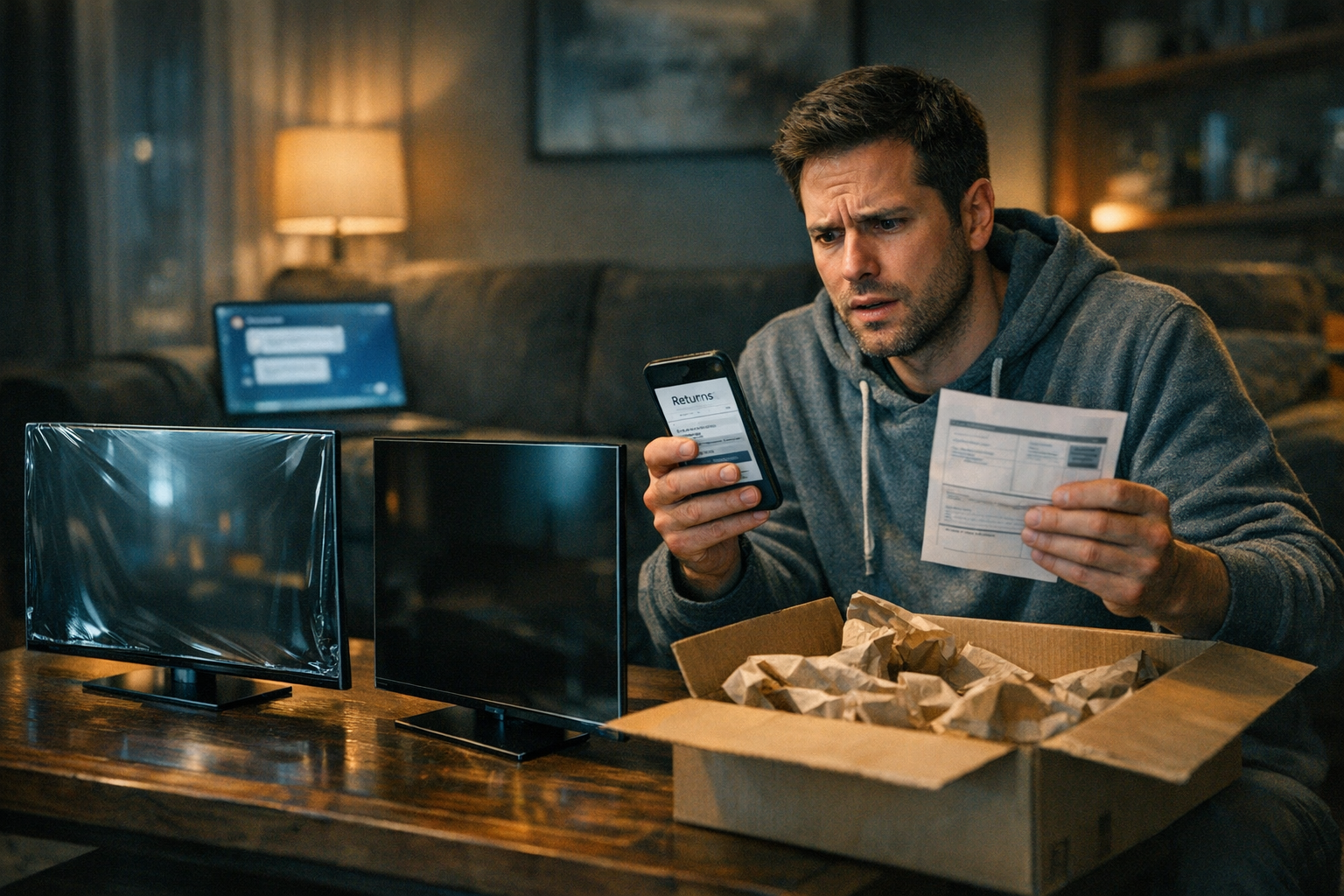
Imagine ordering a high-end gadget and unexpectedly receiving double what you paid for. That’s exactly what happened to one consumer who bought an OLED screen — only to receive two instead of one. Trying to do the right thing, he contacted the retailer to return the extra item. But what unfolded next was not the usual customer service script. Instead of processing a return, the retailer insisted he keep the second screen — free of charge. This exceptional customer service move has people talking and wondering: was this a rare glitch, a show of goodwill, or part of an evolving business strategy in competitive online retail?
The surprising decision by the retailer not only highlights how companies handle logistics errors but also opens a broader discussion about brand loyalty, customer trust, and the true power of user-first service strategies. In a world increasingly driven by technology and efficiency, human-centric policies like this one may just become the most powerful marketing tool companies possess.
Let’s unpack what happened, what it means for consumers and businesses, and why this one case of OLED generosity has gone viral.
Key takeaways and what you need to know
| Incident | Customer ordered one OLED screen but received two |
| Customer Action | Attempted to return the second screen |
| Retailer Response | Allowed customer to keep second screen for free |
| Impacted Product | High-end OLED screen |
| Public Reaction | Positive, fueled discussions on customer service excellence and policy norms |
How one customer wound up with two OLED screens
The story began innocuously enough. A customer placed an order for a single **OLED monitor**, a premium product known for its superior display quality and steep price tag. OLED technology is usually reserved for the most discerning creative professionals and gamers, making each unit particularly valuable.
The twist came during delivery: two boxes arrived instead of one. Expecting some kind of tracking error or fulfillment mishap, the customer did what most conscientious buyers would do — he contacted the retailer to report the overdelivery and offer to return the item. But to his surprise, the agent on the other side of the line would not accept the return, citing internal policies that sometimes allow customers to keep mistaken deliveries if returning them isn’t cost-effective for the business.
Why the retailer gave away a free OLED monitor
Overdelivered products are not an uncommon logistical hiccup in the vast web of online commerce. But how companies choose to handle them is what makes the difference. In this case, the retailer seems to have adopted a policy that values **customer satisfaction, logistical efficiency**, and minimizing returns.
Given the size and complexity of reverse logistics, especially for tech products, the cost of retrieving and processing a single returned OLED screen could outweigh the cost of simply letting the customer keep it — particularly if the item cannot be resold as brand new. Additionally, such moments offer a company the opportunity to reinforce positive customer sentiment.
“Sometimes the easiest resolution is also the smartest. We balance loss prevention with building long-term trust.”
— Alex T., Logistics Policy Lead (Placeholder)
Why this story is resonating with consumers
In an era where customer experience can make or break a brand, stories like this quickly gain traction for their rarity and feel-good factor. Many consumers are used to frustrating return processes, being penalized for mistakes they didn’t make, or having to jump through hoops simply to talk to human agents.
Seeing a company resolve an issue with compassion and pragmatism stands in stark contrast to horror stories that flood review sites and social media. Beyond the OLED screen itself, the real value this customer received might be a **renewed trust** in a system that very often feels cold and automated. It’s no wonder that the story is being widely shared — it taps into a consumer desire not just for great products, but for humane treatment.
What this means for future online orders
Experts believe that we’ll see more such instances as big eCommerce platforms begin to leverage AI to automate returns and customer service decisions. If predictive models show that retrieving a product isn’t fiscally viable, the system might allow customers to keep them — no human contact needed. But while this is efficient, it also comes with risks like policy misuse or inventory mismanagement.
“Automated goodwill gestures are the next level of customer service — but they need strong parameters to avoid abuse.”
— Clara Xu, eCommerce Advisor
Winners and losers in this unique customer story
| Winners | Losers |
|---|---|
| Consumer who received a free OLED screen | Retailer’s short-term profit margin |
| Retailer’s brand perception and loyalty | Logistics oversight |
| Public trust in customer-first policies | Potential policy loopholes for dishonest users |
How rare are such goodwill gestures in eCommerce?
Though headlines like this are rare, industry insiders admit that such incidents occur more frequently than the public realizes. Mistaken double shipments, fulfillment errors, and customer care decisions are often settled quietly — with policies that favor the bottom line and customer retention more than rigid cost recovery.
Most major ecommerce companies maintain internal thresholds for what return processes cost, and weigh them against the value of **a delighted customer**. In certain thresholds, loss is considered acceptable if it secures a future purchase and strengthens the chance of positive word-of-mouth.
How companies can tighten processes without losing goodwill
To navigate this delicate balance, companies are investing in smarter inventory tracking systems, proactive quality checks during pick-and-pack stages, and clearer customer service scripts for agents navigating such decisions. The goal is clear: **reduce errors without reducing empathy**.
“You can’t afford to bleed inventory, but you also can’t afford to alienate loyal customers. Intelligent automation is the answer.”
— Raj Patel, Retail Operations Consultant
How consumers should handle receiving extra items
If you ever find yourself on the receiving end of more than you ordered, it’s still best to notify the seller. Not only is this ethically sound, but many businesses — like in this case — may reward your honesty. And even if you are required to return the item, most will provide prepaid labels or make the process convenient.
In the rare case the retailer lets you keep the item, it serves as a reminder that doing the right thing can sometimes come with unexpected rewards.
Short Frequently Asked Questions
Is it common to receive extra items from retailers?
No, such cases are uncommon. Most retailers have strict inventory checks, but mistakes can happen occasionally during fulfillment.
Is it legal to keep a product you didn’t order?
In many countries, unsolicited items can be legally considered gifts, but it is always best to contact the retailer to clarify the situation.
Why would a company let you keep a mistaken shipment?
If the cost of return exceeds the value of the item or the processing effort, some companies may choose to let you keep it as a goodwill gesture.
Will I be charged later for keeping a mistaken item?
If you report it and are told you can keep it, most retailers will not charge you later. Always document the communication for records.
Should I report extra items even if they are low-cost?
Yes, it’s best to be honest regardless of the product’s cost. Some companies may even reward your integrity with discounts or perks.
Can customers abuse this policy?
Yes, repeated false claims could flag accounts. Retailers monitor for abuse and have protections in place to curb fraud.
Do such returns affect seller ratings?
Not usually. As long as the issue is documented, sellers generally won’t be penalized unless there’s a pattern of errors.