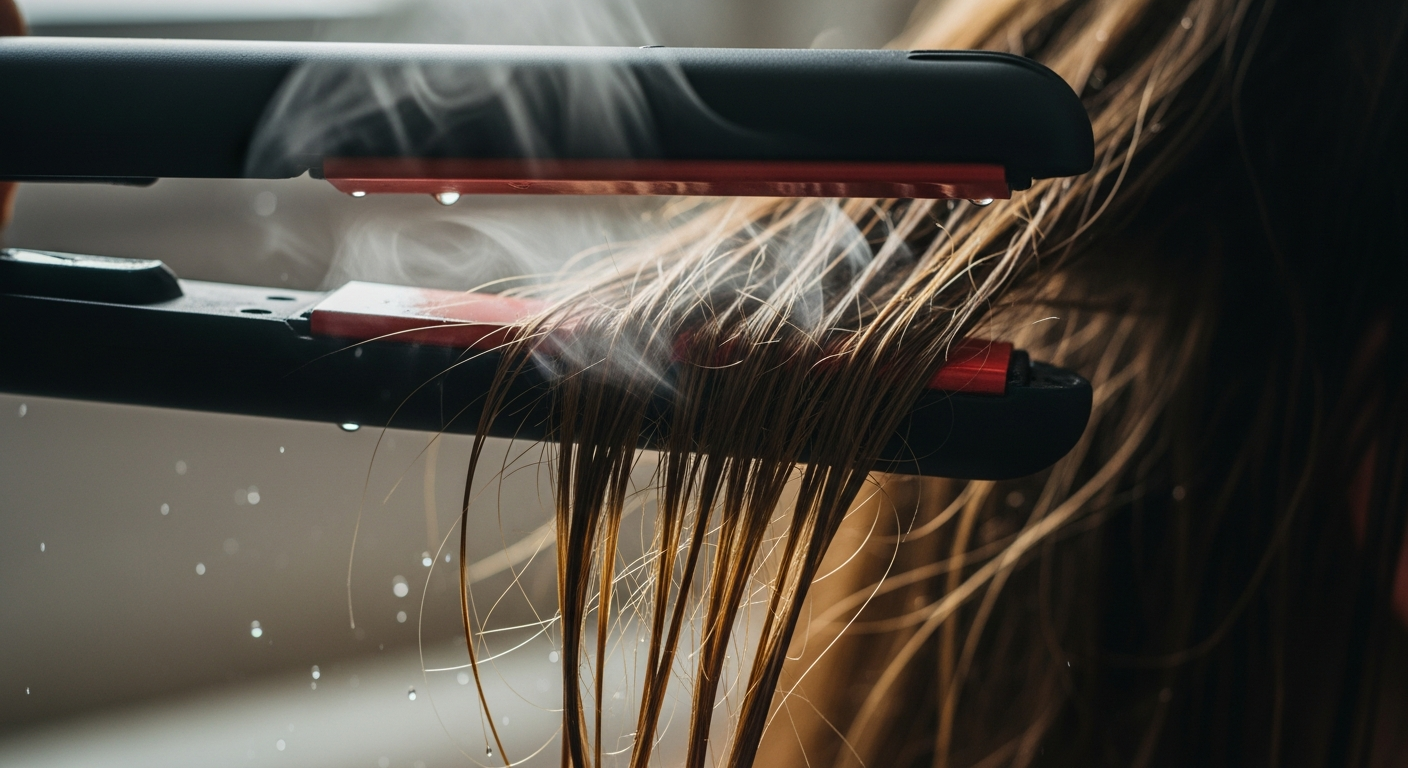
Rebecca had always loved the sleek, straight look that came from using her flat iron. Each morning, after a quick towel dry, she’d plug in her hot tool and smooth out her damp, thick hair before heading to work. It was fast, convenient, and gave her the salon-like finish she craved. But over time, something began to change. Her ends became frayed. A strange, stubborn frizz settled in. Her once-glossy locks transformed into a brittle, unmanageable mess. She had no idea that skipping one critical step—fully drying her hair—was causing irreversible damage to her strands.
Rebecca’s story is far from unique. In the rush of our busy lives, many of us are guilty of using hot tools on damp or wet hair. But what may seem like a time-saving shortcut is, in fact, one of the most damaging things you can do to your hair. Beneath the surface of each strand lies a delicate structure that, once compromised, doesn’t easily bounce back. Let’s explore why this seemingly small mistake could be the single fastest way to destroy your cuticle—and what you can do to protect your hair going forward.
Why using hot tools on damp hair is more harmful than you think
| Issue | Impact on Hair |
| Using hot tools on damp or wet hair | Causes internal water to boil, rupturing the hair cuticle |
| Trapped moisture under intense heat | Leads to strand bubbles, breakage, and frizz |
| Inadequate evaporation time | Hair fiber expansion and permanent damage |
| Cuticle erosion | Leads to dullness, split ends, and irreversible texture changes |
What really happens when heat meets moisture under pressure
When your hair is wet, it holds water not just on the surface but also within the cortex—the innermost structure of the strand. Applying intense heat from a flat iron or curling wand to this retained moisture can lead to a phenomenon known as the “bubble hair effect”. The heat causes the internal water to rapidly boil, forming steam within the hair shaft. As the vapor tries to escape, it creates bubbles that permanently deform the strand, weakening the cuticle and cortex in the process.
These bubbles aren’t just theoretical—they’ve been observed under microscopes, where the inside of heat-damaged hair appears riddled with hollow pockets. When steam stretches the hair from inside, it compromises elasticity, making it prone to split ends and snapping. Once these bubbles form, the damage is irreversible, requiring you to eventually cut away the affected length to restore health.
“Heat tools are supposed to shape hair, not destroy it. But when applied to damp strands, they turn into weapons that break down the very fiber they’re meant to beautify.”
— Dr. Marissa Cheng, Trichologist and Hair Science Expert
Why frizz is a symptom, not just a style problem
Frizz is often treated as merely an aesthetic concern, tamed with serums, oils, and anti-humidity sprays. But in reality, persistent frizz is usually one of the first signs of deeper structural damage. When your cuticle—the protective outer layer of your hair—is eroded or lifted, outside moisture can creep in while internal hydration escapes. This imbalance causes the strand to swell irregularly and twist into unwanted shapes, producing unmanageable frizz and puffiness.
Furthermore, misusing hot tools on damp hair exacerbates this problem. Without a tightly sealed cuticle, hair no longer reflects light well, leading to a dull, matte finish. It becomes porous, dry, and more susceptible to further damage from environmental factors like UV rays and pollution. Fixing this isn’t just about changing your styling products—it starts with changing your routine.
Why towel drying isn’t enough before heat styling
Most people assume that a quick pat down with a towel makes their hair dry enough for heat tools. But towels only remove surface moisture, leaving the inner cortex still saturated. Hair can feel dry to the touch and still contain up to 30% moisture within the strand. This is why stylists always recommend blow-drying your hair completely—or at least letting it fully air-dry—before flat ironing or curling.
The next time you’re tempted to rush, remember this: even slightly damp hair elevates your risk of irreversible damage. Running a 400°F iron over strands that haven’t been fully dried is no different than cooking them from the inside out. That shortcut could cost you months—or years—of healthy growth.
Recognizing the long-term effects of heat misuse
While one slip-up won’t destroy your hair overnight, consistent misuse of hot tools on damp strands leads to a cumulative degradation in texture, elasticity, and shine. Here are some tell-tale signs your hair may be suffering from heat-related cuticle destruction:
- Increased and persistent frizz that doesn’t respond to products
- Split ends and breakage along the shaft, not just at the tips
- A sudden change in curl pattern or wave texture
- Hair feels rough, dry, or overly porous despite conditioning
- Tendency to tangle more easily due to raised cuticle scales
Don’t dismiss these warnings as mere “bad hair days”—they point to deeper structural harm that may already be well underway.
How to safely style your hair with heat
You don’t have to toss out your favorite hot tools to protect your hair. But you do need to alter the way you use them. Here are expert-approved strategies for achieving sleek locks without the irreversible cost:
- Always ensure your hair is completely dry before using any heated iron
- Use a thermal protectant spray with silicones or polymers that create a protective barrier
- Reduce your heat setting—most hair types don’t need anything above 365°F (180°C)
- Limit how often you apply heat—aim for no more than 1-2 times per week
- Invest in high-quality tools with ceramic or tourmaline plating for more even heat distribution
- Trim regularly to remove damaged ends before split ends travel up the hair shaft
“Prevention is the best form of hair care. Avoiding heat on damp hair is not a preference—it’s a necessity if you want healthy, long-lasting results.”
— Sophia Lane, Celebrity Stylist
Winners and losers of heat styling methods
| Winners | Losers |
|---|---|
| Fully air-dried or blow-dried hair before styling | Hair that’s damp but appears dry to the touch |
| Heat-protected strands with quality tools | Unprotected hair under extreme temperatures |
| Minimal heat use on healthy strands | Daily flat-ironing or curling of fragile hair |
Why hair health should come before hair trends
In a culture obsessed with instant transformations and sleek finishes, it’s easy to forget that our hair isn’t just an accessory—it’s a living fiber requiring care and patience. Following viral styling hacks or shortcut routines may offer temporary glam, but the long-term damage they cause often goes unnoticed until it’s too late. Making your styling routine heat-safe isn’t a buzzkill—it’s an investment in the beauty and vitality of your natural hair.
“Think of heat styling the same way you would skincare—intense treatments need protection and precision. Hair deserves the same respect as your face.”
— Lani Roberts, Texture Specialist
Frequently asked questions about heat styling on damp hair
Is it ever safe to use a flat iron on slightly damp hair?
No. Even slightly damp hair can lead to internal steam buildup, which causes irreversible strand damage.
What’s the difference between steam styling and steam damage?
Steam styling tools are engineered to apply moisture strategically. Traditional hot tools on damp hair cause uncontrolled steam, damaging the inner cortex.
How can I tell if my hair is truly dry before heat styling?
Your hair should feel warm and light all over. If any section feels cool or heavy, it’s likely still holding internal moisture.
Does towel drying speed up safe heat styling?
It helps remove surface moisture, but it’s not enough. Always finish with air drying or blow drying until hair is 100% dry.
Can heat-damaged hair be repaired?
Once inner structure is compromised, it cannot be restored—but it can be trimmed and managed with conditioning treatments to improve appearance.
Are there any heat tools specifically designed for safer use?
Tools with adjustable temperature settings, ceramic or tourmaline plates, and built-in moisture sensors offer safer styling options.
How often can I safely use heat tools?
No more than 1-2 times per week is recommended, preferably with heat protection and on dry hair only.
Does hair porosity impact heat damage risk?
Yes. High porosity hair absorbs more moisture and is especially vulnerable to steam damage during heat styling.