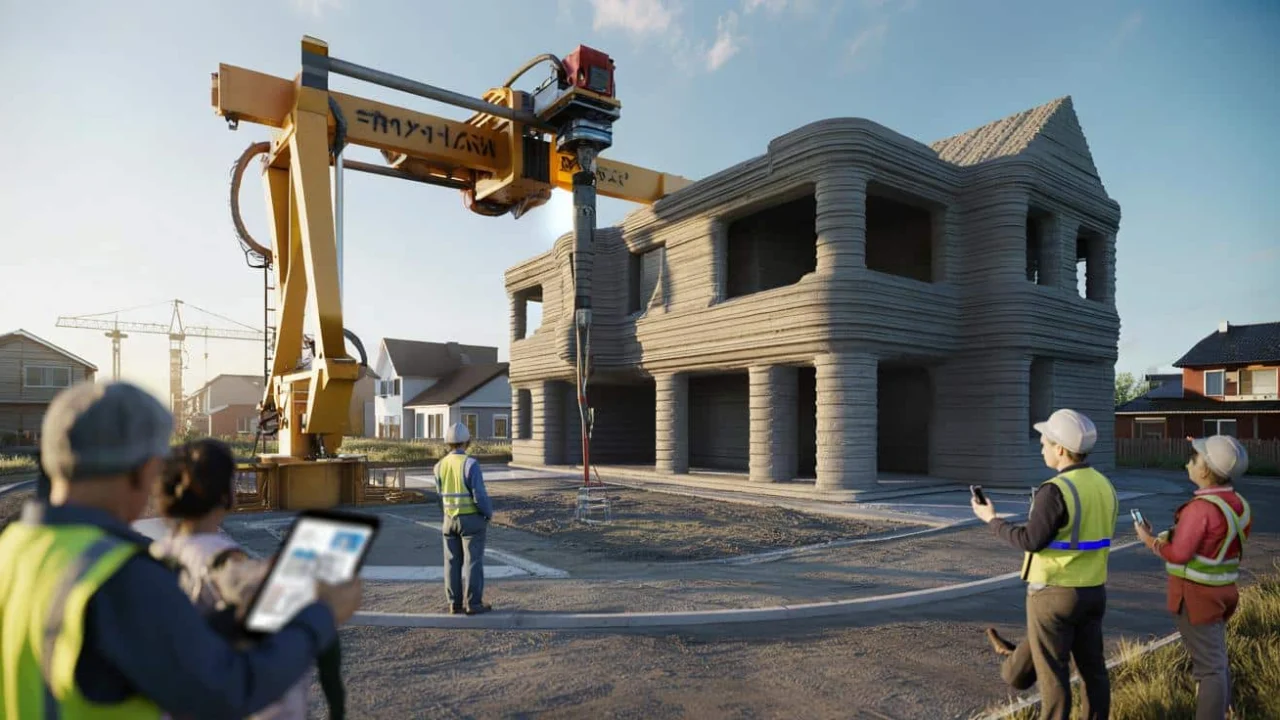
In a quiet neighborhood, a robotic arm the size of a delivery van moves steadily, spraying layer upon layer of concrete in smooth, precise arcs. By nightfall, a 200 m² house stands complete in its structural form—a feat once considered impossible by traditional construction timelines. This robotic breakthrough transforms a process that would typically stretch over months into a project completed within 24 hours. For millions caught in the relentless grip of the housing crisis, it’s a glimpse of a future where affordable and rapid construction might finally become a reality.
Gone are the noisy, chaotic construction sites bustling with workers, hammering and shouting amidst countless delays. Instead, a compact team oversees a machine diligently following a digital blueprint, eliminating human fatigue and weather delays from the equation. The robotic builder, guided by a digital command, ejects special fast-setting concrete with unparalleled precision, forming walls with ready-made cavities for insulation and window spaces as it progresses. What once felt like a bottleneck in homebuilding is evolving into a software-driven solution that saves time, materials, and costs with astounding predictability.
This technological leap is not about luxury or innovation for innovation’s sake. It is designed to tackle the practical realities of housing shortages—from suburban small family homes and social housing projects to emergency shelters in disaster zones. As robots begin to shoulder the heaviest tasks in construction, the entire housing delivery ecosystem stands poised for a profound shift. Faster builds, lower waste, and predictable schedules could soon redefine how communities approach affordable, efficient housing.
| Aspect | Details |
|---|---|
| Structure Size | 200 m² (Approximate) |
| Construction Time (Shell) | Approximately 24 hours |
| Concrete Type | Fast-setting, flow-optimized mix |
| Human Oversight | Small crew (3-6 personnel) |
| Use Cases | Social housing, disaster shelters, suburban homes |
| Key Benefits | Speed, predictability, material efficiency |
How robotic construction changes building speed and efficiency
Traditional homebuilding is notoriously slow and fraught with unpredictability. Coordinating multiple tradespeople, managing materials, adapting to weather conditions, and human fatigue create a cascade of delays that stretch timelines into months or even years. Robotic construction changes this dynamic by turning the building process into a digital, programmable sequence where the robot repeatedly applies concrete in exactly the right places, layer by layer, without breaks or distractions.
The key lies in the digital model that guides the robot—the blueprint effectively becomes code, dictating each filament of concrete needed to build the walls and insulation cavities. This level of precision significantly reduces material waste. Traditional construction frequently results in leftover materials, cutting errors, and inefficiencies that add cost and environmental impact. The robot uses only the concrete it needs, with no excess, helping meet emissions goals critical to modern urban planning.
The human element in robotic homebuilding
Contrary to popular imagination, robots don’t work entirely alone, especially not in early deployment phases. Behind each successful print is a dedicated team of engineers and supervisors ensuring the robot operates seamlessly. These professionals monitor the print path on screens, maintain the concrete mix’s consistency, and intervene if sensors detect errors or misalignments. While the robot performs the heavy lifting and repetitive tasks, human expertise drives flexibility, quality assurance, and system maintenance.
This symbiosis of man and machine does not replace construction jobs but rather reshapes them. Future building professionals will likely shift into supervisory roles, machine operators, and design adaptors, where their skills improve efficiency rather than relying purely on manual labor. It’s a new kind of craftsmanship that blends robotics with architectural and engineering judgment.
Why the predictability of robot-built homes matters
One of the biggest advantages of robotic construction is its predictability. Building delays traditionally cause ripple effects that force expensive rescheduling of workers, inspections, and trades, magnifying costs and setbacks. When a robot is programmed to complete the structural shell in exactly 24 hours, planners know with reasonable certainty when the building will be ready for subsequent stages like electrical wiring and plumbing.
This certainty can revolutionize how housing projects are managed and financed. For social housing and disaster relief, communities can finally expect timely delivery of shelters. Developers and policymakers gain strategy tools to tackle housing shortages systematically instead of reacting to problems that unfold unpredictably on site. It transforms the timeline from a liability into a strength.
Economic and environmental impacts of robotic building
Economic pressures underpin the urgency for faster homebuilding. Skyrocketing rents and mortgage rates push millions into housing insecurity. Robotic 3D printing helps reduce labor costs by minimizing the human workforce needed during the most prolonged phase of construction. Those savings could translate into more affordable housing options for renters and first-time buyers alike.
Moreover, environmental benefits are a critical factor. The precision of robotic printing drastically cuts concrete waste—a major contributor to carbon emissions. By using exactly the volume of concrete required, fewer resources are mined, transported, or discarded. Cities aiming for sustainable growth now have a way to align housing development with climate goals, easing community concerns about the environmental footprint of new builds.
Who stands to benefit the most from this technology
| Winners | Losers |
|---|---|
| Social landlords and housing associations – faster, cheaper builds | Traditional construction firms slow to adopt robotics |
| Disaster relief organizations – rapid deployment shelters | Suppliers of excess construction materials |
| Municipalities fighting housing shortages and emissions | Labor-intensive manual trades at risk without retraining |
| Homebuyers seeking affordable and timely housing options | Speculative investors relying on slow build times |
Rather than a luxury confined to futuristic architecture, this technology promises widespread social impact. Social landlords can cut costs and deliver more homes faster, NGOs can offer emergency shelter with unprecedented speed, and even rural communities can revitalize abandoned land with compact, robotically printed developments. In each case, what seems like a simple engineering feat holds profound consequences for how and where people live.
What needs to happen for robotic housing to become mainstream
Despite the promise, robotic homebuilding still faces hurdles. Legal, political, and financial frameworks have yet to catch up with the technology. Zoning rules, building codes, and approval processes often lag behind innovation, complicating widespread adoption. For robotic construction to scale, cities might need to establish dedicated zones with pre-certified designs streamlined for automatic permits.
Public and private sectors must collaborate to lower barriers and educate construction professionals on the benefits of robotic methods. Funding and policy support could incentivize adopting robotics where the need is greatest, such as social housing projects and disaster relief. It’s also essential to develop local expertise to operate and maintain these machines instead of relying on distant experts, accelerating global reach.
What the future holds for housing and construction workers
Far from rendering the workforce obsolete, automation redefines the construction economy. The physically demanding, monotonous tasks will increasingly transition to robots, while human workers focus on higher-value roles: quality control, design adaptation, maintaining fleets of building machinery, and interfacing with regulatory systems. This shift demands new training programs and career pathways but offers opportunities to preserve employment while improving health and safety on construction sites.
“Robotics won’t magically fix housing, but if we can cut structural build times from months to days, we’re giving policymakers and communities a tool they’ve never had before. Imagine what social housing looks like when delays aren’t baked into the DNA of every project.”
— Construction Robotics Engineer (Name Withheld)
Frequently Asked Questions
How fast can a robot build an entire house?
The structural shell of a 200 m² house can be printed in roughly 24 hours. However, finishing work like windows, doors, roofing, and interiors still takes additional weeks.
Is robotic construction cost-effective compared to traditional methods?
Yes, the major savings come from reducing labor time, cutting material waste, and improving scheduling predictability, which lowers overall costs.
What materials do robots use to print houses?
Robots use a specially formulated fast-setting concrete mix optimized for flow, strength, and rapid curing.
Will robotic construction replace construction workers?
It will shift their roles but not replace them. Workers will take on supervisory, maintenance, and design-related positions requiring skills beyond manual labor.
Can robotic construction be used for disaster relief?
Absolutely, robots can rapidly print durable shelters to house displaced families in flood, fire, or earthquake zones.
Are 3D-printed homes durable and safe?
Yes, the printed shells meet structural requirements, and insulation cavities and curved corners can be built directly into walls, enhancing energy efficiency and strength.
What challenges slow down wider adoption of robotic building?
Regulatory issues, zoning laws, skilled workforce training, and upfront investment are among the main barriers.
Could robot-built homes become customizable for buyers?
Future platforms may allow families to select from digital catalogs of designs, offering customization options much like selecting furniture today.