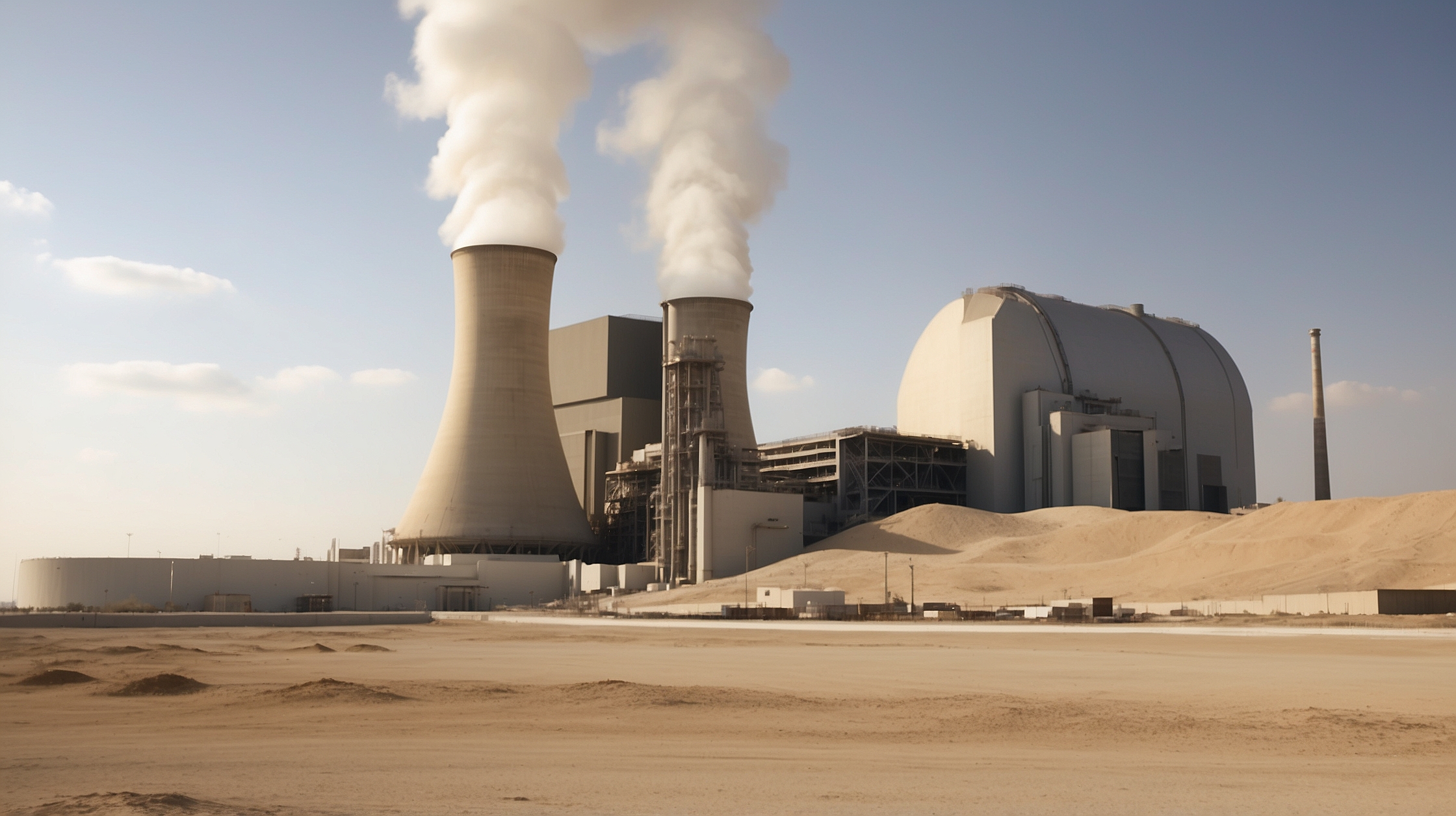
In the heart of the Arabian desert, where the sun beats down over wind-swept dunes and futuristic cities rise from the sands, something unprecedented is quietly taking form. At Barakah, a remote coastal site in the United Arab Emirates (UAE), a nuclear revolution is unfolding — and at the center of it is a collaboration that exemplifies globalization’s complex fusion of science, strategy, and ambition.
Years ago, few imagined that a nation like the UAE, better known for its oil wealth and towering skyscrapers, would become the first Arab state to successfully construct and begin operating a commercial nuclear power plant. But today, the Barakah Nuclear Energy Plant stands as a testament to how geopolitical alignments, cutting-edge technology, and rigorous diplomacy can converge to shift regional energy landscapes. France, through its nuclear powerhouse Framatome, has become an essential player in this story, exporting its reactor engineering expertise to shape one of the Middle East’s most significant energy milestones to date.
This partnership not only highlights the accelerating demand for clean, carbon-free electricity in traditionally hydrocarbon-reliant economies — it also exemplifies the complex dance of nuclear non-proliferation, energy security, and soft power. Barakah’s success sends a clear message: the nuclear renaissance is neither confined to Western nations nor exclusive to Cold War legacies.
Key facts about the Barakah nuclear partnership
| Project Name | Barakah Nuclear Energy Plant |
| Location | Al Dhafra Region, Abu Dhabi, United Arab Emirates |
| Primary Technology Provider | Framatome (France) |
| Reactor Type | APR-1400 Pressurized Water Reactors |
| Total Units Planned | 4 |
| First Reactor Operational | 2020 |
| Estimated Output (Full capacity) | 5.6 Gigawatts |
| Primary Contractor | Korea Electric Power Corporation (KEPCO) |
Why nuclear energy in the Gulf is a big deal
The Gulf region, traditionally pegged as the oil capital of the world, is undergoing a dramatic shift in energy strategy. Facing increasing climate concerns, growing electricity demand, and a need to diversify economically, Emirati and Gulf leaders have turned toward nuclear energy as a solution offering both sustainability and geopolitical stature.
The Barakah project, which will supply up to 25% of the UAE’s electricity needs once all four units are online, anchors this new direction. Importantly, it’s not just about energy. The project showcases the UAE’s ambitions to position itself as a leader in nuclear safety, international cooperation, and non-proliferation standards. The construction required years of audits, international inspections, staff training, and compliance with meticulous approvals — an effort that now sets a gold standard for other regional aspirants.
How Framatome became a critical player in Barakah
Though the Barakah plant is based on South Korean-designed reactors (APR-1400), Framatome, France’s historic nuclear engineering firm, provided a critical vector: the transfer of reactor component engineering, safety instrument systems, and operator training services.
Working alongside KEPCO and Nawah Energy Company (the UAE’s nuclear operator), Framatome ensured the delicate and complex calibration of control systems that are central to the operation of high-performance reactors. This involved advanced diagnostics, stress-tested safety models, and knowledge transfer that exemplifies the tightrope of providing nuclear “know-how” without proliferating risk.
“France’s collaboration represents not just a commercial export, but an embodiment of how nuclear diplomacy can shape global energy paradigms.”
— Serge Royer, Nuclear Energy Policy Expert
What makes the Barakah approach different from past nuclear expansions
Historically, nuclear development has been the domain of major powers — the US, Russia, China — and often tangled in controversies over safety, waste disposal, and geopolitical tension. What sets Barakah apart is its strict adherence to international oversight, regional transparency, and public engagement.
The UAE signed all major nuclear treaties, including the NPT and the IAEA Additional Protocol. It committed to not enriching uranium or reprocessing spent fuel, two steps often criticized for their dual-use potential. This “gold standard” nuclear agreement with supplier countries, including the U.S. and France, effectively removes military risk while still granting peaceful energy access.
“Barakah is a case study for responsible nuclear development in the 21st century.”
— Dr. Latifa Mohamed, Energy Governance Researcher
The winners and losers in this nuclear collaboration
| Winners | Losers |
|---|---|
| UAE: Gains cleaner energy and global prestige | Fossil fuel dependency: Shift weakens oil’s dominance |
| France: Expands nuclear tech export influence | Nuclear skepticism: Barakah counters anti-nuclear narratives |
| South Korea: Proven exporter of efficient reactor design | Regional polluters: Clean nuclear puts pressure on laggards |
What comes next as Barakah nears full operation
With three reactor units already contributing to the grid and the fourth nearing completion, Barakah is on course to become a full-scale commercial nuclear power plant by 2025. Once fully operational, it will displace around 21 million tons of carbon emissions each year — equivalent to removing 3.2 million cars from roads annually.
This sets the stage for future regional cooperation. Saudi Arabia and Egypt have expressed interest in developing their own nuclear programs, and Barakah offers not just a proof of concept, but a model to emulate for responsible development. Framatome, emboldened by its present role, stands in prime position to offer further consultations and technologies across the Middle East and African markets.
What Barakah means for the global nuclear narrative
For decades, nuclear power has been caught between anxiety and aspiration. Catastrophes like Chernobyl and Fukushima have dampened enthusiasm. But rising climate urgency and energy geopolitics are restoring nuclear’s place in the energy mix.
The Barakah plant, built with international partnerships, cutting-edge safety protocols, and regional cooperation, challenges historical assumptions. It shows that nuclear power can be both safe and scalable — and that the developing world is more than capable of leading that charge responsibly.
“Barakah is more than an energy solution — it’s a narrative transformation.”
— Marie Chevalier, Strategic Analyst in Nuclear Transitions
Frequently asked questions about Barakah and nuclear development in the UAE
What type of reactors are used at Barakah?
The Barakah plant uses APR-1400 pressurized water reactors developed by South Korea, known for their efficiency and modern safety systems.
Why did the UAE choose to invest in nuclear energy?
To diversify its energy sources, reduce carbon emissions, and prepare for a post-oil economy with stable and clean electricity generation.
Is Framatome the main builder of the Barakah plant?
No, the main contractor is Korea Electric Power Corporation, but Framatome plays a key role in reactor components and system integration.
How safe is the Barakah plant?
The plant adheres to strict IAEA guidelines, and the UAE has committed to global non-proliferation standards, ensuring its safe and peaceful use.
Will Barakah fully replace oil-based power?
No, but it will provide up to 25% of the UAE’s electricity needs, significantly reducing dependence on fossil fuels.
Can other Gulf nations replicate this model?
Yes, Barakah serves as a reference point for other countries interested in peaceful and safe nuclear energy development.
What role did France play in Barakah?
France, through Framatome, provided technological components, system engineering, and expertise that are crucial for operational safety.
When will the fourth Barakah unit be online?
The fourth and final unit is expected to be fully operational by 2025, completing the plant’s designed capacity.