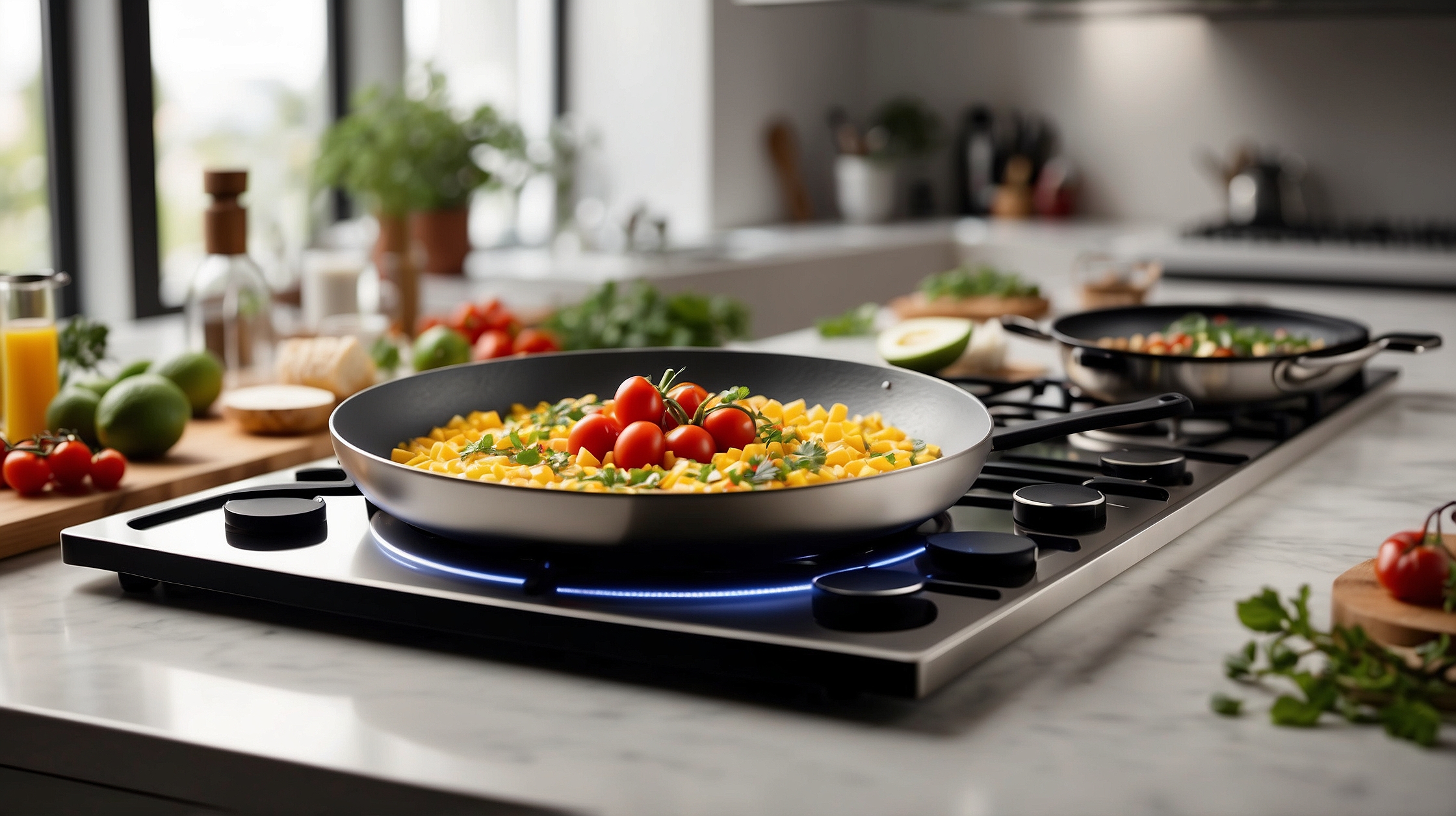
For most home cooks, the kitchen is an ever-adapting space—a laboratory where convenience, creativity, and technology merge. Over the past few decades, we’ve watched appliances evolve from static metal boxes to smart, AI-assisted gadgets that talk to us, automate tasks, and even order groceries. But what if we looked at our kitchen countertop and saw… nothing? No burners, no knobs, no traditional stovetop—just a seamless, sleek surface that somehow cooks food more efficiently than ever before?
That’s the striking reality unfolding in 2026, as a revolutionary innovation is turning the kitchen world on its head. For those who follow home tech trends, whispers of the “invisible hob” have been circulating for a while. Now, the concept has exploded into full-fledged reality, with designers rolling out cooktops that blend invisibly into countertops, ushering in a new minimalist yet powerful era in home cooking. It’s not just about aesthetics anymore—it’s about rethinking how we interact with the heart of our homes.
The buzz began among tech-savvy chefs and interior designers when the first models of this invisible cooking surface were unveiled. With its glassy appearance and smartphone-like controls, it looked more sci-fi than stove. At first, there was skepticism—how effective could a burner be if you couldn’t even see it? But as the results piled in, so did the enthusiasm. Suddenly, manufacturers couldn’t keep up with demand, and home chefs found themselves reimagining their cooking experience not just in function, but in form.
What changed this year
| Feature | Details |
| Technology | Induction-based heating integrated beneath countertop surfaces |
| Aesthetic appeal | Sleek, modern design with no visible stovetops or burners |
| User experience | Touchscreen controls and smart connectivity replace physical knobs |
| Performance | Faster heating, energy efficient, precise temperature management |
| Target audience | Modern homeowners, interior designers, tech-savvy cooks |
This year’s innovation was propelled by two major technological advances. First, manufacturers perfected the use of **hidden induction coils** that nest seamlessly beneath natural stone or synthetic countertops. Second, they developed smarter sensors capable of recognizing cookware placement and adjusting heat accordingly—ensuring safety without compromising performance.
With these capabilities, users can cook anywhere on the surface. Place a pan on the countertop, activate the interface, and the hob underneath powers up only where it’s needed. And when you’re done? The surface becomes just another part of your kitchen island, indistinguishable from the rest. It’s the ultimate blend of **form and function**—a thrilling development for those with an eye for modern aesthetics.
Why home cooks are raving about it
The invisible hob is more than a novelty; it’s a practical improvement that addresses some of the longstanding frustrations many cooks have faced. Traditional stovetops, with their cluttered designs and hard-to-clean grates, contrast sharply with this innovation’s smooth, wipe-down-friendly finish. But cleanliness is just the beginning.
For homeowners with open-concept kitchens, eliminating visual clutter is a game-changer. No more unsightly burners breaking up the line of a quartz countertop. What you get is a **streamlined appearance** perfect for entertaining, multitasking, or simply appreciating the beauty of your kitchen.
“This innovation gives people the freedom to design their kitchens without having to work around bulky appliances.”
— Jenna Lake, Interior Design Expert
Beyond looks, the smart functions included in most 2026 models are incredibly savvy. Built-in sensors detect boiling over, overcooking, or even lack of movement—shutdown protocols help prevent accidents. Some units are even compatible with remote apps, allowing users to warm a pot of water from their phones.
Who stands to gain the most and who might be left behind
| Winners | Losers |
|---|---|
| Modern homeowners upgrading kitchens | Manufacturers of traditional gas hobs |
| Luxury apartment developers | Low-budget kitchen remodelers |
| Interior designers focused on minimalism | Those lacking compatible cookware |
| Home cooks who prioritize tech and innovation | Rural properties with limited electric grids |
While the benefits are widespread, the technology isn’t immune to criticism. For one, there’s the price tag. These systems don’t come cheap—**installation costs and hardware pricing** are still premiums, at least until the market matures.
Additionally, those who love traditional gas cooking may find it hard to give up the workhorse reliability and tactile sensation of a flame. And let’s not forget the cookware issue: only magnetic-compatible pots and pans will work on these surfaces, meaning many kitchens may need to undergo a cookware overhaul before embracing this technological leap.
How design trends pushed this innovation forward
Interior design has become an increasingly important driver of appliance innovation. Over the past five years, one striking trend has been the move toward seamless, **integrated spaces**—from hidden refrigerators to tiled-in dishwashers. This hob fits neatly into that vision, wiping the last visible appliance clean from view while adding new functionality.
Architectural firms and renovation clients alike have demanded **aesthetic continuity with high performance**, pushing manufacturers to innovate. The result is a new kind of kitchen that doesn’t look like a kitchen until it needs to. A beautiful breakfast bar by day transforms into a multi-station cooktop by night—with barely the press of a button.
“Our clients want spaces that are beautiful, flexible, and smart. This tech checks all those boxes and then some.”
— David Renner, Kitchen Architect
What to consider before installing one
Despite its allure, installing an invisible hob isn’t as easy as buying a new coffee maker. You’ll need countertop material compatible with under-surface induction coils. Most manufacturers recommend **porcelain, natural stone, or advanced synthetic blends**, as these transmit heat efficiently and resist warping.
Electrical capacity is another concern. These systems generally require substantial power connections—often demanding upgraded wiring or circuit breakers. And while safety features abound, professional installation is a must, both to meet code requirements and to ensure full functionality.
Maintenance-wise, however, these cooktops are a dream. With **no mechanical knobs or open flames**, cleaning is as effortless as wiping down a glass surface. And software updates mean smart features improve over time, much like a smartphone.
How this could change future kitchens
Looking ahead, this innovation may do more than simplify cooking. It could shift how we **design, buy, and live in our homes**. With kitchens that look more like living spaces, open-plan living becomes more harmonious. We may also see the rise of multipurpose kitchen islands serving as work desks, dining tables, and stoves—all without visual disruptions.
Manufacturers are also hinting at modular versions that support multiple work zones—or even **interactive cooking surfaces** that display recipes, track nutrition, or connect with grocery delivery services. In short, the invisible hob might just be the gateway to the smart kitchen of the future.
“In five years, we won’t even remember how strange a burner-less kitchen once seemed.”
— Elena Marsh, Smart Kitchen Technologist
Frequently Asked Questions
Is an invisible hob the same as induction cooking?
While invisible hobs use induction technology, the key difference is the integration beneath countertop surfaces, allowing for a completely hidden appearance when not in use.
Can I install one in my current kitchen?
Yes, but your countertop must be compatible, and professional installation is recommended. You may also need to upgrade your electrical system.
Do I need new cookware?
Likely, yes. Induction-compatible cookware is required—specifically, pots and pans with a magnetic base.
Are invisible hobs safe?
Absolutely. They come with built-in sensors, safety shut-offs, and cool-to-touch surfaces that reduce burn risks significantly.
How much do they cost?
Currently, high-end models can range from $3,000 to $8,000, depending on features and installation needs.
What materials can support this technology?
Specialized countertop materials like sintered stone, porcelain, or reinforced granite are most suitable for heat and durability.
Will it raise my electricity bill?
Induction is more energy-efficient than traditional cooking methods, so it may actually lower your energy consumption over time.
Can I use the surface for other purposes?
Yes. When not in use, the surface functions like any other countertop—ideal for prepping, serving, or even dining.