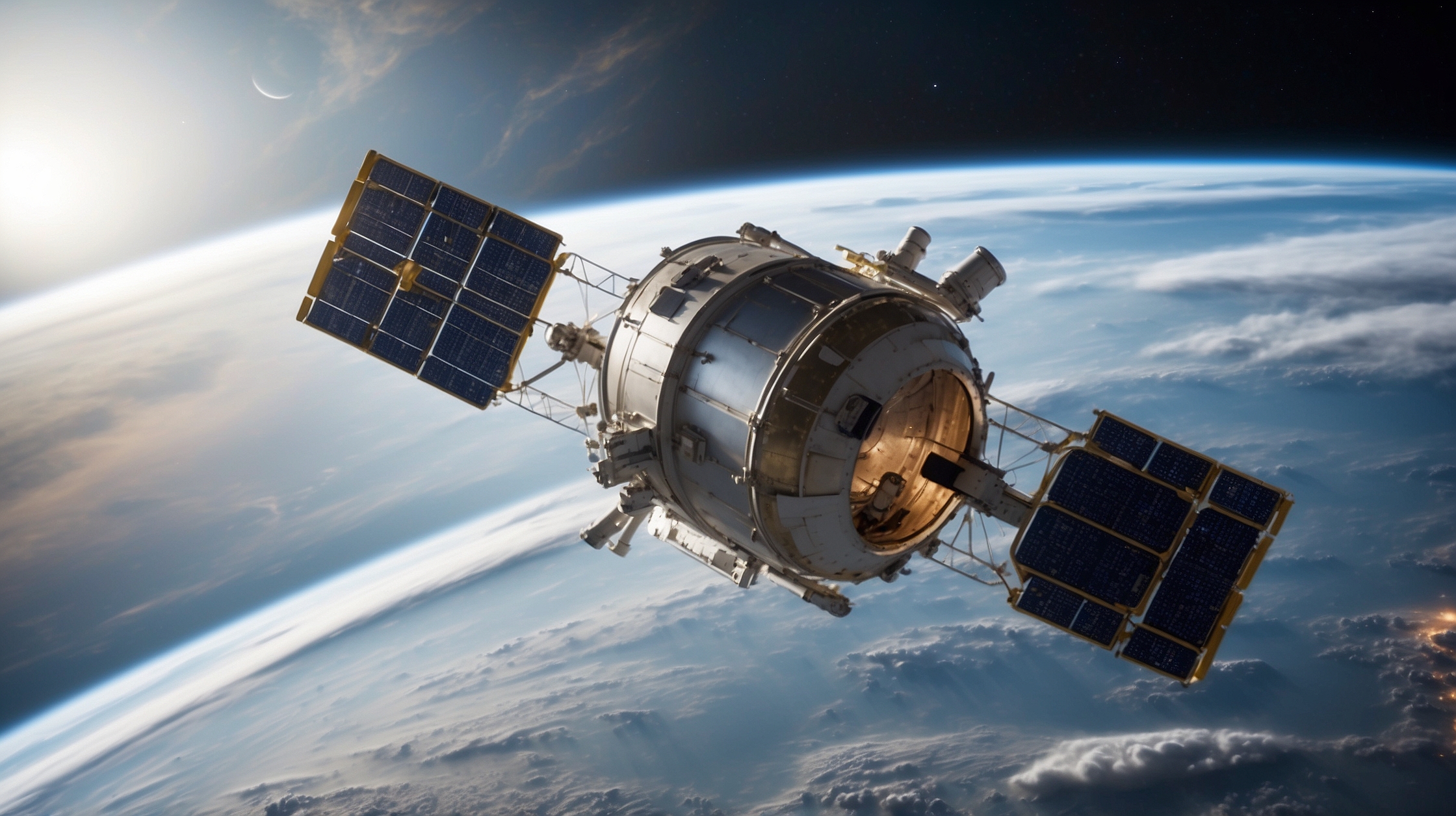
On a crisp morning in March 2024, Italy made another leap into the cosmos, reaffirming its ambitions in space technology with the successful launch of its third COSMO-SkyMed Second Generation (CSG) satellite. As the launch vehicle roared above the French Guiana sky, carrying advanced surveillance equipment into orbit, a quiet but seismic shift took place in the global space race. This achievement wasn’t just an engineering feat — it signified Italy’s increasingly prominent role in a field long dominated by larger superpowers.
The satellite, CSG-3, brings the promise of sharper imagery, faster communication, and enhanced environmental monitoring. Its deployment underlines not just technological advancement, but Italy’s strategic vision: investing in sovereign Earth observation capabilities amid growing demand for geospatial intelligence. As climate change intensifies and global security threats evolve, space-based radar systems like CSG-3 are no longer optional — they’re essential.
Behind this satellite is a partnership of innovation, public investment, and strategic diplomacy. The Italian Space Agency (ASI) and aerospace giant Leonardo have worked in coordination for years to heighten Italy’s influence in the orbital domain. The CSG-3 is set to play a critical role in both civilian and defense applications — from disaster response to maritime security. But what exactly does this mission bring to the table, and why should the world take notice?
Overview of Italy’s Latest Space Mission
| Mission Name | COSMO-SkyMed Second Generation (CSG-3) |
|---|---|
| Launch Date | March 2024 |
| Launch Site | Kourou Spaceport, French Guiana |
| Operating Agencies | Italian Space Agency (ASI), Ministry of Defence, Leonardo |
| Key Technology | Synthetic Aperture Radar (SAR) |
| Spectral Capability | X-band radar imaging |
| Mission Objectives | Earth observation, environmental monitoring, defense, disaster response |
Why this satellite launch matters now more than ever
The launch of the third CSG satellite comes at a turning point in global affairs. As the world grapples with both man-made and natural crises — from climate disturbances to geopolitical conflicts — having autonomous access to real-time, high-resolution data from space has become a national security imperative. Italy recognizes this, and through CSG-3, it is bolstering its capacity for independent situational awareness.
The COSMO-SkyMed system uses synthetic aperture radar (SAR), a technology that can generate clear images of the Earth’s surface regardless of weather conditions or time of day. This allows authorities to monitor environmental changes, track illegal activities at sea, assess agricultural trends, or even support humanitarian relief operations in crisis zones. Few countries possess the capability to develop and operate such systems.
“This launch positions Italy among the few nations with state-of-the-art radar satellite constellations capable of delivering 24/7 surveillance and global coverage.”
— Marco Delos, Aerospace Expert
How the COSMO-SkyMed system has evolved
The COSMO-SkyMed program originally began in 2007 with the deployment of the first generation of satellites, specifically designed for dual civilian and military use. The second generation, which includes CSG-3, represents a major technological upgrade. These newer satellites offer finer spatial resolution, increased agility, and significantly reduced latency in data transmission.
With CSG-3 now in orbit, the constellation comprises three active second-generation satellites alongside some first-generation units still in operation. The newer versions are equipped with innovative payloads and advanced SAR sensors that enable higher-definition imaging and faster tasking capabilities. This reflects a broader strategy by Italy to continuously modernize its national space assets amid international competition and changing defense landscapes.
“These satellites are not just Italian achievements but European milestones that contribute to shared strategic autonomy within the continent.”
— Giulia Traverso, Defense Policy Analyst
What the satellite will monitor and why it’s critical
The applications for CSG-3 span multiple domains. In environmental monitoring, it aids in tracking glacier retreat, desertification, and deforestation — all key elements of global climate models. In agriculture, the satellite helps map changes in land use and optimize irrigation planning. But perhaps most crucially, it supports risk assessment and disaster management by swiftly identifying flooded regions, wildfire outbreaks, and structural damage after earthquakes.
In the defense and security realm, CSG-3 ensures enhanced reconnaissance capabilities. Italy can independently monitor high-risk zones, migrant flows across maritime corridors, and track illegal fishing or naval movements in the Mediterranean. For NATO and EU allies, this improves shared situational awareness and boosts Italy’s value as a contributor to international security frameworks.
Winners and losers from the mission’s launch
| Winners | Losers |
|---|---|
| Italian Aerospace Industry | Competitor space nations reliant on outdated observation tech |
| Europe’s Strategic Autonomy | Foreign reconnaissance service providers |
| Disaster Management Agencies | Actors engaging in illegal maritime activities |
Partnerships and funding behind the project
The CSG-3 satellite is a result of complex public-private cooperation. The Italian Space Agency and the Ministry of Defence spearheaded the initiative, with industrial implementation and development led by Leonardo through its Space Alliance with Thales Alenia Space. Funding was partly supported through the National Recovery and Resilience Plan (PNRR), financed under the European Union’s NextGenerationEU program.
This mode of collaboration has served as a model across the continent, enabling long-term returns on investment in terms of national resilience, industrial growth, and scientific advancement. Italy’s commitment to space has spurred job creation across tech and engineering sectors and reinforced its status as a key player in the European Space Agency (ESA).
What this mission means for Europe’s space ambitions
Italy’s technological advancements are part of a broader European ambition to secure independent access to strategic space assets. As global alliances become increasingly complex and technological dependency grows riskier, Italy and other ESA members are working to establish co-dependent but autonomous systems. The CSG series fits neatly into this vision, offering synergies with programs like Copernicus and Galileo.
More than just national pride, this launch is a tangible step toward European space sovereignty—a concept increasingly shared across EU capitals. It allows Europe to monitor its territories, borders, and environmental markers without outsourcing crucial data handling to non-European actors.
“CSG-3 enhances both Italy and Europe’s capability to act decisively in times of crisis, be it a natural disaster or a geopolitical flashpoint.”
— Francesca Mullini, Head of Aerospace Governance Council
What changed with this particular launch
With CSG-3, there’s a clear change in both capability and cadence. The satellite can process and transmit data faster than its predecessors and is designed to support higher volumes of simultaneous requests from multiple users. This boosts operational responsiveness, an essential feature in crisis scenarios where every second counts. Additionally, integrating artificial intelligence and automation into system controls marks a step toward “smart satellite” functions.
Another change is logistical: the use of Arianespace’s Vega-C rocket signaled a renewed commitment to European launch infrastructure, despite prior reliability concerns. The launch’s success may bolster investor and institutional confidence in future missions originating from the Guiana Space Centre.
Short FAQs about the CSG-3 Space Mission
What is the main purpose of the COSMO-SkyMed Second Generation system?
The CSG system focuses on high-resolution Earth observation for both civilian and military uses, including environmental monitoring, disaster response, and surveillance.
Who manages the CSG-3 satellite?
The satellite is managed jointly by the Italian Space Agency (ASI) and the Italian Ministry of Defence, with industrial support from Leonardo and Thales Alenia Space.
What makes Synthetic Aperture Radar (SAR) special?
SAR technology allows satellites to provide clear images anytime, regardless of lighting or weather conditions, making it highly effective for surveillance and analysis.
How is the data from CSG-3 used in real-world applications?
It is used for agriculture planning, natural disaster response, maritime security, urban mapping, and environmental conservation.
What does the CSG-3 launch mean for Italy’s global positioning?
It enhances Italy’s role as a technological leader in space and strengthens its standing within European and NATO defense frameworks.
Will this satellite collaborate with other European systems?
Yes, it is expected to integrate with the EU’s Copernicus program and complement other European Earth observation systems.
Is this satellite an improvement over the previous generation?
Absolutely. It offers better resolution, faster communication, and more flexibility in operations than the first-generation satellites.
How many COSMO-SkyMed satellites are currently active?
As of March 2024, three active second-generation satellites and several first-generation satellites are operational.