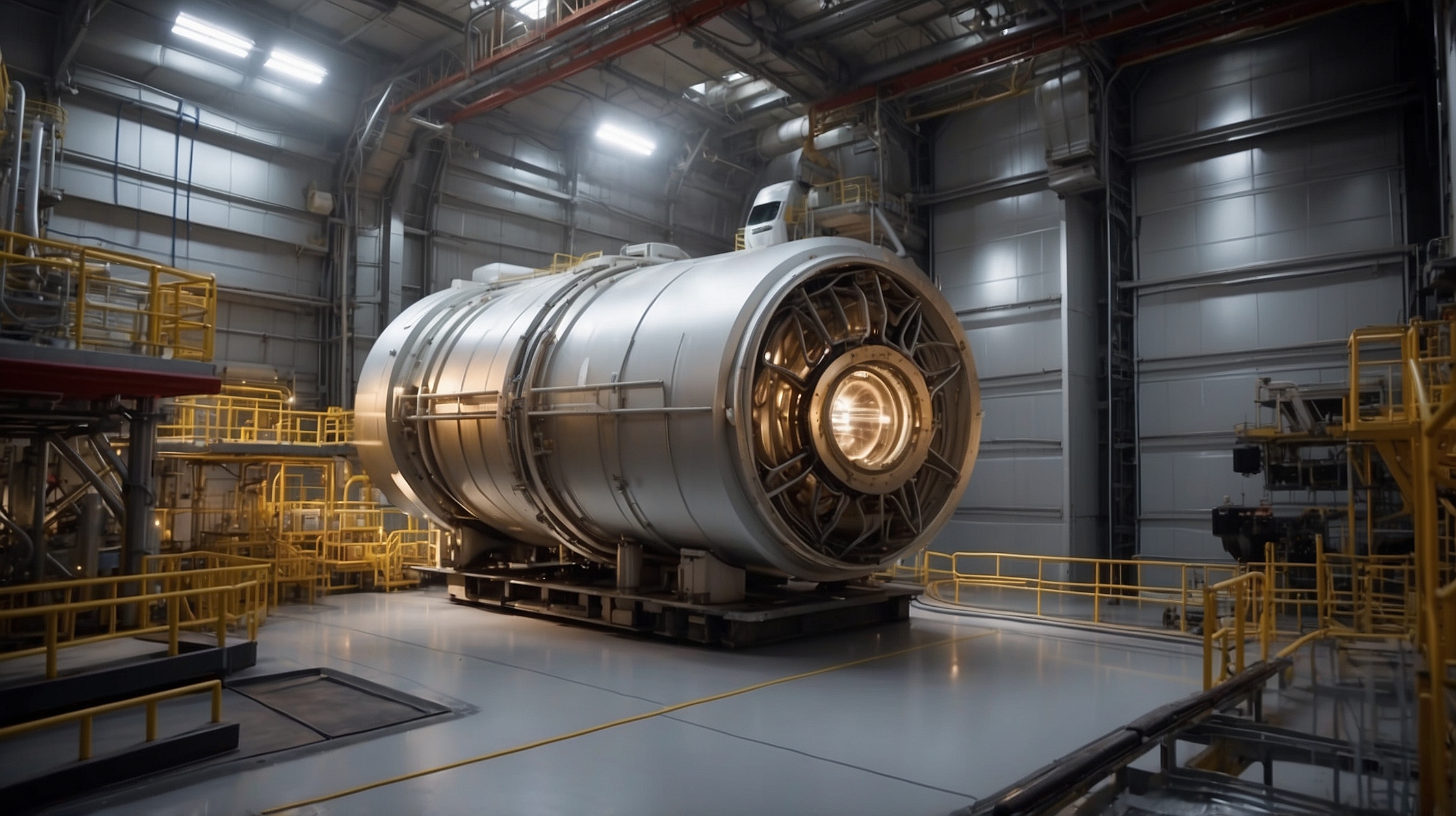
In the arid countryside of southern France, a scientific behemoth is slowly rising. Towering cranes glide silently over a sprawling construction site, lifting massive steel components into place like pieces of an enigmatic puzzle. This is no ordinary infrastructure project; it is ITER—short for International Thermonuclear Experimental Reactor—one of the most ambitious energy endeavors humanity has ever undertaken.
Far from the typical race for profit or geopolitical competition, ITER stands as a hallmark of global scientific collaboration. The goal? To harness the power of the stars—nuclear fusion—and turn it into a safe, clean, and virtually unlimited energy source. And now, this dream has moved one step closer to reality. The recent installation of Vacuum Vessel Sector 5 marks a significant turning point for the project, symbolizing not only engineering progress but renewed scientific optimism.
As the massive steel piece found its place within the Tokamak assembly, engineers and scientists celebrated not just a logistical achievement, but the tightening alignment between idealism and feasibility. Could we finally be on the road to a cleaner, fusion-powered future?
Quick summary of what’s happening with the ITER project
| Project Name | ITER (International Thermonuclear Experimental Reactor) |
| Location | Saint-Paul-lès-Durance, Southern France |
| Recent Milestone | Installation of Vacuum Vessel Sector 5 |
| Goal | Develop nuclear fusion as a sustainable energy source |
| Planned First Plasma | Before 2030 |
| Participating Countries | 35 nations, including EU, US, China, Japan, India, Russia, Korea |
The promise of nuclear fusion
Fusion has long beckoned as the holy grail of energy. Instead of splitting atoms like in traditional nuclear fission, fusion merges light atomic nuclei—typically hydrogen isotopes—releasing vast amounts of energy in the process. Most remarkably, it does so without producing long-lived radioactive waste or contributing to greenhouse gas emissions.
“Fusion represents a profound shift in how we imagine future energy systems. It offers high output, minimal waste, and could be a cornerstone of global decarbonization,” said one research scientist involved with ITER. It’s this promise that has brought together global powers, many of whom are geopolitical rivals, in a unified scientific pursuit.
Why Vacuum Vessel Sector 5 is a major milestone
The Tokamak—a doughnut-shaped chamber at the center of the ITER machine—is where the fusion reactions will take place. At the core of this system lies the vacuum vessel, a highly complex structure made up of nine massive sectors. Sector 5, the latest to be installed, is crucial for maintaining the ultra-high-vacuum conditions fusion reactions require.
Weighing more than 440 tons and covered with embedded ports and cooling tubes, installing Sector 5 required not only technical precision but tight coordination across continents. The part was manufactured in Korea, shipped to France, and then meticulously maneuvered into position over several weeks through advanced crane operations.
“Installing Sector 5 proves we’re not just assembling parts, but building confidence in an energy future powered by fusion.”
— Dr. Léon Marchal, ITER Systems Engineering Lead
What changed this year
Until recently, ITER faced a series of delays due to pandemic-related supply chain disruptions, rising costs, and engineering recalibrations. However, 2024 has brought a renewed rhythm to the site. Construction workflows have stabilized, documentation processes have been streamlined, and international deliveries resumed full-scale operations earlier in the year.
More importantly, this year marked the completion of several subsystems required for the installation of the vacuum vessel, meaning future components can now be integrated at a faster pace.
Global collaboration driving science forward
ITER is unlike any other energy initiative in modern history. Co-funded and co-engineered by 35 nations, the collaboration cuts across political, cultural, and technological lines. The European Union contributes nearly half the construction cost, with other major players—like the United States, China, and India—providing components, research, and funding.
“What’s remarkable isn’t just the science, but the spirit of collaboration. Countries are working side by side for a common future.”
— Hiroshi Taniguchi, Japanese Field Engineer
The project is managed through the ITER Organization, headquartered in France, while each member country has its own domestic agency coordinating contributions. Together, these teams form one of the largest peacetime engineering crews on Earth.
Challenges still on the horizon
Despite the upbeat advancements, ITER’s path remains strewn with obstacles. Among the most pressing is achieving “First Plasma”—the initial test where hydrogen plasma will be energized within the Tokamak. This is projected before 2030, but achieving it depends on the successful installation and operation of thousands of components, many of which are custom-designed and one-of-a-kind.
Additionally, scientists will face major hurdles in energy containment and sustained output. The real litmus test comes later in the decade when ITER attempts to demonstrate more energy output than input—an elusive benchmark that fusion reactors have yet to reach sustainably.
Who benefits and who doesn’t
| Winners | Losers |
|---|---|
| Energy researchers and scientists | Fossil fuel industry stakeholders |
| Environmental advocates | Communities near decommissioned coal plants |
| Future tech sectors (AI, Data Centers) | Regions with minimal investment in green tech |
Why this matters for climate goals
ITER is not just a physics experiment; it’s a potential climate solution. If fusion becomes commercially viable, it could revolutionize global energy portfolios and significantly reduce dependence on carbon-intensive sources. This aligns directly with the Paris Agreement targets and net-zero frameworks adopted by many countries.
While renewable energies like solar and wind are essential, they suffer from intermittency. Fusion, by contrast, offers a constant, reliable energy stream that could stabilize grids and reduce blackout risks in a warming world.
Will ITER produce electricity for homes?
No. ITER is an experimental reactor and is not designed to feed power into the grid. Its mission is to prove the viability of fusion energy, serving as the foundation for future commercial reactors.
When will “First Plasma” happen?
First Plasma is currently scheduled to occur before 2030, marking the Tokamak’s initial operation phase.
What is the Tokamak?
The Tokamak is a donut-shaped magnetic containment device that holds superheated hydrogen plasma, enabling fusion reactions to occur under controlled conditions.
How is ITER funded?
ITER is largely funded through in-kind contributions from 35 member nations. The EU covers approximately 45% of the cost, with the remainder shared by the other participants.
How big is the ITER site?
The ITER site spans roughly 180 hectares and features numerous buildings for manufacturing, testing, and control operations in addition to the main reactor hall.
Why is fusion better than fission?
Fusion produces significantly less radioactive waste, carries no risk of meltdown, and uses abundant fuel sources like deuterium and tritium extracted from water and lithium.
What comes after ITER?
The next-stage project is DEMO, a prototype fusion power plant that aims to demonstrate electricity generation and prepare for commercial fusion reactors around 2050.
Can fusion help stop climate change?
Yes, if successfully developed and deployed at scale, fusion could significantly reduce reliance on fossil fuels and become a cornerstone of global clean energy strategies.