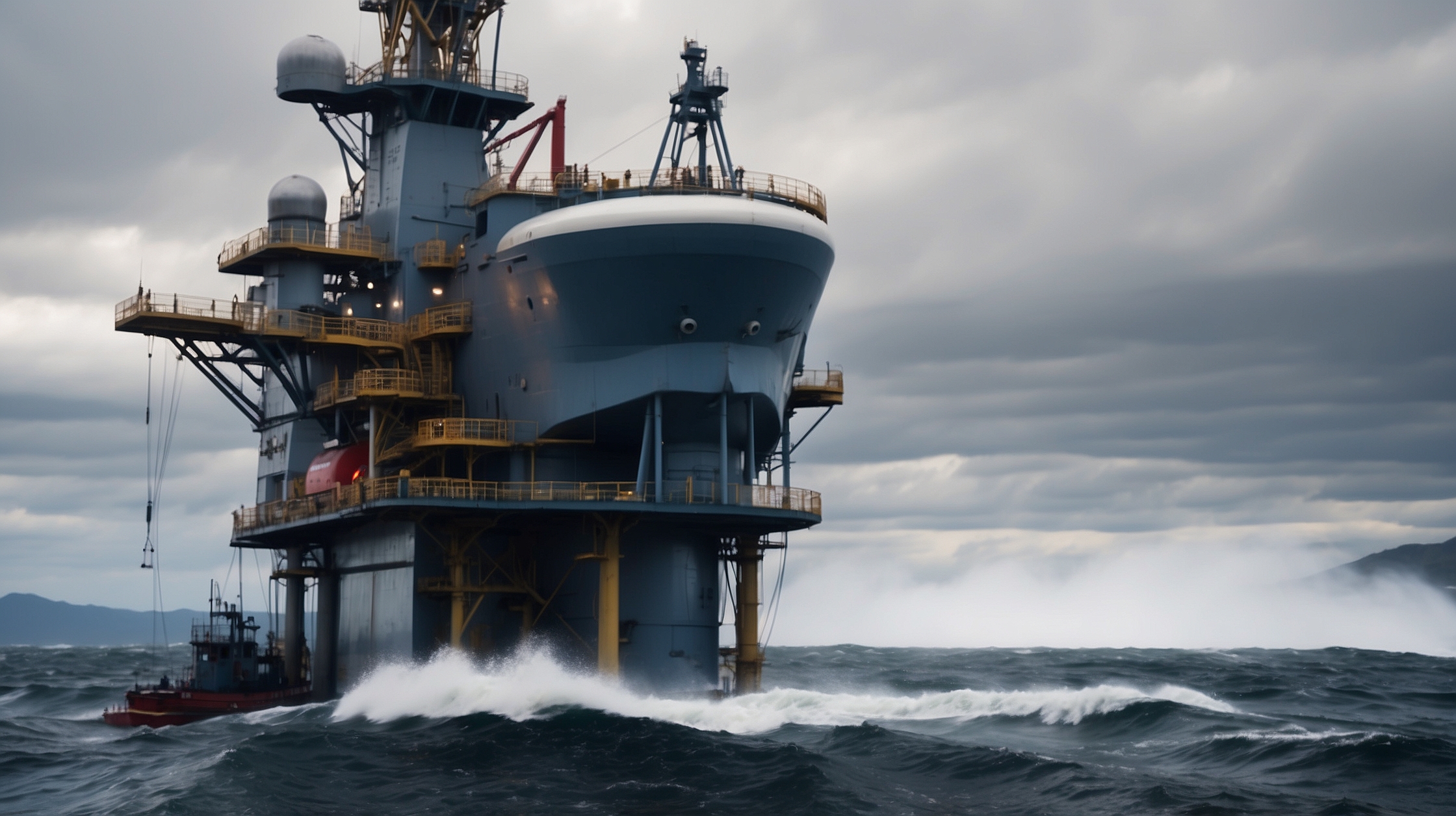
On the ocean floor, 6,000 meters beneath the restless waves, lies a new frontier—one that may reshape the global balance of technological power. Japan, a country long known for its commitment to innovation and precision engineering, is preparing to make history by deploying a groundbreaking technology aimed at a world-first mission: the extraction of rare earth elements from extreme ocean depths. With global demand for these critical materials soaring due to their role in everything from electric vehicles to advanced weaponry and semiconductors, Japan’s ambition now has the attention of the world economy—and its competitors.
Rare earth elements may be called “rare,” but they are not as scarce as their name suggests. The catch? They are often difficult and expensive to mine. China currently dominates over 60% of the global supply chain, posing a strategic dependency for nations pursuing technological sovereignty. That’s why Japan’s daring venture into deep-sea mining marks a potential paradigm shift. More than just a technological feat, it’s a symbol of Japan’s renewed efforts to secure its economic and national security interests in an increasingly complex geopolitical landscape.
In the months ahead, the Japanese government, in collaboration with the Japan Agency for Marine-Earth Science and Technology (JAMSTEC), plans to test its advanced deep-sea excavation system with the goal of retrieving rare earth-rich mud—a slurry teeming with valuable elements such as yttrium, europium, terbium, and dysprosium. This mud could contain enough of these metals to satisfy Japan’s domestic demand for hundreds of years.
But Japan’s seafloor aspirations are more than science fiction come to life—they highlight urgent questions of sustainability, sovereignty, environmental stewardship, and industrial strategy. Here’s what you need to know about this daring technological leap into the deep blue unknown.
Japan’s deep-sea mission at a glance
| Project Name | Deep-Sea Rare Earth Extraction Initiative |
| Lead Organization | Japan Agency for Marine-Earth Science and Technology (JAMSTEC) |
| Primary Technology | Deep-sea excavation and pumping system |
| Operation Depth | Approximately 6,000 meters |
| Expected Start | December 2024 |
| Target Resources | Rare earth-rich mud (yttrium, europium, dysprosium, etc.) |
| Economic Goal | Reduce dependence on Chinese rare earths, secure supply chain |
What changed this year
This initiative isn’t new, but the timing of its implementation is crucial. Over the past decade, Japan has been quietly investigating its deep-sea mineral wealth, particularly in the waters around Minamitorishima Island—a remote Pacific outpost more than 1,800 kilometers from Tokyo. What’s different in 2024 is that the research phase is transitioning rapidly into real-world application. Following successful 2018 tests that retrieved over 100 kilograms of rare earth mud, Japan is now ready to upscale the mission to industrial-level extraction.
Concurrently, geopolitical tensions and raw material bottlenecks have amplified global urgency. Countries heavily dependent on Chinese exports are racing to diversify their sources. Japan’s decision to escalate this effort now positions it not only as a scientific leader but potentially as a rare earth supplier for Asia and allies beyond.
“This is the most sophisticated deep-sea excavation system ever developed. It’s not just about domestically securing resources—it’s about setting the global standard.”
— Koji Kato, Marine Technology Researcher (Placeholder)
Why rare earths matter more than ever
Rare earth elements are indispensable to modern life. They enable high-efficiency magnets essential to electric motors, wind turbines, satellite systems, missile guidance technology, and the very smartphones we use every day. As the green energy and defense sectors continue to expand, so too does the appetite for these elusive materials. The problem? Their extraction often carries heavy environmental costs, particularly when driven by mining practices that lack regulatory oversight.
Japan’s undersea alternative proposes a cleaner, albeit technologically demanding, solution. By targeting mud deposits on the abyssal ocean plains—which are relatively low in toxicity and more accessible for modern robotic systems—the country aims to bypass the land-use controversies and ecological damage associated with conventional rare earth mines.
How the deep-sea extraction system works
The system designed by JAMSTEC is a technical marvel. Submersible machines are deployed to 6,000 meters below the surface, where they vacuum rare earth-rich mud into long pumping tubes. This high-pressure slurry is then channeled to a platform vessel above water for initial processing. The separated rare earths are transported to shore for final refinement.
What makes this revolutionary isn’t just the depth but the efficiency. The system is engineered to minimize energy consumption, avoid disruption of deep-sea ecosystems, and enable high-yield collection. Engineers say it could yield up to 400,000 tons of rare earths from just one zone—enough to supply Japan’s needs for more than 100 years.
Potential economic and geopolitical impact
Japan’s ability to reduce its reliance on Chinese rare earths reshapes more than just its internal economy. It sets a precedent for secure, independent resource strategies for other nations. If the project succeeds, it could catalyze new multilateral supply agreements and decrease the leverage of resource-dominant exporters in critical technological domains.
Moreover, the venture could usher in a new marine economy based on responsible resource extraction. Unlike fossil fuels, which come with escalating emissions, rare earths support the electrification of global industries—marking this as not just a national security strategy, but also an environmental bet on future technologies.
“This is a historic moment for ocean engineering. We’re on the cusp of unlocking a new layer of Earth’s natural capital.”
— Naomi Sato, Oceanographer (Placeholder)
The environmental stewardship question
Even as Japan takes calculated steps to mitigate environmental harm, questions remain about the long-term ecological effects of deep-sea mining. The ocean floor is home to many species we barely understand, and critics warn against rushing into commercial extraction without comprehensive biodiversity studies.
To address this, JAMSTEC is building a framework for real-time environmental monitoring. During the trials, sensors will measure sediment plumes, species presence, and disruptive noise levels. Japan has also indicated that extraction will only advance with international cooperation and compliance with the International Seabed Authority.
Winners and losers in the new deep-sea era
| Winners | Losers |
|---|---|
| Japan’s high-tech and defense sectors | Chinese rare earth exporters |
| Global manufacturers seeking supply diversification | Conventional mining companies with high land-use costs |
| Environmentally-conscious investors | Countries without deep-sea exploration capabilities |
What Japan’s success could mean for other nations
If Japan’s mission proves viable, other technologically advanced nations could look to the ocean for their own resource needs. Countries like the U.S., South Korea, and EU members may fast-track their own undersea mining research or form alliances with Japan. This could rejuvenate a lagging international push toward more diversified rare earth supply chains, in line with net-zero carbon goals.
Moreover, success will push the boundaries of engineering, unmanned robotics, and pressure-resistant material science—indirectly benefiting fields from space exploration to disaster recovery. The symbolic value of succeeding where no other country has speaks volumes about Japan’s place in the 21st-century innovation race.
Short FAQs on Japan’s deep-sea rare earth project
Why is Japan extracting rare earths from the ocean floor?
Japan aims to reduce its dependence on Chinese rare earths and secure a long-term, stable supply by tapping into mud deposits on the ocean floor rich in critical minerals.
Where is the mining operation taking place?
The operation targets areas near Minamitorishima Island, a remote Pacific location within Japan’s exclusive economic zone.
When does the project begin?
Field testing for the advanced excavation system is expected to begin in December 2024, with industrial-level mining to follow subject to results and environmental assessments.
How does the extraction technology work?
Subsea vehicles collect rare earth-rich mud and channel it to the surface via high-pressure pipes. The materials are then refined onshore.
What rare earths are being targeted?
Key elements include yttrium, europium, terbium, and dysprosium—all essential for electronics, EVs, and clean energy technologies.
Are there environmental concerns with this method?
Yes, but Japan is actively designing systems to monitor and reduce environmental impact, including sediment tracking and biodiversity observation tools.
Who stands to gain the most from the project?
Japan’s defense and tech sectors, global manufacturers, and countries seeking alternatives to China-dominated supply chains.
Will this lower the global cost of rare earths?
If scaled efficiently, Japan’s deep-sea mining could help stabilize prices by introducing new, competitive supply sources to the market.