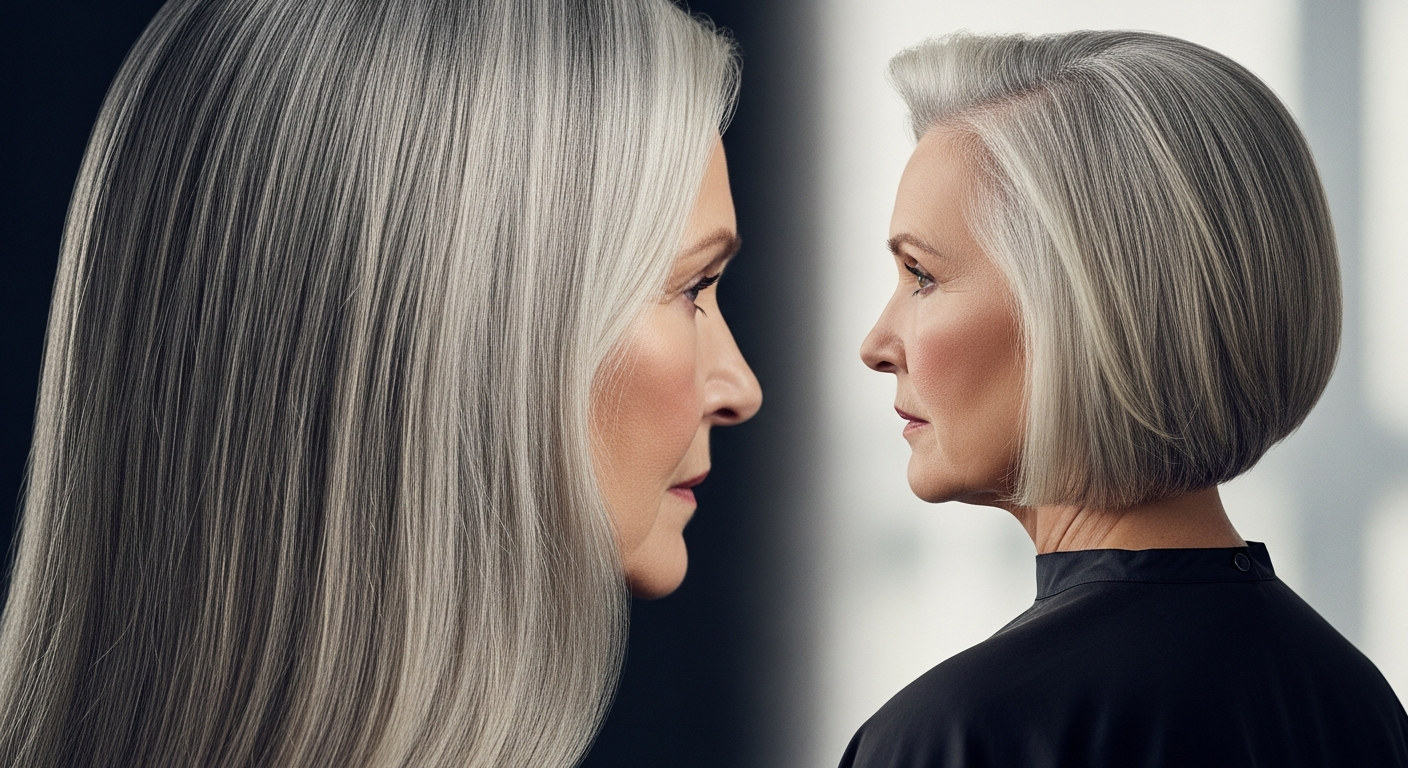
At a certain age, many women begin to reflect not just on their health and lifestyle choices, but also on how their outward appearance communicates their inner vitality. For decades, long flowing hair has often been a symbol of femininity and confidence. However, there’s a subtle, often-overlooked beauty dynamic at play — especially for women over 60 — where hair length can unintentionally accentuate aging features. Instead of lifting and brightening the face, long hair may actually add weight to the overall look, dragging down facial features that may already have softened with time.
Mary, 64, always wore her hair below her shoulders, believing it made her look youthful. But at a routine salon visit, her stylist suggested trying a slightly shorter cut that framed her face. The results were transformative. Not only did she appear more radiant and energetic, but she also felt an immediate boost in confidence. These subtle shifts in styling can offer far more than cosmetic improvement — they can rejuvenate one’s sense of agency and self-expression during the golden years.
So what’s the science and style behind this change? Let’s explore the length that lifts the face, why it works, and how women over 60 can embrace subtle changes that highlight their natural beauty and confidence.
How hair length impacts facial features after 60
| Feature | Impact of Long Hair | Impact of Optimal Length |
|---|---|---|
| Jawline Definition | Blurred/diminished | More defined and contoured |
| Cheekbones | Less noticeable | Enhanced and lifted |
| Neck Appearance | Can highlight sagging skin | Creates upward visual lift |
| Overall Brightness | Heavier appearance | Fresher, more radiant look |
The illusion of elongation and how gravity affects hair and skin
As we age, our skin naturally loses elasticity. Gravity begins to pull features downward, especially around the jawline, cheeks, and neck. When paired with long, dense hair that falls below the shoulders, the visual effect can be exacerbated. The weight and flow of long hair naturally draw the eye downward — in contrast, a shorter, face-framing cut can redirect the focus upward and inward toward the eyes and cheekbones, giving a more youthful and lifted appearance.
This visual phenomenon isn’t just opinion — hairstylists and beauty professionals often observe that clients over 60 look more alert, energized, and polished after adopting what’s recognized as the “mid-length lift.” Cuts that end around the collarbone or just above the shoulders create a framing effect, reinforcing natural facial contours and reducing the drooping illusion that longer hair may amplify.
“When a woman over 60 chooses a length that lifts rather than pulls down, she’s visibly reclaiming control of her style and confidence.”
— Linda C., Master Stylist
The strategic length that enhances facial structure
So, what exactly is the magic number when it comes to hair length after 60? While individual face shapes and hair textures vary, stylists agree that the sweet spot lies around the **collarbone to shoulder-length range**. This length offers multiple benefits:
- It’s long enough to feel versatile and feminine.
- It avoids the weight-induced drag from longer styles.
- It supports layers and shaping that benefit sagging or softening features.
- It provides enough structure to frame the face without overwhelming it.
Layering also plays a critical role. Wispy, face-framing layers create softness and volume near the cheeks and temples, pulling attention upward. Subtle inward angles around the jawline can provide additional contouring effect, often dubbed “the built-in facelift.”
“The key is movement that elevates the face — whether it’s layers, texture, or the cut itself.”
— Robert M., Celebrity Hair Designer
Psychological benefits of the right cut after 60
The impact of a flattering haircut transcends appearance. For many women over 60, stepping into this new style phase is symbolic of embracing oneself as is — wrinkles, wisdom, and wonder included. Appearance often reflects identity, and opting for a refined, face-lifting hairstyle acts as a visual affirmation of personal growth and vibrancy.
Numerous clients report increased confidence, motivation to try new things, and improved mood after switching to a mid-length or collarbone cut. When styling becomes manageable and results in a bright, fresh look, it instills ease — and that ease shows.
“It’s not about hiding age, it’s about honoring maturity with style that uplifts rather than weighs down.”
— Fiona Y., Life Coach and Wellness Author
Styling tips to enhance your face-lifting cut
Once the ideal length is achieved, the next step is simple styling. Here are a few tips to maintain the face-lifting effects daily:
- Side-parting: Avoid heavy center parts that pull the face down. A gentle side part adds asymmetry and natural lift.
- Blow-drying up and out: Drying hair with an upward motion at the roots enhances volume around the crown and upper face.
- Soft waves or curls: Gentle waves soften facial lines and create depth. Avoid poker-straight styles that elongate the face downward.
- Color accents: Subtle face-framing highlights can brighten the complexion and add shimmer around key facial features.
“Low-maintenance doesn’t mean no impact — the right blow-dry can amplify lift and youthful presence.”
— Dana H., Senior Hair Stylist
Common mistakes with hair length after 60
While personal expression should always be encouraged, there are some common mistakes that women over 60 often fall into when it comes to hair length and style:
- Clinging to outdated styles: Trying to preserve a decades-old style can unintentionally make one look older.
- Ignoring face shape updates: Facial structure subtly shifts over time; what suited your 30s may not flatter in your 60s.
- Over-layering or heavy bangs: These can harden soft features or draw attention to wrinkles instead of framing gracefully.
- Not trimming regularly: Long hair often hides split ends and dryness; frequent trims keep the style fresh and buoyant.
Winners and losers when choosing the right hair length after 60
| Winners | Losers |
|---|---|
| Women opting for shoulder-length cuts with soft layers | Those keeping ultra-long, heavy hair past mid-back |
| Those embracing strategic highlights near the face | Those avoiding trims and letting styles grow out unevenly |
| Clients open to modernizing their overall look | Sticking with one-length cuts with no shaping |
Short FAQs on hair length after 60
What is the best hair length to lift features after 60?
Shoulder-length or collarbone cuts with subtle layers are most effective for lifting facial features.
Does short hair always look better after 60?
Not always; the goal is balance. Mid-length cuts with layers often work better than very short or long styles.
How often should I trim my hair post-60?
Every 6 to 8 weeks is ideal to maintain the style’s structure and remove split ends.
Can I still wear bangs after 60?
Yes, but opt for soft, wispy bangs that don’t overpower facial features or draw attention downward.
Is coloring necessary for hair to look fresh?
Not necessarily, but subtle highlights around the face can add brightness and dimension.
Will layers make my hair appear thinner?
When done properly, layers can actually add volume by preventing hair from lying flat against the head.
How can I give my hair more lift daily?
Blow-drying at the roots, using volumizing products, and embracing light curls can all help add lift.
Is it too late to try a new hairstyle after 60?
Never! A new cut can symbolize renewal and confidence at any age.