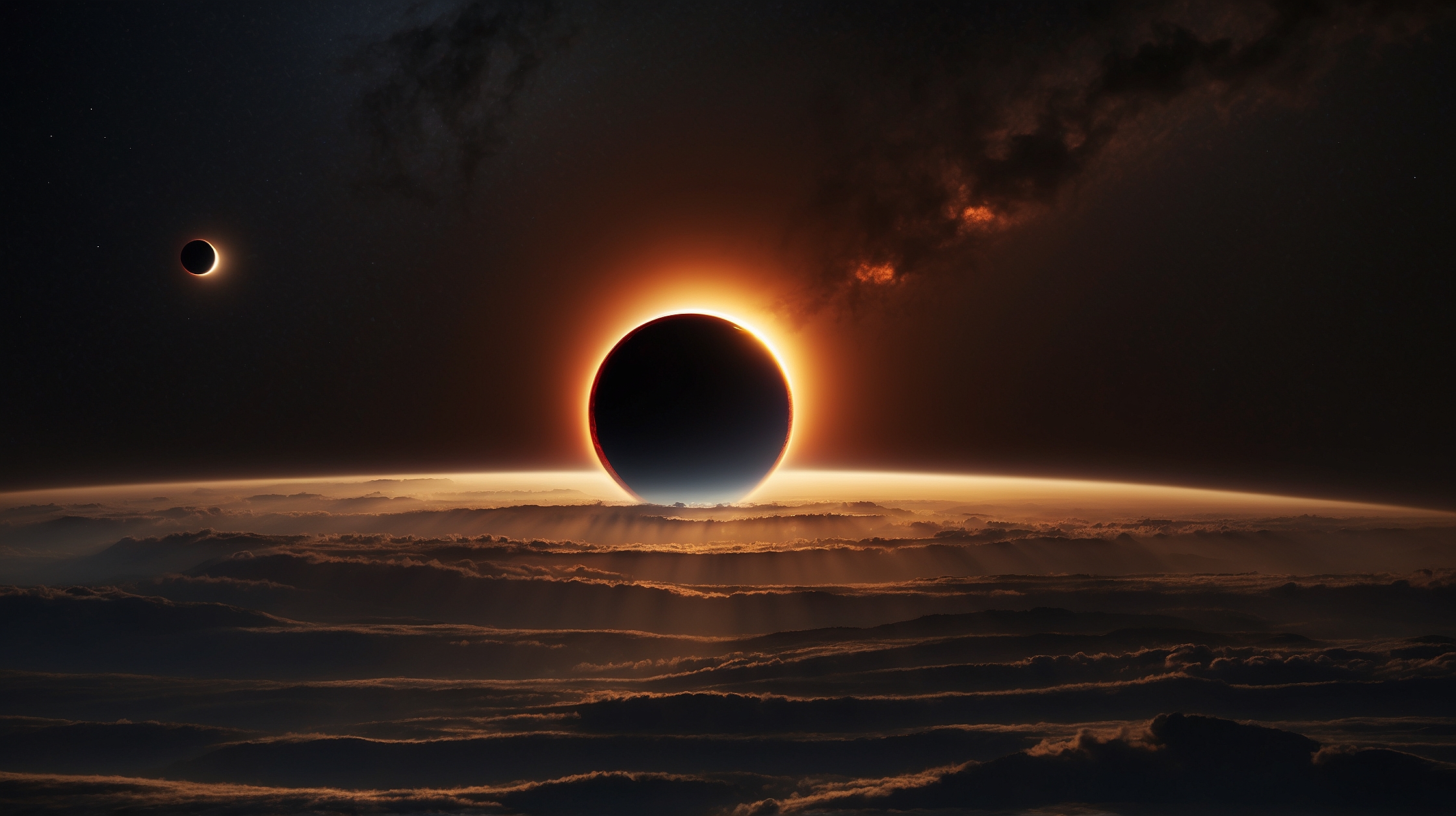
As dawn slowly brightens the sky on August 2, 2027, millions of skywatchers across parts of the globe will be treated to a breathtaking celestial event — a total solar eclipse that is drawing headlines as the longest solar eclipse of the 21st century. For astronomers, adventurers, and casual stargazers alike, this is not just another date on the calendar. It is an opportunity to witness nature at its most dramatic, and experts say it’s an event truly worth traveling for.
The phenomenon of a solar eclipse—wherein the moon passes between the Earth and the sun, casting its shadow and briefly plunging parts of the planet into daytime darkness—has always fascinated humankind. But the upcoming one in 2027 is particularly special. With a maximum duration of totality exceeding 6 minutes in certain locations, this eclipse is expected to outshine previous ones in its length and geographic reach, creating perfect conditions for both scientific observation and awe-inspiring experiences.
Much preparation is already underway in many countries that will find themselves along the eclipse’s path. Several cities in North Africa and the Middle East are gearing up for historic tourism booms, as visitors from around the globe make travel arrangements to be in the right spot when the skies go dark. Meanwhile, researchers are preparing experiments that can only be conducted during a total eclipse, such as solar corona observations and atmospheric studies.
So, what makes the 2027 eclipse so unique? Who will get to see it in its totality? And what should you do if you want to be part of this rare spectacle? Below, we break down everything you need to know.
Quick overview: Key facts about the 2027 solar eclipse
| Event | Total Solar Eclipse |
| Date | August 2, 2027 |
| Maximum Duration of Totality | 6 minutes 23 seconds |
| Countries in Path | Morocco, Algeria, Tunisia, Libya, Egypt, Saudi Arabia, Yemen |
| Type | Total Solar Eclipse (Longest of the Century) |
| Best Viewing Locations | Luxor (Egypt), Al-Ula (Saudi Arabia), parts of Tunisia and Libya |
What makes this eclipse the longest of the century
The length of totality varies from eclipse to eclipse depending on several cosmic factors including the moon’s distance from the Earth, the Earth’s distance from the sun, and the geographical path the eclipse takes over Earth’s surface. On August 2, 2027, all these factors align in near-perfect harmony, resulting in one of the longest total phases possible — a whopping 6 minutes and 23 seconds at its peak.
According to astronomy experts, the eclipse’s extended duration stems from the moon being near perigee—its closest point to Earth—and Earth being near aphelion—its farthest distance from the sun. This rare orbital geometry means the moon will appear larger in the sky, fully covering the sun for an extraordinary length of time.
“This is a once-in-a-lifetime alignment that not only delivers a long eclipse but makes it visible in regions that are geographically diverse and rich in cultural heritage.”
— Dr. Leila Hashim, Astronomer
Where and when to experience the totality
The eclipse’s path of totality spans thousands of kilometers, crossing through several countries in North Africa and the Middle East. The spectacle will begin over the Atlantic Ocean and move eastward, making its first landfall in Morocco before arcing across Algeria, Tunisia, and Libya. It will then sweep across Egypt and Saudi Arabia, before exiting the continent through Yemen and dissipating over the Arabian Sea.
Prime viewing destinations include:
- Luxor, Egypt: One of the cities with the longest duration of totality, Luxor is expecting a tourism surge. The eclipse here will last just over 6 minutes.
- Al-Ula, Saudi Arabia: A UNESCO World Heritage site that lies inside the eclipse path, providing an awe-inspiring combination of history and science.
- Southern Tunisia and Libya: These regions offer some of the clearest skies in Africa, ideal for viewing.
Local authorities in many of these countries have already begun infrastructure planning to accommodate the massive influx of international eclipse chasers. Accommodations, local guides, and viewing platforms are being organized months in advance.
How to prepare for your eclipse experience
If you’re planning to witness the 2027 eclipse in person, early preparation is key. Here are several steps to take:
- Choose your location – Research weather patterns and accessibility to maximize your viewing chances.
- Book in Advance – Hotels and flights are expected to fill up quickly, especially in cities like Luxor and Al-Ula.
- Safety First – Never look at the sun without ISO-certified solar eclipse glasses. Make sure your entire group is prepared.
- Join Meetup Groups or Tours – Several professional astronomy tour companies offer guided eclipse watching packages, which often include expert commentary and equipment.
Scientific opportunities during the eclipse
Total solar eclipses aren’t just for public marvel—they offer rare windows for astronomers and scientists to conduct studies that are otherwise impossible. During the total eclipse, the sun’s outer atmosphere, the solar corona, becomes visible. Researchers take advantage of this to analyze its shape, density, and magnetic field structures.
Moreover, universities and space agencies are expected to launch coordinated experiments, including:
- High-resolution imaging of the solar corona
- Experiments on the Earth’s ionosphere affected by sudden changes in solar radiation
- Animal behavior studies during totality
“There’s no better laboratory than a total eclipse to study the solar magnetic field, which plays a big role in space weather and satellite safety.”
— Prof. Omar Khalid, Solar Physicist
Cultural and tourism impacts across regions
Countries across the eclipse path are expected to draw millions of tourists to historically rich cities and remote desert landscapes alike. Egypt’s Ministry of Tourism is already planning special festivals around the event, combining ancient mythology and modern science. Similarly, Saudi Arabia is expected to promote its emerging tourism sector by spotlighting heritage sites like Al-Hijr near Al-Ula.
Hotels, resorts, and local businesses are preparing packages targeted at international travelers. Economists predict a significant boost in tourism revenue in these regions, although much will depend on safety, political stability, and transportation infrastructure.
Winners and losers from the eclipse path
| Winners | Losers |
|---|---|
| Tourism-dependent cities in Egypt and Saudi Arabia | Regions outside the path of totality |
| Scientific community conducting solar research | Unprepared travelers without eclipse-safe gear |
| Astronomy educators and content creators | Cities plagued by overcast weather on eclipse day |
What to watch out for on eclipse day
While the eclipse offers a grand display, there are some key details observers should keep in mind:
- **Timing is precise**: Totality may last a few minutes but you must be prepared an hour in advance.
- **Temperature drops**: Expect a noticeable drop in temperature during totality.
- **Wildlife behavior**: Animals may act as if night is falling—an eerie but natural response.
FAQs about the 2027 total solar eclipse
Where will the 2027 solar eclipse be visible?
The eclipse will be visible across North Africa and the Middle East, passing through countries including Morocco, Algeria, Tunisia, Libya, Egypt, Saudi Arabia, and Yemen.
How long will the eclipse last?
The total phase will last up to 6 minutes and 23 seconds in some locations, making it the longest of the 21st century.
What makes this eclipse so special?
Its exceptional duration, favorable viewing geography, and alignment with perigee and aphelion make it a once-in-a-century event.
Is it safe to look directly at the eclipse?
Only during the few minutes of full totality is it safe to look without protection. At all other times, ISO-certified eclipse glasses or viewers are essential.
Do I need to travel to see it?
If you’re not located along the path of totality, you will only see a partial eclipse. Traveling to the path ensures a full, immersive experience.
What time will it occur?
The exact timing depends on your location. In Luxor, for instance, the eclipse is expected around midday local time.
What should I bring to watch the eclipse?
Bring eclipse glasses, a camera with a solar filter, a picnic blanket or chair, sunscreen, and plenty of water especially if you’re outdoors in desert areas.
Can weather affect the viewing?
Yes. Clouds and storms can obscure the view, which is why planning your location based on historical weather data is crucial.