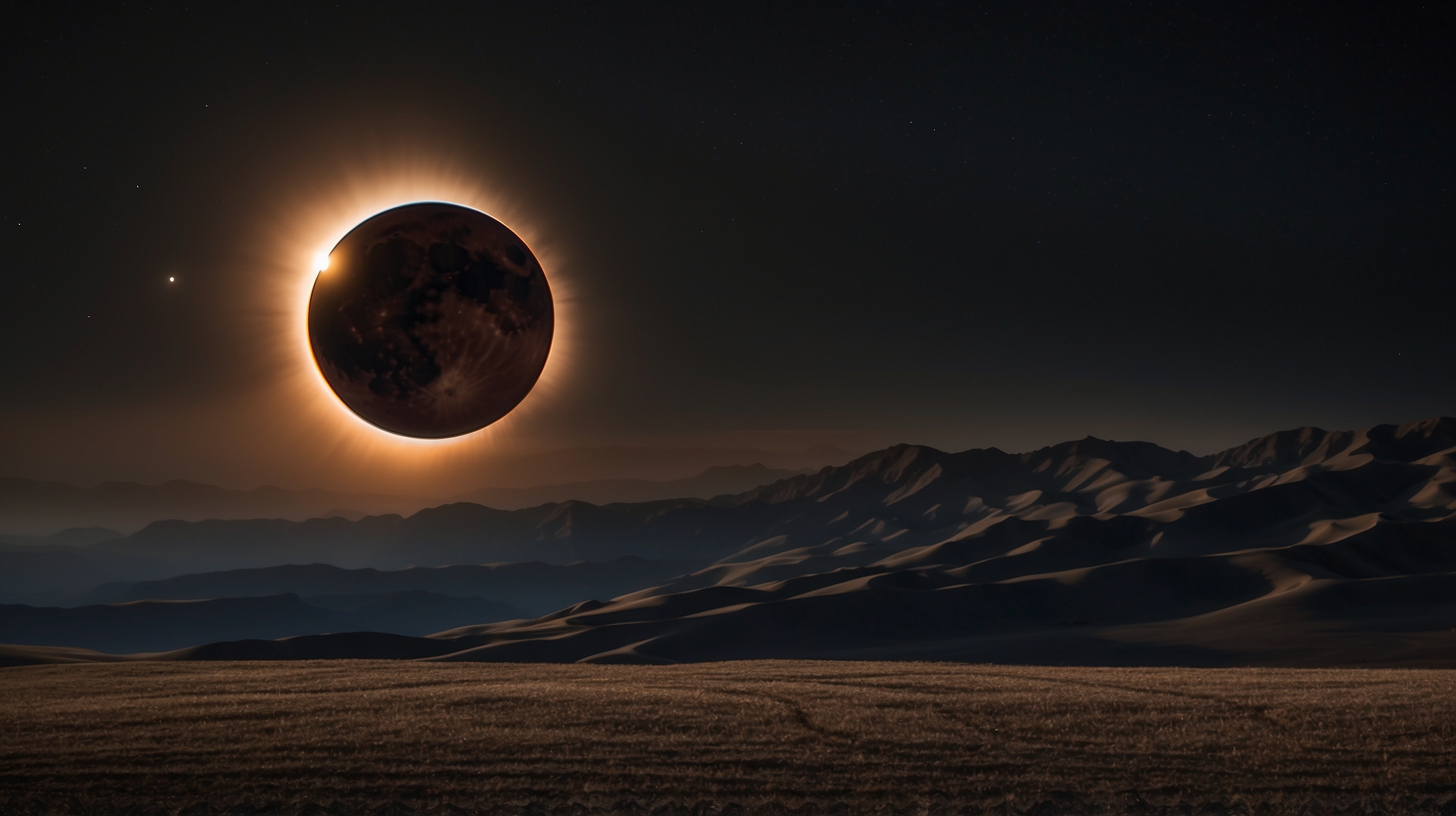
On a seemingly ordinary day, the sky will darken, the temperature will drop, and a rare celestial event will sweep across the Earth’s surface — a total solar eclipse that’s set to become the **longest of the century**. For millions of people within its path, the sun will disappear behind the moon, transforming daytime into an eerie twilight. But this is more than a natural marvel or a curious anomaly. This event is poised to have a profound scientific, emotional, and even spiritual impact. As we edge closer to this astronomical spectacle, it invites both wonder and preparation.
The eclipse is expected to carve its darkened pathway across several countries, serving up what could be one of the most visually compelling moments in a lifetime. Enthusiasts and scientists alike are eagerly ticking days off the calendar in anticipation. With a totality lasting longer than any other eclipse this century, it promises not just beauty, but an unparalleled opportunity for research and reflection.
Whether you’re an astronomy aficionado camping out with telescopes or someone planning to just witness it from your backyard, this is a moment not to be missed. Here’s everything you need to know about the celestial event that will momentarily turn day into night and why it’s capturing the world’s attention.
Key facts about the longest total solar eclipse of the 21st century
| Aspect | Details |
|---|---|
| Date of Eclipse | July 22, 2009 |
| Duration of Totality | 6 minutes and 39 seconds |
| Maximum Eclipse Point | Over the Pacific Ocean southeast of Japan |
| Countries in Path | India, Nepal, Bangladesh, Bhutan, China, Japan |
| Next Long Eclipse | Expected after 2132 for similar duration |
| Notable Characteristics | Darkest and longest eclipse of the century |
Why this eclipse is so unique
This solar eclipse stands out due to its **exceptional duration** of totality — the time when the sun is completely covered by the moon. Unlike other total solar eclipses whose darkness may last just a couple of minutes, this one stretched for more than six minutes at its peak. That’s nearly double the average duration, offering a rare, extended window into this astronomical event.
Another factor contributing to its uniqueness is the **geographical sweep** of the eclipse’s path. Beginning in India, shadowing through Nepal, crossing over China and ending in the Pacific Ocean, this eclipse put some of the world’s most densely populated regions right in the path of greatest visibility. Hundreds of millions of people had the chance to witness it without even leaving their cities.
Scientific opportunities around the longest eclipse
Eclipses aren’t just spectacles; they’re also opportunities. Scientists around the world organized ahead of the eclipse to conduct multiple simultaneous observations. High above Earth in balloons and aboard aircraft, and along the ground with portable observatories, researchers attempted to gain insight into **solar corona dynamics**, atmospheric response, and gravitational anomalies.
One of the focal points of this eclipse was studying the **Sun’s corona** — the outer atmosphere which is normally obscured by the bright light of the solar surface. The extended eclipse provided an ideal moment to observe coronal mass ejections and magnetic flows, helping refine space weather models and understand turbulence in solar plasma better.
“This eclipse offers unparalleled continuity for corona observation. It’s something we might not see again for over a century.”
— Dr. Lillian Ho, Astrophysicist
Culture, tradition, and public participation
In many regions across Asia, this eclipse carried not only scientific significance but cultural resonance. From blending spiritual rituals with awe-struck silence, to ancient stories re-invoked in modern times, the eclipse reminded people that nature still commands reverence.
Crowds gathered at ancient temples in India, while families in China and Japan observed centuries-old traditions for **celestial omens**. Many considered the eclipse as a moment for reflection, purification, or prayer. Others simply celebrated, with schools organizing public viewings and communities gathering in open fields and rooftops.
“You could feel the silence — it wasn’t just the darkness, but how everything paused. It felt like the Earth itself was holding its breath.”
— Asha Nair, Eclipse Observer
Economic and tourism surge in eclipse zones
Wherever the shadow traveled, **tourism surged**. From hill stations in India to coastal points in Japan, cities and towns in the eclipse path experienced an influx of domestic and international tourists. Hotels booked months in advance, local businesses prepared eclipse-themed events, and observatories opened their doors to the public interested in both science and spectacle.
This brought short-term boosts to local economies through hospitality, transportation, and guided viewing tours. Innovative entrepreneurs offered customized eclipse-watching packages, complete with safety glasses, merchandise, and local cuisine. For some, eclipses became not just a natural curiosity but a **commercial opportunity** as well.
| Winners | Losers |
|---|---|
| Astronomers and science communities | Regions under cloud cover |
| Tourism industries in eclipse path | Air traffic and logistics facing eclipse delays |
| Educational institutions holding events | Unsuspecting travelers unaware of viewing importance |
Safety precautions and viewing etiquette
One of the key takeaways from any eclipse event is the **importance of safe viewing**. Despite the excitement, solar exposure can cause irreversible eye damage if viewed with the naked eye. Special eclipse glasses featuring ISO-certified filters became essential accessories, quickly flying off shelves in the days leading up to the event.
Authorities and scientific agencies worked together to spread public awareness. Social media, community meetups, and school circulars all emphasized one point again and again: don’t look directly without proper protection. In some places, **improvised pinhole projectors** and shadow boxes were used to view the event indirectly — especially in rural areas.
“What’s most important about any eclipse is not just what we see, but how safely we see it.”
— Rahul Dev, Educational Program Coordinator
How this eclipse will be remembered
The eclipse of July 22, 2009, is now etched into the annals of celestial history. Not only because of its record-setting **duration**, but due to the number of people it reached, the cultural confluence it catalyzed, and the vast trove of scientific data it generated. Though we will experience many more eclipses in our lifetimes, few will match the **grandeur and global attention** this one received.
While the next comparable eclipse in terms of duration won’t happen until the year 2132, the memory of this event will remain vivid for those who witnessed it. It stands as a reminder of Earth’s dance in the cosmos — and of how even our hectic human affairs pause when the universe writes its stories across the sky.
Short FAQs about the longest total solar eclipse of the 21st century
When exactly did the longest eclipse occur?
The longest total solar eclipse of the century occurred on July 22, 2009.
How long did the eclipse last?
The period of totality lasted for 6 minutes and 39 seconds at its peak.
Which regions experienced the full eclipse?
India, Nepal, Bhutan, Bangladesh, China, and parts of Japan were in the path of totality.
Why is this eclipse considered so significant?
It combined record-breaking duration, high population density in its path, and wide-reaching scientific opportunities.
Was it safe to look at the eclipse directly?
Only during totality. At all other times, proper solar viewing glasses were required to avoid eye damage.
What was the biggest scientific benefit of this eclipse?
Extended observation time of the solar corona, which helped researchers study solar plasma and magnetic activity.
Will there be another eclipse this long soon?
No. The next eclipse of similar duration is not expected until the year 2132.
Did the eclipse impact airline or satellite services?
Some flight paths and satellite calibrations were adjusted, but no major service disruptions were reported.