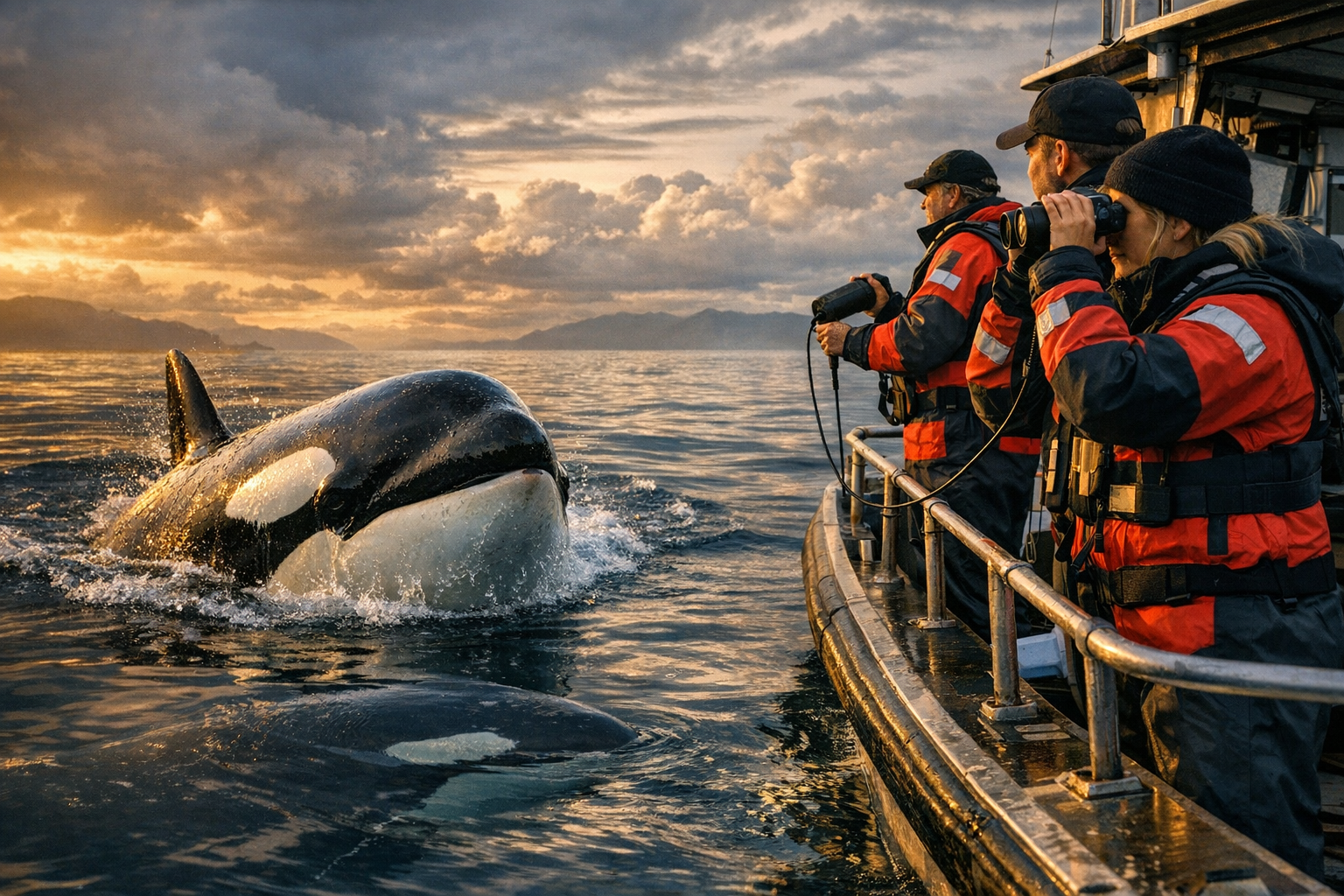
Off the coast of Europe, a majestic and once-revered creature is becoming the center of scientific concern. What was once described as awe-inspiring encounters between humans and orcas — or “killer whales” — has evolved into a perplexing behavioral shift that is alarming both researchers and maritime professionals. Long considered intelligent and socially complex, orcas are now showing aggressive behaviors toward boats, prompting escalating concern and urgent investigations.
Marine biologists are ringing the alarm over a rise in orca interactions with vessels, a change that seems to have begun in earnest in 2020 but has rapidly escalated over the last year. In particular, pods of orcas around the Iberian Peninsula have been making calculated moves to damage and disable yachts and small crafts. The chilled winds of the Atlantic are carrying more than salt and spray—they now carry the tension of a growing mystery in marine science.
So what’s behind this behavioral evolution? Is it a new technique learned and spread among the orca population, or are we witnessing a form of retaliation rooted in disturbance and displacement from human activity? Experts are diving deeper to understand what is turning revered sea giants into unpredictable players in the ocean’s complex theater.
Snapshot of emerging orca behaviors
| Aspect | Details |
|---|---|
| Region of Activity | Primarily waters near Spain and Portugal, especially near the Strait of Gibraltar |
| Behavior Type | Direct interactions with sea vessels, including physical contact and attempts to disable steering systems |
| First Noted | 2020 |
| Increase in Frequency | Significant surge noted throughout 2023 and into 2024 |
| Species Involved | Orcinus orca – Iberian subpopulation |
| Maritime Impact | Damage to vessels, increased cost for repairs, precautionary route changes |
| Scientific Concern | Unclear motivation, possible changes in social learning and inter-species interaction dynamics |
What changed this year in orca behavior
The most troubling change observed in 2024 is the strategic nature of the interactions. According to recent field observations, certain pods appear to be targeting the rudder systems of boats with uncanny precision. Unlike accidental or passive interactions, these direct engagements seem purposeful, with orcas working in coordination to disable small sailing crafts. This behavior signifies not just curiosity — it suggests intent and learned tactics.
Initial recordings from yachts and maritime patrols show orcas approaching in groups and circling vessels before each animal takes a deliberate turn at hitting specific parts of the boat. Crews have reported eerie moments where orcas acted in synchronization, reminiscent of pack-hunting behavior seen in the wild with prey like seals or fish—only now, maritime hardware has become the target.
“There’s a sophistication in these maneuvers that defies past observations. They’re not just bumping into boats — they know what they’re doing.”
— Dr. Elena Urruña, Marine Ethologist
Possible explanations scientists are exploring
While frightening, scientists caution against jumping to hostile conclusions. Marine biologists are exploring a variety of hypotheses to explain this new conduct. One leading theory involves **social transmission**—the idea that orcas are learning and teaching this behavior among their pods. Orcas are known for their complex social structures, and behaviors can spread culturally, much like in humans.
Another theory points to **environmental stress** and **territorial competition**. The Iberian subpopulation of orcas is endangered and faces dwindling food sources, particularly bluefin tuna, forcing them to adjust their behavior and possibly view boats as threats. Climate impacts, increased shipping traffic, and underwater noise pollution may also be contributing factors affecting orca behavior and stress levels.
“When natural resources are disrupted, social species tend to adapt, sometimes in ways we don’t expect. Stress alters behavioral norms.”
— Dr. Sofia Velera, Oceanic Ecosystem Researcher
How this impacts sailing, maritime industries, and conservation
The economic and logistical ripple effect has already begun. With damages mounting, yacht operators and commercial sailors are having to choose alternative routes, often at higher financial and environmental costs. The perception of threat, whether warranted or not, also stirs hesitance in tourism-related sailing expeditions, which could further strain coastal businesses.
From a conservation standpoint, there’s dual concern. If humans retaliate against the creatures, even in defense, it could pose severe risks for the **endangered Iberian orca population**, currently estimated under 50 individuals. Marine authorities have issued guidelines encouraging de-escalation, including shutting off engines and refraining from interaction to lower perceived threats.
Could these actions be learned behavior?
The possibility that this is a learned behavior is gaining increasing traction. Several studies indicate that a particular orca — nicknamed “White Gladis” — may have initiated this pattern. After experiencing an adverse interaction with a boat, White Gladis may have passed on this behavior to her pod family. A domino chain appears to be forming, with other pods mimicking this disruptive interaction, akin to how orcas learn hunting techniques and vocalizations within family groups.
“White Gladis may be a critical link here. We’re looking at how trauma, cognition, and social memory are shaping this evolution.”
— Dr. Miguel Ramos, Cetacean Cognitive Research Lead
Winners and losers in the waters
| Winners | Losers |
|---|---|
| Scientific community (more research opportunities) | Yacht operators and sailing crew (financial loss) |
| Conservationists (renewed attention on orca welfare) | Orcas (risk of retaliation or misunderstanding) |
| Public awareness on marine behavior | Maritime tourism sector |
How authorities are responding
Maritime authorities are not standing idly by. In response to these incidents, regional coast guards and scientific committees have increased patrols and initiated formal data collection missions. Some ports have issued guidelines for sailors on how to avoid provoking orcas, including precautionary route changes and acoustic monitoring systems to detect pod locations.
Meanwhile, international panels are being formed to consider broader policy implications. Conservation organizations are pushing for expanded marine protected zones where vessel traffic is limited, and funding is being directed toward non-invasive tracking of local orca populations.
Long-term implications for orca-human interactions
If this behavior persists, it may mark a notable turning point in the historical relationship between humans and orcas. Once seen as animals intrigued by boats and often approaching them in curiosity, these marine mammals may now be entering a period of conflict resulting from adaptation in the face of changing conditions. Scientists emphasize that this is not an act of revenge, but rather a **manifestation of intelligence**, adaptation, and possibly frustration.
With the role of climate change, overfishing, and increasing marine traffic, more interactions between wildlife and humans are inevitable. What matters now is not merely understanding the behavior but also adjusting our own to coexist responsibly with majestic creatures like orcas.
Frequently asked questions
Why are orcas interacting with boats?
Experts believe orcas may be displaying complex learned behavior, possibly passed down socially. Environmental stress and low food availability could also be contributing factors.
Are the orcas attacking boats deliberately?
The behaviors appear intentional and strategic, particularly targeting boat rudders. However, scientists believe this is more of a behavioral adaptation than an act of aggression.
Is this happening in other parts of the world?
While occasional orca-boat interactions happen globally, the frequency and nature of events near the Iberian Peninsula are uniquely consistent and concentrated.
Can orcas get hurt from these interactions?
Yes, orcas risk injury from metal parts, propellers, or vessel retaliation. Conservationists are urging non-intervention to avoid harming the orcas further.
What should sailors do if approached by orcas?
Turn off the engine, stop movement, avoid panic, and do not attempt to engage or scare the orcas. Report the incident later to the authorities.
How are governments responding to this crisis?
Authorities have begun increasing patrols, issuing navigation advisories, and supporting scientific efforts to better understand and mitigate these interactions.
Is the Iberian orca population endangered?
Yes, it’s critically endangered, with fewer than 50 known individuals. Conservation efforts are vital to ensure their survival.
Could climate change be a factor?
Possibly. Climate effects on ocean temperatures, fish migration, and noise pollution may all be stressors altering orca behavior patterns.